How to Clean and Care for Your Turquoise and Red Necklace
Expert care and cleaning tips for your turquoise and red necklace. Learn how to safely wash porous gems, protect settings, and prevent discoloration.


The Unique Vulnerabilities of Turquoise and Red Gemstones
A turquoise and red necklace is a striking sartorial choice, often evoking Southwestern heritage, bohemian flair, or vintage elegance. However, from a gemological perspective, this specific color pairing presents a unique maintenance challenge. Turquoise is a hydrous phosphate of copper and aluminum, ranking between 5 and 6 on the Mohs hardness scale. More importantly, it is inherently porous. Unless it has undergone high-end stabilization (like the Zachary process or epoxy resin impregnation), raw turquoise will absorb oils, lotions, and chemicals, leading to permanent discoloration.
When you pair this delicate stone with a 'red' gemstone, the care protocol becomes even more complex. The red stones most commonly paired with turquoise—red coral, carnelian, and garnet—each possess entirely different chemical sensitivities. Using a one-size-fits-all jewelry cleaner on a multi-gemstone piece is the fastest way to ruin the matrix of your turquoise or etch the surface of your red gems. According to the Gemological Institute of America (GIA), the porosity of turquoise demands a strictly controlled, chemical-free cleaning environment to preserve its natural luster and structural integrity.
Identifying Your Red Gemstone: A Care Comparison
Before you mix any cleaning solution, you must identify the red gemstone in your necklace. The cleaning rules change drastically depending on whether the red stone is organic or silicate-based.
| Red Gemstone | Mohs Hardness | Material Type | Primary Cleaning Hazard | Ultrasonic Safe? |
|---|---|---|---|---|
| Red Coral | 3.5 - 4.0 | Organic (Calcium Carbonate) | Acids, sweat, ammonia, heat | Never |
| Carnelian | 6.5 - 7.0 | Silicate (Chalcedony) | Thermal shock, harsh alkalis | Risky (if fractured) |
| Garnet | 6.5 - 7.5 | Silicate (Nesosilicate) | Hard impacts, extreme heat | Generally Yes |
If your necklace features red coral, you are dealing with an organic gem that is highly reactive to acids. Human sweat contains lactic acid, which can dull coral's polish over time. As noted in the GIA Coral Care Guidelines, organic gems require a 'put on last, take off first' approach to avoid contact with perfumes and cosmetics. Carnelian and garnet are much hardier, but if they are set in the same bezel as turquoise, you must default to the gentlest cleaning method required by the turquoise.
Step-by-Step Cleaning Protocol
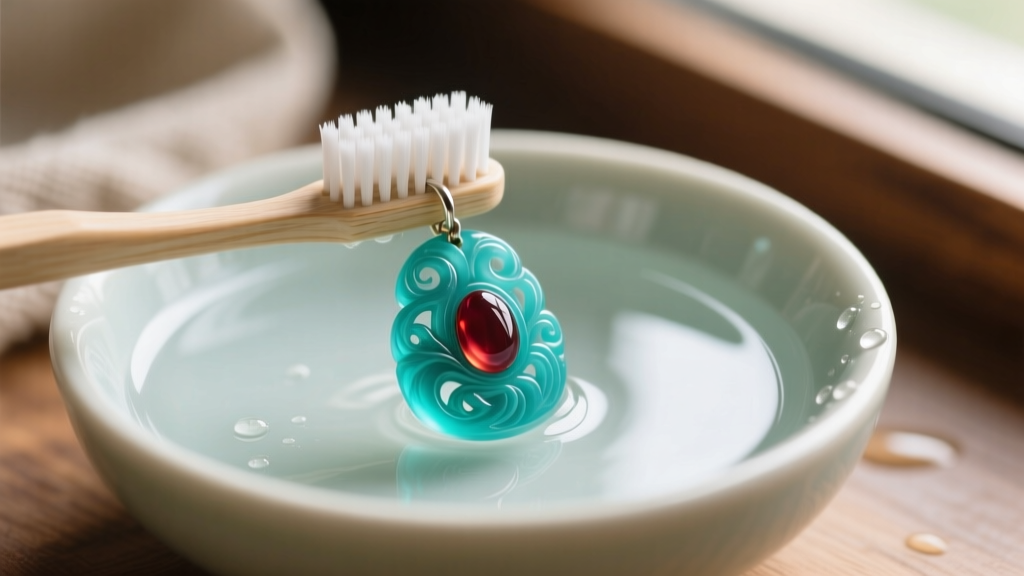
Forget commercial jewelry dips, ultrasonic cavitation machines, and steam cleaners. The vibrations from an ultrasonic cleaner can easily shatter treated turquoise or loosen the adhesive in multi-stone inlay settings. Here is the safest, most effective method for washing your turquoise and red necklace at home.
What You Need
- Distilled water (never tap water, which contains chlorine and fluoride that can react with copper in turquoise)
- Phosphate-free, mild dish soap (like a basic Dawn or Castile soap)
- A brand-new, ultra-soft baby toothbrush
- Untreated microfiber cloths
- A wooden or plastic skewer (for tight bezel corners)
The Washing Technique
Step 1: Mix a few drops of mild soap into a bowl of lukewarm distilled water. Ensure the water is not hot, as thermal shock can cause microscopic fractures in carnelian or stabilized turquoise.
Step 2: Dip the soft toothbrush into the solution and gently tap it against the edge of the bowl to remove excess water. You want the brush damp, not dripping.
Step 3: Gently brush the surface of the red gemstones and the metal settings. When you reach the turquoise, use an even lighter touch, brushing in one direction to avoid pushing dirt into the natural matrix veins.
Step 4: Use the wooden skewer to carefully dislodge any dirt trapped between the metal bezel and the stone. Never use metal tools, which will scratch the silver or gold and gouge the turquoise.
Step 5: Quickly rinse the necklace under a slow stream of lukewarm distilled water. Do not let the necklace soak. Prolonged water exposure can weaken the silk or nylon threading and compromise the adhesive in inlay work.
Step 6: Immediately pat the necklace dry with a microfiber cloth, then lay it flat on a dry towel in a well-ventilated area away from direct sunlight to ensure the backing and drill holes dry completely.
Metal Setting Maintenance and Tarnish Removal
Turquoise and red necklaces are frequently set in sterling silver, which is prone to oxidation and tarnish. The challenge is removing silver tarnish without applying chemical polishes to the stones. Baking soda pastes and silver dip solutions are strictly forbidden; they will permanently stain the porous turquoise and strip the polish off red coral.
Instead, use a high-quality, treated silver polishing cloth. Fold the cloth to create a taut edge, and carefully rub the silver bezels and chain links. Keep the cloth away from the gemstones. If tarnish has built up in the crevices right next to the turquoise, use a dry, soft-bristled brush to gently sweep it away. For heavy oxidation on vintage pieces, it is highly recommended to take the necklace to a professional jeweler who can use a precision laser or localized polishing wheel to clean the metal without endangering the stones.
Environmental Hazards and Daily Wear Rules
Preventative care is vastly superior to reactive cleaning. To maintain the vivid contrast between the blue-green turquoise and the deep red stones, you must mitigate environmental hazards.
- Cosmetics and Aerosols: Hairspray, perfume, and body lotions contain alcohols and oils that will seep into untreated turquoise, turning bright robin's egg blue into a muddy green. Always apply your beauty products and wait 10 minutes before putting on your necklace.
- UV Exposure: Prolonged exposure to direct sunlight can fade certain dyed red stones and dehydrate turquoise, leading to surface checking (tiny cracks). Store your necklace away from sunlit windows.
- Chlorine and Salt: Never wear your necklace in a swimming pool, hot tub, or the ocean. Chlorine is highly reactive with the copper in turquoise and can cause irreversible bleaching or pitting.
Expert Insight: If your turquoise accidentally absorbs lotion or sweat and develops a dark spot, do not attempt to 'bleach' it out. The stain is often permanent. Embrace the patina as part of the stone's natural history, or consult a lapidary about a professional re-polish, though this will remove a microscopic layer of the stone.
Long-Term Storage and Restringing
How you store your turquoise and red necklace is just as critical as how you clean it. Never toss it into a communal jewelry box where harder stones (like diamonds or sapphires) can scratch the turquoise and red coral.
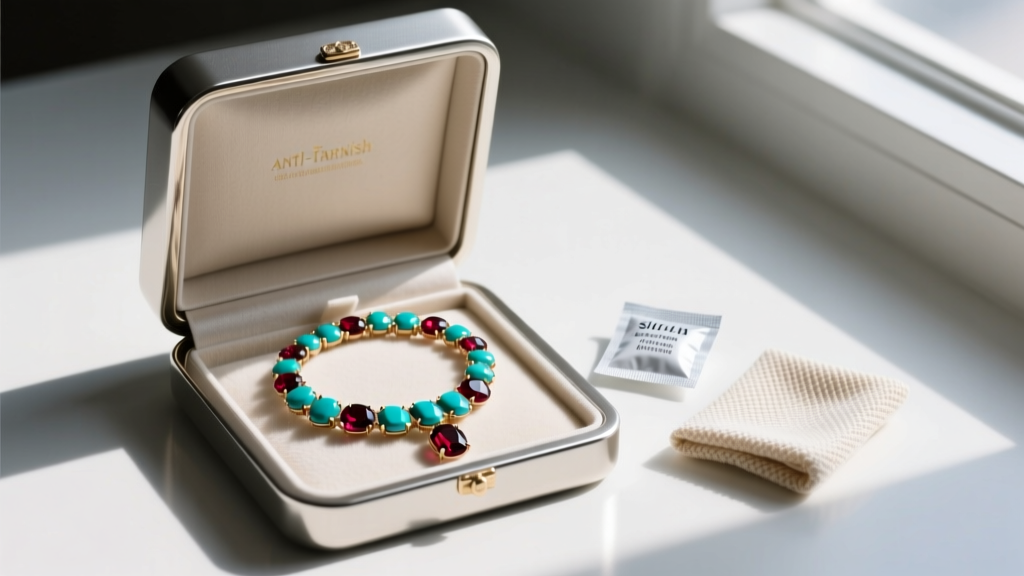
Store the piece flat in an anti-tarnish flannel pouch. Hanging heavy beaded necklaces for long periods can stretch the threading. If your necklace is strung on beads, pay attention to the thread material. Traditional silk thread is beautiful and knots well, but it degrades rapidly when exposed to moisture and skin oils. If you wear the necklace frequently, have it restrung every 18 to 24 months. For a more durable alternative, ask your jeweler to restring the piece on beading wire (like Soft Flex) or high-tenacity nylon, ensuring they use French wire or bead protectors at the clasp to prevent metal-on-thread friction.
By understanding the distinct mineralogical properties of both the turquoise and the specific red gemstone in your piece, you can ensure your necklace remains vibrant, structurally sound, and ready to be passed down as a pristine heirloom.


