The Complete Guide to Choosing Women's Necklace Size
Discover how to find your perfect women's necklace size. Learn measurement techniques, body proportion mapping, and hardware tips for a flawless fit.


Finding the perfect piece of jewelry goes far beyond selecting the right metal or gemstone; the true mark of a well-chosen piece lies in its fit. When shopping online or in-store, understanding your exact women's necklace size is the difference between a flattering, comfortable drape and an awkward, restrictive fit. While the jewelry industry has long relied on the 'standard 18-inch' rule, modern styling, layering techniques, and diverse body proportions demand a much more precise approach. Whether you are investing in a delicate diamond pendant, a heavy gold chain, or a layered choker set, mastering your personal measurements and understanding how hardware interacts with your anatomy is essential. This comprehensive buying guide will walk you through the exact metrics, mapping techniques, and structural details you need to evaluate before making a purchase.
The Anatomy of Women's Necklace Size: Beyond the Standard 18 Inches
The concept of a universal 'standard' length is a historical artifact that fails to account for the reality of human anatomy. According to industry guidelines from Jewelers of America, an 18-inch chain is designed to sit just below the collarbone on an average-sized frame. However, 'average' is a moving target. A woman's neck circumference, torso length, and shoulder width all dictate where a specific chain length will actually fall.
For instance, a woman with a 13-inch neck circumference and a petite torso will find that an 18-inch chain falls much lower on her chest, mimicking a princess-length (20-inch) drape on a taller woman. Conversely, a woman with a broader chest and a longer torso might find that same 18-inch chain sitting uncomfortably high, acting more like a choker. Therefore, when determining your ideal women's necklace size, you must stop thinking about the chain's absolute length and start thinking about the 'drop zone'—the specific anatomical landmark where you want the pendant or chain to rest. The three primary drop zones are the hollow of the throat (14-16 inches), the collarbone shelf (17-19 inches), and the upper sternum (20-24 inches).
How to Measure for Your Ideal Women's Necklace Size
To accurately determine your size, you need to measure your neck and torso using methods that account for both circumference and desired drape. Never guess your size based on t-shirts or clothing sizes; jewelry requires millimeter-level precision.
The Soft Tape Method
Wrap a flexible, soft fabric measuring tape around your neck where a choker would naturally sit (usually just above the collarbones). Note this base circumference. To find your ideal collarbone-length necklace, add exactly 2 to 3 inches to this base number. If your neck measures 14 inches, a 16-inch chain will sit snugly at the base of your neck, while a 17.5-inch chain will rest perfectly on the collarbone. Always ensure you can comfortably slide two fingers between the tape and your skin; this 'two-finger rule' prevents the chain from feeling restrictive when you swallow or move your head.
The String and Ruler Technique
If you lack a soft measuring tape, use a piece of non-stretchable string or a shoelace. Drape it around your neck and adjust it until the ends meet at your desired drop zone. Mark the meeting point with a pen, lay the string flat on a table, and measure the distance with a rigid ruler or metal tape measure. This method is particularly useful for visualizing longer lengths, such as matinee (24-inch) or opera (30-inch) sizes, allowing you to see exactly where a pendant will hit against your wardrobe's necklines.
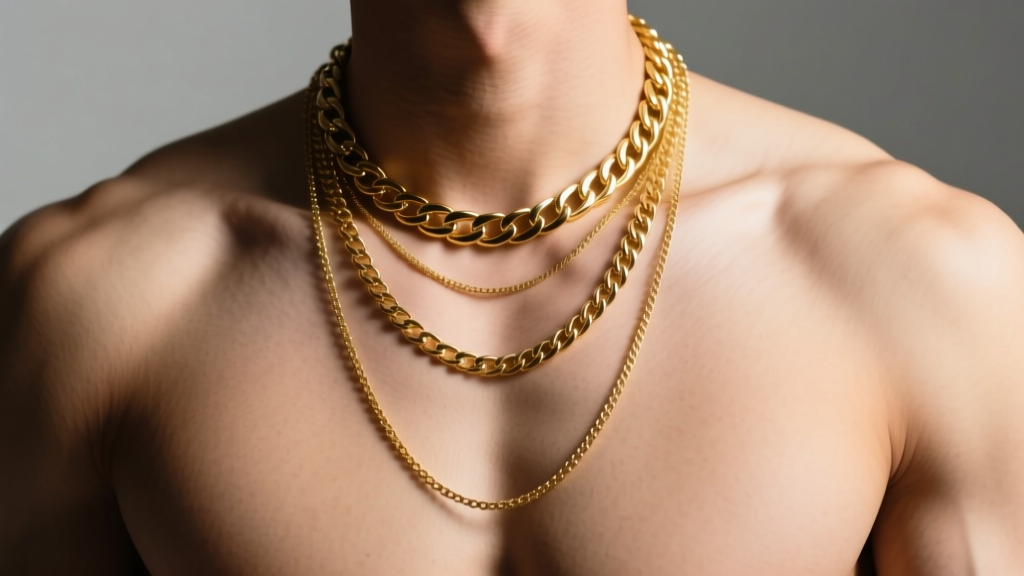
Mapping Necklace Lengths to Body Proportions
Height and torso length dramatically affect how a chain drapes. A 20-inch chain on a woman who is 5'2" will fall near the bustline, while on a woman who is 5'9", it will barely clear the collarbone. Use the following framework to map your height and torso proportions to baseline chain lengths before adjusting for your specific neck circumference.
| Height / Body Type | Choker / Collar | Standard Collarbone | Princess / Bust |
|---|---|---|---|
| Petite (Under 5'4") | 14 - 15 inches | 16 - 17 inches | 18 - 20 inches |
| Average (5'4" to 5'7") | 15 - 16 inches | 17 - 18 inches | 20 - 22 inches |
| Tall / Long Torso (Over 5'7") | 16 - 17 inches | 18 - 20 inches | 22 - 24 inches |
| Plus Size / Broader Chest | 16 - 18 inches | 20 - 22 inches | 24 - 26 inches |
When layering, maintain a minimum 2-inch gap between each chain to prevent the clasps and pendants from tangling. If your first layer is a 16-inch choker, your second layer should be no shorter than 18 inches, and your third should be 20 or 21 inches.
The Hardware Factor: Clasps, Extenders, and Chain Gauges
Sizing is not just about the length of the chain; it is heavily influenced by the hardware. The weight of a pendant and the thickness of the chain dictate how the necklace behaves on your body.
Why Extender Chains are Non-Negotiable
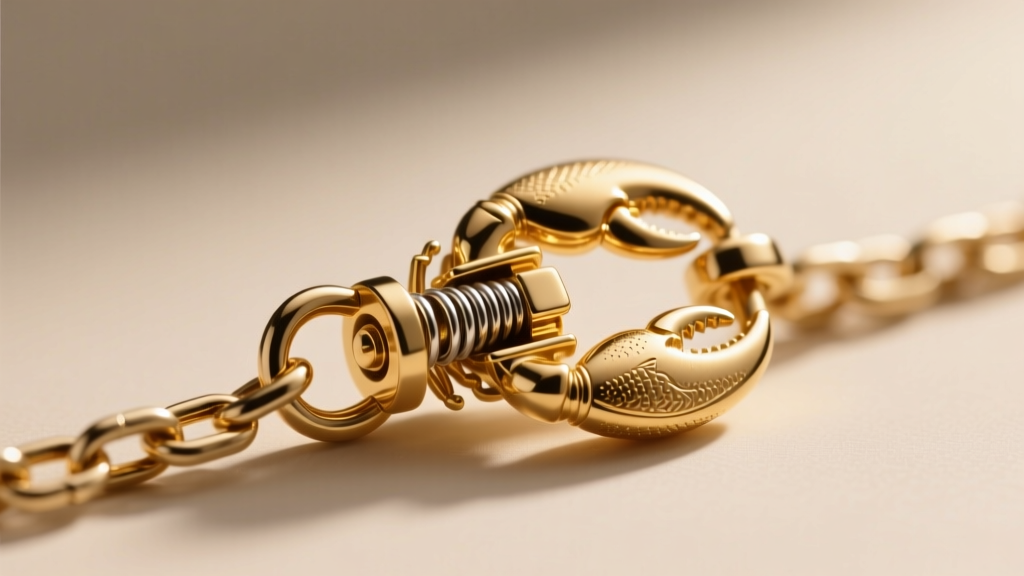
When buying fine jewelry, always look for a 2-inch extender chain at the clasp. Extenders provide crucial micro-adjustability, allowing you to shift the necklace's drop zone by up to two inches to accommodate different shirt necklines or slight fluctuations in bloating and comfort. The best extenders are made from 1.2mm to 1.5mm rolo chains, which are thick enough to catch a lobster clasp securely but flexible enough to drape without kinking.
Matching Pendant Weight to Chain Gauge
A common sizing failure occurs when a heavy pendant is paired with a chain that is too thin, causing the chain to snap or stretch. According to metal durability guidelines referenced by the Gemological Institute of America (GIA), precious metals like 14k and 18k gold are relatively soft. If you are purchasing a solid gold pendant that weighs more than 8 grams, avoid thread-like chains (0.8mm to 1.0mm). Instead, opt for a cable, box, or wheat chain with a minimum gauge of 1.5mm to 2.0mm. The wider surface area distributes the weight evenly across the back of your neck, preventing the chain from cutting into your skin.
Common Sizing Mistakes to Avoid When Buying
- Ignoring the Clasp Weight: A heavy, oversized lobster clasp on a very delicate chain will cause the necklace to constantly slide backward, pulling the pendant off-center. Ensure the clasp weight is proportional to the chain gauge.
- Forgetting About Clothing Friction: Wide, flat chains like herringbone or omega necklaces grip the skin and fabric. If you plan to wear the necklace over a sweater or high-neck blouse, you must size up by at least 1 to 1.5 inches to compensate for the friction and added bulk of the clothing.
- Buying Fixed-Length Chokers Without Measuring: Velvet or solid metal chokers rarely have extenders. If you buy a rigid 15-inch choker without measuring your exact neck circumference plus a half-inch for breathing room, you risk receiving a piece that is physically unwearable.
- Overlooking Pendant Bail Size: The bail (the loop connecting the pendant to the chain) must be wide enough to slide over the clasp and the chain links. If you are buying a chain and pendant separately, verify the bail's inner millimeter width against the chain's thickness.
Final Fitting Checklist
Before finalizing your purchase, run through this quick diagnostic checklist: Have I measured my neck circumference and added the appropriate drop-zone inches? Does my torso length align with the recommended sizing chart for my height? Is the chain gauge thick enough to support the pendant's gram weight without stretching? Does the piece include a rolo extender for wardrobe versatility? By treating your women's necklace size as a precise anatomical metric rather than a generic guess, you ensure that every piece you add to your collection sits flawlessly, comfortably, and exactly where it was designed to shine.


