Restore & Clean Your Vintage Brighton Heart Necklace
Learn how to safely clean, polish, and restore a vintage Brighton heart necklace without damaging its silver plating or protective lacquer coating.

The Allure and Anatomy of Vintage Brighton Heart Necklaces
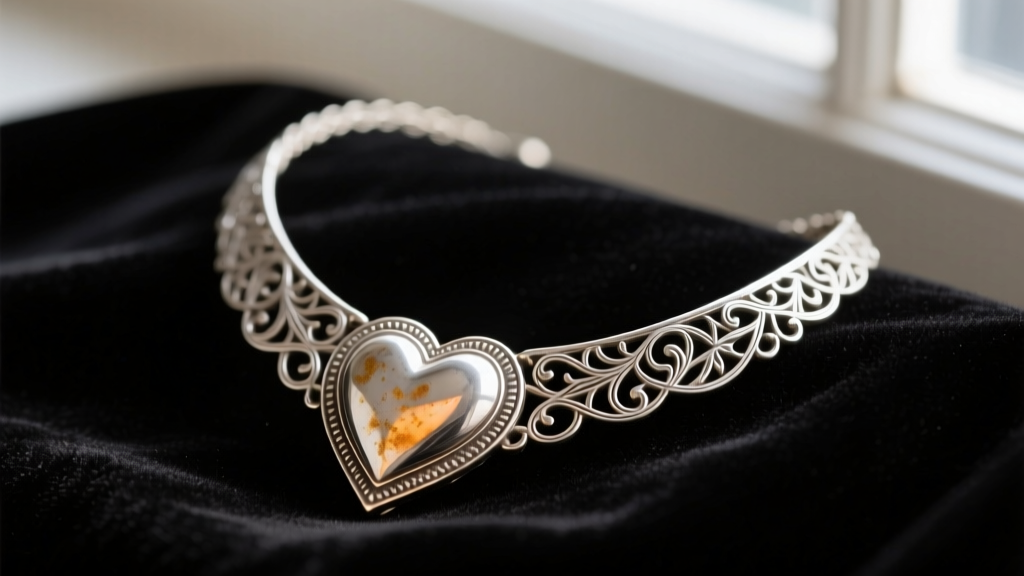
Owning a vintage Brighton heart necklace—whether it is a classic Sweet Dreams locket, a Regency heart motif, or an intricate Heart Cross pendant—means possessing a piece of contemporary jewelry history. However, caring for these specific pieces requires a radically different approach than cleaning solid sterling silver. Brighton Collectibles constructs their jewelry using a solid brass or zinc alloy base, which is then heavily silver-plated and sealed with a proprietary anti-tarnish lacquer (often referred to as an e-coating).
When dealing with vintage pieces from the 1990s and early 2000s, this protective lacquer may have developed micro-fractures, worn away at high-friction points, or completely degraded. Using standard silver cleaning methods on a vintage Brighton heart necklace will instantly strip the remaining plating, expose the base metal, and permanently ruin the piece. According to the Gemological Institute of America (GIA), silver-plated jewelry requires specialized, non-abrasive care to preserve the microscopic layer of precious metal. This comprehensive guide will walk you through the exact protocols for cleaning, restoring, and storing your vintage Brighton pendants.
The Destructive Agents: What NEVER to Do
Before applying any moisture to your necklace, you must understand the chemical and mechanical threats to Brighton's silver plating. The American Institute for Conservation warns against using aggressive chemical reducers on plated artifacts. Avoid the following at all costs:
- Ultrasonic Cleaners: The high-frequency cavitation bubbles created by ultrasonic machines will literally blast the silver plating and lacquer right off the brass base, leaving you with a dull, grayish pendant.
- Commercial Silver Dips: Liquid silver cleaners rely on thiourea and strong acids to dissolve tarnish. These chemicals will instantly melt Brighton's e-coating and cause the silver plate to flake.
- The Aluminum Foil & Baking Soda Bath: While this galvanic reaction works wonders for solid sterling silver, it is catastrophic for plated jewelry. The electrochemical transfer will strip the silver ions from your Brighton necklace.
- Abrasive Pastes and Toothpaste: Baking soda pastes and toothpaste contain microscopic silica and calcium carbonate particles. Because Brighton's silver plate is relatively thin, rubbing these abrasives will scratch through the silver and expose the yellow brass underneath.
Step-by-Step Safe Cleaning Protocol
To safely remove skin oils, perfume residue, and environmental dust from your vintage Brighton heart necklace, follow this conservation-grade cleaning method.
- Prepare the Solution: Mix a few drops of pH-neutral, lotion-free dish soap (like original blue Dawn) into a bowl of distilled water. Do not use tap water, as the chlorine and dissolved minerals can react with exposed base metals.
- The Gentle Agitation: Submerge the necklace for no more than 60 seconds. Use an ultra-soft baby toothbrush or a goat-hair detailing brush to gently sweep the bristles into the intricate filigree and crevices of the heart pendant. Never scrub; let the bristles do the lifting.
- The Crystal Precaution: If your vintage heart necklace features Swarovski crystals or enamel inlays, avoid brushing directly over them. The foil backing on older crystals can be compromised by prolonged moisture exposure.
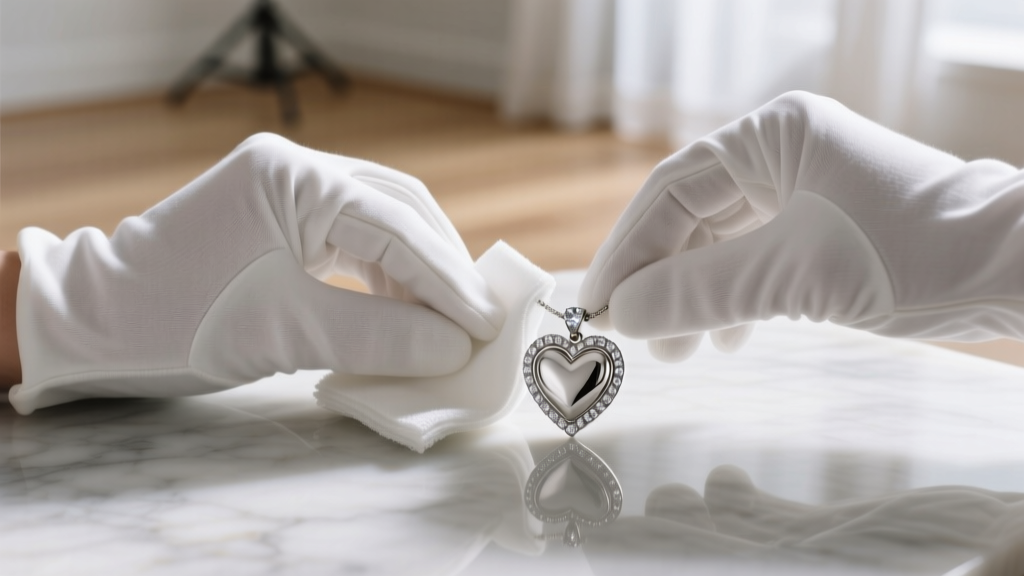
- Rinsing and Drying: Rinse the pendant briefly under a slow stream of distilled water. Immediately pat it dry with a lint-free microfiber cloth. Follow up with a hairdryer on the 'cool' setting to ensure no moisture is trapped in the chain links or the locket hinge.
Chain Maintenance: Box Chains vs. Snake Chains
Vintage Brighton necklaces typically feature either 1.5mm box chains or smooth snake chains. Each requires specific maintenance. Box chains trap dead skin cells and lotion in their interlocking square links. To clean a box chain, lay it flat on a microfiber towel, apply a tiny drop of soapy distilled water, and gently rub a cotton swab along the length of the chain. Snake chains, while smooth on the outside, are prone to kinking. Never pull a tangled snake chain; instead, lay it on a glass surface and use two fine sewing needles to gently tease the kink apart. If the chain feels stiff, apply a microscopic drop of mineral oil to the clasp mechanism, working it in by opening and closing the lobster claw.
Troubleshooting Common Vintage Brighton Issues
When dealing with older Brighton heart lockets and pendants, you may encounter specific failure modes. Use this diagnostic table to determine your next steps.
| Issue Identified | Root Cause | Actionable Solution |
|---|---|---|
| Black spots under the surface | Moisture penetrated micro-cracks in the lacquer, tarnishing the silver from the inside out. | Cannot be polished out. Requires professional re-plating and re-lacquering by a jeweler. |
| Green discoloration on skin | The silver plate and lacquer have worn away, exposing the copper/brass base to skin acids. | Stop wearing immediately. Clean the piece and apply a coat of jewelry sealant (see below). |
| Cloudy Swarovski crystals | Buildup of oils or lotion on the crystal surface, or degradation of the foil backing. | Dip a cotton swab in isopropyl alcohol and gently clean the top of the crystal. Avoid the metal. |
| Stiff or sticky lobster clasp | Oxidation or debris trapped in the tiny spring mechanism. | Apply a single drop of lightweight sewing machine oil or mineral oil to the hinge. Wipe excess. |
Advanced Restoration: Re-Sealing the Lacquer
If your vintage Brighton heart necklace has lost its original factory e-coating, the silver will tarnish within days of exposure to air and humidity. To preserve the piece, you must apply a modern archival sealant. Brighton Collectibles recommends keeping their pieces dry, but for vintage items where the lacquer has failed, conservationists often turn to specialized coatings.
Using ProtectaClear or Renaissance Wax
For a permanent, invisible barrier, use a jewelry-specific coating like ProtectaClear. First, ensure the silver is impeccably clean and completely dry. Using a high-quality brush, apply a paper-thin layer of ProtectaClear over the silver areas, meticulously avoiding any crystals or enamel. Allow it to cure for 24 hours in a dust-free environment. For a less permanent, museum-grade alternative, apply a thin layer of Renaissance Wax using a soft cotton cloth. Let it haze for 10 minutes, then buff it to a gentle shine. The wax will need to be reapplied every six months, but it provides a beautiful, soft luster that mimics vintage patina without the destructive oxidation.

Archival Storage for Long-Term Preservation
How you store your vintage Brighton heart necklace is just as critical as how you clean it. Silver plating is highly susceptible to sulfur-induced tarnish. Never store your Brighton jewelry in cardboard boxes, wrapped in rubber bands, or near wool fabrics, as these materials off-gas sulfur compounds. Instead, place the necklace in an individual, air-tight polyethylene ziplock bag (avoid PVC plastics, which can trap moisture and emit harmful plasticizers). Include a small packet of silica gel to control humidity and a 3M anti-tarnish strip to absorb any ambient sulfur gases. By combining meticulous, non-abrasive cleaning with archival storage practices, your vintage Brighton heart necklace will retain its intricate beauty and sentimental value for decades to come.


