How to Clean and Restore a Vintage Henri Bendel Necklace
Learn how to safely clean, restore, and store your vintage Henri Bendel necklace with expert tips on preserving plating, enamel, and rhinestones.

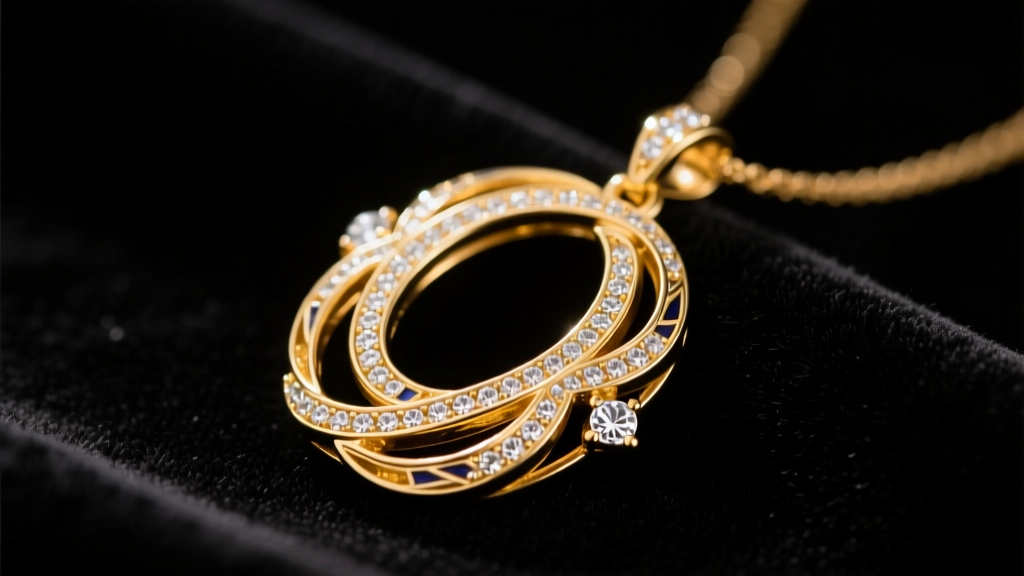
Henri Bendel was an iconic luxury emporium, and though the brand’s physical doors closed in 2019, their fashion jewelry remains highly coveted on the vintage and secondary markets. A vintage Henri Bendel necklace often features intricate gold-tone or silver-tone plating, delicate enamel work, and pavé-set crystals. However, because these are primarily fashion jewelry pieces rather than solid precious metals, they require a highly specific, gentle approach to maintenance. Improper cleaning can strip the plating, cloud the crystals, or dissolve the adhesives holding the piece together. This comprehensive guide will walk you through the exact protocols for cleaning, troubleshooting, and preserving your Henri Bendel necklaces for decades to come.
Understanding Henri Bendel Jewelry Materials
Before applying any cleaning solution, you must understand the metallurgy and construction of vintage Henri Bendel pieces. Most of their necklaces were crafted using a brass or zinc-alloy base metal, which was then electroplated with 14k or 18k gold, or rhodium for silver-tone finishes. The plating thickness typically ranges from 0.5 microns (flash plating) to 2.5 microns on heavier statement pieces.
The gemstones used are predominantly high-quality glass crystals or cubic zirconia, often backed with a delicate silver-foil to enhance refraction. Crucially, these stones are usually set using a jewelry-grade epoxy resin rather than traditional metal prongs. The chain links and jump rings connecting the pendants are generally 18-gauge or 20-gauge wire, which is sturdy but susceptible to bending if snagged. Knowing that you are dealing with a micro-thin layer of precious metal over a reactive base metal, glued over foil-backed glass, dictates every step of the cleaning process.
The Golden Rules of Cleaning Plated Vintage Necklaces
When dealing with plated vintage jewelry, what you don't do is just as important as what you do. According to the Gemological Institute of America (GIA), harsh chemicals and mechanical agitation are the primary enemies of treated and plated jewelry.
- Never use ultrasonic cleaners: Ultrasonic waves create microscopic cavitation bubbles that implode, generating localized heat and shockwaves. This will shatter glass crystals, strip thin gold plating, and liquefy old, brittle epoxy adhesives.
- Avoid commercial silver dips and polishing cloths: Liquid dips contain thiourea and harsh acids that will instantly strip gold plating down to the brass base. Similarly, treated polishing cloths contain embedded micro-abrasives designed to remove tarnish from solid silver; using them on a Henri Bendel necklace will essentially sand off the gold layer.
- Keep away from ammonia and alcohol: These solvents will degrade the epoxy holding the rhinestones in place and can cause dyed enamel accents to fade or crack.
Step-by-Step Cleaning Guide for Henri Bendel Pendants and Chains
To safely remove sebum, cosmetics, and environmental dust without compromising the integrity of the piece, follow this meticulous, conservation-grade cleaning method.
Step 1: Dry Dusting and Inspection
Before introducing any moisture, use a clean, dry makeup brush with ultra-soft synthetic bristles to gently sweep away loose dust from the pavé settings and chain links. Inspect the piece under a magnifying lamp for any loose stones or cracked enamel. If you find a loose stone, stop cleaning and proceed to the restoration section.
Step 2: The Distilled Water Bath
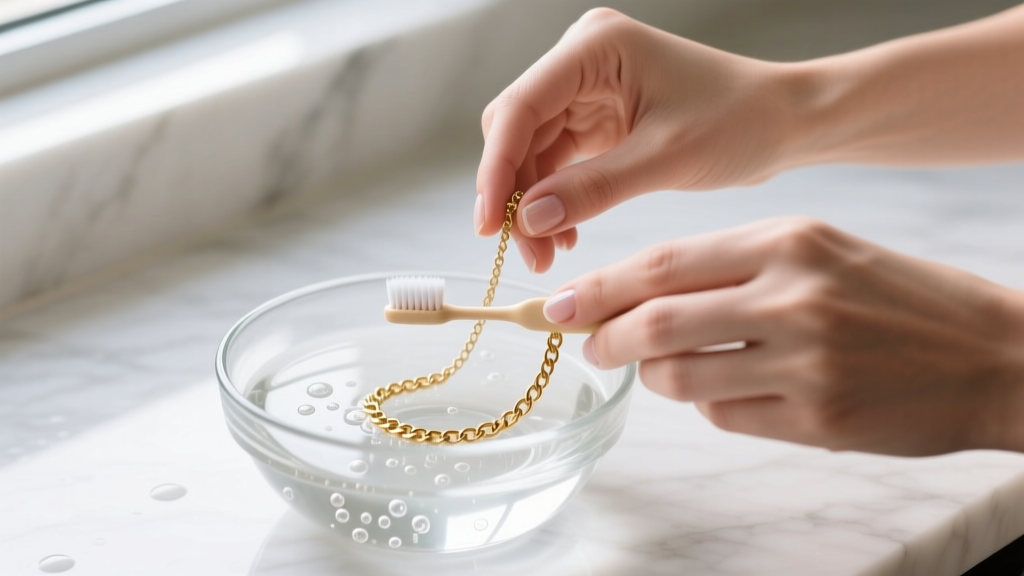
Fill a glass bowl with lukewarm distilled water. Do not use tap water, as the dissolved minerals (calcium and magnesium) can leave stubborn white deposits on the metal and stones. Add two drops of a pH-neutral, dye-free dish soap (such as original Dawn). Swirl gently to create mild suds.
Step 3: Gentle Agitation
Submerge the necklace for no more than 60 seconds. Using an extra-soft baby toothbrush, gently flick the bristles over the chain and the surface of the stones. Do not scrub in circles; use a flicking motion to dislodge dirt from the 18-gauge jump rings and behind the pendant settings. Avoid brushing directly over any enamel inlay, as vintage enamel can be porous and prone to micro-chipping.
Step 4: Rinsing and Controlled Drying
Rinse the necklace briefly under a gentle stream of distilled water. Immediately pat it dry with a lint-free microfiber cloth. To ensure no moisture remains trapped under the foil-backed rhinestones or inside the hollow clasp mechanisms, use a hair dryer on the cool, low-airflow setting to blow out the crevices. Trapped moisture is the leading cause of foil degradation, which makes stones look cloudy and black.
Troubleshooting Common Vintage Necklace Issues
Even with meticulous care, vintage fashion jewelry presents unique challenges. Below is a diagnostic framework for addressing the most common failure modes associated with Henri Bendel and similar legacy brands.
| Issue | Root Cause | Actionable Solution |
|---|---|---|
| Green Skin Discoloration | The gold plating has worn thin, exposing the copper-rich brass base. Sweat and acids react with the copper to create copper chloride. | Wipe the back of the pendant with isopropyl alcohol and apply a thin coat of clear, jewelry-safe nail polish or a specialized polymer barrier like JewelSkin to seal the metal. |
| Cloudy or Black Rhinestones | Moisture has penetrated the setting, oxidizing the silver-foil backing behind the glass crystal. | Unfortunately, this is irreversible without professional reset. Prevent it by strictly controlling humidity and never swimming with the piece. |
| Flaking or Cracked Enamel | Thermal shock (sudden temperature changes) or physical impact causing the glass-based enamel to separate from the metal base. | Do not attempt to glue flakes. Store the piece flat to prevent further loss and consult a lapidary for cold-enamel resin filling. |
| Stiff or Rusty Clasp | Water trapped inside the spring mechanism of a gold-plated lobster claw or spring ring causes the internal steel spring to rust. | Apply a microscopic drop of synthetic watch oil to the clasp hinge using a needle oiler. Work the clasp open and closed to distribute the lubricant. |
Proper Storage to Prevent Tarnish and Decay
How you store your Henri Bendel necklace when it is not being worn dictates its lifespan. Tarnish is a chemical reaction between the base metals and sulfur compounds in the air. To halt this process, you must control the micro-climate of your storage environment.
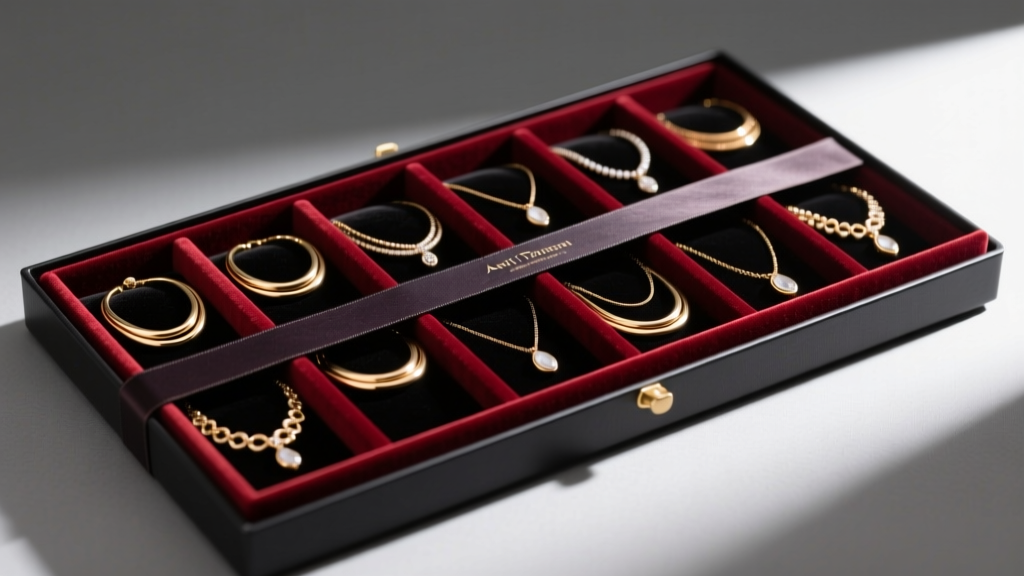
Always store your necklaces in a cool, dark place with low humidity. Avoid hanging heavy statement necklaces, as the weight of the pendant can slowly stretch the 20-gauge chain links over time, leading to structural failure. Instead, lay them flat in a jewelry box with individual velvet dividers to prevent the chains from tangling and scratching the plating.
Crucially, never store vintage jewelry in standard PVC (polyvinyl chloride) plastic bags. As PVC degrades, it emits sulfur dioxide gas, which rapidly accelerates tarnishing. If you must use plastic, opt for archival-grade polyethylene or polypropylene ziplock bags. For maximum protection, place a 3M Anti-Tarnish strip inside the storage compartment; these strips absorb airborne sulfur and hydrogen sulfide, protecting the gold and rhodium plating for up to six months before needing replacement.
When to Seek Professional Restoration
While routine cleaning can be done at home, certain types of damage require professional intervention. If the gold plating has completely worn off the high-friction areas of the pendant or clasp, the piece can be professionally re-plated. A reputable jewelry electroplater can strip the remaining finish, polish the brass base, and apply a fresh 2.5-micron layer of 18k gold or rhodium. Expect to pay between $45 and $85 for this service, depending on the surface area of the necklace.
If a rhinestone has fallen out, resist the urge to use household cyanoacrylate (Super Glue). Cyanoacrylate outgasses as it cures, leaving a permanent, cloudy white fog on the surface of glass crystals. Instead, use a precision adhesive specifically formulated for jewelry, such as GS Hypo Cement. This adhesive dries clear, remains slightly flexible to absorb impacts, and features a needle-like applicator tip perfect for placing a micro-drop into the tiny pavé settings of a Henri Bendel pendant.
"Preserving vintage fashion jewelry is less about aggressive polishing and more about environmental control and gentle, pH-neutral hygiene. Treat the plating as a fragile skin, and the piece will outlast its era."
By understanding the specific material composition of your Henri Bendel necklace and adhering to these conservation-grade cleaning and storage protocols, you ensure that these beautiful, historically significant pieces remain vibrant and wearable for the next generation of collectors.


