Expert Care Guide for Your Wedding Ring and Necklace Set
Discover expert cleaning, storage, and maintenance tips to keep your wedding ring and necklace set sparkling and damage-free for decades.
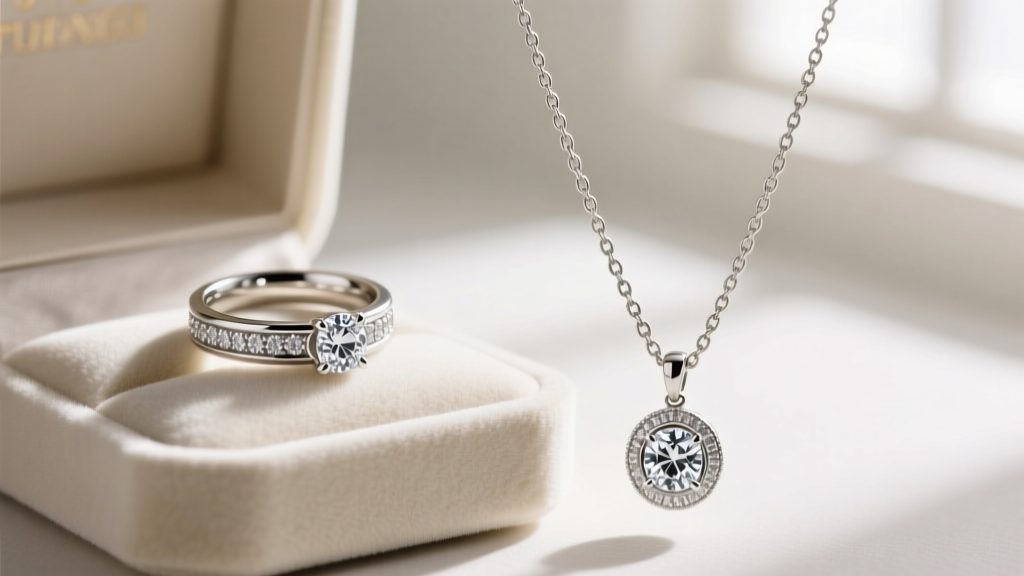
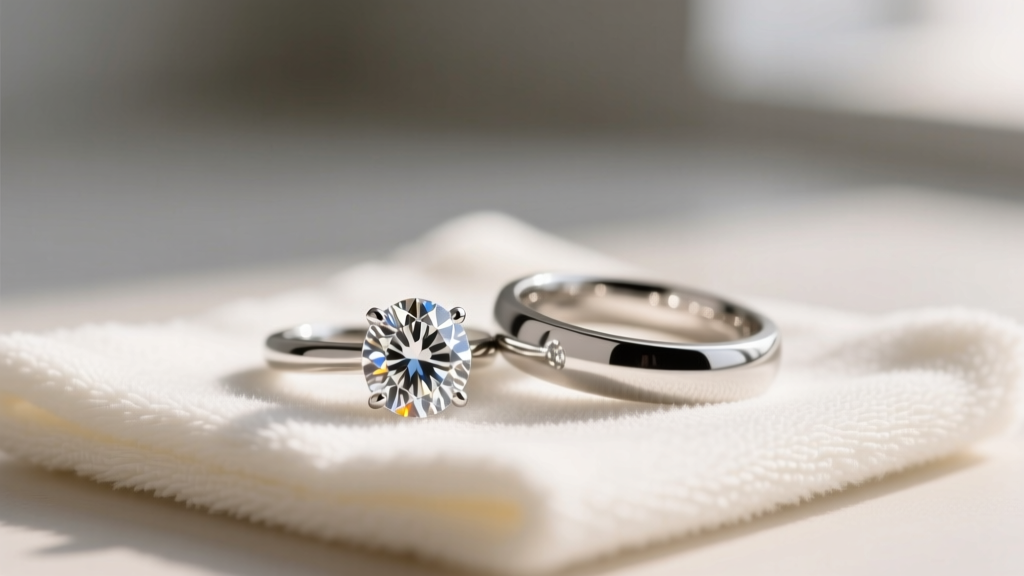
Your bridal jewelry represents one of the most significant emotional and financial investments you will make in your lifetime. However, many owners inadvertently degrade the brilliance and structural integrity of their pieces through improper maintenance. Caring for a matched wedding ring and necklace set requires more than a quick wipe with a cloth; it demands an understanding of metallurgy, gemstone porosity, and mechanical stress points. Whether you are wearing a classic diamond solitaire pendant with a platinum band or a mixed-metal bridal set featuring colored gemstones, this comprehensive guide will help you preserve your jewelry's original luster and structural security.
The Hidden Dangers of Co-Storing Bridal Jewelry
The most common mistake jewelry owners make is tossing their wedding ring and necklace into the same compartment of a velvet-lined jewelry box. This seemingly harmless habit leads to catastrophic micro-scratching due to the Mohs Hardness Scale. A diamond, ranking at a 10 on the scale, is hard enough to scratch not only other gemstones but also precious metals. Gold and platinum rank much lower (gold is roughly 2.5 to 3, while platinum is around 4 to 4.5). If a diamond ring shifts against a delicate gold chain necklace overnight, the diamond's facets will act like sandpaper, gouging the metal links and weakening the chain's structural integrity.
To prevent this, implement a strict separation protocol:
- Individual Pouches: Store the necklace and ring in separate, lint-free microfiber or untreated flannel pouches. Avoid polyethylene plastic bags, as they can trap moisture and emit sulfur gases that accelerate silver and white gold tarnishing.
- The Straw Trick for Chains: To prevent your necklace chain from tangling or knotting—which weakens the soldered links—unclasp the chain, thread one end through a plastic drinking straw, and re-clasp it. This keeps the chain rigid and tangle-free during storage or travel.
- Anti-Tarnish Strips: Place 3M Pacific Silvercloth or activated charcoal anti-tarnish strips inside your storage drawers. These strips absorb ambient hydrogen sulfide and sulfur dioxide, drastically slowing the oxidation process for sterling silver and lower-karat gold alloys.
Material-Specific Cleaning Matrix
Because a wedding ring and necklace set often features different metal alloys or gemstone combinations, a one-size-fits-all cleaning approach can cause irreversible damage. Refer to the matrix below to determine the safest cleaning protocol for your specific set.
| Material Combination | Safe Cleaning Agent | Strictly Avoid | Drying Method |
|---|---|---|---|
| Platinum Ring + Diamond Pendant | Mild dish soap + warm water | Chlorine bleach (causes stress corrosion) | Lint-free microfiber cloth |
| 18k Yellow Gold + Pearl Necklace | Damp, soft cotton cloth only | Ammonia, ultrasonic cleaners, brushes | Air dry on a soft towel |
| 14k White Gold + Sapphire Set | Commercial non-abrasive jewelry dip | Harsh toothpaste or baking soda pastes | Low-heat hairdryer or air dry |
| Rose Gold + Emerald Pendant | Lukewarm water + baby shampoo | Ultrasonic cleaners, steamers, alcohol | Pat gently with cotton swab |
The Ultimate Manual Cleaning Protocol
For standard diamond and precious metal sets, manual cleaning remains the gold standard for safe, effective maintenance. According to the Gemological Institute of America (GIA), household dust and skin oils can severely diminish a diamond's light return, making it appear cloudy and dull. Follow this precise, step-by-step degreasing protocol:
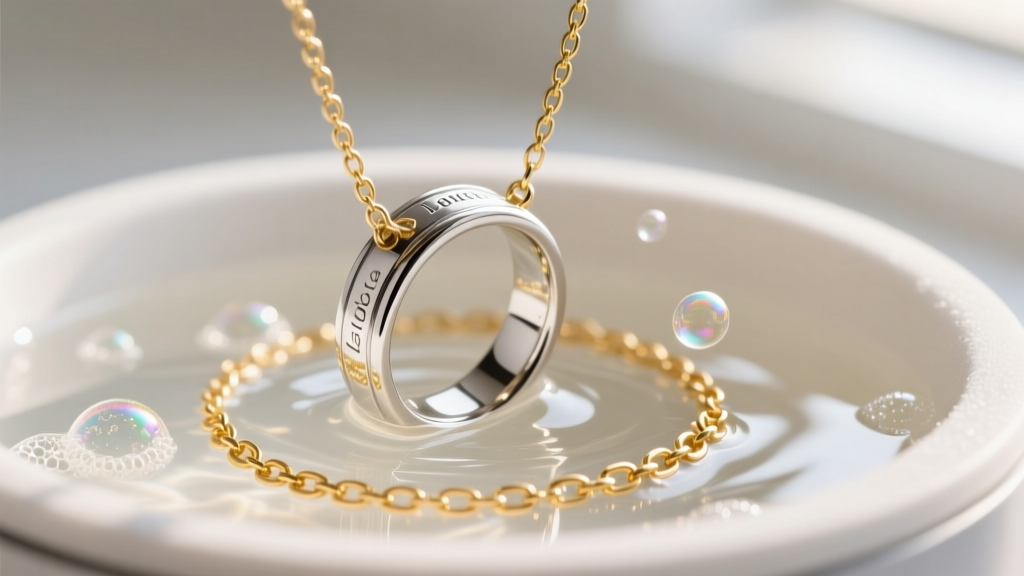
- Prepare the Solution: Fill a small glass bowl with warm (not hot) water. Add three to four drops of a high-quality degreasing dish soap, such as Dawn. Avoid soaps with heavy moisturizers or opaque dyes, as they leave a filmy residue on gemstones.
- Soak: Submerge your wedding ring and necklace in the solution for 15 to 20 minutes. This allows the surfactants to break down the sebum and cosmetic buildup trapped beneath the ring's gallery and the necklace's bail.
- Agitate Gently: Using an extra-soft baby toothbrush (never a medium or hard brush, which will scratch polished gold), gently sweep the bristles over the jewelry. Pay special attention to the back of the diamond pendant and the underside of the ring's prongs, where lotion accumulates.
- Rinse and Dry: Rinse the pieces under a gentle stream of lukewarm water. Crucial: Always plug the sink drain or use a mesh strainer bowl before rinsing. Pat dry with a clean, untreated microfiber cloth, avoiding paper towels, which contain wood fibers that can inflict micro-scratches on polished metals.
When to Use (and Avoid) Ultrasonic Cleaners
Ultrasonic cleaners use high-frequency sound waves (typically around 40 kHz) to create microscopic bubbles in a liquid solution. When these bubbles collapse against the jewelry—a process known as acoustic cavitation—they blast away microscopic debris. While highly effective for cleaning a diamond wedding ring and a sturdy platinum chain, ultrasonic cleaners are incredibly dangerous for certain gemstones and metal treatments.
Never place your necklace or ring in an ultrasonic cleaner if the set includes:
- Porous or Fractured Gems: Pearls, emeralds, opals, turquoise, and lapis lazuli will shatter or lose their luster due to the intense vibrations and heat.
- Fracture-Filled Diamonds: If your diamond has been clarity-enhanced with glass or resin fillers, the ultrasonic waves can dislodge the filler, leaving visible internal cracks.
- Rhodium-Plated White Gold: Prolonged ultrasonic exposure can accelerate the wear of the rhodium plating on white gold necklaces and rings, exposing the yellowish underlying alloy.
Clasp and Prong Maintenance Framework
Cleaning only addresses the aesthetic half of jewelry maintenance; structural security is equally vital. The mechanical components of your wedding ring and necklace—the ring's prongs and the necklace's lobster clasp—are subject to constant friction and tension.
The Paper Test for Ring Prongs
Over time, prongs can lift or wear thin, risking the loss of your center stone. Perform the 'paper test' monthly: gently drag the crown of your ring across a piece of tissue paper. If the prongs snag or tear the paper, they are lifted and require immediate professional retipping. According to Jewelers of America, prongs should be professionally inspected and polished every six months to ensure the gemstone remains securely seated.
Lobster Clasp Troubleshooting
The lobster clasp on your necklace contains a tiny internal spring that can become clogged with skin cells, lotion, or debris, causing it to stick or fail to close completely. If your clasp feels stiff, do not use WD-40 or chemical lubricants, which will attract more dirt and degrade the metal. Instead, use a wooden toothpick to gently clear debris from the clasp's hinge, followed by a single drop of pure mineral oil applied with a needle. Work the trigger back and forth to distribute the oil, then wipe away any excess.
Professional Servicing Schedule
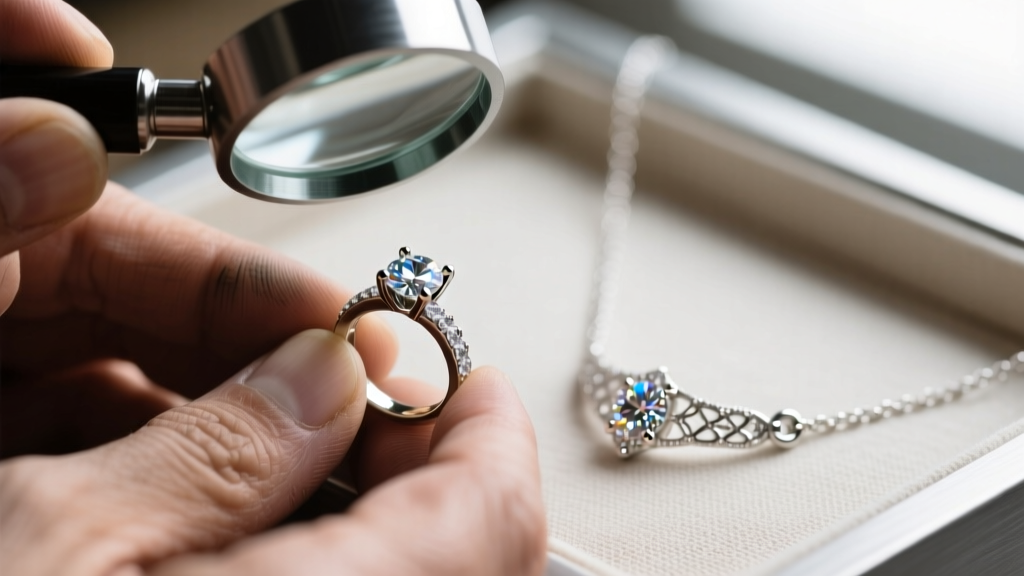
While diligent at-home care is essential, it cannot replace professional servicing. Establish a bi-annual appointment with a certified bench jeweler. During this visit, the jeweler will use a 10x triplet loupe to inspect the necklace's soldered jump rings and the ring's shank for stress fractures. They will also perform a professional steam clean, which reaches temperatures and pressures impossible to replicate at home, restoring the factory-polished mirror finish to your precious metals. By combining mindful daily storage, precise chemical cleaning, and routine professional audits, your wedding ring and necklace set will remain a flawless, sparkling heirloom for generations to come.


