The Flat Bead Necklace: 2026 Minimalist Trend Guide
Discover why the flat bead necklace is defining 2026's quiet luxury trend. Explore material grades, layering frameworks, and pricing matrices.

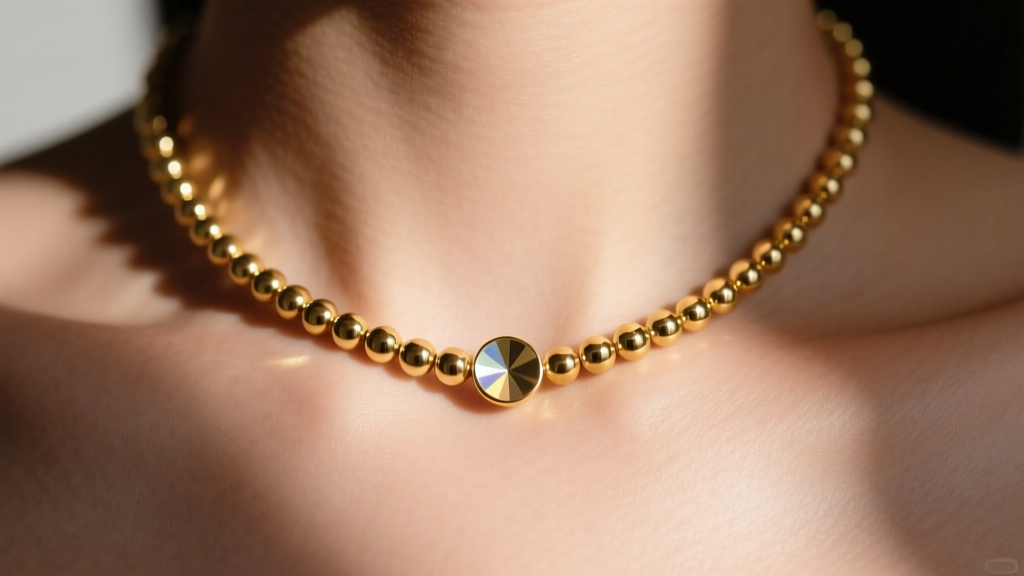
The evolution of minimalist jewelry has officially pivoted from delicate, barely-there chains to structural, intentional geometry. At the forefront of this 2026 movement is the flat bead necklace. Moving away from the traditional spherical beads that dominated the early 2020s, contemporary designers are embracing lenticular, cylindrical, and bi-conical disc shapes. These flattened silhouettes offer a sophisticated "strobe" effect against the collarbone, catching light across a broader surface area while maintaining the understated ethos of quiet luxury.
As architectural influences merge with wearable art, understanding the nuances of this trend requires a deep dive into material grades, precise dimensional ratios, and strategic layering techniques. This comprehensive analysis breaks down everything you need to know about selecting, styling, and investing in a flat bead necklace this year.
The Geometry of Quiet Luxury: Anatomy of a Flat Bead
Not all flat beads are created equal. The defining characteristic of a high-quality flat bead necklace lies in its edge finishing and dimensional ratio. In 2026, the industry standard for premium demi-fine and solid gold pieces features a 10mm diameter with a 2.5mm to 3mm thickness. This specific 3:1 ratio ensures the bead lays flush against the skin without flipping, a common issue with thinner, poorly weighted discs.
Furthermore, the edge profile is critical. Mass-produced flat beads often feature sharp, 90-degree stamped edges that can catch on delicate fabrics or irritate the skin. Luxury iterations utilize chamfered or micro-beveled edges. This subtle rounding softens the architectural harshness, allowing the metal to glide smoothly against the décolletage while preserving the crisp, modern silhouette from a visual distance.
2026 Trend Forecast: The Shift to Architectural Minimalism
According to recent analyses of the global luxury market, consumer preferences are shifting heavily toward "permanent" feeling pieces that convey status through material integrity rather than overt branding. The flat bead necklace perfectly encapsulates this Bain & Company luxury market observation. The visual weight of a flat disc necklace mimics the bold presence of a chunky chain, but its low profile allows it to be worn seamlessly under tailored blazers, silk blouses, and cashmere knits.
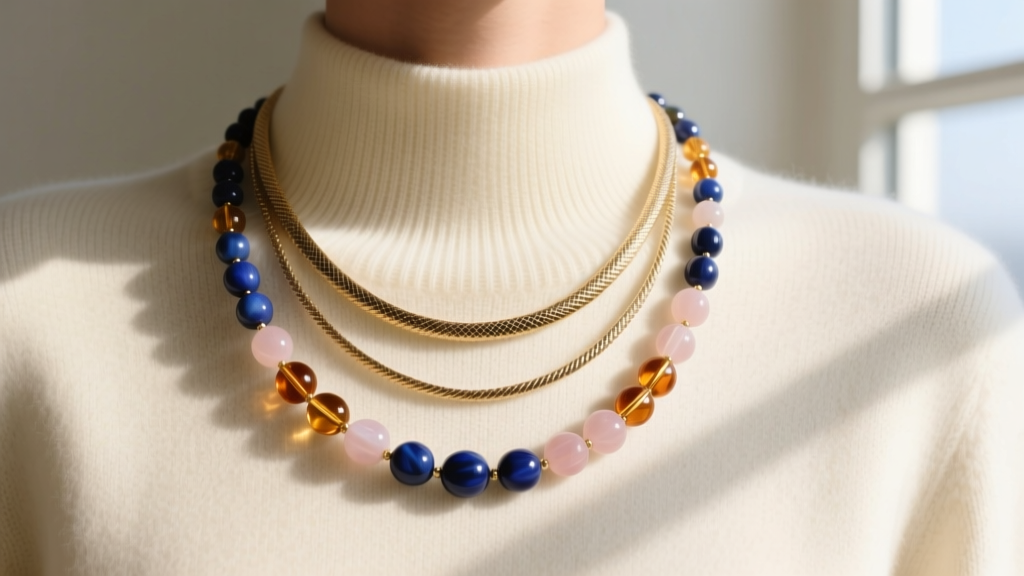
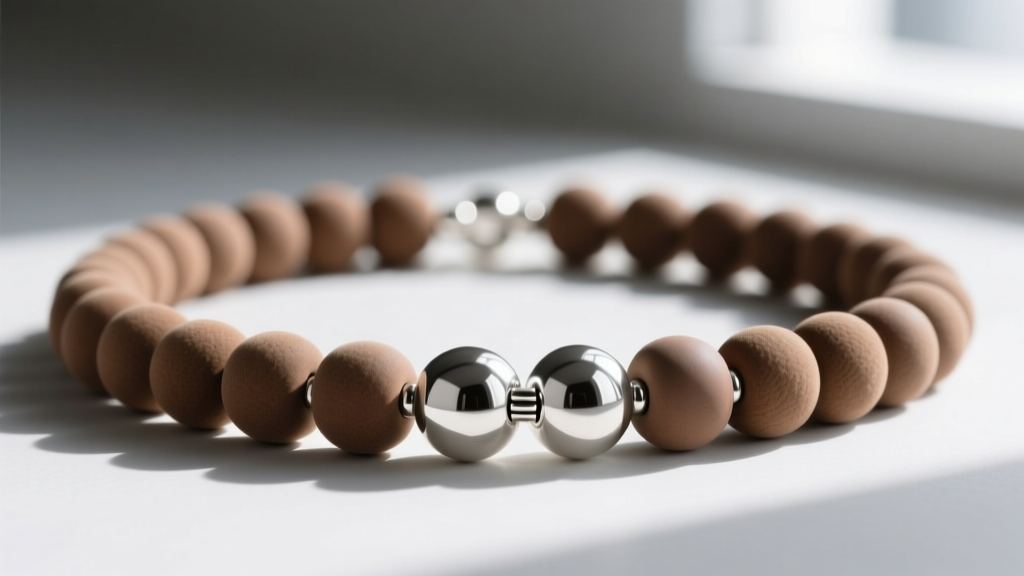
Designers are also experimenting with mixed-media flat beads. We are seeing a surge in matte-finished ceramic discs interspersed with high-polish 18k gold spacers. This juxtaposition of textures—light-absorbing matte against light-reflecting polish—creates a kinetic visual interest that static spherical beads simply cannot achieve.
Material Matrix & Pricing Framework
When investing in a flat bead necklace, the high surface-area-to-volume ratio of the beads means that material degradation (like tarnishing or plating loss) is highly visible. Below is a definitive matrix to help you evaluate pricing and material longevity.
| Material Grade | Composition & Finish | Edge Durability | 2026 Price Range (16") |
|---|---|---|---|
| 925 Sterling Silver | 92.5% Silver, Rhodium Plated | High (Rhodium prevents edge tarnish) | $65 - $140 |
| Heavy Gold Vermeil | 925 Silver Base, 2.5µm+ 14k Gold | Medium (Edge friction wears plating) | $120 - $250 |
| 14k Solid Gold | 58.5% Gold, Alloyed for Hardness | Very High (Will not wear away) | $600 - $1,200 |
| 18k Solid Gold | 75% Gold, Soother, Richer Hue | High (Slightly softer, prone to micro-scratches) | $1,400 - $2,800+ |
The Verdict on Gold Vermeil for Flat Geometries
While gold vermeil is an excellent choice for pendants and hoop earrings, it presents a unique failure mode for flat bead necklaces. Because flat discs rest directly against the skin and collarbone, the constant micro-friction acts like a gentle sandpaper on the edges of the beads. Over 12 to 18 months of daily wear, the gold plating on the edges of vermeil flat beads will inevitably wear down to the silver core. If you wear your necklace daily, bypass vermeil and invest directly in 14k solid gold, which the GIA notes offers the optimal balance of purity and structural hardness for jewelry that experiences high skin contact.
Precision Layering: The 3-Point Anchor System
Layering flat bead necklaces requires a different methodology than layering standard cable chains. Because the beads carry more localized weight, they tend to pull the center of the chain downward, creating a deep "V" shape rather than a graceful curve. To counteract this, utilize the 3-Point Anchor System:
- The Base Layer (14" - 15"): Use a rigid flat bead choker. The shorter length ensures the beads sit high on the clavicle, acting as a structural anchor that prevents longer chains from tangling.
- The Mid Layer (17" - 18"): Introduce a contrasting texture. Pair a 10mm matte ceramic flat bead necklace with a 1.5mm diamond-cut rope chain. The rope chain's light-refracting facets balance the matte absorption of the ceramic.
- The Anchor Pendant (22"+): Finish with a long, single-strand chain featuring a solitary, oversized flat bead (15mm+) acting as a minimalist pendant. This draws the eye vertically, elongating the torso.
Neckline Calibration Guide
The architectural nature of a flat bead necklace demands precise pairing with garment necklines. Use this framework to ensure your jewelry complements rather than competes with your wardrobe:
- The Crew Neck: Opt for a 16-inch princess length. The flat beads will rest exactly on the fabric seam, creating a deliberate, framed look. Avoid shorter chokers, which will visually crowd the collar.
- The Deep V-Neck: A 20-inch matinee length is mandatory. The flat beads should trace the inside edge of the V-neck, mirroring the garment's geometry and elongating the neck.
- The Halter Top: Skip the necklace entirely, or opt for a tightly fitted 14-inch choker that sits entirely above the halter's fabric lines to avoid a cluttered décolletage.
- The Silk Button-Down (Unbuttoned): Layer a 15-inch silver flat bead choker with an 18-inch delicate chain. The metallic flat beads will catch the light against the matte silk, providing a sharp, tailored contrast.
Maintenance: Preserving the Chamfered Edge
The broad, flat surfaces of these beads are essentially mirrors; they will showcase fingerprints, lotion residue, and micro-scratches more readily than textured or spherical beads. To maintain the optical clarity of your flat bead necklace, avoid ultrasonic cleaners, especially if your piece features mixed media like ceramic or enamel, as the high-frequency vibrations can cause microscopic fracturing along the chamfered edges.
Instead, clean your necklace weekly using a lint-free microfiber cloth dampened with a few drops of mild, phosphate-free dish soap and warm water. Wipe each flat bead individually, following the circular grain of the metal. For solid gold pieces, a final buff with a treated jeweler's polishing cloth will restore the high-polish finish of the disc faces, ensuring your flat bead necklace remains a cornerstone of your 2026 jewelry rotation.


