Beyond the Necklace Emoji: Translating Digital Pendants to Real Gold
Discover how bench jewelers translate the necklace emoji into physical CAD designs, covering metal shrinkage, gem mapping, and chain gauges.

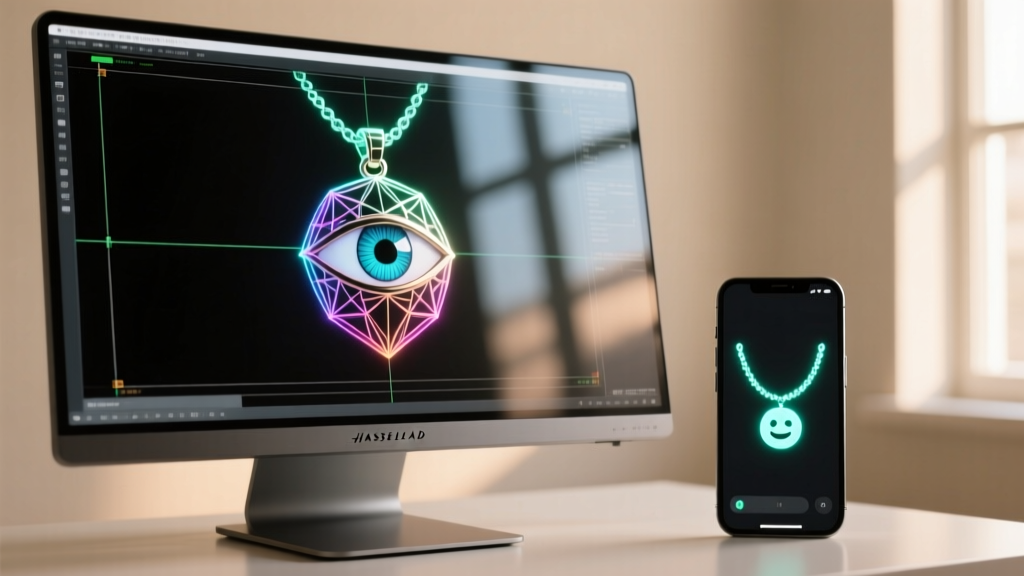
In the modern jewelry atelier, client consultations often begin not with a hand-drawn sketch, but with a text message containing a single Unicode character. The necklace emoji—whether it is the beaded 📿, the nazar amulet 🧿, or the brilliant diamond 💎—has become a universal shorthand for custom jewelry requests. But as any master bench jeweler in 2026 will tell you, bridging the gap between a 24x24 pixel digital icon and a structurally sound, heirloom-quality physical pendant requires rigorous technical translation.
When a client texts a necklace emoji, they are communicating an aesthetic feeling, not a mechanical blueprint. It is the jeweler's responsibility to decode these digital symbols into exact CAD tolerances, alloy shrinkage rates, and gemstone mapping. This deep dive explores the technical workflow of transforming digital emoji concepts into tangible, high-end necklaces.
Decoding the Necklace Emoji: What Clients Actually Mean
The Unicode Consortium does not currently have a single, dedicated 'pendant necklace' emoji, which forces clients to use adjacent symbols. Understanding the technical implications of these substitutes is the first step in the CAD design process.
- The Nazar Amulet (🧿): Clients sending this emoji typically want an evil eye pendant. Technically, this requires a multi-layered cabochon setup or a vitreous enamel recess. The jeweler must calculate the focal depth to ensure the 'pupil' of the eye remains visible from a 45-degree angle.
- The Prayer Beads (📿): Often used to request station necklaces or beaded chain designs. This translates to engineering precise wire-wrapping loops or laser-welded bezel cups spaced at exact millimeter intervals along a cable chain.
- The Gem Stone (💎): The universal sign for a solitaire diamond pendant. This requires a focus on light return, meaning the CAD designer must prioritize a minimal gallery wire and an open basket to maximize the stone's brilliance.
Translating Pixels to CAD Tolerances and 3D Printing
Once the emoji's intent is decoded, the design moves into Computer-Aided Design (CAD) software like MatrixGold. A digital icon has no physical mass, but a gold pendant must obey the laws of metallurgy and gravity. In 2026, AI-assisted CAD generators can instantly draft a 3D model from an emoji prompt, but manual technical verification remains critical.
"A common failure mode when designing emoji-inspired pendants is underestimating the Z-axis depth. A flat, 2D emoji translated directly into a 1mm thick 3D model will warp during the casting cooling phase. We mandate a minimum 1.8mm Z-depth for any pendant exceeding 15mm in diameter to prevent thermal distortion."
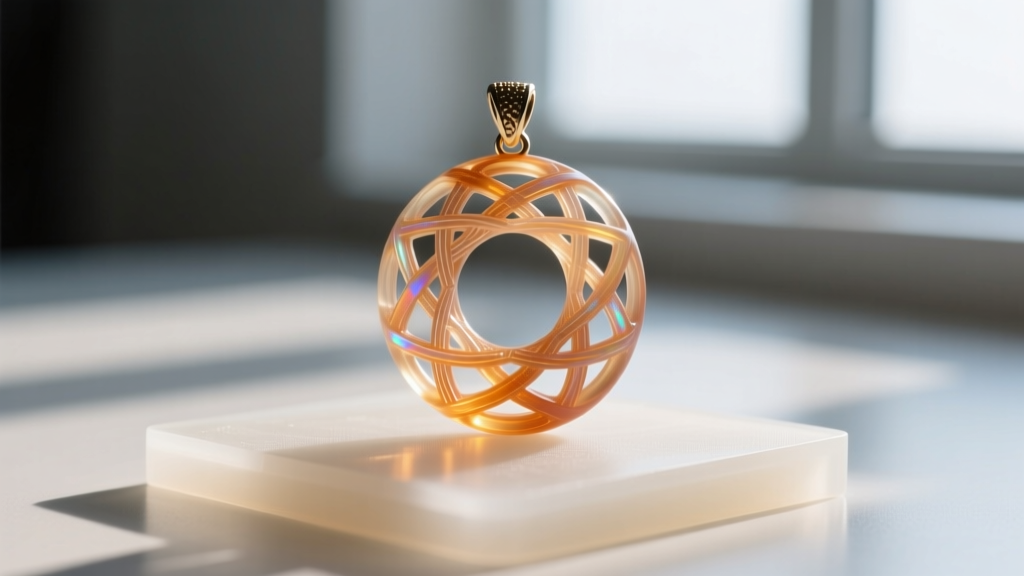
After the CAD model is finalized, it is exported to an STL file and sent to a high-resolution DLP 3D printer using castable resins like BlueCast X-One. The technical tolerances at this stage are unforgiving:
- Minimum Wall Thickness: 0.30mm for structural integrity; 0.25mm for delicate filigree elements.
- Prong Dimensions: A prong base must be at least 0.70mm, tapering to no less than 0.45mm at the tip to survive the burnout process without melting away.
- Support Structures: Resin models require micro-supports to prevent warping on the build plate. These must be placed on non-critical surfaces to avoid scarring the final gold cast.
Material Mapping: Gemstones and Alloys for Digital Designs
Translating the vibrant, solid colors of a necklace emoji into real-world materials requires a deep understanding of gemology and metallurgy. The GIA Gem Encyclopedia provides the foundational data for mapping digital hues to physical stones, but bench jewelers must also account for setting mechanics.
| Emoji Concept | Physical Material Translation | Technical Specification & Tolerance |
|---|---|---|
| 🧿 (Blue Center) | Synthetic Spinel or Lapis Lazuli Cabochon | Bezel wall thickness: 0.25mm. Cabochon dome height: 1.5mm minimum for proper light refraction. |
| 📿 (Red Beads) | Natural Garnet or Coral Stations | Drill hole diameter: 0.80mm. Chain wire gauge: 0.65mm to allow fluid articulation between beads. |
| 💎 (Diamond Solitaire) | Earth-Mined or CVD Lab-Grown Diamond | Table percentage: 54-57%. Depth percentage: 59-62.5%. Gallery clearance: 1.2mm below culet. |
For designs requiring solid blocks of color (like the blue and white of the 🧿 emoji), vitreous enamel is often superior to gemstones. Firing glass enamel into a gold recess requires a kiln temperature of 1450°F (788°C). The CAD model must include a precise 0.45mm recess with a 90-degree interior wall to prevent the molten glass from creeping over the bezel edge during firing.
Chain Gauge and Clasp Engineering
A pendant is only as secure as the chain it hangs from. When a client requests a heavy, emoji-inspired medallion, pairing it with a delicate chain is a recipe for disaster. According to technical guidelines from Rio Grande Jewelry Making Articles, the chain's tensile strength must be rated for at least three times the static weight of the pendant to account for dynamic shock (e.g., the pendant swinging and snapping taut).
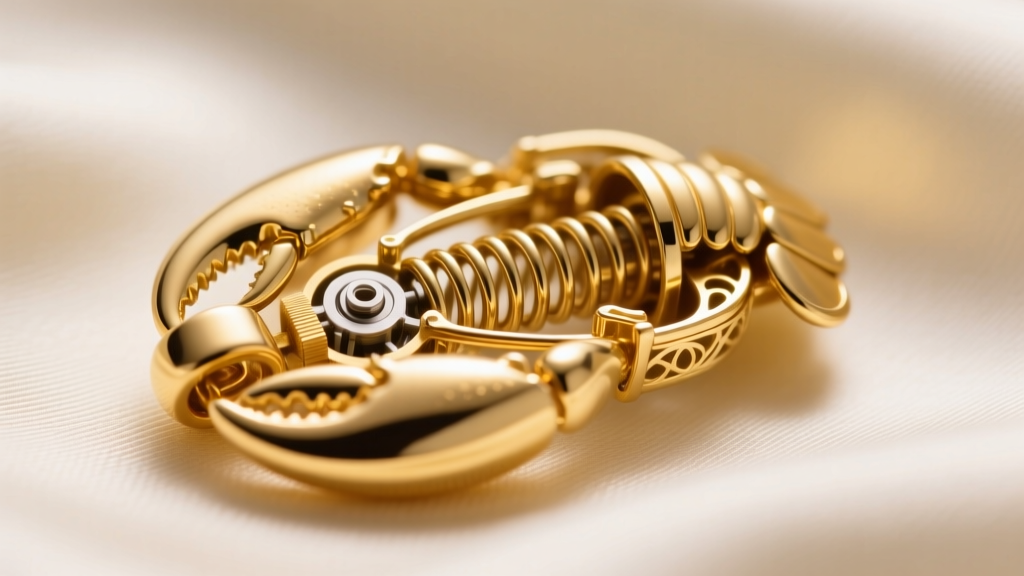
For a standard 8-gram gold pendant, a 1.5mm rope chain or a 1.8mm box chain is the technical minimum. However, the true point of failure is almost always the clasp. Spring-ring clasps, while cheap, suffer from high internal spring fatigue. For custom emoji-inspired pieces, we exclusively use forged lobster clasps. A high-quality 12mm lobster clasp features an internal stainless steel spring and a precision-machined trigger that can withstand over 15 lbs of tensile force before deformation.
The 2026 Casting Workflow: Compensating for Shrinkage
The final hurdle in bringing a necklace emoji to life is the lost-wax (or lost-resin) casting process. Metals shrink as they transition from a molten state to a solid state. If a CAD designer models a pendant at exactly 20.0mm, the final gold piece will emerge from the investment flask significantly smaller.
Master casters apply precise scaling factors in the CAD software before printing the resin model:
- 18k Yellow Gold: Scales up by 1.25% to 1.30%.
- 14k White Gold: Scales up by 1.35% (due to higher nickel and zinc content).
- Platinum (950 Pt): Scales up by 1.50% to 1.60%, requiring a specialized phosphate-bonded investment and a much higher melt temperature of 3,215°F (1,768°C).
By applying these exact metallurgical corrections, the physical pendant perfectly matches the digital proportions the client originally envisioned when they first typed out that simple necklace emoji.
Conclusion: The Art of Technical Translation
The necklace emoji is a marvel of modern digital communication, but it lacks the weight, brilliance, and mechanical reality of fine jewelry. As we move through 2026, the most successful custom jewelers are those who act as expert translators—taking the vague, pixelated desires of their clients and engineering them into precise, durable, and breathtaking physical realities. The next time you receive a 🧿 or 💎 in your inbox, remember the complex web of CAD tolerances, alloy shrinkage rates, and tensile engineering required to bring that tiny digital icon to life around your neck.


