Buying Gold Necklaces: Karat Guide & Cleaning a Gold Necklace
Discover what to look for when buying gold necklaces. Learn how alloy compositions affect durability and the safest methods for cleaning a gold necklace.

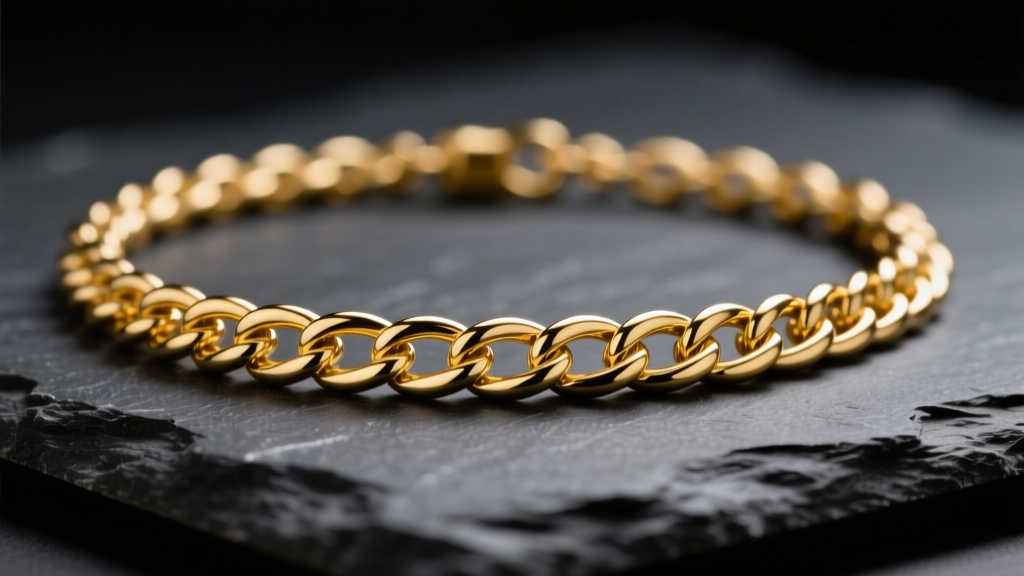
The Metallurgy of Gold: Why Karats Dictate Maintenance
When investing in fine jewelry, the upfront cost is only one part of the equation. The long-term lifecycle, structural integrity, and maintenance requirements of your piece are heavily dictated by its metallurgical composition. Pure gold is virtually indestructible when it comes to tarnish, but it is far too soft for daily wear. To create durable necklaces, jewelers alloy pure gold with metals like copper, silver, zinc, and nickel. However, these very alloys are what introduce the need for maintenance. Understanding this metallurgical trade-off is the first step in buying a piece that aligns with your lifestyle, and knowing the science behind it makes cleaning a gold necklace far less intimidating.
24K vs. 18K vs. 14K: The Alloy Breakdown
The karat system measures the purity of gold on a scale of 24. A 24K necklace is 99.9% pure gold. While it will never tarnish or react with your skin's chemistry, a 24K chain will easily stretch, kink, and lose its structural integrity if worn daily. Therefore, most buyers opt for 18K or 14K gold. According to the Gemological Institute of America (GIA), 18K gold contains 75% pure gold and 25% alloy, offering a rich, warm color with moderate durability. 14K gold contains 58.3% pure gold and 41.7% alloy, making it the industry standard for durable, everyday chains. However, that higher alloy content in 14K and 10K gold means a higher susceptibility to oxidation and tarnish, directly impacting how often you will be cleaning a gold necklace.
| Karat | Gold % | Common Alloys | Tarnish Risk | Best For |
|---|---|---|---|---|
| 24K | 99.9% | None | Zero | Investment pieces, occasional wear |
| 18K | 75.0% | Copper, Silver, Palladium | Low | High-end pendants, luxury chains |
| 14K | 58.3% | Copper, Zinc, Nickel | Moderate | Everyday wear, durable cable chains |
| 10K | 41.7% | Copper, Zinc, Silver | High | Budget-friendly, high-impact styles |
Buying for Low Maintenance: What to Look For on the Clasp and Chain
Beyond the karat stamp, the physical architecture of the chain plays a massive role in how much dirt, lotion, and dead skin cells it will trap. When buying a gold necklace for low-maintenance wear, the chain style is just as critical as the metal purity.
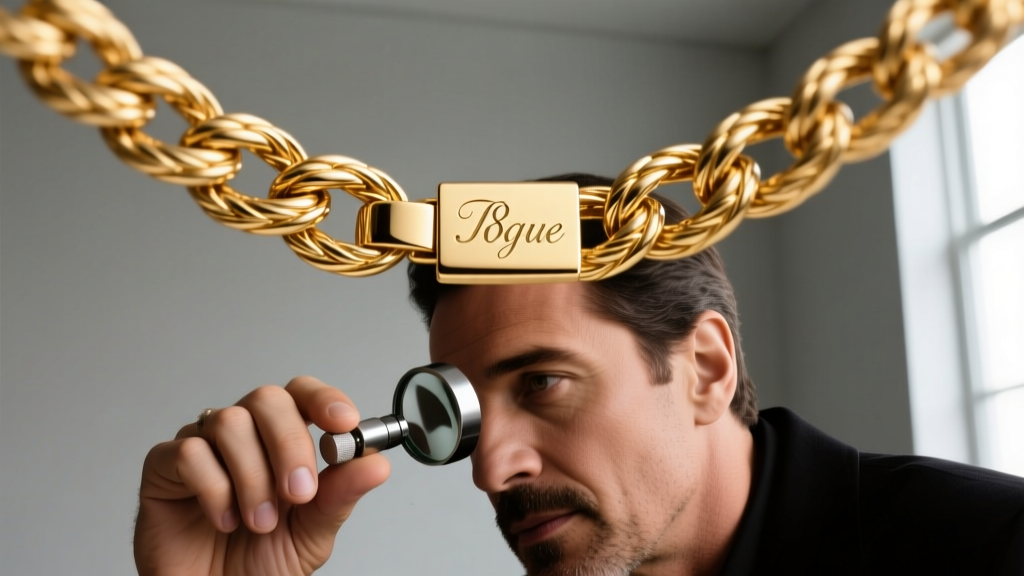
Chain Styles That Trap Dirt (And How to Avoid Them)
- Rope Chains: These feature twisted, interlocking links that mimic the look of a woven rope. While visually striking and excellent for reflecting light, the deep crevices between the twists are notorious for trapping cosmetic powders, body oils, and soap scum. Cleaning a gold necklace with a rope architecture requires significantly more agitation and time.
- Box Chains: Constructed from square, interlocking links, box chains are incredibly strong and popular for holding heavy pendants. However, the flat, interior surfaces of the square links can accumulate a sticky film from lotions and sweat, requiring regular wiping to maintain their luster.
- Cable and Curb Chains: These are the champions of low maintenance. Cable chains feature uniform oval links, while curb chains have flattened, interlocking links that lay flush against the skin. Their open, simple geometries allow for easy wiping with a microfiber cloth and make soaking and brushing highly effective.
The Hidden Danger: Stress Corrosion Cracking
One of the most critical factors to consider when buying and wearing gold alloys is their reaction to chlorine. The Federal Trade Commission (FTC) outlines strict guidelines for gold marking, but consumer education on chemical vulnerabilities is often lacking. When 14K or 18K gold is exposed to chlorine (found in swimming pools, hot tubs, and household bleach), the chemical attacks the copper and silver grain boundaries within the alloy. This causes 'stress corrosion cracking,' a phenomenon where the metal becomes brittle and can snap without warning. If you plan to wear your necklace in the water frequently, you must remove it before entering chlorinated environments, or opt for a platinum or titanium chain instead.
The Reality of Cleaning a Gold Necklace: Methods Ranked
Eventually, environmental pollutants, natural skin acidity (which typically ranges from a pH of 4.5 to 6.2), and cosmetic products will dull your jewelry's finish. When it comes to cleaning a gold necklace, not all methods are created equal. Many commercial 'jewelry dips' are formulated primarily for silver and contain harsh thiourea-based chemicals that can permanently strip the finish from gold alloys or damage porous gemstones.
Expert Warning on Ultrasonic Cleaners: While ultrasonic cleaners (typically operating at 40kHz) are excellent for dislodging microscopic debris from plain gold chains via cavitation, they are highly destructive to porous gemstones like opals, emeralds, and turquoise. Furthermore, the high-frequency vibrations can easily shake loose pave diamonds if the chain or pendant features worn prongs.
Step-by-Step: The Safest Home Cleaning Protocol
For 95% of gold necklaces, a simple, pH-neutral chemical bath combined with gentle mechanical agitation is the safest and most effective route. Avoid antibacterial soaps or heavily fragranced body washes, as they leave behind a cloudy, insoluble film.
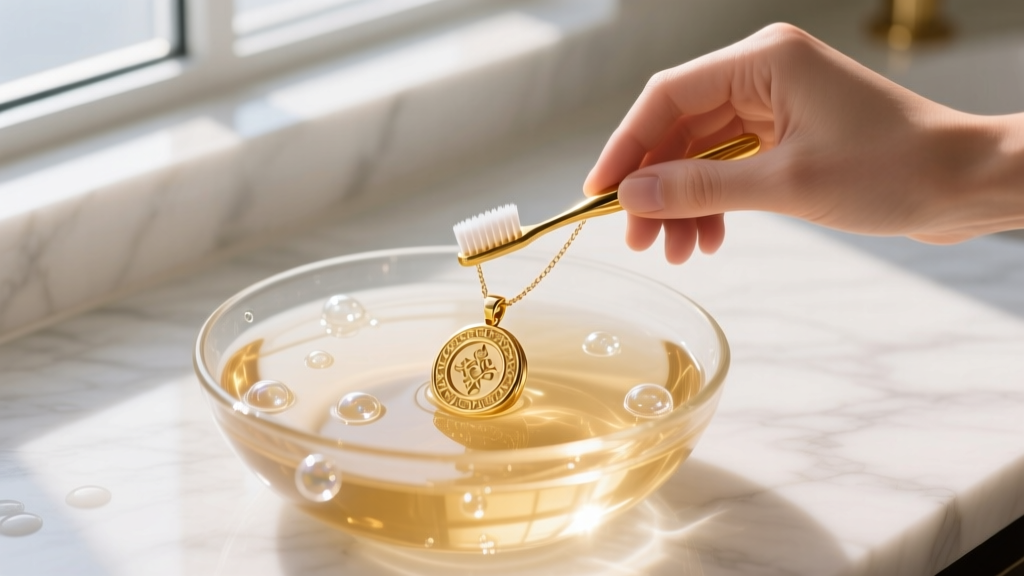
- Prepare the Solution: Fill a small glass bowl with warm (not hot) distilled water. Hot water can cause thermal shock to certain gemstone inclusions. Add three drops of a mild, lotion-free dish soap (like original Dawn) and stir gently to create suds.
- The Soak: Submerge the gold necklace completely. Allow it to soak for 15 to 20 minutes. This gives the mild surfactants time to break down the molecular bonds of body oils and cosmetic residues trapped in the links.
- Mechanical Agitation: Remove the necklace and use an extra-soft baby toothbrush (with nylon bristles no thicker than 0.1mm) to gently brush the chain. Pay special attention to the clasp mechanism and the bail of the pendant, which are the primary friction points for dirt accumulation.
- The Rinse: Rinse the necklace thoroughly under a gentle stream of lukewarm distilled water. Avoid using tap water if your local supply is heavily chlorinated or hard, as mineral deposits can leave water spots on the gold.
- Drying: Pat the necklace dry with a lint-free microfiber cloth. Do not use paper towels or tissues, as the wood fibers can cause microscopic scratching on high-polish gold surfaces.
When to Seek Professional Refinishing
While regular home maintenance will keep your gold necklace free of debris and surface oils, it will not remove physical scratches. Over time, 14K and 18K gold will develop a patina of micro-scratches from contact with harder materials like dust (which contains quartz) and other jewelry. If your necklace has lost its high-polish mirror finish, or if a white gold necklace is revealing its yellowish undertone due to worn rhodium plating, it is time to visit a professional bench jeweler. A jeweler can perform a multi-stage buffing process using rouge compounds to restore the original luster, and re-plate white gold pieces with a fresh layer of rhodium. By understanding the metallurgy and architecture of your jewelry from the moment of purchase, you ensure that cleaning a gold necklace remains a simple, rewarding part of your jewelry care routine rather than a frustrating chore.


