White Butterfly Necklace Materials: Platinum, Gold, and Silver
Discover how platinum, white gold, and sterling silver compare for your white butterfly necklace. Learn about durability, pricing, and grades.

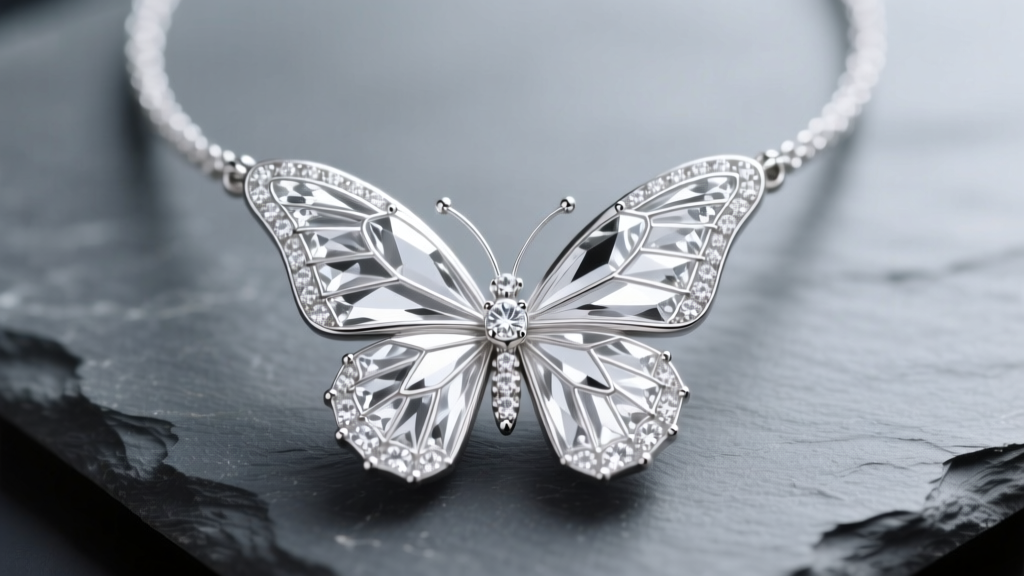
The Anatomy of a White Butterfly Necklace
The white butterfly necklace has transcended seasonal trends to become a permanent fixture in fine jewelry wardrobes. However, the delicate, intricate geometry of butterfly wings and antennae places unique structural demands on the metals and materials used to craft them. A design that looks stunning on day one can quickly degrade if the material lacks the necessary tensile strength or scratch resistance. When investing in a white butterfly necklace, understanding the metallurgical properties of your chosen medium is just as critical as the aesthetic design.
In this comprehensive guide, we dissect the material properties, failure modes, and long-term maintenance requirements of the most popular white metals and inlay materials used in butterfly pendants. Whether you are looking at a micro-pavé diamond butterfly or a solid enamel piece, the substrate dictates the lifespan of your jewelry.
The "White" Metal Spectrum: Platinum, Gold, and Silver
The term "white" in jewelry typically refers to three distinct metals, each with vastly different atomic structures, hardness ratings, and price points. According to the Gemological Institute of America (GIA), the choice of white metal directly impacts how well a piece holds gemstones and resists daily wear.
Platinum (Grade 950): The Heavyweight Champion
Platinum is the premier choice for high-end white butterfly necklaces, particularly those featuring intricate pavé settings or delicate filigree wings. Jewelry-grade platinum is typically an alloy of 95% pure platinum and 5% ruthenium or iridium (stamped as Pt950).
- Durability & Failure Modes: Platinum has a high density (21.45 g/cm³) and exceptional tensile strength. When a platinum prong on a butterfly wing is struck, the metal displaces rather than flakes away. This makes it the safest metal for securing micro-diamonds.
- Patina vs. Polish: Over time, platinum develops a soft, frosted patina. While some collectors love this vintage look, it can soften the crisp, reflective edges of a geometric butterfly design. Re-polishing restores the mirror finish but removes a microscopic layer of metal.
- Pricing: Expect to pay a premium. A solid Pt950 butterfly pendant with a 16-inch chain typically ranges from $1,200 to $3,500+, heavily dependent on diamond weight.
White Gold (14K vs. 18K): The Rhodium Illusion
White gold is not naturally white; it is yellow gold alloyed with white metals like nickel, palladium, or zinc, and then electroplated with a thin layer of rhodium to achieve a bright, reflective white finish. The GIA notes that 14K white gold (58.5% pure gold) is generally harder and more durable for daily wear than 18K (75% pure gold).
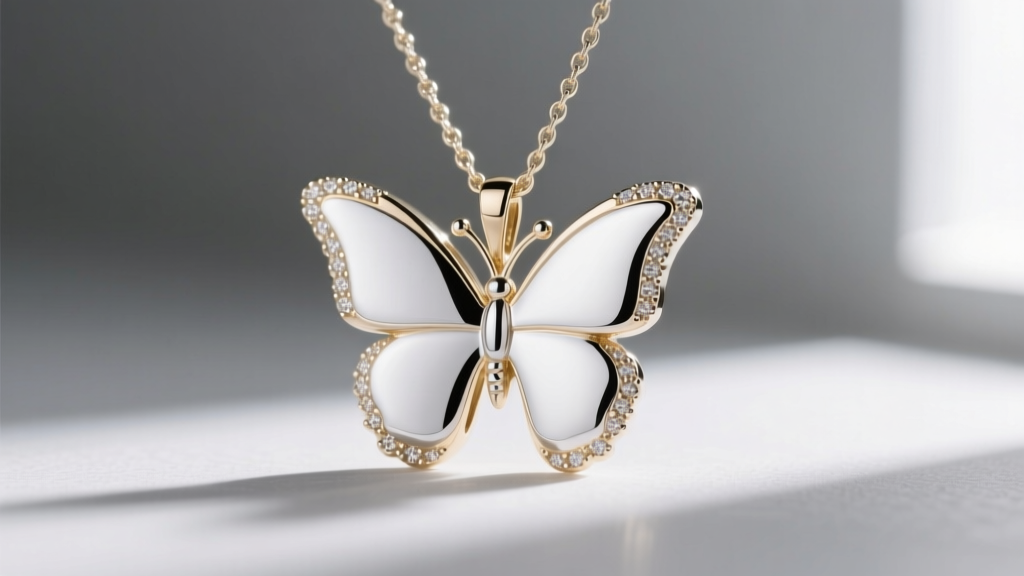
- Durability & Failure Modes: The primary failure mode of a white gold butterfly necklace is rhodium wear. The high-relief areas of the butterfly wings will rub against clothing and skin, causing the rhodium to wear off and revealing the slightly yellowish or grayish alloy beneath. Furthermore, if nickel is used in the alloy, prolonged skin contact can cause contact dermatitis in sensitive individuals.
- Maintenance: Requires re-rhodium plating every 12 to 18 months to maintain the stark white color, costing roughly $50 to $100 per service.
- Pricing: Highly accessible. A standard 14K white gold butterfly pendant ranges from $400 to $1,500.
Sterling Silver (925): The Budget-Friendly Alternative
Sterling silver (92.5% silver, 7.5% copper) offers the most affordable entry point for a white butterfly necklace. However, its metallurgical properties make it less suitable for intricate, high-stress designs.
- Durability & Failure Modes: Silver is significantly softer than gold or platinum (Vickers hardness of ~60-65 compared to platinum's ~130). The delicate antennae of a silver butterfly pendant are highly prone to bending. More critically, silver prongs can easily pull back, leading to lost gemstones.
- Tarnish: The copper alloy reacts with sulfur in the air and skin acids, causing black tarnish. Intricate butterfly engravings can trap tarnish, requiring frequent chemical or ultrasonic cleaning.
- Pricing: Generally ranges from $50 to $250 for solid sterling silver pieces.
Alternative "White" Inlay Materials
Beyond the metal framework, many white butterfly necklaces utilize inlay materials to create the opaque, pearlescent white of the wings. Understanding the Mohs hardness scale is vital here.
White Mother of Pearl (MOP)
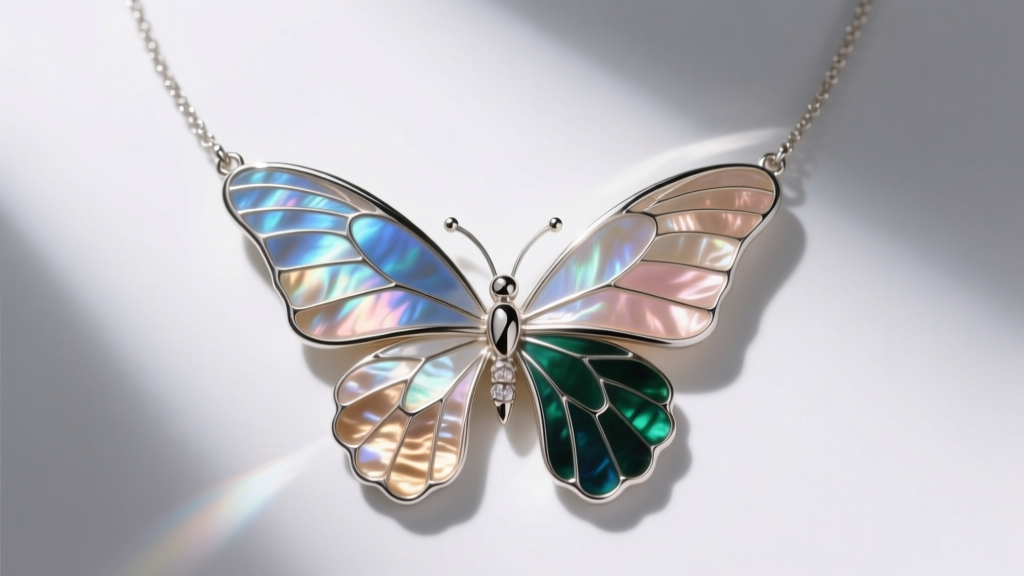
Harvested from the inner lining of mollusk shells, MOP offers a stunning, natural iridescence. However, it ranks a mere 2.5 to 3.0 on the Mohs scale. A mother of pearl butterfly must be set in a protective bezel or flush setting; prong settings leave the edges vulnerable to chipping if the pendant swings and hits a hard surface.
White Vitreous Enamel
Fired at temperatures exceeding 1400°F, vitreous enamel fuses glass powder to the metal base, creating a scratch-resistant, brilliantly white surface. Unlike cold enamel (epoxy resin), which can yellow and scratch within a few years, vitreous enamel maintains its stark white hue indefinitely. However, it is brittle—a hard drop on a tile floor can cause the enamel on the butterfly wings to crack or craze.
Comparative Data: Durability, Price, and Maintenance
To make an informed decision, review the empirical data comparing the most common materials used in white butterfly necklaces.
| Material | Vickers Hardness (HV) | Tarnish / Oxidation | Maintenance Cycle | Avg. Retail Price (1" Pendant) |
|---|---|---|---|---|
| Platinum (Pt950) | 120 - 135 | None (Patina develops) | Polish every 2-3 years | $1,200 - $3,500+ |
| 14K White Gold | 130 - 150 | None (Rhodium wears) | Re-plate every 12-18 mos | $400 - $1,500 |
| 18K White Gold | 110 - 125 | None (Rhodium wears) | Re-plate every 6-12 mos | $800 - $2,200 |
| Sterling Silver (925) | 60 - 65 | High (Copper reacts) | Clean monthly | $50 - $250 |
| Vitreous Enamel (Inlay) | 500 - 600 (Surface) | None | Impact protection | Varies by base metal |
How to Choose Based on Lifestyle and Budget
Selecting the right white butterfly necklace requires aligning the material properties with your daily lifestyle. Use this decision framework to guide your purchase:
The Daily Wear Framework: If you plan to wear your butterfly necklace every day, including during commutes and active routines, prioritize Platinum or 14K White Gold. Avoid silver prongs for pavé diamonds, as the metal fatigue will inevitably lead to stone loss.
For the Hypoallergenic Wearer
If you have sensitive skin or known metal allergies, you must scrutinize the alloy composition of white gold. Many commercial 14K white gold alloys use nickel as a whitening agent. Instead, seek out palladium-based white gold or opt directly for Platinum 950, which is naturally hypoallergenic and biocompatible.
For the Heirloom Investor
If the goal is to pass the necklace down to the next generation, Platinum is the undisputed choice. Its structural integrity means that the delicate wing veins and antennae will survive decades of wear without thinning out, whereas white gold and silver will eventually require complete shanking or prong rebuilding.
For the Trend-Conscious Buyer
If you view the white butterfly necklace as a fun, seasonal accessory rather than a lifelong investment, Sterling Silver or Silver with White Enamel inlays offers the best aesthetic-to-cost ratio. Just be sure to store it in an anti-tarnish bag with silica gel packets when not in use to prevent the copper alloy from oxidizing and turning your skin green.
Final Thoughts on Material Selection
A white butterfly necklace is a beautiful expression of transformation and elegance, but its longevity is entirely dependent on the materials forged into its wings. By looking past the initial sparkle and evaluating the Vickers hardness, alloy composition, and long-term maintenance requirements, you can select a piece that remains as pristine and meaningful as the day you first clasped it around your neck. For further reading on precious metal standards and care, consult resources from the Jewelers of America to ensure your fine jewelry retains its structural and aesthetic integrity for years to come.


