How to Style the Longest Necklace: Step-by-Step Layering Guide
Learn how to style, knot, and layer the longest necklace lengths. Our step-by-step guide covers rope, sautoir, and lariat chain engineering.

When it comes to making a dramatic sartorial statement, few accessories command attention quite like the longest necklace styles. Moving far beyond the standard 18-inch princess length, extra-long chains, ropes, and lariats offer a versatile canvas for personal expression. However, wearing a 45-inch or 60-inch piece of jewelry is not as simple as clasping it around your neck. Without the right techniques, these expansive pieces can tangle, flip awkwardly, or overwhelm your silhouette. This comprehensive, step-by-step guide will teach you how to master the engineering, knotting, and styling of the longest necklace categories, ensuring your look is both intentional and structurally sound.
Decoding the Anatomy of Extra-Long Necklaces
Before you begin draping and knotting, it is crucial to understand the specific terminology and measurements that define the longest necklace options. According to Blue Nile Jewelry Education, necklace lengths are strictly categorized, and anything beyond 30 inches enters specialized territory.
- Opera Length (28 to 36 inches): Falling well below the bust, opera chains are the gateway to long-form jewelry. They can be worn as a single, dramatic strand or doubled over for a layered faux-choker effect.
- Rope Length (37 to 60+ inches): The true heavyweight of the jewelry box. Rope necklaces are highly versatile and almost always require knotting, wrapping, or doubling to sit correctly on the torso.
- Sautoir (40+ inches): A specific type of long necklace that typically features a detachable pendant, tassel, or fringe at the terminal end. Popularized in the 1920s, the sautoir is designed to swing and move with the wearer.
- Lariat (Variable, usually 40+ inches): Distinct from traditional chains, a lariat lacks a clasp. It features an open Y-shape where one or both ends are threaded through a jump ring or decorative loop to secure the piece.
Step-by-Step: How to Knot and Drape the Longest Necklace
Wearing a 60-inch rope chain completely unknotted will draw the eye straight down, often elongating the torso to an unflattering degree. Mastering a few basic knotting techniques will instantly elevate your styling game.
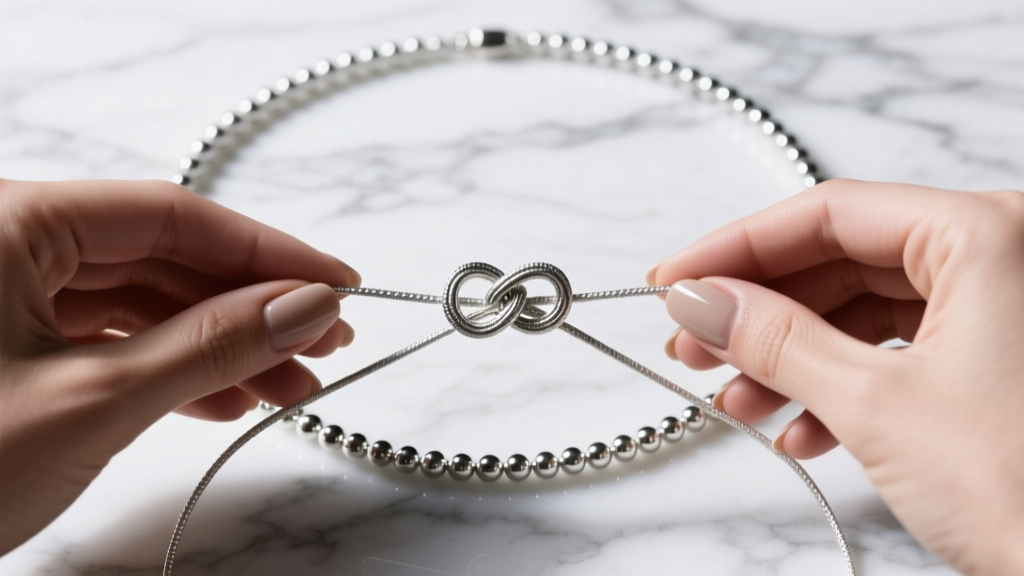
The Asymmetric Overhand Knot (Best for Metal Chains)
This technique prevents heavy metal chains from swinging like a pendulum while creating a chic, off-center focal point.
- Step 1: Drape the 60-inch chain evenly around your neck so both ends hang at the exact same length near your waist.
- Step 2: Pinch the chain approximately 8 inches below the collarbone on your dominant side.
- Step 3: Pull the bottom half of the chain up to create a loose, 4-inch loop.
- Step 4: Pass the lower section of the chain through the loop from the back, pulling it gently to form a loose overhand knot.
- Step 5: Slide the knot up or down the chain to adjust the asymmetry, ensuring one side hangs roughly 6 inches shorter than the other.
The Classic Double-Wrap (Best for Pearls and Beads)
Silk-knotted pearl ropes are incredibly delicate. As noted by the Gemological Institute of America (GIA), the silk thread between pearls degrades over time, and heavy pulling can cause catastrophic strand failure. Never pull a pearl rope tight.
- Step 1: Wrap the entire rope around your neck twice, letting the ends hang asymmetrically in the front.
- Step 2: Take the longer end and wrap it loosely around the shorter strand near the base of your throat.
- Step 3: Tuck the tail end of the longer strand through the newly formed wrap, letting it drape naturally. Do not pull tight; let the friction of the pearls hold the drape in place.
Matching Extra-Long Lengths to Specific Necklines
The longest necklace styles require strategic pairing with your wardrobe. A 50-inch chain will disappear into a busy floral print but will pop brilliantly against solid, structured fabrics. Use the matrix below to guide your daily styling decisions.
| Neckline Type | Ideal Longest Necklace Style | Styling Technique & Rationale |
|---|---|---|
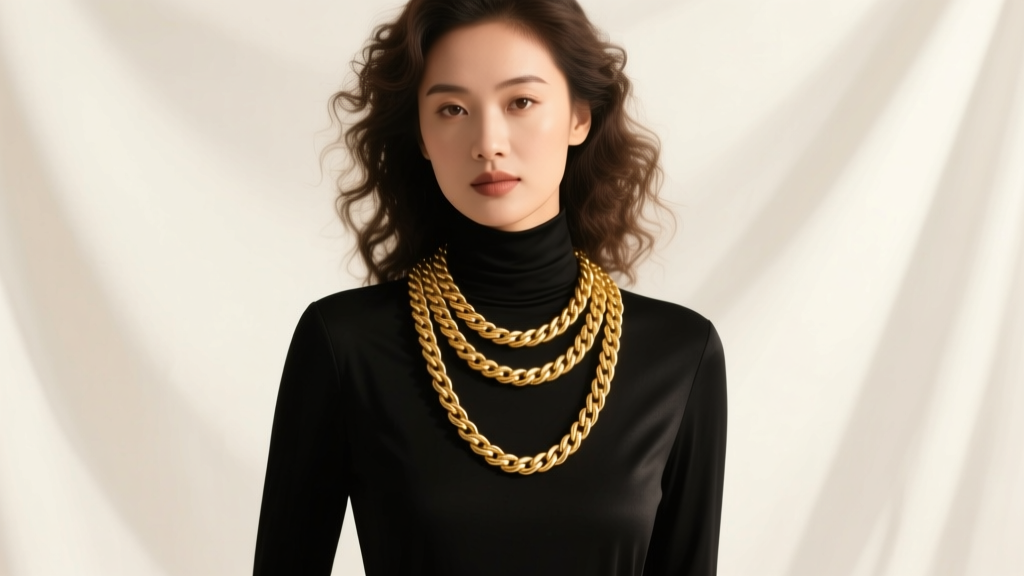
| Turtleneck / Mock Neck | 45-inch Metal Rope Chain | Wear single-strand and unknotted. The solid fabric provides a high-contrast backdrop, and the long V-shape breaks up the visual weight of the heavy collar. |
| Deep V-Neck | 36-inch Opera Chain with Pendant | Keep the pendant resting exactly one inch above the apex of the V-neck. Avoid 60-inch ropes, which will compete with the exposed skin and create visual clutter. |
| Boatneck / Bateau | 50-inch Sautoir with Tassel | The horizontal line of a boatneck is perfectly countered by the extreme vertical drop of a sautoir. Allow the tassel to swing freely over the sternum. |
| Button-Down Shirt | 40-inch Lariat | Leave the top three buttons undone. Thread the lariat through the second buttonhole to anchor it, allowing the tails to rest against the cotton placket. |
Material Weight, Gauge, and Clasp Engineering
When investing in the longest necklace formats, you must consider the physics of jewelry. A standard 18-inch sterling silver cable chain might weigh a mere 8 grams. However, a 60-inch sterling silver rolo chain at a 2.5mm gauge can easily exceed 55 grams. This extreme weight introduces specific structural vulnerabilities that mass-market jewelry often ignores.
Upgrading the Clasp Hardware
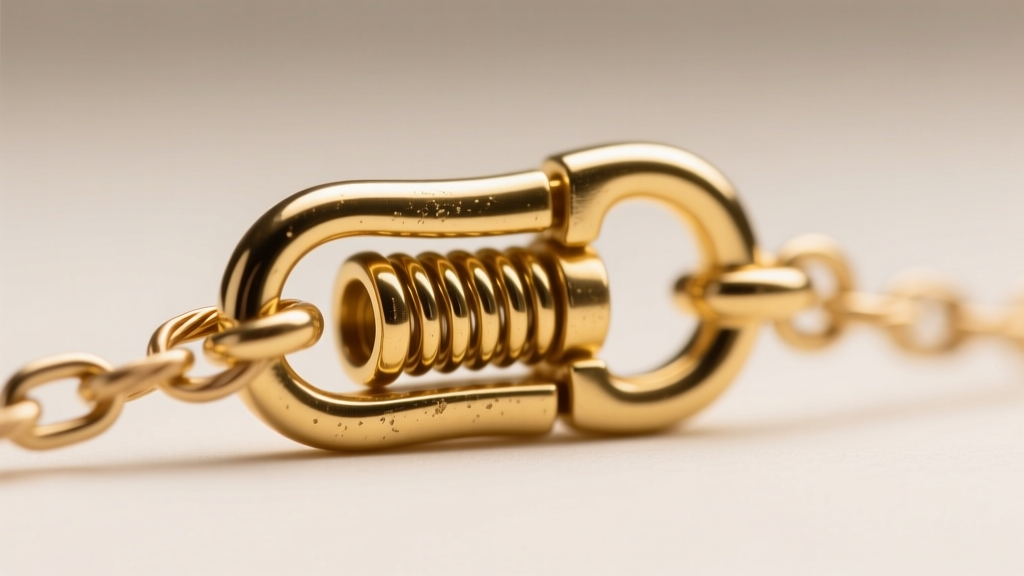
A 55-gram chain generates significant kinetic momentum when you walk, turn, or bend over. Standard 7mm or 9mm lobster clasps are entirely insufficient for this load; the lever arm will bend, or the jump ring will pull apart. Jewelers Mutual Jewelry Insights frequently cites clasp failure as a primary reason for lost pendants and broken chains. For any metal chain exceeding 40 inches and 2.0mm in thickness, you must insist on a heavy-duty 15mm lobster clasp or a reinforced magnetic tube clasp with an internal locking mechanism. Furthermore, the jump ring connecting the clasp to the chain must be soldered shut, not merely pressed together.
Chain Link Integrity
For extra-long chains, avoid hollow-core links. While they offer the look of a massive 5mm chain without the 100-gram weight, hollow links are prone to denting and cannot be easily repaired by a bench jeweler if they snag. Opt for semi-solid or fully solid links, such as a solid Figaro or a reinforced Curb chain, which distribute the tensile stress evenly across the solder points of each individual link.
Troubleshooting Common Issues with Long Chains
Even with perfect styling, the longest necklace formats present unique daily challenges. Here is how to troubleshoot the most common complaints from jewelry enthusiasts.
Problem: The Pendant Constantly Flips Upside Down
The Cause: The bail (the loop connecting the pendant to the chain) is too large for the chain gauge, or the pendant is top-heavy.
The Fix: Have a jeweler add a small, 4mm solid jumper ring inside the pendant bail to reduce its diameter, forcing it to sit flush against the chain links. Alternatively, use a tiny drop of museum wax on the back of the pendant to temporarily adhere it to your clothing.
Problem: The Lariat Keeps Slipping and Loosening
The Cause: Smooth metal chains lack the friction required to hold a lariat knot or slide-ring in place.
The Fix: Switch to a textured chain, such as a wheat or rope chain, which provides natural friction. If you prefer a smooth snake chain, purchase a lariat that features a silicone-lined slide bead instead of a bare metal loop; the silicone grips the smooth metal securely throughout the day.
"The secret to mastering the longest necklace is understanding that it is not merely an accessory, but a structural element of your outfit. Treat the drape, the weight, and the hardware with the same respect you would give to the tailoring of a coat."
By respecting the specific engineering requirements of extra-long chains and mastering a few simple knotting techniques, you can transform the longest necklace in your vault from a tangled mess into your most sophisticated, head-turning styling tool.


