Ultimate Care Guide: Clean Your Wire Wrap Necklace Safely
Learn how to safely clean, polish, and maintain your wire wrap necklace. Expert tips for sterling silver, copper, and gold-filled wire.

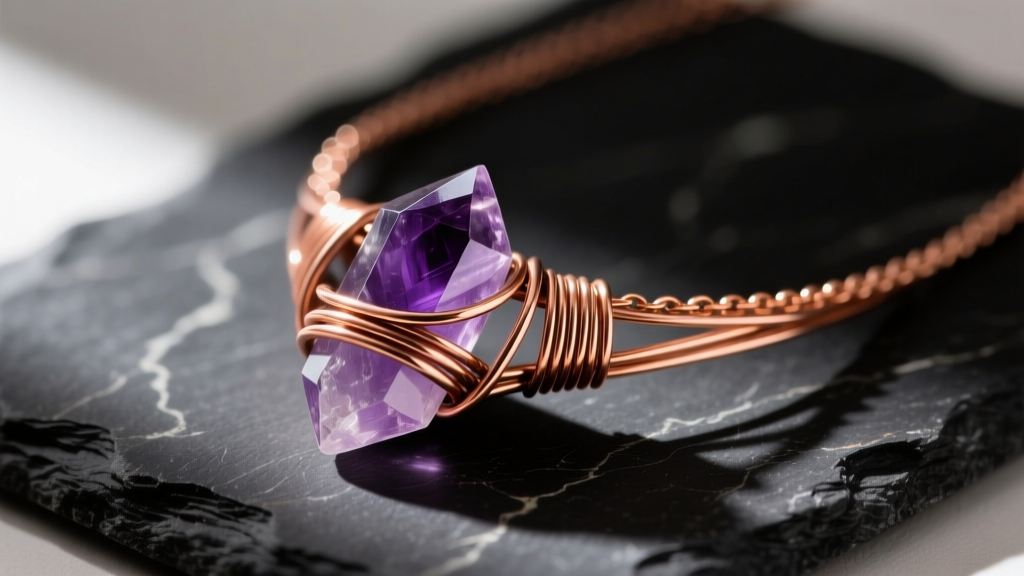
Wire-wrapped jewelry is a testament to the artisan's skill, relying entirely on mechanical tension, precision weaving, and the physical manipulation of metal rather than heat or solder. Because a wire wrap necklace is constructed using intricate tension and delicate micro-weaves, standard jewelry cleaning methods can be disastrous. Harsh chemicals, ultrasonic vibrations, and abrasive polishes can strip intentional patinas, weaken work-hardened wire, and ultimately cause your gemstone to slip from its setting.
Whether your piece features 16-gauge structural frames or 28-gauge decorative weaves, preserving both the metal and the stone requires a specialized approach. This comprehensive guide breaks down the exact material science, structural vulnerabilities, and step-by-step cleaning protocols needed to maintain your wire-wrapped pendants and necklaces for decades.
The Anatomy of a Wire Wrap Necklace: Why Standard Cleaning Fails
To understand how to clean a wire wrap necklace, you must first understand how it holds together. Unlike cast or soldered jewelry, wire wrapping utilizes the metallurgical property of work-hardening. When an artisan bends dead-soft wire—typically 20-gauge (0.81mm) for main wraps or 26-gauge (0.40mm) for weaving—the crystalline structure of the metal compresses and hardens. This tension is what locks a cabochon or raw crystal securely in place.
Standard commercial jewelry cleaners often contain ammonia or thiourea. While effective for cast rings, these chemicals can cause micro-pitting in work-hardened wire. Furthermore, ultrasonic cleaners operate at high frequencies (usually 40-45 kHz) that create microscopic cavitation bubbles. When these bubbles implode against a tension-set stone, they can subtly shift the wire frame. Over time, this vibration relieves the work-hardened tension, leading to the most common failure mode in wire jewelry: the stone slipping out of the harness.
Material-Specific Cleaning Protocols
The wire material dictates your cleaning chemistry. Using the wrong agent will not just ruin the finish; it can permanently damage the structural integrity of the weave.
Sterling Silver (.925) and Argentium Silver
Sterling silver tarnishes when it reacts with sulfur in the air, forming silver sulfide. Many online guides recommend the 'aluminum foil and baking soda' electrochemical bath. Do not use this on a wire wrap necklace. While it converts silver sulfide back to silver, it will completely strip the intentional oxidation (often applied via liver of sulfur) that the artist used to create contrast and depth in the wire weaving. Instead, use a treated microfiber polishing cloth specifically designed for silver, gently rubbing only the high points of the wire frame while avoiding the deep, darkened weaves.
Copper and Brass Wire Wraps
Copper naturally oxidizes to a rich brown or develops a green verdigris in high humidity. If you prefer the bright, rose-gold shine of fresh copper, you can use a mild acidic solution. However, avoid commercial copper dips, which contain harsh sulfuric or hydrochloric acids that can make the wire brittle. A safer alternative is a paste made from equal parts lemon juice and fine salt, applied with a cotton swab strictly to the wire, avoiding any porous gemstones.
Gold-Filled (14/20) Wire
Gold-filled wire consists of a thick layer of 14k gold mechanically bonded to a brass core. The gold layer is substantially thicker than gold plating (usually comprising 5% of the total weight), but it can still be worn away by abrasive polishing pastes or harsh ultrasonic cleaning. According to Rio Grande, a leading jewelry supply authority, gold-filled wire should only be cleaned with warm water, mild dish soap, and a soft cloth to prevent exposing the brass undercore.
Cleaning Agent Compatibility Chart
| Wire Material | Safe Cleaning Agents | Dangerous Agents to Avoid | Patina / Finish Risk |
|---|---|---|---|
| Sterling Silver (.925) | Mild soap, treated silver cloth | Aluminum foil baths, ammonia dips | Strips intentional dark oxidation |
| Copper / Brass | Lemon juice/salt paste, mild soap | Commercial copper dips, bleach | Removes antique brown patina |
| Gold-Filled (14/20) | Warm soapy water, microfiber | Abrasive polishes, ultrasonic | Wears through gold layer to brass |
| Argentium Silver | Mild soap, soft brush | Harsh chemical dips | Low risk (highly tarnish-resistant) |
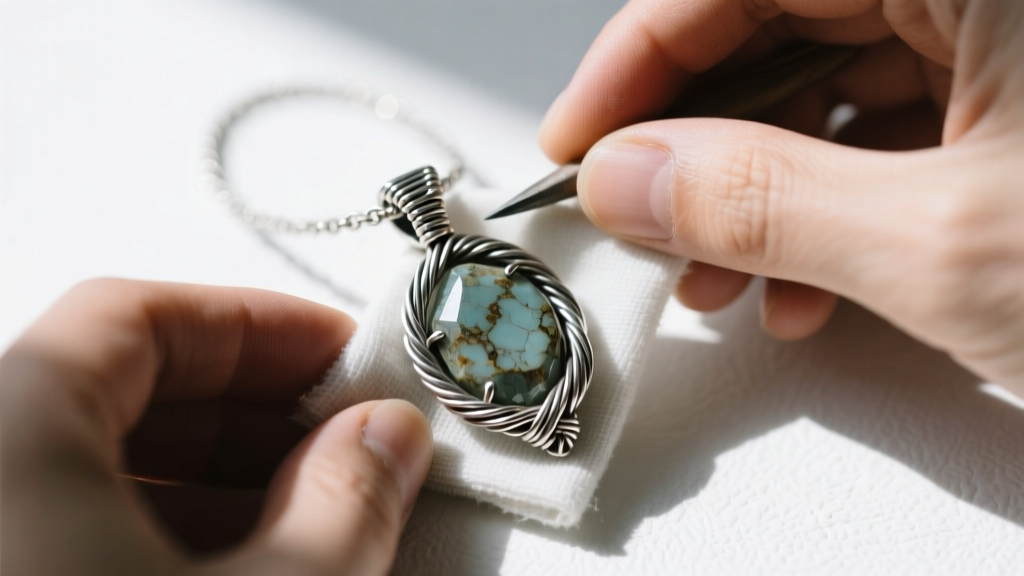
Protecting Tension-Set and Wire-Wrapped Gemstones
The gemstone in your wire wrap necklace requires just as much consideration as the metal. The Gemological Institute of America (GIA) categorizes gemstone durability based on the Mohs hardness scale and structural stability. Wire wrapping is frequently used for raw, uncalibrated, or fragile stones that cannot withstand the heat of traditional prong-setting.
- Porous Stones (Turquoise, Opal, Malachite, Pearl): These stones act like sponges. Never submerge a wire wrap necklace featuring these gems in water or chemical solutions. The stone will absorb the liquid, which can cause discoloration, internal cracking, or a cloudy appearance. Clean the wire around them using a slightly damp cotton swab.
- Brittle Stones (Moonstone, Sunstone, Fluorite): While they may have decent hardness, these stones have distinct cleavage planes. Pressing too hard with a brush or polishing cloth against the wire can transfer pressure to the stone, causing it to fracture along its natural fault lines.
- Durable Stones (Quartz, Amethyst, Agate, Jasper): These can withstand gentle submersion in soapy water and light brushing, making the cleaning process much more straightforward.
The Step-by-Step Deep Cleaning Routine
For a safe, deep clean that respects both the wire tension and the gemstone, follow this artisan-approved protocol:
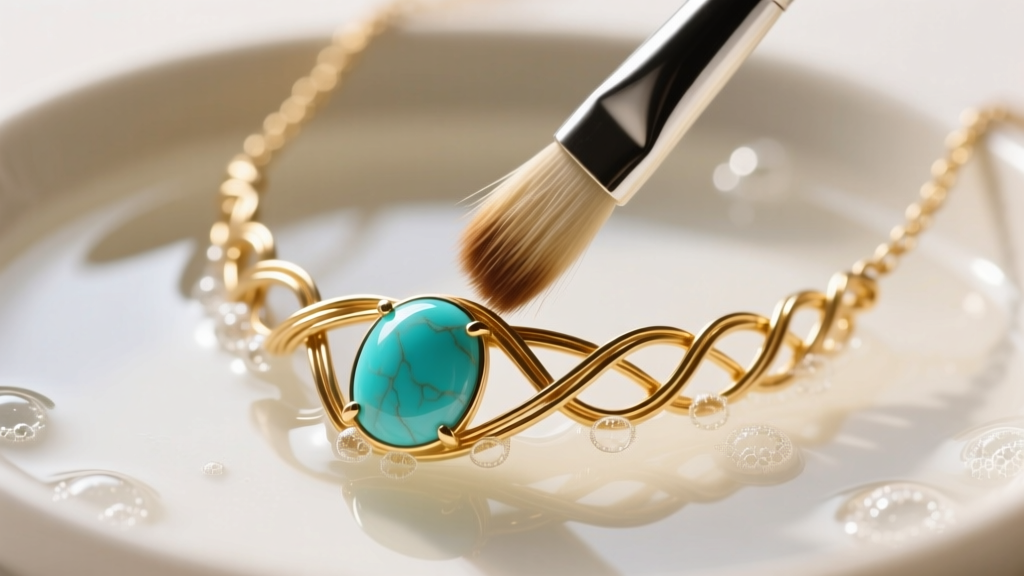
- Prepare the Solution: Mix a few drops of phosphate-free, mild dish soap (like Dawn) into a bowl of lukewarm distilled water. Distilled water prevents hard water mineral deposits from clinging to the wire weaves.
- Targeted Agitation: Dip an extra-soft baby toothbrush into the solution. Gently brush the wire frame, working in the direction of the wire wraps. Never scrub back and forth across a tension point, as this can bend 28-gauge micro-weaves.
- The Rinse: If your stone is non-porous (e.g., quartz or agate), briefly rinse the pendant under a gentle stream of lukewarm distilled water. If the stone is porous, use a clean, damp microfiber cloth to wipe away the soap suds from the wire.
- Drying: Pat the piece dry with a lint-free cloth. Use a hair dryer on the 'cool' setting to blow water out of the tight wire weaves. Leaving moisture trapped between the wire and the stone can lead to localized oxidation or degrade the stone's polish over time.
Storage and Preventative Maintenance
How you store your wire wrap necklace is just as critical as how you clean it. Wire has 'memory,' and improper storage can lead to permanent deformation of the artisan's original design.
Combatting Tarnish and Humidity
Silver and copper oxidize rapidly in the presence of humidity and airborne sulfur. Store your necklaces in individual, airtight zip-lock bags. For maximum protection, include a 3M anti-tarnish strip inside each bag. These strips absorb sulfur gases and can protect the wire's finish for up to 12 months before needing replacement.
Preventing Wire Deformation
Never toss a wire wrap necklace into a crowded jewelry box where heavier items can rest on top of it. The pressure can bend the 16-gauge or 18-gauge frame wires, altering the tension and potentially releasing the stone. Ideally, hang the necklace on a padded jewelry stand or lay it completely flat in a lined drawer. If the piece features a delicate, multi-layered woven bail, ensure the chain does not twist through the bail during storage, as this can slowly pry the bail wires apart.
Expert Insight: 'If you notice a wire wrap necklace losing its grip on a stone, do not attempt to squeeze the wire tighter with standard pliers. Jewelry pliers have serrated teeth that will mar the wire finish. Instead, use nylon-jaw pliers to gently compress the frame, or take it to a professional wire-wrapping artisan for a tension reset.'
By understanding the unique structural mechanics of wire-wrapped jewelry and avoiding the pitfalls of commercial cleaning hacks, you ensure that your wire wrap necklace remains a secure, stunning, and wearable piece of art for years to come.


