Horizon Cross Necklace Guide: Meaning, Sizing and Styling
Discover everything about the horizon cross necklace. Learn about its meaning, ideal chain lengths, metal grades, and how to style this modern pendant.


The Rise of the Horizon Cross: A Modern Jewelry Staple
When building a curated, everyday jewelry collection, few pieces bridge the gap between profound symbolism and sleek minimalism quite like the horizon cross necklace. Often referred to as a sideways cross or horizontal cross, this pendant orientation has evolved from a niche pop-culture trend into a permanent fixture in fine jewelry. Whether you are drawn to its spiritual connotations of groundedness or simply appreciate its clean, geometric lines, understanding how to select, size, and style a horizon cross is essential for any jewelry enthusiast.
Unlike the traditional Latin cross, which draws the eye vertically toward the heavens, the horizon cross lays parallel to the collarbone. This horizontal alignment creates a visually stabilizing effect, making it an incredibly versatile anchor piece for both standalone wear and complex layering stacks. In this comprehensive beginner-friendly guide, we will break down the exact specifications, metallurgy, and styling frameworks you need to choose the perfect horizon cross necklace.
Anatomy of the Pendant: Bails, Balance, and the 'Flipping' Issue
The most common complaint among first-time buyers of horizontal cross pendants is that the necklace constantly flips upside down or tangles. This is rarely a defect; rather, it is a matter of physics and bail engineering. The 'bail' is the component that connects the pendant to the chain. For a horizon cross, there are two primary bail types:
- The Tube Bail (Threaded): The chain threads directly through a hollow horizontal tube integrated into one of the cross's arms. This keeps the pendant lying perfectly flat against the chest but restricts you to very thin chains (usually under 1.0mm).
- The Soldered Loop Bail: A small metal ring is soldered to the top edge of the horizontal arm. This allows for slightly thicker chains and easier swapping, but if the loop is not perfectly centered or if the chain is too light, the pendant's center of gravity will shift, causing it to flip vertically.
Expert Troubleshooting: To prevent flipping, pair your horizon cross with a chain that has enough weight to anchor the back of your neck. A 1.0mm to 1.2mm box chain provides the necessary counterweight to keep the horizontal pendant resting flatly in the front.
Sizing Framework: Finding Your Ideal Proportions
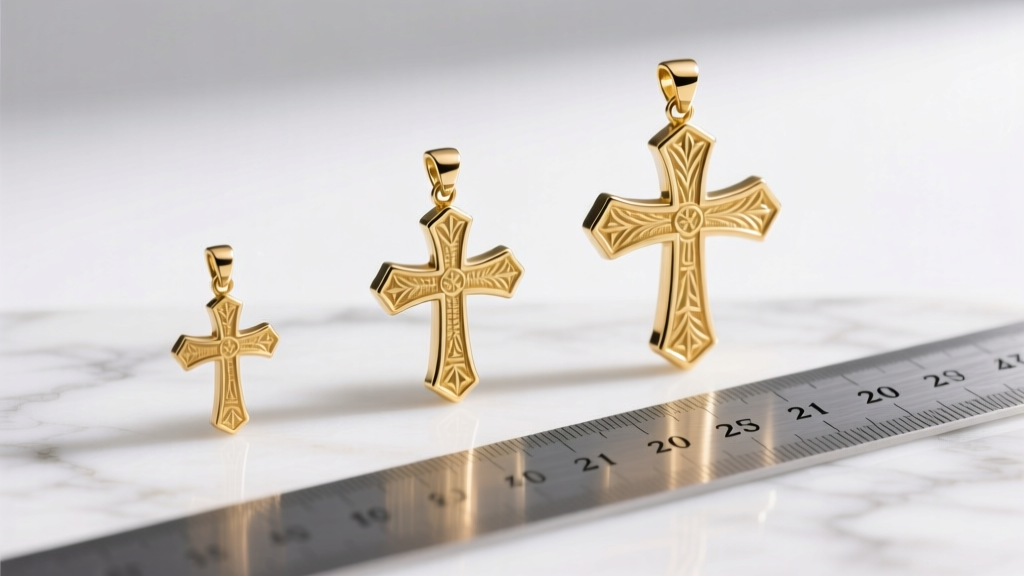
Because the horizon cross is oriented sideways, standard pendant measurements can be confusing. The 'width' refers to the long horizontal axis (the crossbar), while the 'height' refers to the short vertical axis (the stem). Choosing the right scale depends on your body type and styling goals.
| Size Category | Dimensions (W x H) | Best For | Ideal Chain Length |
|---|---|---|---|
| Micro / Delicate | 10mm x 3mm | Layering, subtle everyday wear, petite frames | 14" to 15" (Choker/Collarbone) |
| Standard / Classic | 15mm x 5mm | Solo wear, office-appropriate, balanced proportion | 16" to 18" (Standard) |
| Statement / Bold | 25mm+ x 8mm+ | Standalone focal point, streetwear, deep V-necks | 20" to 24" (Matinee) |
Metallurgy and Diamond Settings: What to Look For
When investing in a piece meant for daily wear, the metal grade and gemstone setting dictate both the longevity and the price point. According to the International Gem Society, understanding alloy compositions is critical for avoiding premature wear and tear.
Metal Grades Explained
- 14k Solid Gold (58.5% Pure Gold): The gold standard for everyday horizon crosses. It offers the perfect balance of rich color and structural durability. It will not tarnish and can withstand daily showering.
- 18k Solid Gold (75% Pure Gold): Yields a deeper, more buttery yellow hue but is slightly softer. Best for pendants that won't endure heavy physical impact.
- Sterling Silver (925): An excellent budget-friendly option, though it requires occasional polishing to remove oxidation. Look for rhodium-plated silver to delay tarnishing.
- Gold Vermeil: A thick layer of gold over sterling silver. While beautiful, vermeil will eventually wear down to the silver base if exposed to daily friction, sweat, and perfumes.
Pave vs. Bezel Diamond Settings
If you prefer a horizon cross with diamond accents, the setting style drastically alters the maintenance required. Micro-pave settings utilize tiny prongs to hold 0.01ct to 0.02ct melee diamonds, maximizing light performance and sparkle. However, as noted in the GIA Diamond Care Guide, pave settings require careful cleaning to prevent dirt buildup from dulling the stones. For a truly snag-free, low-maintenance piece, opt for a bezel-set horizon cross, where a smooth rim of metal surrounds each diamond, protecting the girdle from chipping.
Chain Pairings: The Foundation of the Necklace
A horizon cross relies heavily on its chain to dictate its overall vibe. The chain must be robust enough to support the pendant without overpowering its delicate horizontal lines.
- The Box Chain (0.9mm - 1.2mm): Featuring square, interlocking links, the box chain is highly reflective and incredibly strong. Its geometric structure perfectly complements the straight lines of the horizon cross.
- The Cable Chain (1.0mm - 1.5mm): The classic, uniform oval links offer a traditional, vintage feel. It is lightweight and drapes fluidly.
- The Paperclip Chain (1.5mm+): Elongated rectangular links give a trendy, modern edge. Best paired with standard or statement-sized horizon crosses.

Styling and Layering: The 2-4-6 Rule
The horizontal orientation of the horizon cross makes it an exceptional layering piece because it doesn't compete vertically with other pendants. To build a harmonious necklace stack, utilize the '2-4-6 Rule' for chain lengths to prevent tangling and ensure each piece is visible.
- Base Layer (14 inches): Start with a simple chain, a delicate pearl choker, or a micro-bead necklace that sits high on the collarbone.
- The Anchor (16 to 18 inches): This is where your standard 15mm horizon cross necklace lives. It should rest comfortably in the hollow of your throat or just above the bust line.
- The Statement (20 to 24 inches): Finish with a longer, heavier chain featuring a larger pendant, a lariat, or a solitary gemstone drop to draw the eye downward and elongate the neck.
Style Tip: When wearing a horizon cross with a V-neck or wrap dress, opt for an 18-inch chain so the horizontal line of the cross intersects beautifully with the diagonal lines of the garment, creating a striking geometric contrast.
Care and Maintenance for Longevity
Because the horizon cross lays flat against the skin, it is constantly exposed to body oils, lotions, and friction. To maintain the brilliance of your pendant, especially if it features diamond accents, follow a strict but simple care regimen.
Once a week, soak the necklace in a bowl of warm water mixed with a few drops of mild, phosphate-free dish soap for 15 minutes. Use a baby-soft toothbrush to gently sweep away any debris trapped beneath the horizontal bail or between diamond prongs. Rinse thoroughly under lukewarm water and dry completely with a lint-free microfiber cloth. Avoid ultrasonic cleaners if your horizon cross features fracture-filled diamonds or delicate gemstone accents like opals or emeralds, as the high-frequency vibrations can loosen the settings.
Final Thoughts on Choosing Your Horizon Cross
The horizon cross necklace is more than a fleeting trend; it is a masterclass in modern jewelry design, offering a grounded, contemporary alternative to traditional religious iconography. By paying close attention to the bail construction, selecting the appropriate metal grade for your lifestyle, and sizing the pendant to complement your natural proportions, you will secure a piece that remains a cornerstone of your jewelry wardrobe for decades to come. Whether you choose a microscopic 10mm whisper of gold or a bold, diamond-encrusted 25mm statement piece, the horizon cross promises to bring a touch of serene geometry to your daily style.


