How to Fix, Clean, and Maintain Your Favorite Spiky Necklace
Learn how to troubleshoot common spiky necklace issues, from loose spikes and broken clasps to metal tarnish and skin irritation.

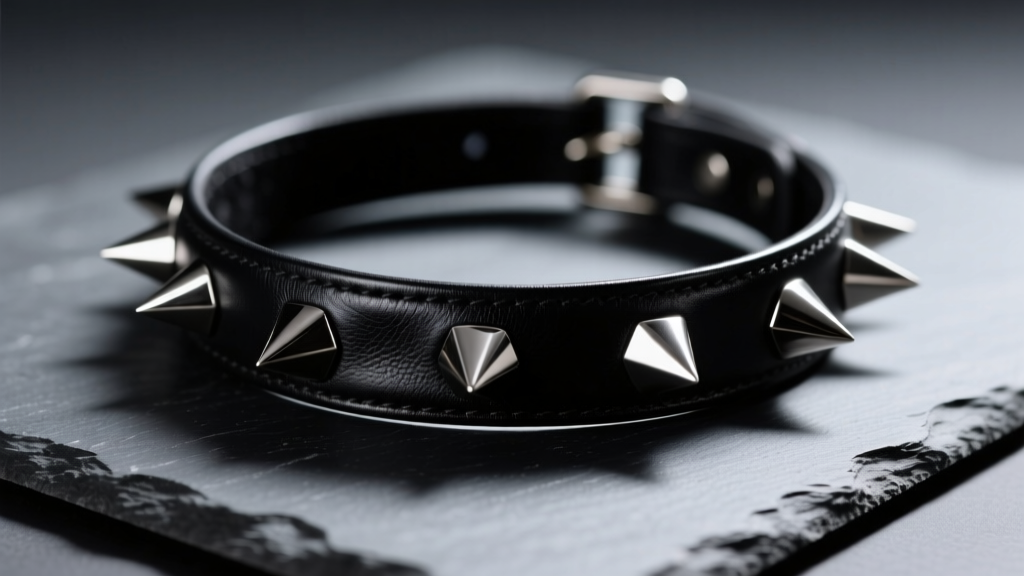
The Anatomy of a Spiky Necklace and Common Failure Points
The spiky necklace has transcended its punk and goth subculture roots to become a staple of avant-garde and high-fashion wardrobes in 2026. Whether you are wearing a delicate Y2K-inspired spiked pendant or a heavy, multi-row leather collar with pyramid studs, the hardware endures immense physical stress. Unlike smooth chains, spikes catch on fabrics, pull against hair, and bear uneven weight distributions. Understanding the anatomy of your jewelry is the first step in troubleshooting its inevitable failures.
Most commercial spiky necklaces fail at three critical junctions: the spike-to-base connection, the clasp mechanism, and the metal finish itself. Fast-fashion manufacturers often prioritize aggressive aesthetics over structural integrity, utilizing cast zinc alloys and weak adhesives. By diagnosing the specific failure mode of your necklace, you can apply targeted, professional-grade solutions that extend the life of your favorite pieces for years.
Material Diagnostics: Why Your Spikes Are Failing
Before attempting any repairs, you must identify the base metal of your spikes and collars. The material dictates which adhesives, cleaning agents, and sealing methods will actually work without causing further degradation.
| Material Grade | Common Uses | Primary Failure Mode | Repair Difficulty |
|---|---|---|---|
| Zamak (Zinc Alloy) | Fast-fashion spikes, lightweight pendants | Brittle fracture, rapid oxidation, poor glue adhesion | High |
| 316L Surgical Steel | Premium collars, body-safe hardware | Thread stripping, heavy weight causing clasp failure | Low |
| Solid Brass | Artisan pieces, vintage punk hardware | Tarnishing, patina buildup, prong fatigue | Medium |
| Polyurethane Resin | Lightweight cosplay, festival wear | UV yellowing, snapping under tension | Medium |
Troubleshooting Loose or Falling Spikes
Nothing ruins the aesthetic of a spiky necklace faster than a missing or dangling spike. Spikes are typically attached via one of three methods: prong-setting, adhesive bonding, or screw-threading. Here is how to fix each type.
1. Adhesive-Bonded Spikes (The Most Common Failure)
Manufacturers often use cheap cyanoacrylate (super glue) to attach flat-backed spikes to leather or fabric chokers. This adhesive becomes brittle over time and shatters upon impact. To fix this, you must completely remove the old adhesive residue using a brass-bristle brush and isopropyl alcohol. Once the surface is prepped, apply a flexible jeweler's epoxy. According to jewelry supply experts at Rio Grande, two-part epoxies like E6000 or G-S Hypo Cement provide the necessary shear strength and flexibility required for wearable hardware. Allow the epoxy to cure for a full 24 hours under a light weight before wearing.
2. Screw-Threaded Pyramid Studs
Heavy leather collars often use screw-back spikes. The constant vibration and movement of walking can cause these screws to back out. Do not use super glue on the threads, as it will permanently fuse the spike to the collar, making future leather repairs impossible. Instead, apply a single micro-drop of blue Loctite 242 (a medium-strength threadlocker) to the screw post before tightening. This allows for future removal with a standard screwdriver while preventing daily loosening.
3. Prong-Set Spikes on Metal Chains
If your spiky necklace features metal spikes prong-set into a chain link, the prongs can fatigue and lift. Using a pair of smooth-jawed chain-nose pliers, gently but firmly squeeze the prongs back against the base of the spike. If a prong has snapped off entirely, the link must be replaced or reinforced with a micro-weld by a professional bench jeweler.
Solving the Snagging and Hair-Tangling Nightmare
The most frequent complaint regarding spiky necklaces is their tendency to act like a comb, aggressively catching on knitwear, silk blouses, and long hair. This is usually caused by microscopic burrs left over from the casting process, or by the spikes being sharpened to an impractical point.
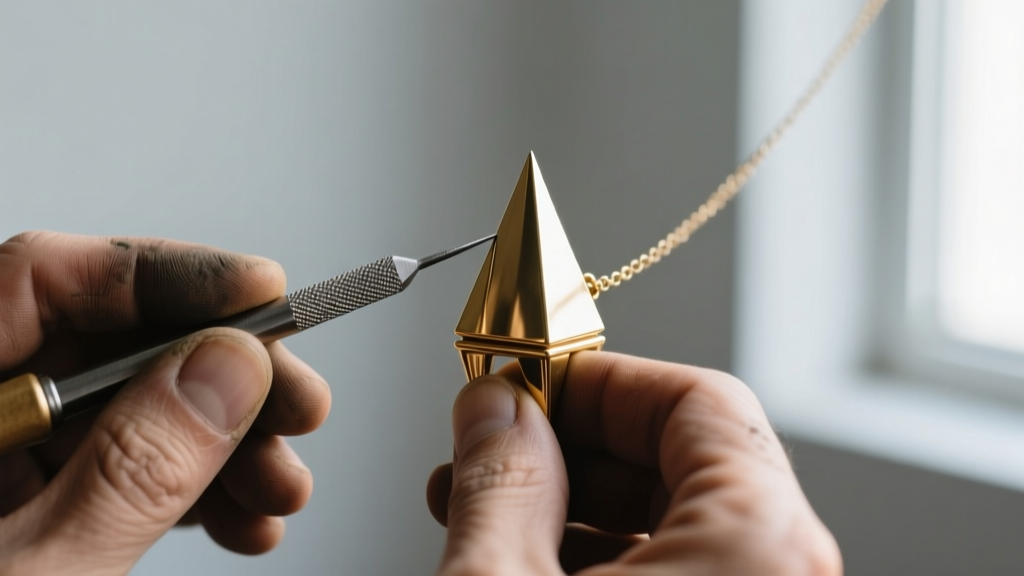
Filing and Buffing Techniques
You can drastically reduce snagging without ruining the aggressive look of the necklace. Secure the necklace in a padded vise or lay it flat on a leather bench block. Using a fine-grit diamond needle file (400 to 600 grit), gently round off the absolute microscopic tip of each spike. You are not removing the point; you are simply removing the 'needle' tip that catches on individual threads. Follow this by polishing the filed area with a micro-mesh pad to ensure the metal is smooth to the touch.
The Silicone Cap Solution
For extremely sharp, needle-like spikes that you only wear for short durations (like concerts or photoshoots), consider using micro-silicone tubing. You can purchase 1mm or 2mm inner-diameter silicone tubing from hardware stores. Cut tiny 3mm segments and push them over the tips of the spikes. This creates an invisible, flesh-toned or black barrier that completely eliminates snagging while maintaining the silhouette of the spike.
Heavy Hardware Clasp Failures
A genuine leather collar adorned with solid metal spikes can easily weigh between 150 and 300 grams. Most commercial necklaces are finished with cheap, 18-gauge spring ring clasps that are rated for less than 50 grams of tensile stress. This mismatch inevitably leads to the clasp popping open or the jump ring pulling apart.
Upgrading Your Findings
To troubleshoot a failing clasp on a heavy spiky necklace, you must upgrade the findings. Discard the spring ring and replace it with a heavy-duty, 14-gauge stainless steel lobster clasp. Furthermore, inspect the jump rings connecting the clasp to the collar. If they are not soldered shut, the weight of the necklace will pull them open. Replace standard split rings with 12-gauge or 14-gauge stainless steel jump rings, and use two pairs of flat-nose pliers to twist them closed securely. For ultimate security on collars over 250 grams, consider installing a heavy-duty magnetic neodymium clasp, which offers superior shear strength and is much easier to fasten behind your neck.
Combating Tarnish, Rust, and Contact Dermatitis
Spiky necklaces sit flush against the pulse points of the neck, an area prone to sweat, perfume, and high body heat. This environment accelerates oxidation in base metals and triggers severe reactions in those with metal sensitivities.
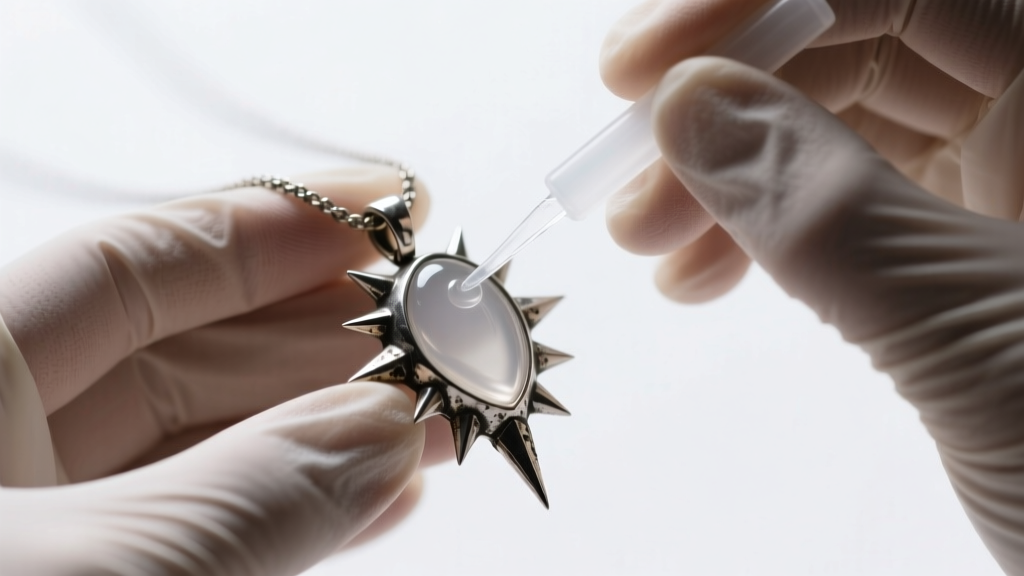
Addressing Nickel Allergies and Green Skin
Many affordable spiky necklaces are cast from Zamak or brass and plated with a thin layer of nickel or silver. As the plating wears off, the underlying nickel is exposed to the skin's moisture, causing contact dermatitis. The Cleveland Clinic notes that nickel allergies are among the most common causes of allergic contact dermatitis, resulting in itchy, red, and blistering skin. If you experience this, stop wearing the piece immediately.
To salvage the necklace, you must create a physical barrier between the metal and your skin. Clean the back of the spikes and the base plate with alcohol, then apply a specialized jewelry sealant like ProtectaClear or a high-quality clear polyurethane spray. These coatings are micro-thin, completely invisible, and will prevent metal ions from migrating into your skin. Reapply the sealant every six months, or whenever you notice the metal beginning to feel 'grippy' against your skin.
Removing Severe Tarnish from Intricate Spikes
Polishing a spiky necklace with a standard cloth is impossible due to the sharp angles and deep crevices. Instead, use a chemical dip or an ultrasonic cleaner. For solid brass or silver spikes (not plated), a mild solution of warm water, a few drops of dish soap, and a soft-bristled toothbrush will remove surface oils. For heavy oxidation, create a paste of baking soda and water, apply it with a cotton swab to the crevices, and rinse thoroughly. Never use harsh abrasive polishes on plated spikes, as you will strip the finish down to the base pot metal, accelerating future rusting.
Quick-Reference Troubleshooting Matrix
- Problem: Spike keeps unscrewing. Fix: Apply blue Loctite 242 threadlocker to the post.
- Problem: Spike fell out of leather. Fix: Clean residue, re-bond with E6000 flexible epoxy.
- Problem: Catching on sweaters/hair. Fix: Lightly file tips with a 600-grit diamond needle file.
- Problem: Clasp keeps popping open. Fix: Upgrade to a 14-gauge stainless steel lobster clasp.
- Problem: Neck turning green/itchy. Fix: Seal the metal with ProtectaClear polyurethane coating.
By treating your spiky necklace not just as an accessory, but as a piece of structural hardware, you can easily troubleshoot and resolve the most common wear-and-tear issues. Proper maintenance ensures that your boldest jewelry pieces remain safe, comfortable, and visually striking for every occasion.


