How Average Men's Necklace Length Dictates Care and Cleaning
Discover how the average men's necklace length impacts wear and tear. Learn targeted cleaning and maintenance routines for collars, mid-chains, and ropes.

The Physics of Chain Wear: Why Length Matters
When guys research the average men's necklace length, they are usually focused on aesthetics—how a chain frames the face or rests against a t-shirt. However, as a jewelry care specialist, I look at length through the lens of physics and metallurgy. The exact placement of a chain on the male body dictates its exposure to sebum, sweat, environmental pollutants, and mechanical stress. A 16-inch choker faces entirely different degradation factors than a 28-inch rope chain. Understanding these micro-environments is the key to preserving your jewelry's structural integrity and brilliance.
Men's skin tends to be thicker and produce more sebum than women's, and body hair can create localized friction against metal links. Furthermore, the swing radius of a longer chain introduces kinetic wear that shorter chains simply do not experience. By mapping your maintenance routine to your specific chain length, you can prevent premature clasp failure, link thinning, and irreversible chemical tarnishing.
Mapping the Average Men's Necklace Length to Maintenance Needs
Before diving into specific cleaning protocols, it is crucial to understand how different lengths interact with the body. The table below breaks down the primary degradation factors based on standard sizing categories.
| Length Category | Placement Zone | Primary Degradation Factor | Ideal Cleaning Frequency |
|---|---|---|---|
| Collar / Choker (14-16 inches) | Base of neck / Pulse points | High sebum, sweat acidity, skin flora | Weekly wipe-down, monthly deep clean |
| Standard Mid (18-22 inches) | Collarbone to upper sternum | Cotton lint, skin oils, moderate friction | Bi-weekly wash, monthly polish |
| Long Chain (24-30 inches) | Mid-chest to solar plexus | Kinetic swing, impact, pendant bail wear | Monthly wash, quarterly clasp inspection |
1. The Collar & Choker (14–16 Inches)
Chokers sit directly against the carotid artery and the base of the neck, an area notorious for high heat and perspiration. If you are wearing 925 sterling silver in this length, the copper alloyed within the silver will rapidly react to the sulfur and chlorides present in human sweat, leading to aggressive black tarnishing. According to the Rio Grande Jewelry Supply metallurgy guides, acidic skin pH can also degrade lower-karat gold alloys over time.
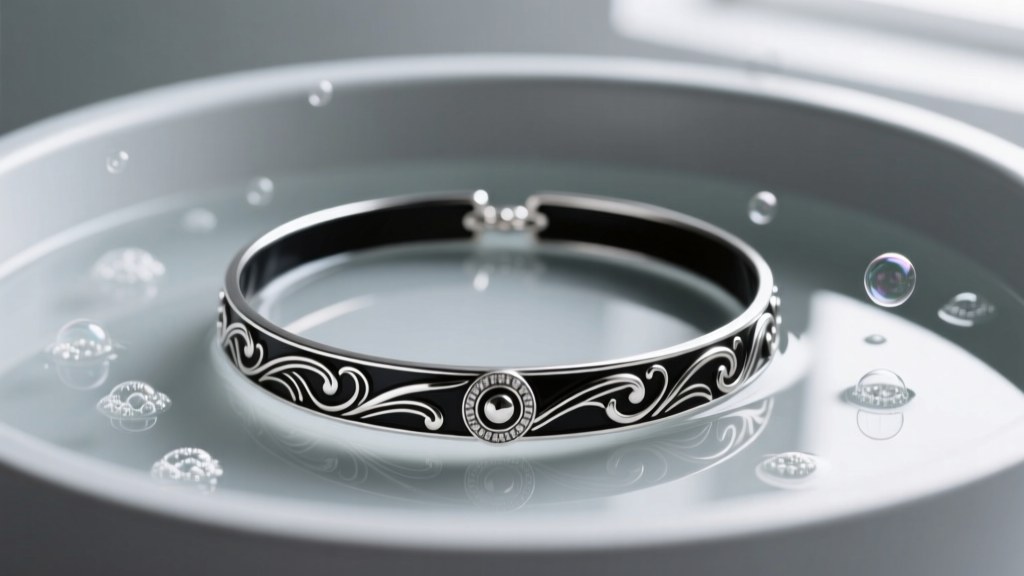
Care Protocol: For collars and chokers, avoid wearing them during intense workouts. To clean a heavily soiled 16-inch silver chain, use a specialized silver dip containing thiourea for exactly 10 seconds, followed by a thorough rinse in distilled water. Never use baking soda and aluminum foil baths on chokers with mixed metal accents, as the galvanic reaction can permanently pit the secondary metals.
2. The Standard Mid-Length (18–22 Inches)
The true average men's necklace length typically falls between 18 and 22 inches, resting comfortably on the collarbone or upper chest. This is the 't-shirt zone.' The primary enemy here is not just sweat, but the accumulation of microscopic cotton fibers, dead skin cells, and environmental dust that pack tightly into the crevices of complex link styles like Cuban, Figaro, or Franco chains.
Care Protocol: Create a lukewarm bath using a few drops of ammonia-free dish soap (like Dawn) and distilled water. Let the chain soak for 15 minutes to loosen the impacted lint. Use a specialized jewelry brush with ultra-soft brass bristles—never toothbrushes, as nylon bristles can trap abrasive toothpaste residue, and stiff bristles will scratch high-polish 14k gold. Rinse thoroughly and dry with a lint-free microfiber cloth, ensuring no moisture remains trapped in the clasp mechanism.
3. The Long Chain & Rope (24–30+ Inches)
Chains that fall below the sternum possess a long pendulum effect. Every time you bend over, the chain swings and impacts tables, steering wheels, or zippers. This kinetic energy transfers directly to the weakest points of the necklace: the jump rings and the clasp.
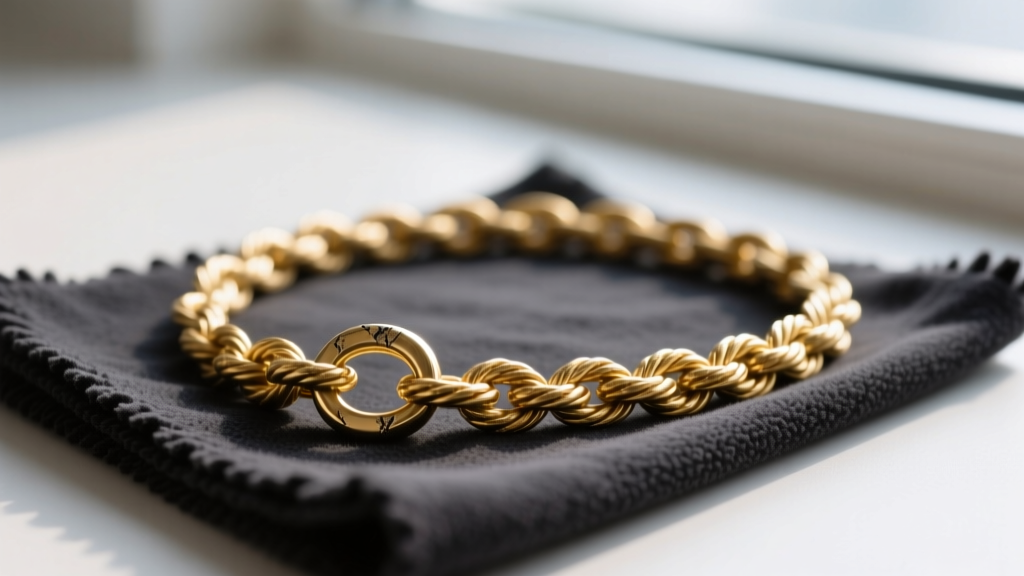
Care Protocol: Maintenance for long chains is less about chemical cleaning and more about mechanical inspection. Every three months, perform a 'tug and click' test on the lobster claw or box clasp. If the spring mechanism feels sluggish or fails to snap shut with an audible click, the internal spring is compromised by pocket lint or metal fatigue. Take it to a jeweler for an ultrasonic flush or clasp replacement. Additionally, if you wear a pendant on a 24-inch chain, inspect the pendant bail (the loop connecting the charm to the chain). The constant swinging acts like a saw, slowly grinding through the bail's metal. Replace worn bails before they snap and drop your pendant.
Material-Specific Cleaning Protocols by Length
The material of your chain interacts differently with the environment based on its length. Here is how to handle the most common men's jewelry metals:
- 316L Surgical Stainless Steel: Highly resistant to sweat and tarnish. Often used for longer 24-inch chains because it requires minimal upkeep. Clean with warm soapy water. Avoid bleach-based cleaners, which can cause localized pitting in the chromium oxide layer.
- 14k and 18k Solid Gold: The standard for mid-length chains. 14k is harder and more scratch-resistant, while 18k is softer and more prone to micro-abrasions from shirt friction. Clean with a 1:6 ratio of ammonia to water, but only if the chain contains no porous gemstones like turquoise or opals, as warned by the Gemological Institute of America (GIA).
- Titanium (Grade 5 / Ti-6Al-4V): Virtually indestructible and hypoallergenic. Ideal for tight 16-inch chokers worn during athletic activities. Can be cleaned with isopropyl alcohol to strip heavy body oils instantly.
Storage Solutions Tailored to Chain Length
How you store your necklace is just as critical as how you clean it. Tossing a 22-inch chain into a drawer guarantees a tangled mess that will require aggressive pulling, potentially warping the links and weakening the solder points.
Expert Tip: Always store chains fully clasped. Leaving a lobster clasp open allows the prong to catch on other jewelry, bending the clasp lever and ruining the tension spring.
For the average men's necklace length (18-22 inches), hang the chain on a velvet-lined jewelry valet or a dedicated wall hook to allow gravity to keep the links aligned. For longer 28-inch chains, drape them over a multi-tiered stand to prevent the bottom loop from kinking. Never store sterling silver chokers in cardboard or paper boxes; the sulfur off-gassing from wood pulp will tarnish the silver overnight. Instead, use anti-tarnish zip-lock bags infused with silver-guard polymers, pressing out all excess air before sealing.
Conclusion
Treating all necklaces with a one-size-fits-all cleaning approach is a recipe for damaged metals and broken clasps. By acknowledging how the average men's necklace length dictates its exposure to sweat, friction, and kinetic impact, you can tailor your maintenance routine to maximize the lifespan of your pieces. Whether you are rocking a tight 16-inch titanium collar or a swinging 26-inch gold Cuban, targeted care ensures your jewelry remains as sharp as the day you bought it.


