Stop Tangles & Tarnish: How to Choose the Right Necklace Boxes
Discover how to troubleshoot jewelry storage. Learn the science behind tangling and tarnishing, and how to choose the best necklace boxes.

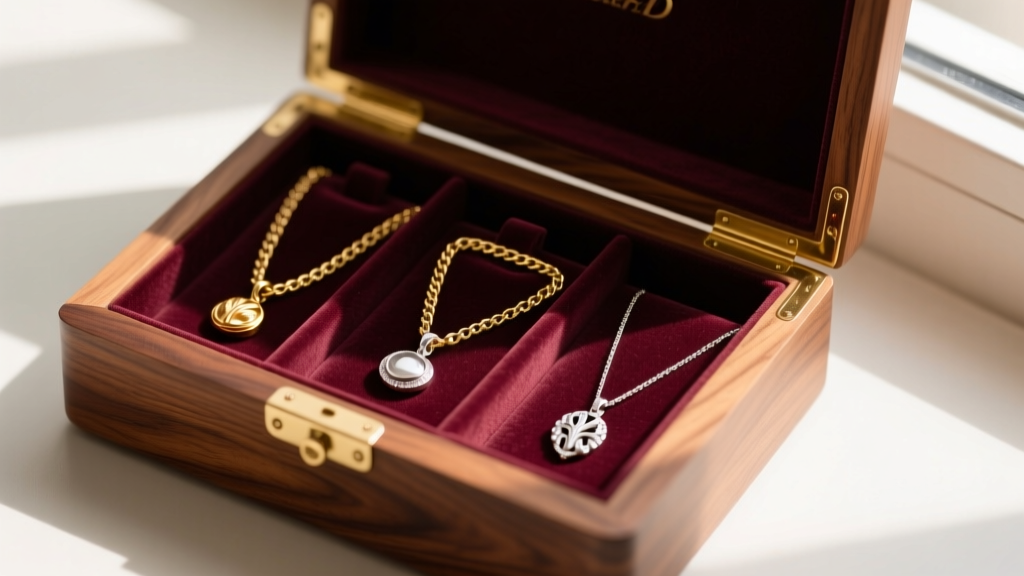
The Hidden Enemies of Your Jewelry Drawer
Most jewelry owners treat storage as a mere aesthetic afterthought, tossing their most prized necklaces into a drawer or a generic velvet pouch. However, improper storage is the leading cause of premature jewelry degradation. In 2026, with the rising costs of precious metals and gemstones, treating your jewelry storage as an active preservation environment is no longer optional—it is a financial necessity. The two most pervasive issues plaguing necklace collections are mechanical tangling and chemical tarnishing. Both of these problems are entirely preventable if you understand the underlying physics and chemistry at play. Choosing the right necklace boxes requires moving beyond superficial design and focusing on archival-quality materials, precise compartmentalization, and environmental control. This guide will troubleshoot the exact failure points in your current storage setup and provide a scientific framework for selecting the ultimate protective housing for your chains, pendants, and lockets.
Troubleshooting Chain Tangling: Weave vs. Storage
Tangling is not a random act of bad luck; it is a predictable outcome of physics, specifically relating to friction coefficients and geometric interlocking. Different chain weaves interact with one another in highly specific ways. For instance, a smooth, high-polish snake chain possesses a very low coefficient of friction, allowing it to easily slide into the microscopic gaps of a textured rope chain or a standard cable chain when subjected to the micro-vibrations of a closing drawer. Furthermore, the hardware itself is often the culprit. Standard spring-ring clasps have a tiny, exposed tension gap that acts like a grappling hook, catching on the open links of Figaro or Mariner chains.
The 'Hanging Insert' Framework
To solve the tangling equation, you must eliminate lateral movement and hardware-to-chain contact. The most effective troubleshooting method is the 'Hanging Insert' framework. High-end necklace boxes utilize vertical, tension-based hanging bars lined with high-friction suede or silicone. By suspending the necklace from the clasp and allowing the chain to hang plumb, gravity naturally aligns the links, making interlocking physically impossible. If your current necklace boxes only feature flat, horizontal velvet slots, you are forcing the chain to coil. Coiling introduces torsional stress, especially on box chains and herringbone weaves, which can lead to permanent kinking and structural failure over time. When shopping for new necklace boxes, prioritize those with vertical hanging capabilities or individual, snap-locking rigid channels that prevent the chain from shifting during transit.
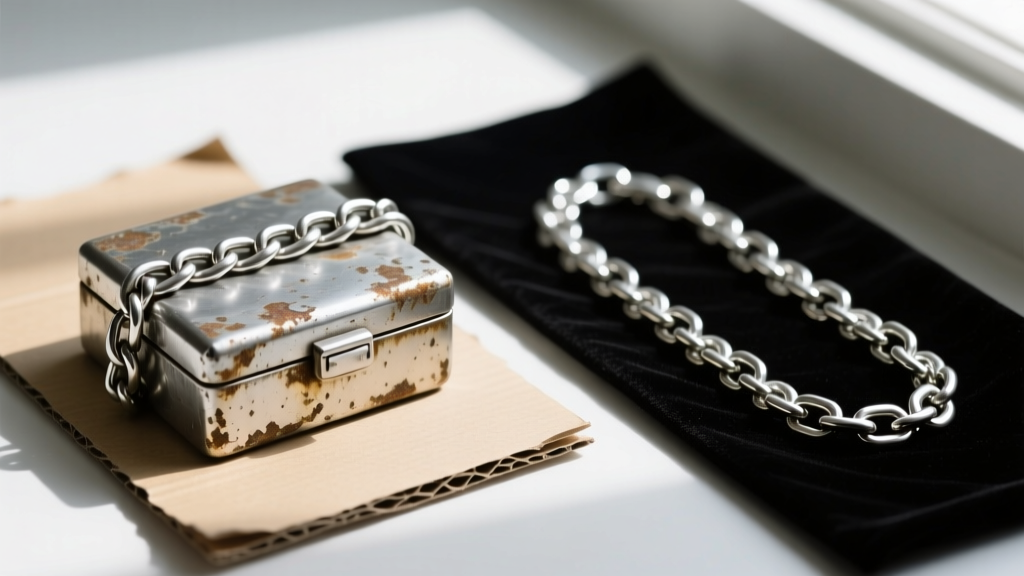
Solving the Tarnish Equation: Humidity and Off-Gassing
While gold and platinum are largely immune to environmental degradation, sterling silver and copper-alloy necklaces are highly susceptible to tarnish. Tarnish is a chemical reaction where silver reacts with hydrogen sulfide or sulfur dioxide in the air to form silver sulfide—a dull, black layer that corrodes the surface. Many consumers are shocked to discover that their expensive necklace boxes are actually accelerating this process. Cheap, mass-market jewelry boxes are frequently constructed from MDF (Medium-Density Fiberboard) or standard cardboard. The wood pulping process (specifically the Kraft process) used to create these materials leaves behind significant sulfur residues. Furthermore, the adhesives and polyurethane finishes used in budget boxes off-gas volatile organic compounds (VOCs) and formaldehyde, which create an acidic micro-environment that eats away at delicate metal finishes and porous gemstones.
According to the Gemological Institute of America (GIA), the most effective way to combat this is through the use of treated anti-tarnish textiles. Premium necklace boxes line their interiors with materials like Pacific Silvercloth, a specialized fabric embedded with microscopic silver particles. These particles act as a sacrificial anode, intercepting and absorbing airborne sulfur gases before they can reach your actual jewelry. When auditing your current necklace boxes, perform the 'smell test.' If the interior smells strongly of chemicals, glue, or damp wood, it is actively off-gassing and must be replaced or lined with an archival barrier.
| Box Interior Material | Chemical Properties | Best Used For | Troubleshooting Warning |
|---|---|---|---|
| Standard Cardboard/Paperboard | High sulfur content, acidic, absorbs moisture | Short-term transit only | Will cause rapid silver sulfide formation and copper oxidation. |
| MDF with Polyurethane Finish | Off-gasses formaldehyde and VOCs | Display-only (non-enclosed) | Acidic vapors will degrade porous gems like turquoise and pearls. |
| Archival Polyethylene Plastic | Inert, non-reactive, zero off-gassing | Diamonds, gold, platinum | Traps ambient humidity; do not use for moisture-sensitive organics. |
| Treated Anti-Tarnish Flannel | Embedded with zinc/silver sacrificial particles | Sterling silver, copper alloys | Cloth loses efficacy after 2-3 years; requires replacement inserts. |
Specialized Troubleshooting: Pearls, Opals, and Soft Gems
Organic and porous gemstones require a completely different storage paradigm than metals. Pearls, for example, are composed of calcium carbonate platelets held together by an organic protein called conchiolin. If you store a pearl necklace in an airtight plastic necklace box with silica gel desiccant packets, you will systematically destroy the jewelry. The silica gel will strip the ambient moisture from the air, causing the conchiolin to dry out, shrink, and crack, ultimately leading to the peeling and flaking of the nacre. The GIA Pearl Care Guide explicitly warns against storing pearls in safety deposit boxes or airtight plastic environments for extended periods.
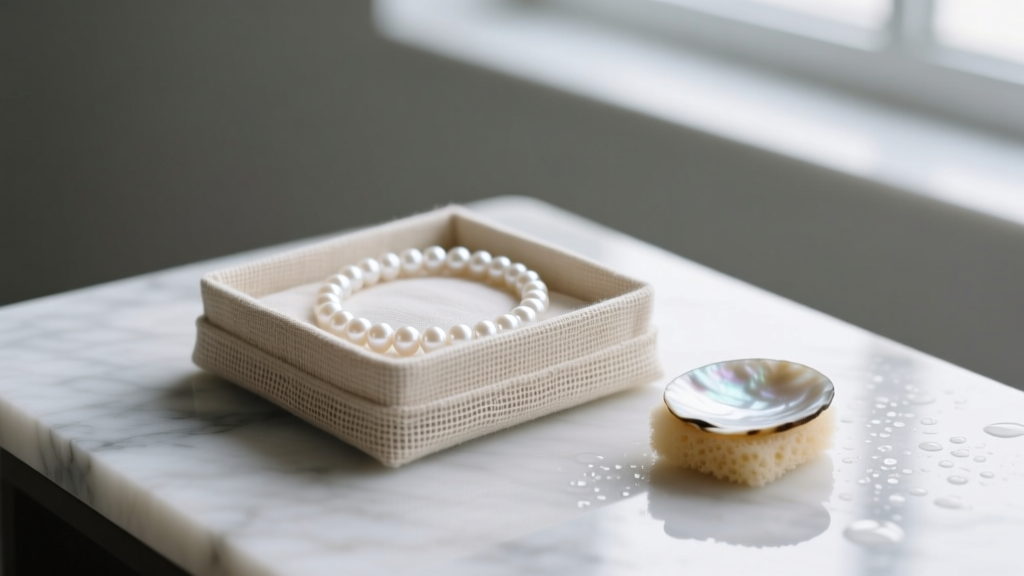
To troubleshoot pearl and opal storage, you must seek out necklace boxes that offer 'micro-climate breathability.' Linen-lined or untreated cotton-lined wooden boxes are ideal, as they allow for a gentle exchange of air while maintaining a stable Relative Humidity (RH) of around 40% to 50%. If you live in an arid climate or keep your home's heating cranked up during winter, place a barely damp cellulose sponge in a separate, adjacent compartment of the necklace box to passively maintain the necessary humidity levels. Never store pearls hanging, as the silk thread will stretch and weaken over time; they must always be stored flat in a dedicated, soft, unstructured pouch within a breathable box.
Step-by-Step Audit: Upgrading Your Current Setup
Transitioning to a proper archival storage system does not require throwing away your entire collection of boxes. Follow this troubleshooting checklist to upgrade your current setup and protect your investments:
- Step 1: The Purge. Remove all necklaces from cardboard, MDF, or strong-smelling fabric boxes. Wipe down silver pieces with a specialized polishing cloth to remove existing silver sulfide before placing them in a new environment.
- Step 2: Clasp Securing. Fasten all lobster and spring-ring clasps. For chains prone to slipping through gaps, thread the clasp through a small piece of archival, acid-free tissue paper before closing it to prevent the hook from catching on adjacent links.
- Step 3: The Barrier Method. If you own beautiful but chemically reactive antique wooden necklace boxes, line the interior compartments with acid-free, buffered tissue paper or zip-seal your silver necklaces in specialized anti-tarnish zip bags (like those from 3M) before placing them inside the box.
- Step 4: Climate Control. Keep your necklace boxes out of direct sunlight and away from exterior walls or bathroom vanities, where temperature fluctuations and high humidity spikes will accelerate both chemical tarnishing and adhesive failure in the box lining.
By understanding the material science behind jewelry degradation, you can transform your necklace boxes from simple decorative containers into highly effective preservation vaults. Investing in archival-quality storage—such as those offered by heritage brands like Wolf or modular systems like Stackers—ensures that your chains remain untangled, your silver stays brilliant, and your organic gems retain their structural integrity for generations to come.


