Cleaning & Care for Layered Gold Necklaces for Women
Discover expert tips to clean, untangle, and maintain your layered gold necklaces for women. Keep your 14k and 18k stacks tarnish-free and pristine.


The art of the necklace stack has evolved from a passing trend into a permanent fixture of modern personal style. However, wearing multiple chains simultaneously introduces unique maintenance challenges. Friction between links, compounded exposure to environmental elements, and the inevitable micro-tangles can quickly degrade your favorite pieces. Proper care for layered gold necklaces for women requires an understanding of metallurgy, daily wear hazards, and specialized cleaning protocols. Whether you are stacking delicate 18k gold cable chains or bold 14k gold paperclip links, this comprehensive guide will help you preserve the structural integrity and brilliant luster of your jewelry.
The Material Science of Your Gold Stack
Before applying any cleaning solution, you must identify the exact material composition of your layered pieces. Pure 24k gold is entirely hypoallergenic and impervious to tarnish, but it is far too soft for daily-wear chains. Therefore, jewelers alloy gold with metals like copper, zinc, and silver to increase durability. According to the Gemological Institute of America (GIA), these alloy metals are the actual culprits behind tarnish and discoloration.
Solid Gold: 14k vs. 18k
An 18k gold chain contains 75% pure gold and 25% alloy metals, offering a rich, warm hue but remaining slightly more susceptible to scratching. A 14k gold chain contains 58.5% pure gold and 41.5% alloys, making it highly durable but more prone to oxidation (tarnish) when exposed to sulfur and sweat. When layering, mixing 14k and 18k pieces is common, but be aware that the 14k pieces will require more frequent polishing to maintain a uniform color match across your stack.
Gold Vermeil and Gold-Filled Alternatives
Many affordable layering sets utilize gold vermeil or gold-filled construction. True gold vermeil must feature a sterling silver base plated with at least 2.5 microns of gold. Gold-filled chains consist of a brass core with a much thicker outer layer of gold (usually 5% to 10% of the total weight). While these materials mimic the look of solid gold, aggressive polishing can wear through the outer layers, exposing the base metal beneath. In 2026, PVD (Physical Vapor Deposition) gold coatings on stainless steel have also become ubiquitous; these are highly water-resistant but require entirely different care protocols than traditional plated jewelry.
The Daily Wear Threat Matrix
When you wear layered gold necklaces for women, the chains constantly rub against each other and your skin. This friction creates micro-abrasions that trap dead skin cells, cosmetics, and environmental pollutants. Understanding what damages your gold is the first step in preventative maintenance.
- Chlorine: The absolute enemy of gold alloys. Exposure to chlorinated pool water or harsh household bleach causes 'stress corrosion cracking' in 14k and 18k gold, literally dissolving the alloy metals and causing chains to snap at the clasps or solder points.
- Sulfur: Found in hard water, certain hot springs, and even some rubber bands. Sulfur reacts with the copper and silver alloys in your gold, creating a dark, tarnished film on the surface.
- Cosmetics and Perfumes: Aerosol hairsprays, liquid foundations, and alcohol-based perfumes leave a sticky residue that dulls the reflective surface of gold links and accelerates the degradation of gold vermeil plating.
- Friction: Wearing a heavy pendant on a delicate 1mm chain within a stack causes uneven wear, eventually thinning the links at the point of contact.
Step-by-Step Cleaning Protocol for Layered Gold
To safely clean a tangled or tarnished stack of solid gold or gold-filled chains, follow this jeweler-approved methodology. Never use ultrasonic cleaners on layered chains, as the high-frequency vibrations can weaken delicate solder rings and shake loose gemstone settings.
What You Need
- Lukewarm distilled water (tap water contains minerals that can leave spots)
- A few drops of pH-neutral dish soap (such as original Dawn)
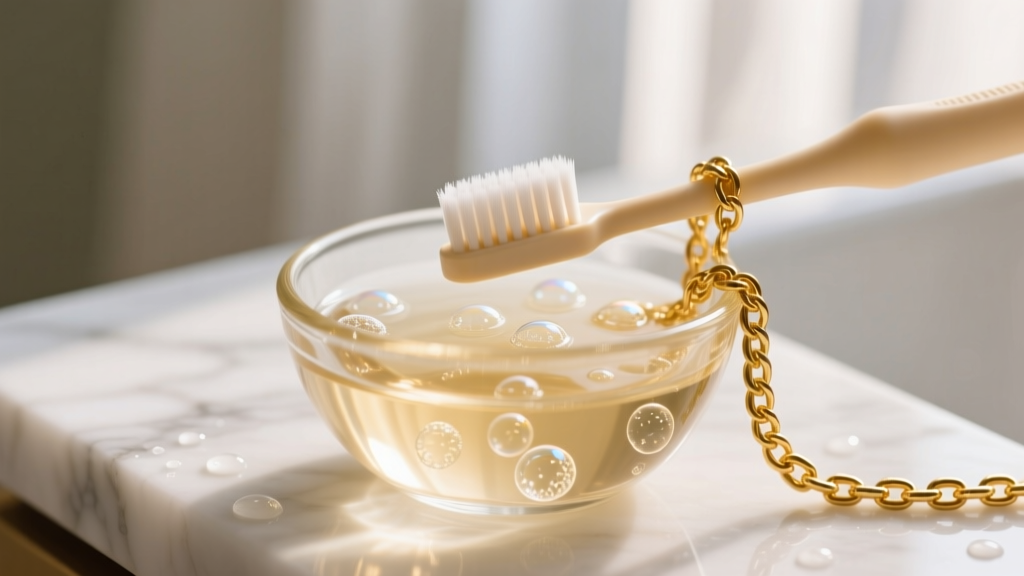
- A brand-new, ultra-soft baby toothbrush
- A lint-free microfiber polishing cloth
- A ceramic or glass bowl (avoid metal bowls that can scratch the gold)
The Wash and Dry Technique
First, unclasp all necklaces in your stack and lay them flat on a clean, dark towel so you can easily spot any dropped pieces. Mix a few drops of dish soap into the lukewarm distilled water. Submerge your chains for no more than three to five minutes to loosen body oils and cosmetic buildup. Take your soft baby toothbrush and gently stroke the bristles along the length of the chain, moving in the direction of the links. Pay special attention to the clasps and jump rings, where grime accumulates most heavily.
Rinse the chains thoroughly under a gentle stream of lukewarm water. Crucial step: Always ensure the drain is plugged or use a mesh strainer over the sink. Lay the chains flat on a microfiber cloth and gently pat them dry. Never pull or stretch a wet chain. Allow them to air dry completely for an hour before storing or re-wearing.
Untangling the Stack: A Jeweler's Trick
The most frustrating aspect of wearing multiple necklaces is the inevitable knotting. When three or more chains twist together, pulling them tight will only result in permanent kinks, especially in herringbone or snake chains. Professional jewelers rely on a simple friction-reduction technique.
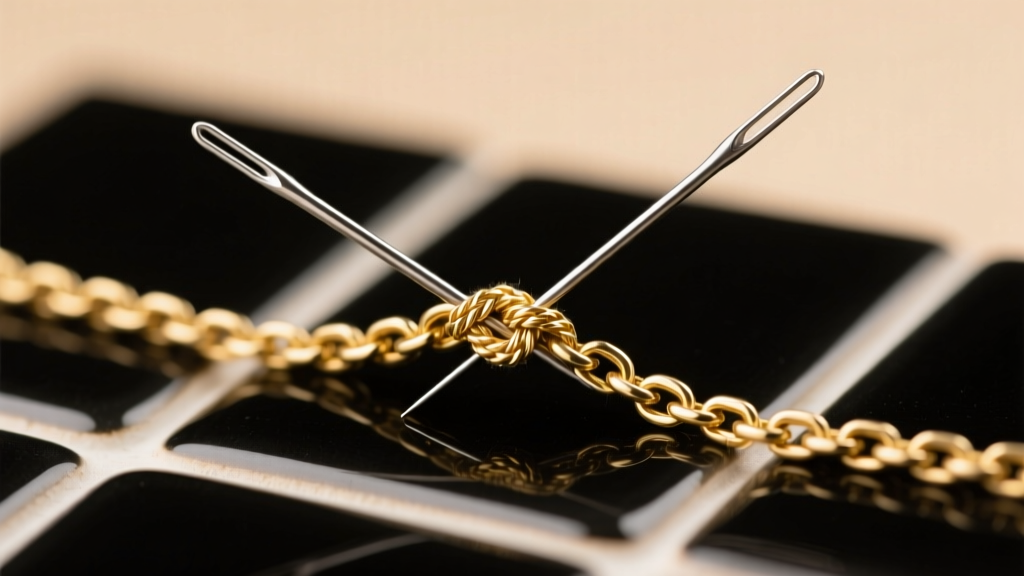
Lay the tangled mass flat on a hard, smooth surface like a glass or ceramic tile. Sprinkle a generous amount of baby powder or cornstarch directly onto the knot. The fine powder acts as a dry lubricant, eliminating the friction between the metal links. Take two fine sewing needles or straight pins and gently insert them into the center of the knot. Slowly wiggle the needles outward to loosen the core, then use your fingertips to massage the powder into the links until the knot slides apart effortlessly. Wipe away the excess powder with a soft brush before washing the chain as described above.
Material-Specific Care Matrix
Not all gold jewelry can be treated identically. Use the table below to determine the safest cleaning and maintenance route for the specific types of chains in your collection.
| Material Type | Safe Cleaning Agents | Agents to Avoid | Polishing Method |
|---|---|---|---|
| Solid 14k / 18k Gold | Mild dish soap, warm water, commercial gold dip (sparingly) | Chlorine, bleach, toothpaste, abrasive pastes | Soft microfiber cloth, professional polishing rouge |
| Gold Vermeil (Silver Base) | Mild dish soap, cool water, quick rinse | Hot water, silver dip, ultrasonic cleaners, rough rubbing | Very gentle wiping; avoid aggressive buffing |
| Gold-Filled (Brass Base) | Mild dish soap, warm water | Ammonia, harsh chemical dips | Microfiber cloth; use a jewelry polishing cloth designed for gold |
| PVD Gold (Stainless Steel) | Soap and water, glass cleaner, alcohol wipes | Chlorine (can still degrade coating over time) | Any soft cloth; highly scratch-resistant |
Strategic Storage to Prevent Chain Knotting
How you store your layered gold necklaces for women is just as important as how you clean them. Tossing multiple chains into a single jewelry box drawer guarantees a tangled mess and increases the risk of surface scratching. The Jewelers of America recommends storing pieces individually in soft pouches or lined compartments.
For stackers, the best investment is a multi-strand jewelry roll or a hanging jewelry organizer with individual felt snaps. If you must store them in a drawer, place each chain inside its own small, zip-top polyethylene bag. Leave the clasp hanging just outside the zip seal; this prevents the clasp from catching on the links during transit and keeps the chain relatively straight. For an extra layer of protection against tarnish, drop a 3M anti-tarnish strip into each bag. These strips absorb ambient sulfur and hydrogen sulfide gases, keeping your 14k gold chains bright for up to a year without requiring a polish.
When to Seek Professional Maintenance
While daily cleaning can be handled at home, structural maintenance requires a professional touch. Once a year, take your most-worn layered pieces to a bench jeweler. They will inspect the solder points on your jump rings, check the spring tension in your lobster clasps, and use a professional steam cleaner to blast away hardened debris from intricate link crevices. If you wear a pendant on one of your layered chains, the jeweler will also check the bail and prong settings to ensure your gemstones are secure. According to the Federal Trade Commission (FTC), maintaining the structural integrity of precious metals is essential to preserving both their aesthetic and intrinsic value.
By understanding the metallurgy of your pieces, avoiding harsh environmental chemicals, and employing gentle, friction-reducing cleaning techniques, your layered gold necklace stack will remain a brilliant, tangle-free staple in your wardrobe for decades to come.


