How to Clean and Maintain the Thinnest Chain Necklace
Learn expert care, cleaning, and untangling tips for the thinnest chain necklace. Protect your 0.5mm micro-chains from kinks, tarnish, and breaks.

The Allure and Vulnerability of Micro-Chains
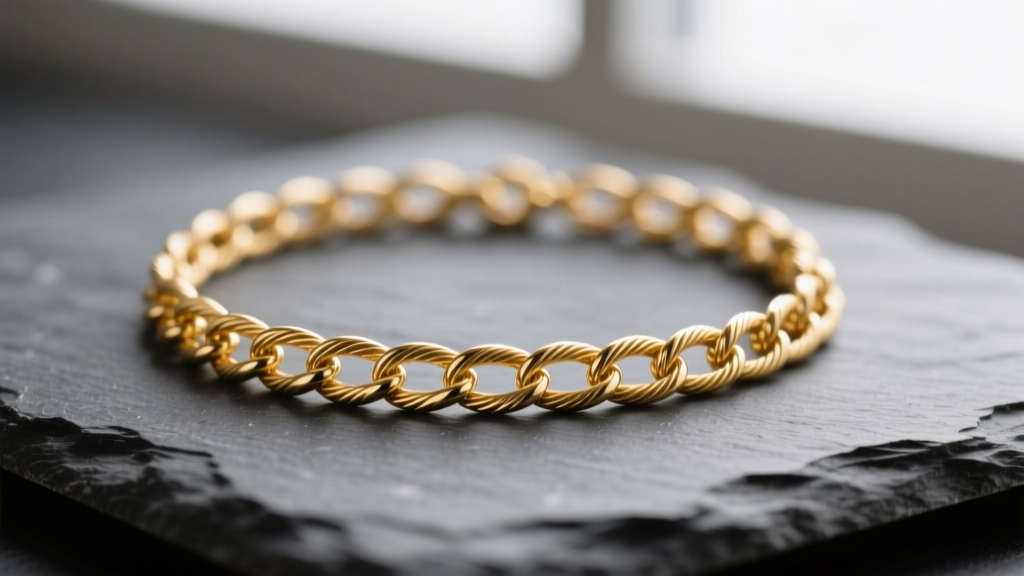
The barely-there aesthetic has dominated fine jewelry trends for years, but owning the thinnest chain necklace comes with a unique set of metallurgical and maintenance challenges. When a chain's width drops below the 1.0mm threshold—often hovering between 0.5mm and 0.8mm—it transitions from a standard accessory to a delicate micro-structure. These hairline chains, frequently crafted in micro-cable, thread, or fine box styles, offer an ethereal, floating illusion on the collarbone. However, their minimal mass means they possess very low tensile strength and are highly susceptible to kinking, stretching, and catastrophic link failure.
Caring for ultra-fine jewelry requires abandoning standard cleaning habits. What works for a heavy 3.0mm Cuban link can instantly destroy a 0.6mm thread chain. This comprehensive guide explores the exact protocols required to clean, untangle, and preserve the structural integrity of the thinnest chain necklace in your collection.
The Anatomy of Ultra-Fine Chains: Why They Break
To properly care for micro-chains, you must understand their physical limitations. The thinnest chain necklace options on the market are typically drawn from 22-gauge (0.64mm) or 24-gauge (0.51mm) wire. At this thickness, the metal's crystalline structure is highly sensitive to stress fatigue.
Alloy Composition and Tensile Strength
According to the Gemological Institute of America (GIA), pure 24k gold is far too soft for jewelry. Therefore, fine chains are alloyed for durability. However, when shopping for the thinnest chain necklace, 14k gold (58.5% pure gold) is actually superior to 18k gold (75% pure gold). The higher percentage of alloy metals like copper, zinc, and silver in 14k gold provides crucial structural rigidity, reducing the likelihood of the chain stretching under the weight of a pendant or the friction of daily wear.
The Jump Ring Vulnerability
The most common failure point on any micro-chain is the jump ring connecting the clasp. On standard chains, these are soldered. On the thinnest chain necklace styles, traditional torch soldering can melt the adjacent microscopic links. Therefore, high-end jewelers use laser welding to seal these jump rings. If your chain snaps near the clasp, it is often due to a poorly laser-welded jump ring that has succumbed to metal fatigue from repetitive opening and closing.
Daily Wear Rules to Prevent Kinking and Snapping
Prevention is the cornerstone of micro-chain maintenance. Because a 0.5mm chain lacks the mass to resist bending, it will conform to any pressure applied to it, resulting in permanent kinks that weaken the metal's molecular bonds.
- The Lotion Hazard: Body lotions, sunscreens, and perfumes do not just tarnish metal; they act as an adhesive for micro-dust and dead skin cells. On a micro-chain, this creates an abrasive paste that settles inside the tiny link joints, acting like liquid sandpaper that slowly grinds away the metal from the inside out.
- Sleeping Restrictions: Never sleep while wearing the thinnest chain necklace. The friction between your neck, the pillowcase, and your body weight generates enough localized torque to snap a 24-gauge chain instantly.
- Pendant Weight Ratios: A general rule of thumb in jewelry design is that a pendant should not weigh more than three times the weight of the chain. For a 0.6mm chain weighing roughly 1.5 grams, your pendant should not exceed 4.5 grams. Exceeding this ratio causes microscopic stretching of the links over time.
Step-by-Step Cleaning Protocol for Micro-Chains
Standard jewelry cleaning methods are notoriously dangerous for ultra-fine pieces. The Jewelers of America frequently warns against using harsh chemicals or mechanical agitation on delicate items. Here is the safest, expert-approved 'Float and Swish' method for cleaning the thinnest chain necklace.
What to Absolutely Avoid
Never use an ultrasonic cleaner on a micro-chain. Ultrasonic machines work through cavitation—creating millions of microscopic vacuum bubbles that implode with intense force. While this shakes dirt loose from heavy rings, the shockwaves can easily rattle open the un-soldered micro-links of a fine box chain or fracture a weakened 24-gauge cable link.
The Safe Cleaning Method
- Line a small glass bowl with a soft microfiber cloth to prevent the chain from scratching against the hard glass surface.
- Fill the bowl with lukewarm distilled water and add exactly two drops of pH-neutral dish soap (such as original blue Dawn).
- Submerge the chain and let it float for 5 to 10 minutes to loosen sebum and cosmetic buildup.
- Gently swish the water with your finger. Do not rub the chain between your fingers, as this encourages kinking.
- Lift the chain out by the clasp, allowing it to hang straight down. Rinse under a very gentle stream of distilled water.
- Pat dry with a lint-free cloth and allow it to air-dry completely flat before storage.
| Cleaning Agent / Tool | Effect on Micro-Chains (0.5mm - 0.8mm) | Verdict |
|---|---|---|
| Ultrasonic Cleaners | Cavitation shockwaves can fracture links or shake open jump rings. | Never Use |
| Soft-Bristle Toothbrush | Bristles can catch on micro-cable links, pulling and warping them. | Avoid |
| Baking Soda Paste | Highly abrasive; will scratch high-polish 14k/18k gold and platinum. | Avoid |
| pH-Neutral Dish Soap | Gently breaks down oils without degrading metal alloys. | Highly Recommended |
| Lint-Free Microfiber | Prevents cotton fibers from snagging on microscopic chain joints. | Highly Recommended |
Untangling the Impossible: A Micro-Chain Rescue Guide
Because the thinnest chain necklace is so lightweight, it easily slips through standard jewelry box dividers and tangles upon itself. A severe knot in a 0.5mm thread chain can look impossible to undo, but pulling it will only tighten the metal and cause a break.
Expert Insight: The secret to untangling micro-chains is reducing surface friction. Never use oil (like olive or baby oil), as it will leave a stubborn residue that attracts dirt and degrades the chain's polish over time.
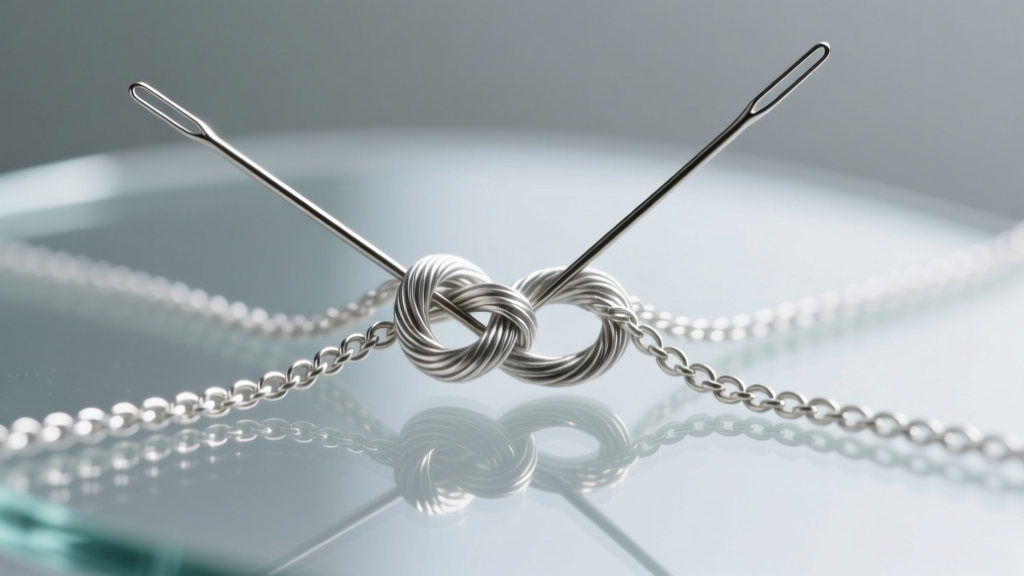
Instead, utilize the Talcum Powder Technique. Lay the tangled chain flat on a clean, hard surface like a glass cutting board or a ceramic plate. Generously dust the knot with cosmetic talcum powder or cornstarch. The fine powder acts as a dry lubricant, coating the microscopic links and eliminating the friction that keeps the knot locked. Take two fine-tipped beading needles (or sterilized sewing needles) and gently work the powder into the center of the knot. Use the needles to push the links apart from the inside out, rather than pulling the ends of the chain. Once the knot is resolved, use the 'Float and Swish' cleaning method detailed above to remove the powder.
Proper Storage Solutions for Hairline Jewelry
How you store the thinnest chain necklace is just as critical as how you clean it. Improper storage is the leading cause of mysterious chain kinks and tarnish.
Isolation and Climate Control
Micro-chains must be stored completely isolated from other jewelry. Even the gentle friction of a heavier bracelet resting against a 0.6mm chain in a shared drawer can cause micro-abrasions. Store each chain in its own individual, resealable polyethylene bag. Squeeze out all excess air before sealing to minimize oxidation.
For silver or white gold micro-chains, insert a small strip of 3M Anti-Tarnish paper into the bag. These strips absorb sulfur compounds and hydrogen sulfide from the trapped air, preventing the microscopic crevices of the chain links from turning black. Finally, store the bags flat in a climate-controlled drawer. Avoid hanging ultra-thin chains on jewelry trees for long periods, as the constant gravitational pull can cause the metal to slowly stretch and weaken over months of storage.
Final Thoughts on Micro-Chain Longevity
Owning the thinnest chain necklace is an exercise in mindful jewelry wear. By respecting the physical limitations of 22-gauge and 24-gauge metals, avoiding destructive cleaning technologies like ultrasonics, and employing dry-lubricant untangling methods, you can ensure your delicate pieces remain pristine. Treat your micro-chains with the precision they demand, and they will continue to provide that effortless, barely-there elegance for years to come.


