How to Clean a Garnet Necklace Vintage Buyers Treasure
Discover expert cleaning and maintenance tips for your garnet necklace vintage piece. Learn how to protect foil-backed stones and antique settings.

The Unique Vulnerabilities of Antique Garnets
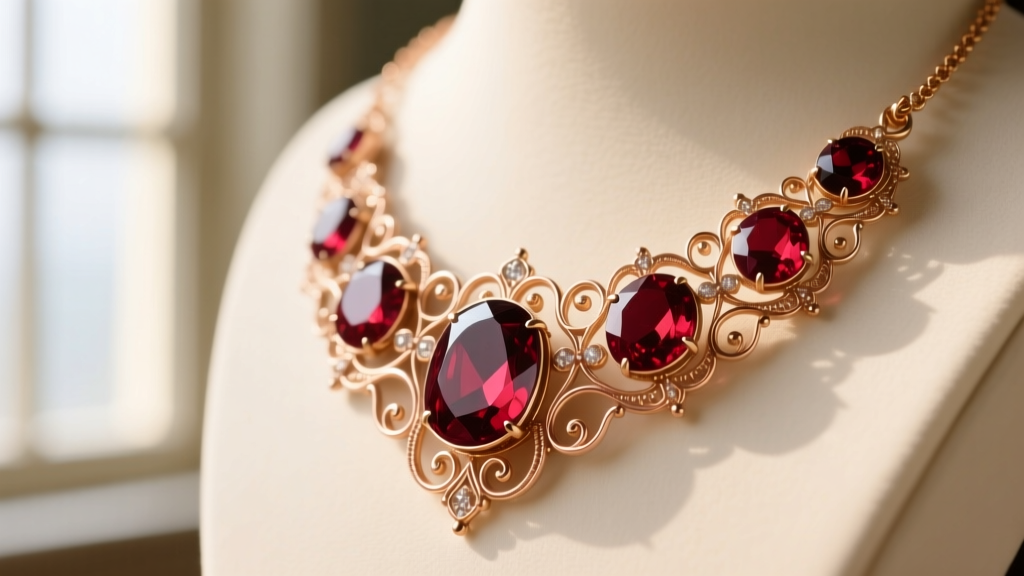
Owning an antique piece of jewelry is a privilege that comes with distinct custodial responsibilities. When evaluating a garnet necklace vintage collectors prize, you are often looking at a survivor from the Victorian or Edwardian eras. While garnet is a relatively durable gemstone—ranking between 6.5 and 7.5 on the Mohs hardness scale—the historical construction methods used to set these stones introduce severe vulnerabilities that modern jewelry does not possess. According to the Gemological Institute of America (GIA), while the stone itself can withstand moderate wear, the antique settings, historical metal alloys, and backing materials require a highly specialized, gentle approach to cleaning and maintenance.
Modern ultrasonic and steam cleaning methods, which are standard for contemporary diamond and sapphire jewelry, can be utterly catastrophic for antique garnets. The high-frequency vibrations can shatter rose-cut stones or loosen fragile historic prongs, while steam can permanently destroy the delicate metal foils often placed behind antique gems to enhance their color. To preserve the historical integrity and monetary value of your piece, you must abandon modern shortcuts and adopt a meticulous, conservation-grade cleaning protocol.
Identifying Your Vintage Garnet Necklace Construction
Before applying any cleaning agent, you must accurately identify the specific construction of your necklace. The cleaning protocol for a solid-back Edwardian pendant differs vastly from that of a closed-back Victorian choker.
Foil-Backed vs. Solid Back Settings
During the 18th and 19th centuries, lapidaries frequently placed a thin sheet of silver, copper, or colored foil behind the garnet to reflect light and deepen the stone's crimson hue. As noted by Antique Jewelry University, these foils are incredibly susceptible to moisture. If water seeps behind the stone through a worn prong or a micro-fracture in the bezel, the foil will oxidize, turn black, and permanently cloud the gemstone. If your necklace features closed-back bezels or a visibly metallic reflection behind the stone, it must never be submerged in liquid.
Bohemian Pyrope vs. Almandine Garnets
Victorian jewelry heavily featured two types of garnet. Bohemian pyrope garnets are typically small, faceted, and set in clusters (often in low-karat gold or silver-gilt). Almandine garnets are darker, often cut en cabochon (smooth and rounded), and set in heavier, ornate yellow or rose gold. Pyrope clusters trap immense amounts of skin oils and cosmetic residue between the tiny stones, requiring careful, targeted brushing, whereas almandine cabochons are easier to wipe down but are highly prone to surface scratching if abrasive polishes are used.
Step-by-Step Cleaning Protocol for Vintage Garnets
Follow this conservation-approved method to safely remove decades of accumulated grime, skin oils, and environmental dust without compromising the antique setting.
Step 1: Dry Dusting and Inspection
Always begin dry. Use a clean, soft-bristled makeup brush or a dry microfiber cloth to gently sweep away loose dust and grit. This prevents you from rubbing hard particulate matter into the gold or the stone during the wet cleaning phase. While dusting, use a jeweler's loupe (10x magnification) to inspect the prongs and bezels. If you see lifted metal, bent prongs, or rattling stones, stop immediately and take the piece to a specialist in antique jewelry restoration.
Step 2: The Damp Cloth Method (For Foil-Backed Stones)
If your garnets are foil-backed or set in closed bezels, avoid all liquids. Lightly dampen a microfiber cloth with distilled water (never tap water, as the minerals can leave deposits). Wring it out until it is barely moist. Gently wipe the surface of the garnets and the metal settings. Immediately follow up with a dry, lint-free cloth to buff the stones and remove any residual moisture.
Step 3: The Mild Solution Method (For Open-Back, Solid Settings)
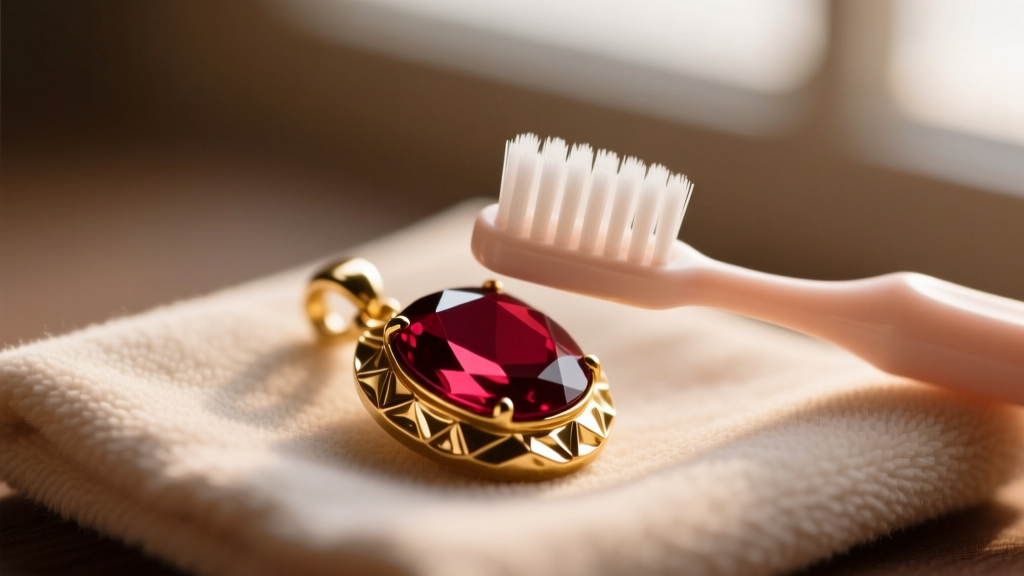
If you have confirmed the stones are open-backed and solid, you can use a mild aqueous solution. Mix a few drops of phosphate-free, gentle dish soap (like Dawn) into a bowl of lukewarm distilled water. Dip an extra-soft baby toothbrush into the solution, tap off the excess liquid, and gently brush the garnets in small circular motions. Pay special attention to the backs of the stones where lotion and dead skin accumulate. Rinse the brush in clean distilled water and gently sweep away the suds. Pat dry immediately with a microfiber cloth.
Cleaning Agents: What to Avoid and What to Use
The chemical sensitivity of antique metals and historical gemstone treatments means that common household jewelry cleaners are strictly prohibited. Refer to the table below to ensure you are using safe materials.
| Cleaning Agent / Tool | Safety Status | Reasoning |
|---|---|---|
| Ultrasonic Cleaners | NEVER USE | Vibrations shatter rose-cuts and shake loose antique solder joints. |
| Steam Cleaners | NEVER USE | Thermal shock fractures stones; moisture destroys backing foils. |
| Ammonia / Bleach | NEVER USE | Corrodes historic copper alloys and strips patina from Pinchbeck. |
| Baking Soda Paste | NEVER USE | Highly abrasive; will scratch both the garnet and the soft gold. |
| Distilled Water + Mild Soap | SAFE (Open-back) | Gently lifts oils without leaving mineral deposits or chemical residue. |
| Extra-Soft Baby Toothbrush | SAFE | Reaches intricate filigree without scratching the metal or stone. |
| Untreated Microfiber Cloth | SAFE | Traps dust and buffs the stone without chemical polishing agents. |
Maintenance: Prong Tightening and Silk Cord Care
Cleaning is only half the battle; structural maintenance is what keeps a vintage necklace wearable. Garnets are dense, heavy stones. Over a century of wear, the tension of the stone against the metal causes antique prongs to thin and wear down. Have a professional jeweler who specializes in antique pieces check the prongs every 18 to 24 months. They can use a burnishing tool to gently push and thicken the metal back over the girdle of the stone without removing the historical patina.
If your vintage garnet necklace is strung on silk cord or thread—a common technique for Victorian seed pearl and garnet chokers—you must monitor the thread's integrity. Silk degrades over time due to exposure to skin acidity and UV light. If the necklace feels stiff, or if you notice fraying near the clasp, it requires professional re-stringing. Never attempt to wash a silk-strung necklace, as water will weaken the fibers and cause the internal knotting to rot.
Storage and Environmental Protection
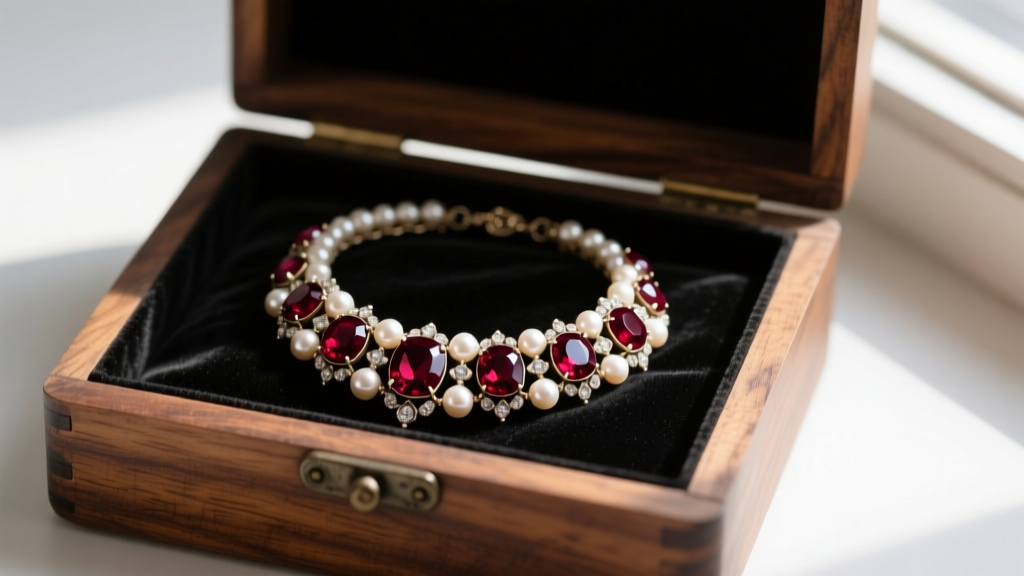
How you store your vintage garnet necklace is just as critical as how you clean it. Garnets can be scratched by harder gemstones like diamonds, sapphires, and topaz. Conversely, they can easily scratch softer materials like pearls or opals. Always store your necklace in its own individual compartment or a soft, acid-free tissue pouch.
Furthermore, keep the piece away from extreme temperature fluctuations and prolonged direct sunlight, which can cause thermal stress or fade certain treated stones over decades. Avoid storing the necklace in humid environments like bathrooms; the ambient moisture will accelerate the tarnishing of silver settings and the oxidation of any hidden copper foils. By combining gentle, informed cleaning with rigorous, climate-controlled storage, you ensure that your antique garnet necklace remains a vibrant, intact heirloom for the next generation of collectors.


