Diamond Four Leaf Clover Necklace: Metal & Gem Guide
Compare metals and stones for your diamond four leaf clover necklace. Expert guide on 18k gold, platinum, and diamond grades for lasting luxury.

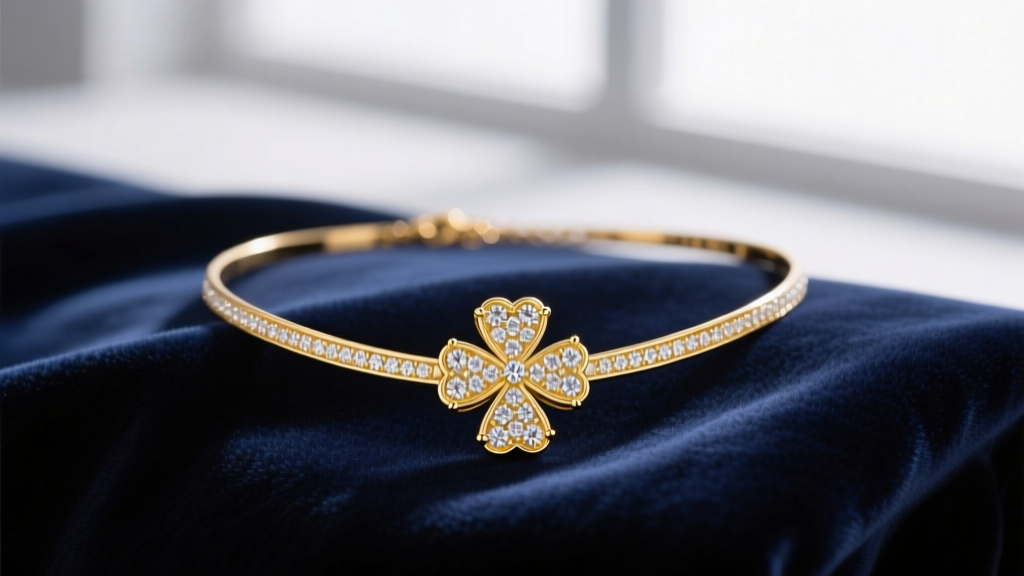
The Anatomy of the Quatrefoil: Why Materials Matter
The four-leaf clover, or quatrefoil, is one of the most iconic motifs in fine jewelry, popularized by legacy houses and widely adopted across the industry. When investing in a diamond four leaf clover necklace, the aesthetic appeal is only half the equation. The structural integrity, light performance, and long-term wearability of the piece are entirely dictated by its material composition. Because the clover shape relies on perfect radial symmetry, the metal framework must be cast or stamped with extreme precision to prevent warping over time. Furthermore, the interplay between the metal alloy, the diamond melee, and the contrasting gemstone inlays requires a deep understanding of material hardness and chemical stability. In this comprehensive guide, we break down the exact metallurgical and gemological properties you need to evaluate before making a purchase in 2026.
Metal Matrix: 18k Gold vs. Platinum vs. 14k Gold
The framework of a high-end clover pendant must balance malleability for intricate detailing with the tensile strength required to hold micro-pavé diamonds securely. According to the World Gold Council, pure 24k gold is far too soft (Vickers hardness of ~25 HV) for daily wear jewelry, necessitating the use of precise alloys.
- 18k Yellow Gold (75% Au): Alloyed typically with 12.5% copper and 12.5% silver. It offers a rich, warm hue and a Vickers hardness of approximately 125 HV. It is the industry standard for luxury clover necklaces, providing an ideal balance of workability and scratch resistance.
- 18k White Gold: Alloyed with palladium or nickel and plated with rhodium (usually 0.75 to 1.0 microns thick). While it provides a bright, silvery finish that complements white diamonds, the rhodium plating will inevitably wear away over 12 to 24 months of daily wear, revealing the slightly yellowish underlying alloy and requiring professional re-plating.
- Platinum 950 (95% Pt, 5% Ru or Ir): Denser and heavier than gold, with a Vickers hardness of around 110 HV. While technically softer on the surface than 18k gold, platinum possesses vastly superior tensile strength. When scratched, platinum displaces rather than loses metal, developing a patina that many collectors desire. It is the ultimate choice for securing delicate diamond settings.
- 14k Gold (58.3% Au): Harder (approx. 140 HV) and more affordable, but lacks the depth of color and prestige associated with luxury quatrefoil designs. It is more prone to stress-corrosion cracking in thin wire components like necklace bails.
| Metal Alloy | Composition | Vickers Hardness (HV) | Maintenance Level | 2026 Market Premium |
|---|---|---|---|---|
| 18k Yellow Gold | 75% Au, 12.5% Ag, 12.5% Cu | ~125 | Low | Baseline |
| 18k White Gold | 75% Au, Pd/Ni, Zn | ~130 | High (Rhodium) | +5% to +10% |
| Platinum 950 | 95% Pt, 5% Ruthenium | ~110 | Low (Patina) | +35% to +50% |
| 14k Yellow Gold | 58.3% Au, Ag, Cu, Zn | ~140 | Low | -40% (Discount) |
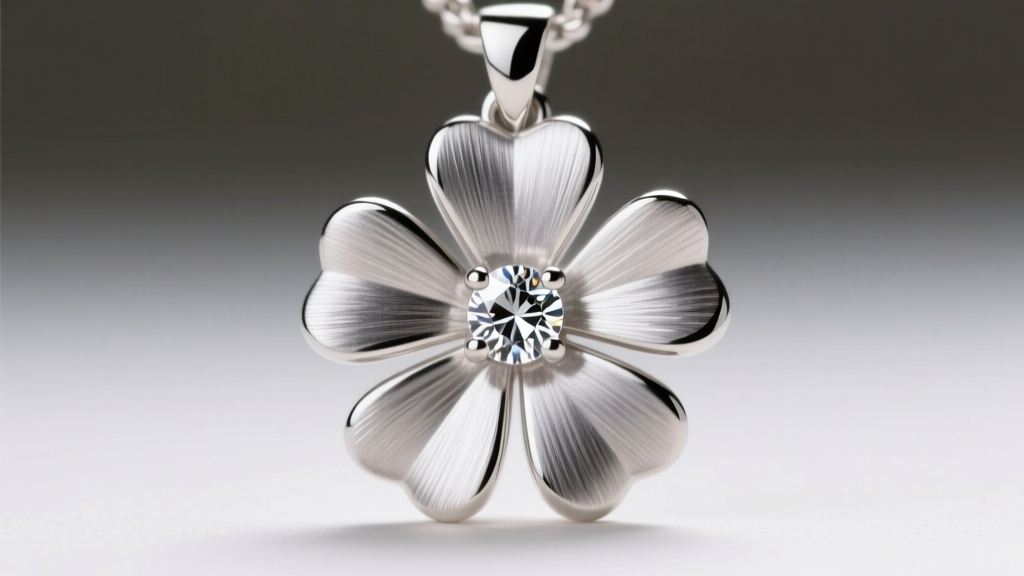
Diamond Selection: Melee Grades and the 2026 Lab-Grown Shift
The sparkle of a diamond four leaf clover necklace relies entirely on "melee" diamonds—small stones typically ranging from 0.01 to 0.15 carats each. A standard 15mm clover pendant utilizes between 20 and 40 melee stones, totaling roughly 0.25ct to 0.50ct in combined weight. The Gemological Institute of America (GIA) emphasizes that even in small sizes, cut quality dictates light return.
Full-Cut vs. Single-Cut Melee
Never compromise on single-cut melee for a clover motif. Single-cut diamonds feature only 17 or 18 facets, resulting in a glassy, flat appearance. You must insist on full-cut melee, which features the standard 57 or 58 facets of a larger round brilliant. This ensures the "crushed ice" scintillation that makes the curved petals of the clover come alive under ambient light.
Natural vs. CVD Lab-Grown in 2026
The 2026 jewelry market has seen a massive shift toward Chemical Vapor Deposition (CVD) lab-grown melee diamonds. Because lab-grown melee can be produced with D-E color and VVS clarity at a fraction of the cost of natural earth-mined melee, many accessible luxury brands have adopted them to maximize visual impact. However, if your goal is long-term value retention and heirloom prestige, natural melee (typically graded G-H color and VS2-SI1 clarity) remains the requisite standard. Inclusions in the VS-SI range are completely invisible to the naked eye at the melee scale, making higher clarity grades a waste of capital.
The Inlay Backdrop: Mohs Hardness and Porosity
Diamonds in a clover necklace are rarely set in solid metal alone; they usually frame a vibrant gemstone inlay. The physical properties of these inlays dictate how the necklace must be worn and cared for.
- White Mother of Pearl (Mohs 2.5 - 4.5): Composed of calcium carbonate, MOP is highly susceptible to acidic environments. Perfumes, lotions, and even natural skin acidity can etch the surface, dulling its iridescence over time.
- Onyx (Mohs 6.5 - 7.0): A dense variety of chalcedony. Onyx is highly durable for daily wear and resists scratching, though its conchoidal fracture means a hard drop on tile can cause chipping at the bezel edge.
- Malachite (Mohs 3.5 - 4.0): A copper carbonate hydroxide mineral prized for its vivid green banding. It is exceptionally soft, porous, and sensitive to heat and ultrasonic cleaners. Malachite inlays require meticulous care and should be removed before any physical activity.
- Carnelian (Mohs 6.5 - 7.0): Similar to onyx in durability, this reddish-orange chalcedony offers excellent scratch resistance and structural stability within a gold bezel.
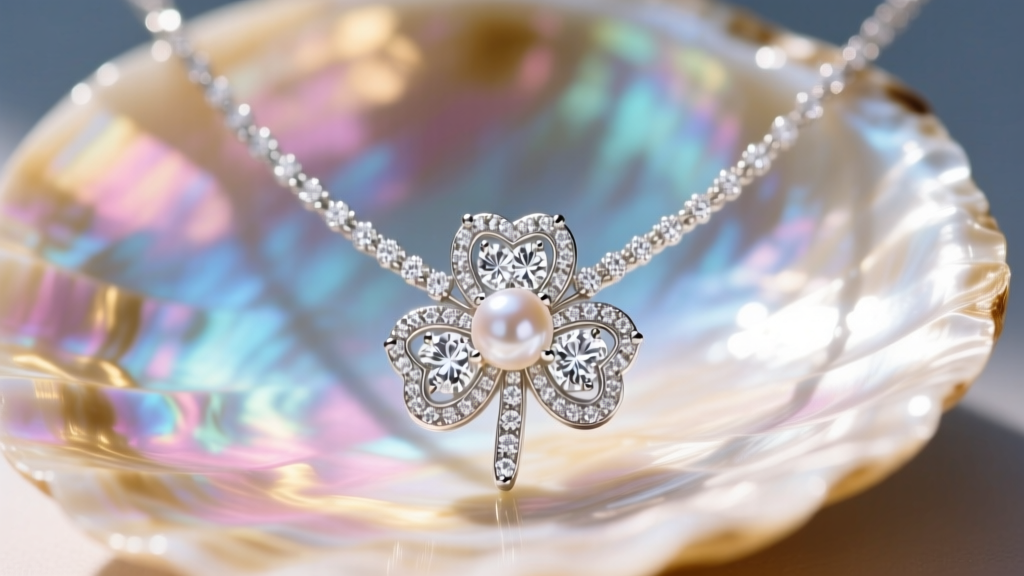
Setting Mechanics and Failure Modes
The method used to secure the diamonds profoundly impacts the lifespan of your necklace. The two primary settings used in quatrefoil designs are micro-pavé and bezel.
Micro-Pavé and Metal Fatigue
Micro-pavé settings use tiny beads of metal pushed over the girdle of the diamond to hold it in place. While this maximizes diamond surface area and brilliance, it is inherently fragile. The most common failure mode in older clover necklaces is prong fatigue. Repeated micro-impacts, catching on knitwear, or exposure to chlorine can cause the tiny metal beads to flatten or shear off, resulting in lost diamonds. If you choose micro-pavé, have a jeweler inspect the beads under magnification every 12 months.
Bezel Settings for Active Wear
Some modern interpretations of the clover motif utilize a continuous or segmented bezel setting, where a rim of metal completely encircles the diamond. While a bezel slightly reduces the visible diameter of the stone, it offers near-total protection against impacts and eliminates the risk of prong failure. For professionals who type heavily or individuals with active lifestyles, a bezel-set diamond four leaf clover necklace is the only structurally sound choice.
Expert Troubleshooting: If your clover pendant spins on the chain, causing the bail to wear unevenly against the metal loop, add a small silicone necklace stopper or have a jeweler solder a counter-weight jump ring to the back of the bail to maintain center gravity.
Final Verdict: Engineering Your Clover Pendant
Selecting the right diamond four leaf clover necklace requires looking past the brand name and evaluating the engineering. For a timeless, low-maintenance heirloom piece, opt for an 18k yellow gold framework with G-H natural full-cut melee diamonds and an onyx or carnelian inlay. If you prioritize maximum brilliance and a modern aesthetic, a platinum setting with D-color lab-grown micro-pavé diamonds and white mother of pearl offers unparalleled visual contrast, provided you commit to the necessary chemical-free care routines. By understanding the Vickers hardness of your metals and the Mohs scale of your inlays, you ensure your necklace remains as structurally sound as it is visually captivating.


