Necklace Black Panther Guide: Troubleshooting Tarnish and Breakage
Fix your failing necklace Black Panther fans love. Expert troubleshooting for heavy pendant chain snapping, black rhodium chipping, and base metal tarnish.

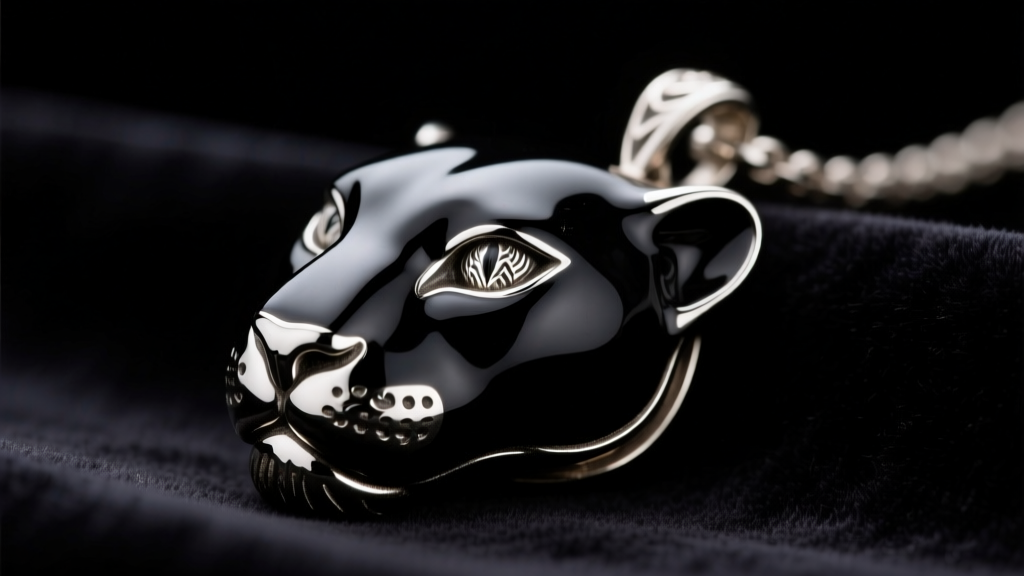
The Anatomy of a Black Panther Pendant: Where Failures Occur
Whether you are wearing a licensed Marvel cosplay replica, a Wakanda-inspired tribal collar, or a high-end luxury animalier piece, a Black Panther necklace is a bold statement. However, the very design elements that make these pendants striking—heavy die-cast metals, intricate black enamel inlays, and aggressive claw motifs—also make them highly susceptible to specific structural failures. As a jewelry specialist, I frequently see panther-themed necklaces suffering from three primary issues: chain snapping under excessive weight, black plating or enamel chipping, and severe skin discoloration from reactive base metals.
Troubleshooting these issues requires an understanding of the materials involved. Many mass-market replicas are cast from Zamak (a zinc alloy), while premium versions utilize 925 sterling silver plated with black rhodium, or solid 316L stainless steel. Below is a breakdown of common materials used in panther pendants and their inherent failure points.
| Material | Common Use | Weight Range | Primary Failure Point |
|---|---|---|---|
| Zamak (Zinc Alloy) | Cosplay replicas, movie merchandise | 40g - 80g | Bail snapping, severe tarnishing, skin reactions |
| 925 Sterling Silver | Fine jewelry, premium fan pieces | 15g - 35g | Black rhodium plating wear, soft metal scratching |
| 316L Stainless Steel | Everyday wear, durable streetwear | 20g - 50g | Clasp stiffness, jump ring friction |
| Brass with Enamel | Tribal collars, detailed Wakanda motifs | 30g - 60g | Enamel chipping on impact, brass oxidation |
Troubleshooting Problem #1: Heavy Pendant Chain Snapping
The most catastrophic failure for any heavy pendant is chain breakage. Black Panther pendants, particularly those featuring elongated panther claws or solid metal Wakanda panther heads, often weigh between 40 and 70 grams. When paired with the standard 1.2mm box chains included by manufacturers, the sheer kinetic force generated by walking or bending over creates immense shear stress on the chain's weakest link: the jump ring connecting the clasp, or the bail loop itself.
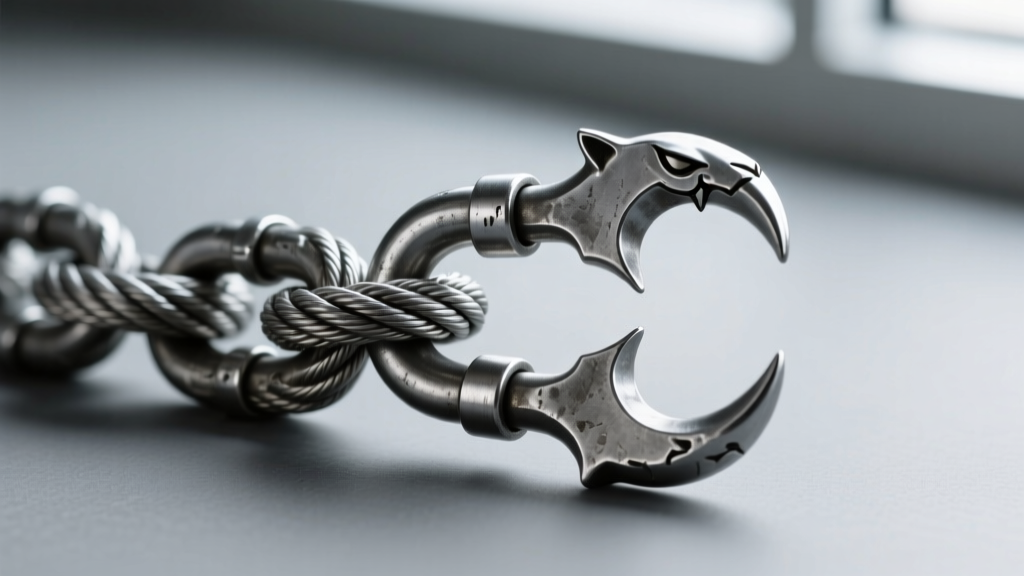
The Physics of Bail Friction and Chain Upgrades
A standard 20-gauge (0.8mm) jump ring will easily deform under the pendulum-like swing of a 50-gram pendant. To permanently solve this, you must upgrade both the chain profile and the connecting hardware. I recommend replacing flimsy box chains with a 3mm to 4mm 316L stainless steel rope chain or a Foxtail chain. Rope chains possess a high tensile strength and, crucially, their woven texture provides a wider surface area inside the pendant's bail, reducing localized friction that saws through softer metals.
Furthermore, inspect the jump ring. If it is a simple split ring, take the necklace to a jeweler to have it replaced with a 16-gauge (1.3mm) soldered jump ring. Soldering eliminates the gap where the chain can slip through and snap under tension. If the pendant's bail itself is thinning due to friction, a jeweler can install a sterling silver or platinum 'bail tube' insert to protect the original casting.
Troubleshooting Problem #2: Black Rhodium and Enamel Chipping
The sleek, stealthy aesthetic of a Black Panther necklace relies heavily on dark finishes. In fine jewelry, this is achieved using black rhodium or black ruthenium plating over sterling silver. In fashion jewelry, it is achieved using epoxy enamel or black PVD (Physical Vapor Deposition) coating. When these dark accents chip, the pendant loses its dramatic contrast.
Restoring Black Rhodium vs. Enamel
Black rhodium is notoriously brittle compared to traditional white rhodium. It has a Vickers hardness of roughly 800 HV, but it lacks ductility, meaning it will flake off if the underlying silver bends or receives a sharp impact. If your silver panther pendant is losing its black finish, do not attempt to paint it with store-bought markers. The correct troubleshooting step is professional re-plating. A master jeweler will polish away the flaking rhodium, apply a fresh layer of nickel-free barrier metal, and electroplate it with black ruthenium instead. Ruthenium is significantly harder and more resistant to everyday friction than rhodium, making it the superior choice for high-wear areas like the panther's snout or ears.
For enamel chips on brass or Zamak tribal collars, the fix is more hands-on. You can use a two-part clear jewelry epoxy mixed with a drop of high-pigment black mica powder. Using a micro-applicator needle, carefully fill the chipped divot, slightly overfilling it. Once cured (usually 24 hours), gently wet-sand the area with 2000-grit automotive sandpaper until it is perfectly flush with the surrounding metal, then polish with a microfiber cloth.
Troubleshooting Problem #3: The 'Green Neck' Base Metal Reaction
If your necklace leaves a dark green or black smudge on your chest, you are experiencing galvanic corrosion. Many budget-friendly Black Panther replicas are cast from Zamak or brass, which contain high levels of copper and nickel. When these metals come into contact with the slightly acidic pH of human sweat (typically between 4.5 and 6.0), a chemical reaction occurs, creating copper chloride salts that stain the skin.
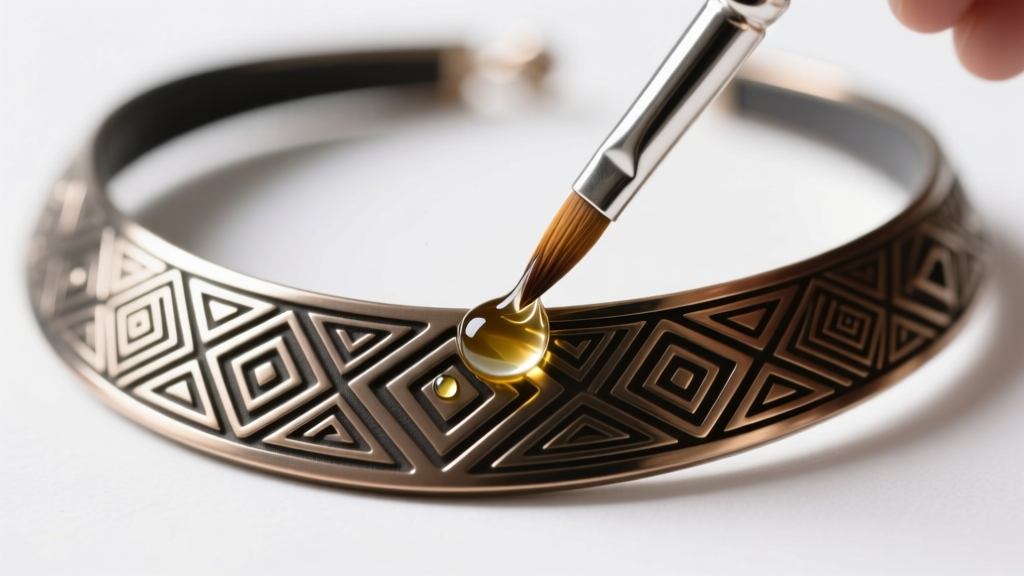
The Barrier Method for Skin Protection
To stop this reaction without ruining the necklace's conductivity or aesthetic, you must create an invisible barrier between the metal and your skin. The most effective, professional-grade solution is applying a micro-crystalline wax, such as Renaissance Wax. Unlike clear nail polish—which yellows, cracks, and peels within a week—Renaissance Wax was developed by the British Museum to protect artifacts. Simply rub a thin layer onto the back of the pendant and the inside of the collar, let it dry for ten minutes, and buff it with a soft cloth. This seals the pores of the metal and prevents sweat penetration for months.
Alternatively, you can use a specialized polymer coating like Jewelry Shield. Apply it with a soft foam brush, ensuring you cover the bail and the back of the pendant. According to the Federal Trade Commission (FTC) Jewelry Guides, base metals must be properly sealed or disclosed if they cause skin reactions, but taking the sealing process into your own hands is the fastest way to salvage a favorite piece of cosplay jewelry.
Caring for Obsidian and Onyx Inlays
Many premium Black Panther necklaces feature genuine gemstone inlays, typically black onyx or natural obsidian, used for the eyes or as a backdrop for the panther motif. A common troubleshooting mistake owners make is tossing these necklaces into ultrasonic cleaners. The Gemological Institute of America (GIA) explicitly warns that black onyx is frequently dyed to achieve its uniform, deep black color. The high-frequency vibrations and heat of an ultrasonic cleaner can cause the dye to leach out or create micro-fractures in the stone, especially if the onyx has been heated during the dyeing process.
To safely clean gemstone-inlay panther pendants, use a solution of lukewarm water and a few drops of pH-neutral dish soap. Gently agitate the water, submerge the pendant for no more than three minutes, and use a baby-soft toothbrush to clean around the prongs or bezel settings. Dry immediately with a lint-free cloth to prevent water spots on the surrounding metal.
When to Upgrade: Moving from Cosplay to Fine Jewelry
Troubleshooting can only extend the life of a failing piece so far. If your Zamak pendant continues to break at the bail despite chain upgrades, or if the base metal is pitting from irreversible oxidation, it is time to consider an upgrade. Transitioning to a solid 14k white gold pendant with black ruthenium accents and natural, undyed black spinel inlays will provide a lifetime of wear. When shopping for an upgrade, look for castings that feature 'euro-shanks' or reinforced bails, and always verify the metal stamp (e.g., 585 for 14k gold or 925 for sterling silver) to ensure you are investing in a piece that honors the strength and resilience of the Black Panther legacy.


