Navajo Pearl Bow Necklace: The Ultimate Beginner Guide
Discover the Navajo pearl bow necklace. Learn about sterling silver beads, Southwestern bow motifs, pricing, authentication, and how to style them.

The Origins: What Exactly is a Navajo Pearl Bow Necklace?
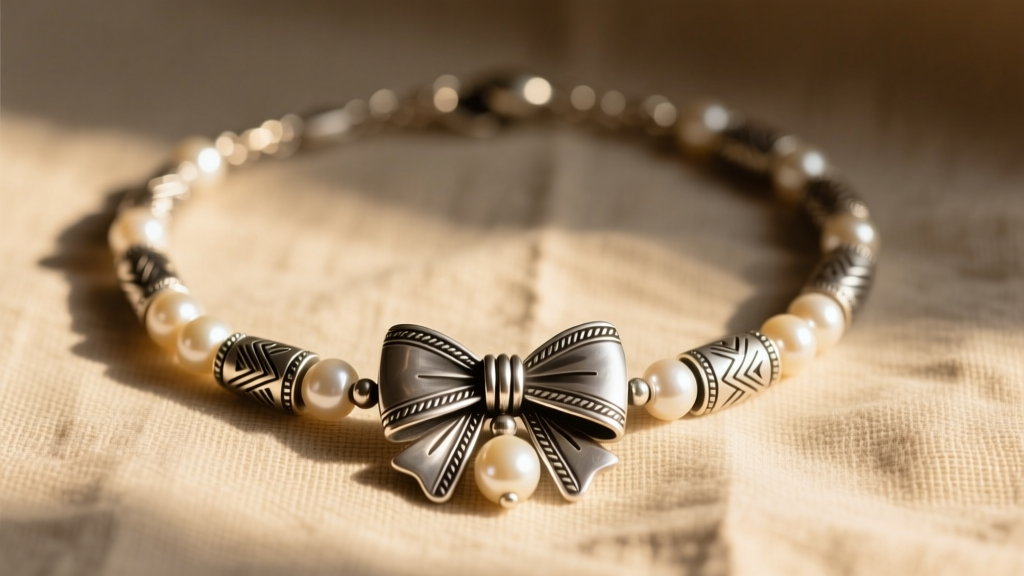
When exploring the rich landscape of Southwestern jewelry, few pieces capture the intersection of Native American craftsmanship and vintage Americana quite like the Navajo pearl bow necklace. For beginners, the name can be slightly misleading. "Navajo pearls" are not organic gemstones harvested from the sea; rather, they are meticulously handcrafted sterling silver beads that have been a staple of Navajo silversmithing since the late 19th century.
The addition of the "bow" motif traces its roots back to the Fred Harvey era (roughly the 1930s through the 1950s). During this time, the expansion of the railroad and highway systems brought an influx of tourists to the American Southwest. To meet the demand for wearable, lightweight, and affordable souvenirs, Native American jewelers began incorporating universally recognized motifs—like bows, arrows, and thunderbirds—into their traditional silverwork. A Navajo pearl bow necklace typically features a strand of these textured silver beads culminating in a delicate silver bow pendant, sometimes accented with a single turquoise cabochon. Today, these necklaces are highly sought after by collectors and style enthusiasts alike for their historical significance and versatile, rustic elegance.
The Anatomy of Authenticity: Bench Beads vs. Cast
To truly appreciate a Navajo pearl bow necklace, you must understand the metallurgy and labor involved in creating the beads themselves. Authentic Navajo pearls, often referred to as "bench beads," are created using a labor-intensive process. A silversmith cuts two identical discs from a sheet of sterling silver (an alloy consisting of 92.5% pure silver and 7.5% copper for durability). These discs are then domed, stamped with intricate floral or geometric designs, and soldered together.
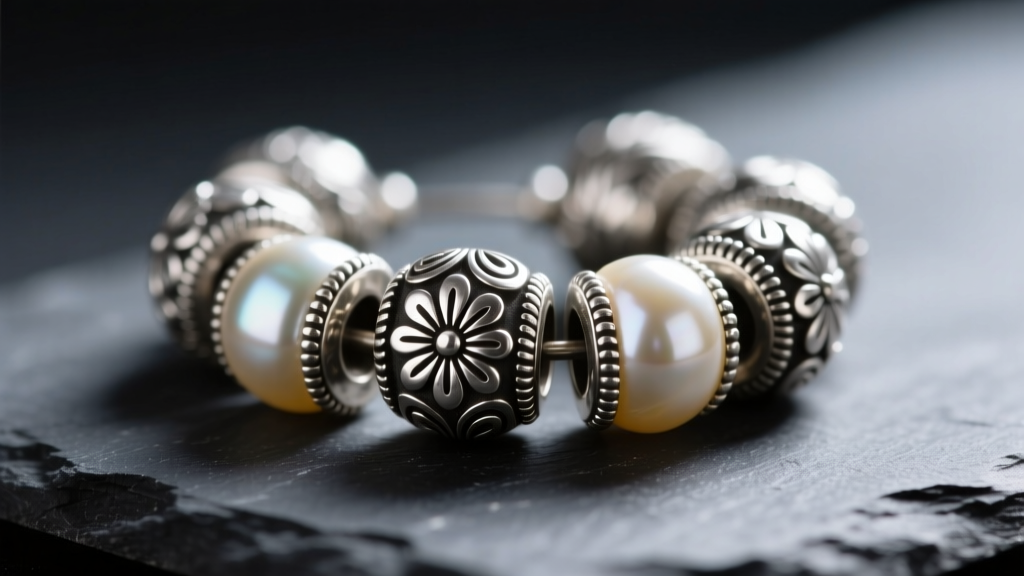
The most critical tell-tale sign of an authentic, handmade Navajo pearl is the solder seam. Because the two halves are joined using a silver solder alloy, a faint, sometimes slightly raised or darkened line will be visible around the equator of the bead. Mass-produced, machine-cast beads lack this seam entirely, presenting a perfectly smooth, uniform surface that lacks the soul and slight asymmetry of true bench beads. The bow pendant on vintage pieces was often sand-cast or hand-fabricated from heavy gauge silver wire, giving it a substantial, tactile feel that modern, thin-stamped reproductions simply cannot replicate.
Sizing, Proportions, and the Bow Drop
Choosing the right size is crucial for how the bow pendant sits on your chest. Navajo pearls generally range from 4mm (petite and delicate) to 12mm (bold and heavy). The size of the beads directly impacts the overall weight and drape of the necklace. Below is a structural guide to help you select the right proportions for your body type and styling needs.
| Bead Diameter | Necklace Length | Approx. Weight | Best Use Case & Bow Placement |
|---|---|---|---|
| 4mm - 6mm | 16" (Choker) | 12 - 18g | High on the collarbone; ideal for layering under V-necks. The bow sits prominently at the base of the throat. |
| 7mm - 9mm | 18" (Princess) | 25 - 35g | The most versatile length. Rests on the upper chest, allowing the bow pendant to act as a clear focal point over crewnecks. |
| 10mm - 12mm | 20" - 24" | 45g+ | Statement wear. Best worn solo over dark fabrics or denim. The bow drops lower, creating a dramatic, elongating silhouette. |
The Buyer's Framework: Authentication and Pricing
The market is unfortunately flooded with counterfeit Southwestern jewelry. Importers often use terms like "Tibetan Silver," "Alpaca," or "Nickel Silver" to describe alloys that contain zero actual silver. These base metals are primarily copper, nickel, and zinc, and they can cause severe skin discoloration or allergic reactions. According to the Indian Arts and Crafts Board, it is a federal offense to misrepresent jewelry as Native American-made if it is not, making it vital to buy from reputable sources.
When authenticating a Navajo pearl bow necklace, rely on the magnet test (precious metals are non-magnetic) and the ice test (silver has the highest thermal conductivity of any metal; an ice cube placed on sterling silver will melt almost instantly). Furthermore, examine the patina. Genuine vintage silver develops a warm, grayish-black oxidation in the crevices of the stamping that is difficult to fake without looking overly uniform or artificially painted.
Market Pricing Guide (2026 Estimates)
- Authentic Vintage (1930s-1950s Fred Harvey Era): $450 – $1,200+. Highly collectible, often features a darker, undisturbed patina and a heavier, cruder bow casting.
- Authentic Contemporary (Modern Navajo Artisans): $250 – $600. Features bright, polished silver, precise stamping, and often includes a ".925" stamp alongside the artist's hallmark.
- Mass-Produced Imports (Fakes): $20 – $60. Lightweight, seamless beads, overly shiny or artificially darkened, often sold in bulk on generic e-commerce platforms.
For deeper historical context on the evolution of these techniques, the Smithsonian National Museum of the American Indian offers extensive archives detailing how early Navajo smiths like Atsidi Sani adapted silversmithing from Mexican plateros, eventually giving rise to the bead-making traditions we see today.
Styling the Southwestern Bow
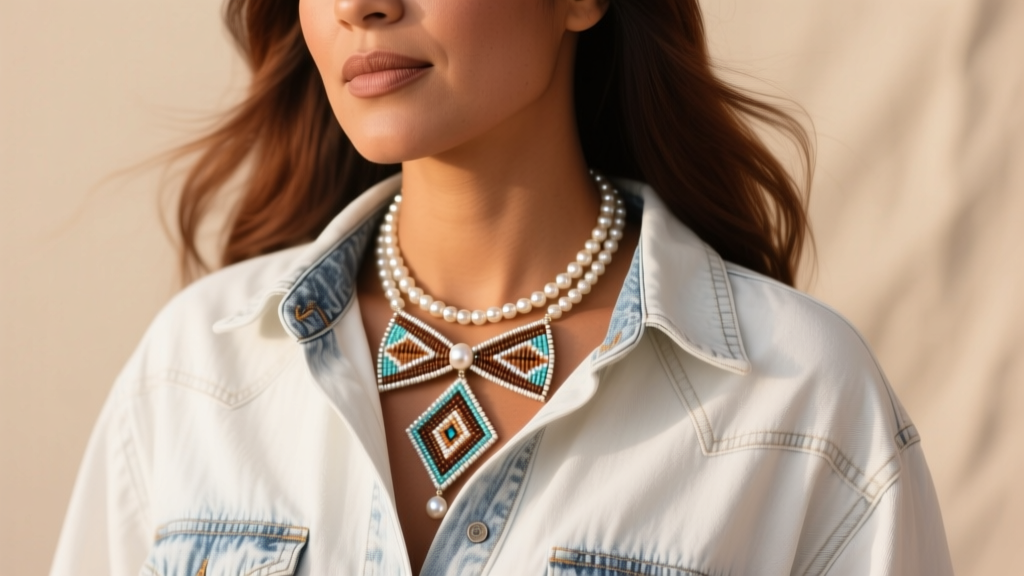
The beauty of the Navajo pearl bow necklace lies in its surprising versatility. While it is a natural companion to rustic or bohemian wardrobes, it can also serve as a striking contrast piece in modern, minimalist outfits.
"The key to styling vintage Southwestern silver is contrast. The intricate, oxidized textures of hand-stamped Navajo pearls pop brilliantly against crisp, clean fabrics like white linen, raw denim, or black silk."
Layering Technique: To create a dynamic, curated look, pair your 18-inch Navajo pearl bow necklace with a 16-inch strand of natural turquoise heishi beads and a 22-inch plain sterling silver chain. This creates a cascading effect that draws the eye downward while allowing the silver bow to remain the undisputed centerpiece. Avoid wearing the necklace with heavily patterned tops, as the intricate stamping on the beads will compete with the fabric's design, resulting in visual clutter.
Preserving the Patina: Care and Maintenance
Sterling silver naturally tarnishes when the copper alloy reacts with sulfur and moisture in the air. However, with vintage Navajo pearl bow necklaces, tarnish is not always the enemy. The dark oxidation that settles into the hand-stamped grooves provides contrast, making the floral and geometric designs visible. If you strip this patina away completely, the bead will look flat and lose its artisanal character.
According to metallurgical guidelines outlined by the Gemological Institute of America (GIA), you should avoid harsh liquid silver dips or ultrasonic cleaners, especially on vintage pieces, as these can damage the structural integrity of the old solder seams and strip the desirable antique finish. Instead, use a specialized polishing cloth (like a Sunshine cloth) and gently rub only the high, raised surfaces of the beads and the bow pendant. This removes the dull surface tarnish while leaving the dark, contrasting oxidation safely intact within the stamped crevices. Store your necklace in an airtight ziplock bag with an anti-tarnish silica strip or a piece of simple chalk to absorb ambient moisture and slow down future oxidation.


