Cleveland Emerald Necklace: Material & Gemstone Property Guide
Explore the material properties, gemological treatments, and metal settings of a vintage Cleveland emerald necklace in our expert guide.

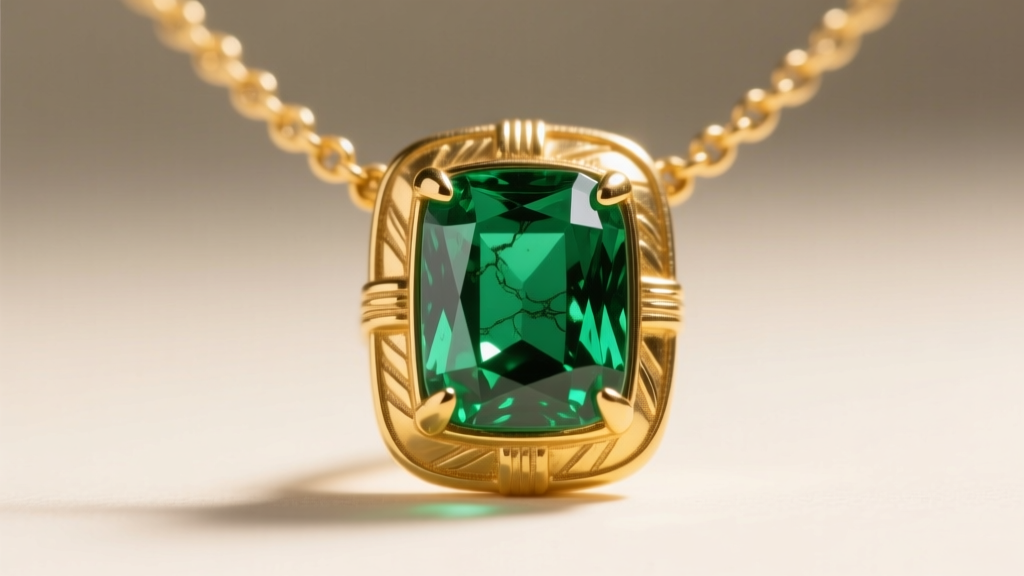
The Gemological Reality of Emeralds in Estate Settings
When collectors and gemologists discuss a vintage Cleveland emerald necklace, they are typically referring to the robust, architectural estate pieces that emerged from historic Midwestern jewelers like Cowell & Hubbard and Aronson's during the mid-20th century. These pieces are celebrated not just for their intricate Art Deco and Mid-Century filigree, but for how their specific metal architectures were engineered to protect one of the most notoriously fragile precious gemstones in the world: the emerald.
To truly understand the value and wearability of these necklaces, we must look past the aesthetic and examine the material science of the stone itself. Emerald is a variety of the mineral beryl (Be3Al2(SiO3)6), colored by trace amounts of chromium and sometimes vanadium. While it registers a respectable 7.5 to 8 on the Mohs scale of hardness, hardness only dictates a material's resistance to scratching. It is toughness—the resistance to breaking and chipping—that defines an emerald's vulnerability.
Natural emeralds are classified as Type III clarity gemstones by the Gemological Institute of America (GIA), meaning they are almost always heavily included. These internal fractures and mineral deposits, romantically referred to as the 'jardin' (garden), severely compromise the stone's structural integrity. A sudden impact against a granite countertop can easily cleave an emerald along a pre-existing internal fracture plane.
Treatment Tiers: Oil vs. Resin in Vintage Pieces
Because of the pervasive surface-reaching fractures in natural beryl, the vast majority of emeralds undergo clarity enhancement. When evaluating a Cleveland emerald necklace from an estate sale or auction, identifying the specific treatment medium is critical for both valuation and long-term care.
Traditional Cedarwood Oil
Historically, emeralds were submerged in cedarwood oil. This oil has a refractive index (RI) of approximately 1.52, which is close enough to the emerald's natural RI (1.577–1.583) to make surface fractures less visible to the naked eye. However, cedar oil is volatile. Over decades, it dries out, evaporates, or is accidentally stripped away by harsh soaps, causing the stone to suddenly appear cloudy and heavily fractured. Re-oiling is a standard, accepted maintenance protocol in the gemological community.
Modern Epoxies and Opticon Resins
In the late 20th century, the industry shifted toward synthetic resins like Opticon. These polymers have an RI of roughly 1.56, making them nearly invisible under magnification. Furthermore, they do not evaporate. While they offer superior visual clarity and permanence, purists and high-end auction houses often penalize heavily resin-treated stones, as the treatment is considered more invasive than traditional oiling. According to the Federal Trade Commission (FTC) Jewelry Guides, any clarity enhancement that is not permanent or that requires special care must be explicitly disclosed to the buyer.
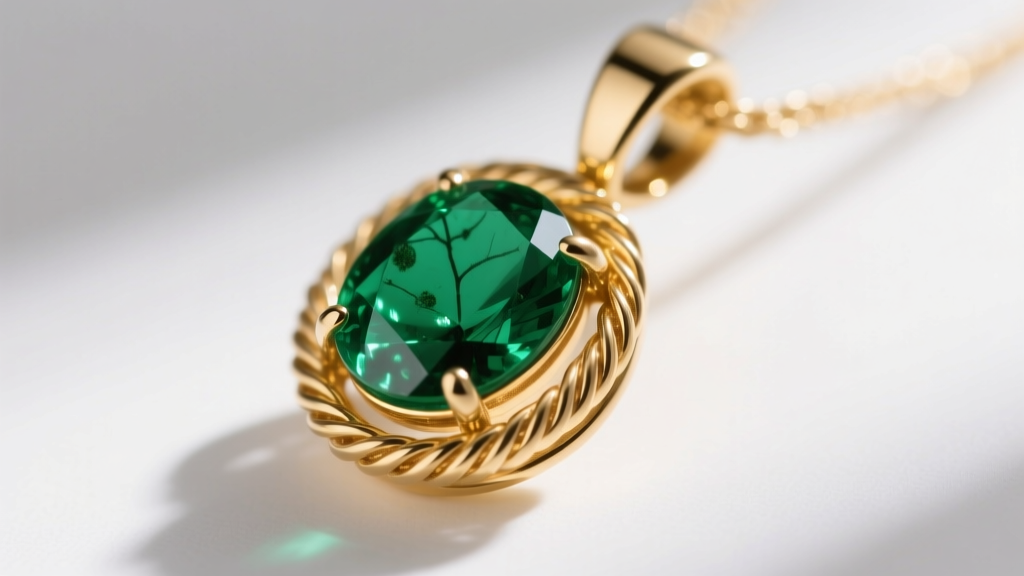
Metallurgy: Which Setting Protects Brittle Beryl?
The hallmark of a genuine Cleveland-style setting is its defensive architecture. Unlike modern, minimalist prong settings that leave the girdle of the stone exposed, these vintage necklaces utilize heavy bezels, deep gallery rails, and reinforced filigree baskets. But the metallurgical composition of the gold alloy plays a massive role in how well the setting performs over a century of wear.
| Metal Alloy | Gold Content | Yield Strength (Approx.) | Suitability for Emeralds |
|---|---|---|---|
| 14k Yellow Gold | 58.5% | 200 - 250 MPa | Excellent. High copper/zinc alloy content provides superior rigidity, ensuring prongs and bezels do not easily bend away from the brittle stone. |
| 18k Yellow Gold | 75.0% | 120 - 150 MPa | Good, but requires care. Softer and richer in color, but prongs can wear down or pull back over decades, risking stone loss. |
| Platinum (950) | N/A | 170 - 200 MPa | Superior Security. Extremely dense and durable. When a platinum bezel is burnished over an emerald, it stays locked in place indefinitely. |
Many mid-century Cleveland pieces were crafted in 14k gold. While modern consumers often chase the prestige of 18k or platinum, 14k gold's higher yield strength actually makes it mechanically superior for gripping the fragile, uneven girdles of natural emeralds without warping under daily tension.
Evaluating the 'Cleveland' Filigree & Bezel Architecture
When inspecting the pendant or centerpiece of the necklace, pay close attention to the gallery wire—the horizontal band of metal that wraps around the lower pavilion of the stone. In high-quality vintage pieces, this wire is not merely decorative; it acts as a shock absorber. If the necklace is dropped, the reinforced gallery takes the brunt of the kinetic energy, preventing the force from traveling directly into the emerald's culet (the bottom point of the stone).
'A masterfully engineered bezel setting will feature a microscopically thin lip of metal folded over the emerald's crown, while the underlying structural wall remains thick enough to resist deformation. This duality is the defining trait of elite mid-century lapidary work.'
Authentication via the Chelsea Filter
If you are sourcing a vintage piece and need to verify the presence of chromium (indicating a natural or high-quality synthetic emerald rather than green glass or dyed beryl), a Chelsea filter is an invaluable tool. When viewed under strong incandescent light through the filter, chromium-rich emeralds will glow a distinct reddish-pink. While this does not separate natural from lab-grown, it immediately rules out common period-accurate simulants like green tourmaline or demantoid garnet, which remain green under the filter.
Care and Maintenance Protocols for Estate Emeralds
The most common way a vintage emerald necklace is destroyed is not through physical impact, but through improper cleaning. Because you can never be 100% certain whether a vintage stone is held together by fragile cedar oil or a more stable resin, you must adopt the most conservative cleaning protocol possible.
- NEVER use ultrasonic cleaners: The high-frequency acoustic cavitation will violently shake the emerald along its internal fracture planes, almost guaranteeing the stone will shatter into multiple pieces.
- NEVER use steam cleaners: Sudden thermal shock can cause existing inclusions to expand and crack the stone. Furthermore, heat will melt or boil away traditional cedar oil treatments in seconds.
- AVOID harsh solvents: Acetone, alcohol, and commercial jewelry dips will strip clarity enhancements, leaving the stone looking opaque and heavily fractured.
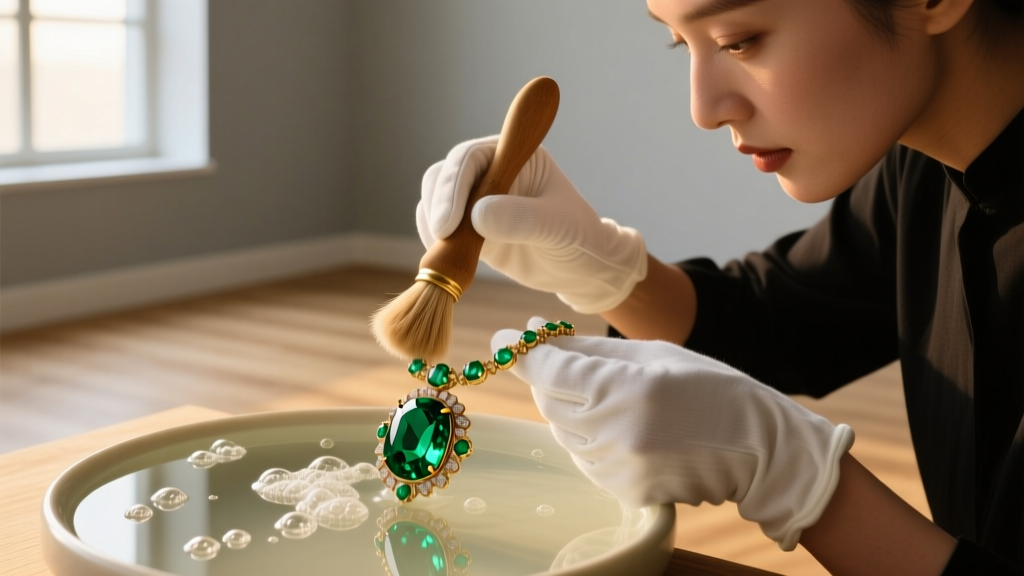
The Only Safe Method: Fill a small bowl with lukewarm water and a few drops of mild, phosphate-free dish soap. Let the necklace sit for three to five minutes to loosen skin oils and cosmetics. Use an ultra-soft baby toothbrush to gently sweep the back of the setting (the pavilion), where dust accumulates and blocks light return. Rinse under a gentle stream of lukewarm tap water, and pat dry with a lint-free microfiber cloth. Store the necklace flat in a fabric-lined box to prevent the gold chain from tangling and scratching the emerald's surface.
By understanding the intersection of beryl's crystallography, historical treatment methods, and mid-century metallurgical engineering, you can confidently acquire, wear, and preserve a Cleveland emerald necklace for generations to come.


