Clitoris Necklace Value: Safe Metals & Pricing Guide
Assess the true value of a clitoris necklace. Compare implant-grade titanium vs. gold, gauge requirements, and pricing for safe intimate body jewelry.

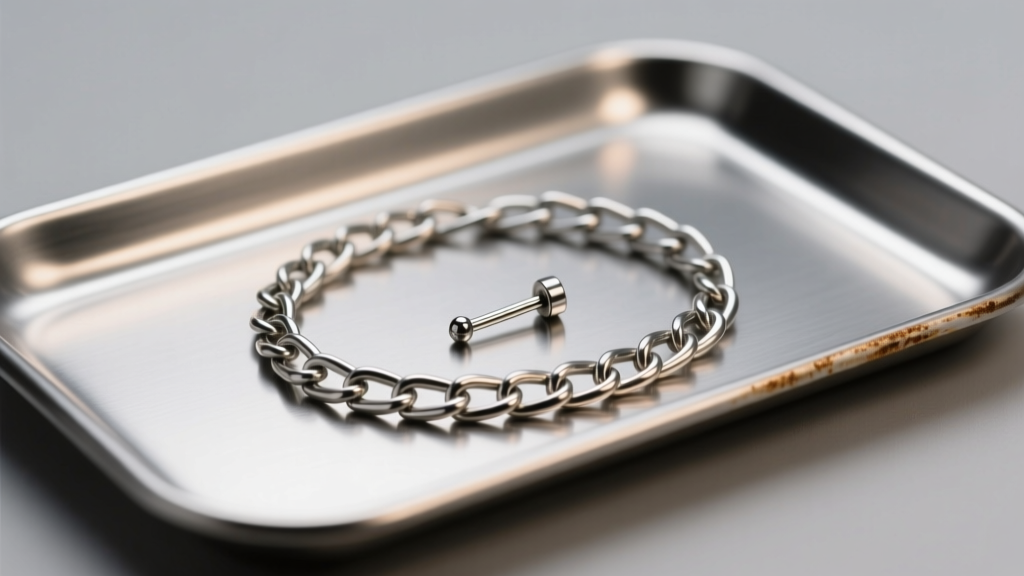
Defining the Intimate Drape: What is a Clitoris Necklace?
In the specialized realm of advanced intimate body modification and avant-garde jewelry, the term "clitoris necklace" refers to a delicate chain drape, shield, or harness attachment that connects to a Vertical Clitoral Hood (VCH) or Triangle piercing. Unlike standard captive bead rings or curved barbells, this jewelry style features a cascading chain that drapes downward, sometimes connecting to a secondary waist chain, thigh harness, or simply hanging as a decorative pendant against the mucosal tissue. Because this jewelry sits in a highly sensitive, high-moisture, and high-friction environment, assessing its budget and value requires a strict focus on biocompatibility, metallurgical density, and precision engineering rather than mere aesthetics.
When evaluating the cost of intimate chain jewelry, consumers often encounter a massive price disparity. You can find generic steel chains on mass-market e-commerce platforms for under $15, while custom-fitted, implant-grade titanium or solid gold pieces from specialized body jewelers can range from $120 to over $400. This guide breaks down the true value of these investments, examining why cutting corners on intimate jewelry is not just a financial mistake, but a severe biological risk.
Material Metallurgy: Where Budget Meets Biology
The mucosal tissue of the vulva is highly permeable and exceptionally reactive to heavy metals and corrosive alloys. When assessing the value of a clitoris necklace, the base material is the single most critical factor. The Association of Professional Piercers (APP) strictly outlines which materials are safe for long-term wear in intimate environments.
The Danger of "Surgical Steel"
Many budget-friendly options are marketed as "Surgical Steel" (typically 316L stainless steel). While 316L is fine for external hardware, it contains up to 10-14% nickel. In a high-moisture environment, the saline and acidic nature of bodily fluids can cause the steel to corrode microscopically, leaching nickel ions directly into the tissue. According to research published by the National Institutes of Health (NIH), nickel is the leading cause of allergic contact dermatitis. In a VCH piercing, this manifests as severe swelling, hypergranulation, and eventual tissue rejection. The "value" of a $15 steel chain is entirely negated by the medical costs and tissue damage it causes.
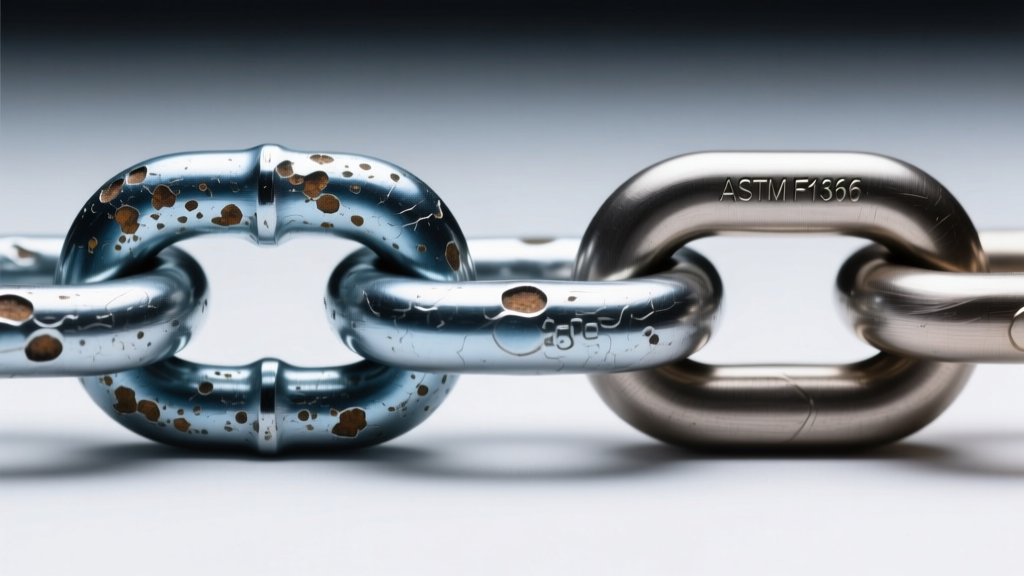
The Gold Standard: ASTM F136 Titanium
True value in intimate jewelry is found in ASTM F136 ELI (Extra Low Interstitial) Titanium 6AL-4V. This is the exact same alloy used in surgical joint replacements and pacemakers. It is entirely nickel-free, highly corrosion-resistant, and significantly lighter than steel. A high-quality titanium clitoris necklace drape will cost between $80 and $150, but it offers a lifetime of safe wear without the risk of contact dermatitis or tissue migration.
The Physics of Drape: Density and the Cheese-Cutter Effect
Beyond material safety, the physical weight of the chain dictates the long-term viability of the piercing. This is where solid gold—often viewed as the ultimate luxury—presents a unique challenge in intimate chain jewelry. Gold has a density of 19.3 g/cm³, whereas titanium has a density of just 4.43 g/cm³.
If a clitoris necklace features a heavy, solid 14k gold chain, the constant downward pull of gravity combined with the friction of daily movement can trigger the "cheese-cutter effect." This occurs when the heavy jewelry slowly slices through the delicate clitoral hood tissue, leading to piercing migration, splitting, and permanent scarring. Therefore, a lightweight titanium chain is not only more budget-friendly but often structurally superior for maintaining the health of the piercing tract. If you prefer the aesthetic of gold, opt for high-quality PVD (Physical Vapor Deposition) gold coating over an ASTM F136 titanium base, which provides the luxurious color without the dangerous weight penalty.
Value Assessment: Pricing Tiers and Longevity
To help you budget appropriately, the table below compares the standard material tiers available for intimate chain attachments, factoring in initial cost, safety, and expected lifespan.
| Material Grade | Avg. Price Range (USD) | Nickel Content | Mucosal Safety | Expected Lifespan |
|---|---|---|---|---|
| 316L Surgical Steel | $10 - $30 | High (8-12%) | Poor (High Risk) | 1-6 Months |
| Acrylic / Silicone | $15 - $40 | None | Moderate (Porous) | 3-12 Months |
| Niobium (Anodized) | $60 - $110 | None | Excellent | Lifetime |
| ASTM F136 Titanium | $80 - $180 | None | Superior | Lifetime |
| Solid 14k/18k Gold | $250 - $600+ | Varies by Alloy | Good (If Heavy) | Lifetime |
As the data illustrates, the sweet spot for budget and value lies in the $80 to $180 range for implant-grade titanium or niobium. Spending less inevitably introduces toxic alloys into your body, while spending significantly more on solid gold introduces the risk of tissue migration due to excessive weight.
Gauge Sizing, Threading, and Custom Fits
A clitoris necklace is only as secure as its connection point. The base ring or curved barbell that holds the chain must be perfectly sized to the individual’s anatomy. The standard gauge for a VCH piercing is 14g (1.6mm), though some anatomy requires a 12g (2.0mm) for adequate structural support. Using a chain attachment that is too heavy for a 14g wire can cause the wire to bend or warp over time.
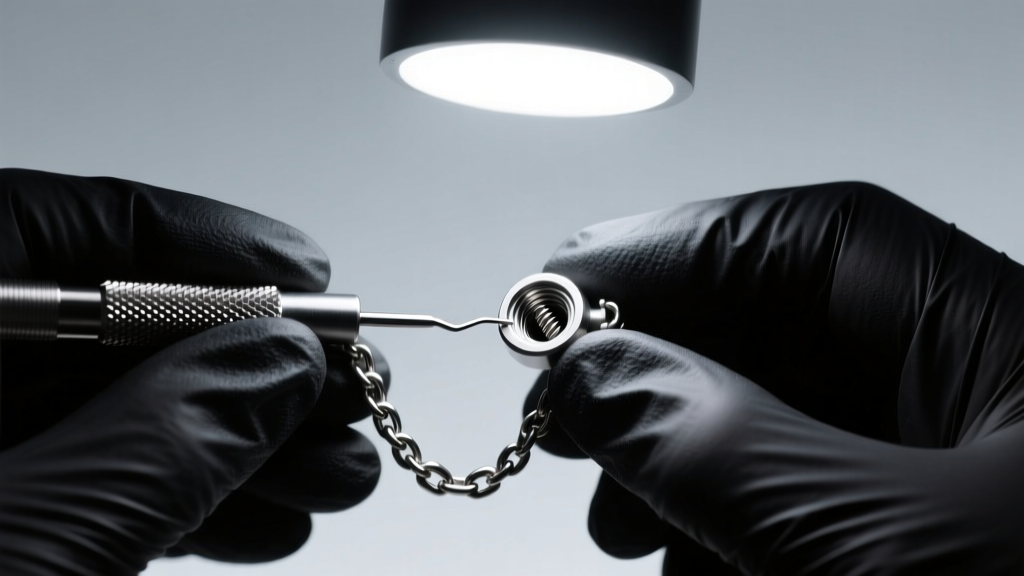
The Importance of Threading Mechanics
When purchasing a modular chain attachment, pay strict attention to the threading. Budget manufacturers often use externally threaded jewelry, where the screw threads are on the post that passes through the piercing. Dragging sharp metal threads through a healed or healing fistula causes micro-tears and scar tissue buildup. High-value, professional-grade jewelry utilizes internally threaded (where the screw is on the decorative end) or threadless (press-fit) mechanisms. Threadless titanium chain tops are particularly valuable for intimate jewelry, as they allow for seamless, snap-in customization without any screwing or unscrewing in hard-to-reach areas.
Hidden Costs: Professional Installation and Aftercare
When budgeting for a high-end clitoris necklace, you must also factor in the cost of professional installation. Intimate piercings require a deep understanding of pelvic anatomy, specifically the depth of the prepuce (clitoral hood) and the location of the dorsal nerve. Attempting to self-pierce or visiting an unlicensed parlor to save money can result in nerve damage or complete loss of clitoral sensation.
Expect to pay between $60 and $120 for a piercing service at an APP-certified studio, which includes the initial sterile setup and basic titanium hardware. Once the custom chain drape is purchased, maintenance costs are minimal, provided you stick to sterile saline sprays for cleaning and avoid harsh chemical soaps that can degrade anodized titanium colors or porous alternative metals.
The Final Verdict on Intimate Jewelry Investment
Assessing the value of a clitoris necklace requires shifting your perspective from traditional fashion jewelry to medical-grade body modification. The true cost of budget-friendly, mass-produced steel chains is paid in biological tolls: allergic reactions, chronic inflammation, and piercing rejection. By investing $100 to $180 in a custom-fitted, internally threaded, ASTM F136 titanium chain drape, you are purchasing peace of mind, structural integrity, and long-term anatomical safety. In the intimate jewelry market, the highest value is always found at the intersection of lightweight engineering and absolute biocompatibility.


