Gifting a Cloisonne Necklace: 2026 Occasion Guide
Discover how to choose the perfect cloisonne necklace for any milestone. Our 2026 gift guide covers enamel quality, chain pairings, and occasion matching.

Why Cloisonne Makes an Unforgettable Gift in 2026
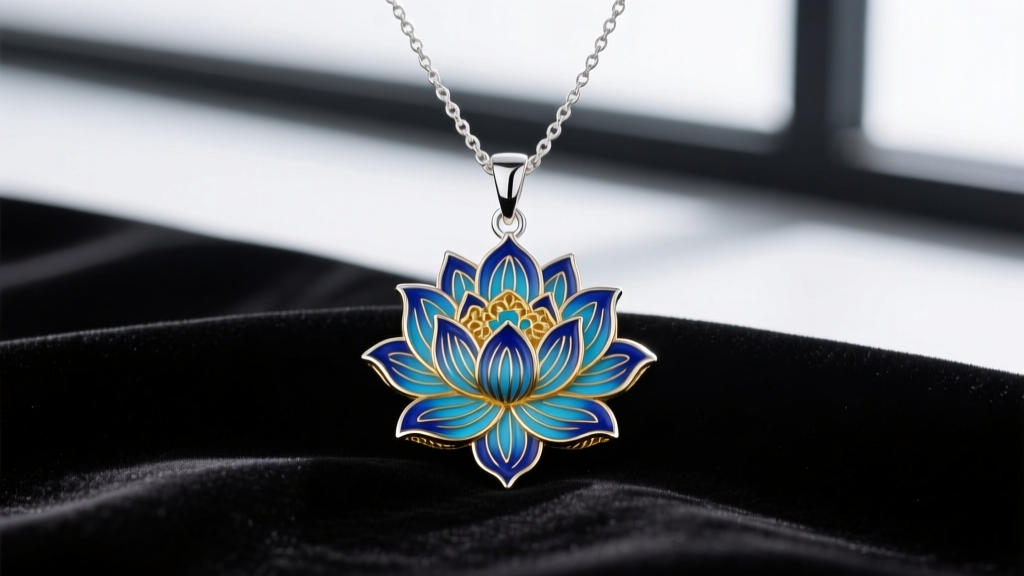
In an era where mass-produced, minimalist jewelry dominates the market, gifting a piece with profound historical and artisanal weight is a powerful statement. A cloisonne necklace is not merely an accessory; it is a wearable mosaic. As we move through 2026, jewelry buyers and collectors are increasingly prioritizing heritage techniques and vibrant, glass-like finishes over fleeting trends. Cloisonne, an ancient enameling technique that involves soldering fine metal wires to a base and filling the resulting compartments with vitreous enamel, offers a level of depth, color saturation, and craftsmanship that modern casting simply cannot replicate.
However, gifting a cloisonne pendant requires a nuanced understanding of the medium. Because the process bridges metallurgy and glasswork, the quality variance between a mass-market tourist trinket and a master-crafted heirloom is vast. This guide will equip you with the technical knowledge and stylistic frameworks necessary to select a cloisonne necklace that perfectly aligns with your recipient's milestone, personal style, and the practical realities of daily wear.
Decoding the Craft: What Separates Heirloom from Costume?
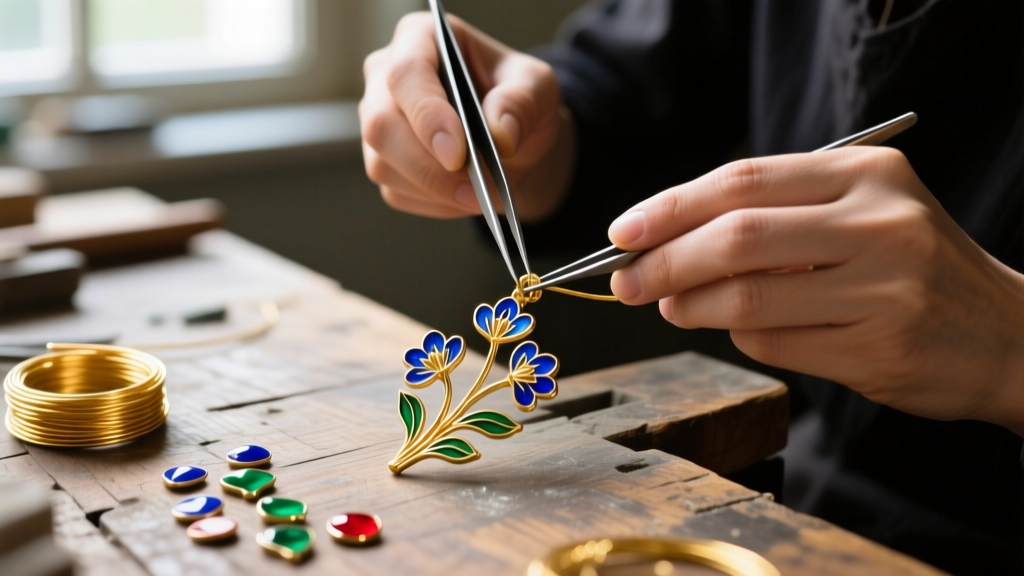
Before selecting a piece for a specific occasion, it is critical to understand the anatomy of true cloisonne. According to the Metropolitan Museum of Art's Heilbrunn Timeline of Art History, the technique requires the artisan to bend microscopic ribbons of metal—traditionally gold, silver, or copper—into intricate patterns. These ribbons, known as 'cloisons,' are soldered to a metal backing plate.
The compartments are then packed with ground glass (vitreous enamel) and fired in a kiln at temperatures exceeding 800°C (1470°F). Because the enamel shrinks during cooling, this process of packing and firing must be repeated multiple times until the glass is perfectly level with the top of the metal wires. Finally, the piece is ground and polished to a mirror-like finish. When shopping, look for these hallmarks of quality:
- Wire Flushness: Run your fingernail across the surface. The metal wires should be perfectly flush with the enamel. Any dipping or ridges indicate poor polishing or a rushed firing process.
- Base Metal Integrity: While copper is traditional and cost-effective, it is prone to oxidization if the enamel backing chips. For a premium gift, insist on a 925 sterling silver or 18k gold base, which provides a brighter under-reflectivity that makes translucent enamels glow.
- Color Complexity: High-end artisans use 'gradient packing,' where multiple colors of glass powder are layered within a single cloison to create ombre effects before firing.
The Occasion Matrix: Matching the Pendant to the Milestone
Cloisonne is deeply symbolic, often utilizing specific color palettes and motifs rooted in cultural history. Use this matrix to align your gift with the emotional resonance of the occasion.
| Occasion | Recommended Motif | Color Palette | Ideal Base Metal |
|---|---|---|---|
| University Graduation | Geometric or Abstract | Deep Cobalt, Emerald, Silver Wire | Sterling Silver |
| 20th or 35th Anniversary | Intertwined Florals / Peony | Ruby Red, Amber, Gold Wire | 18k Yellow Gold |
| Cultural Heritage / Travel | Dragons, Cherry Blossoms, Koi | Jade Green, Lapis Blue, Turquoise | Copper or Silver |
| Major Career Milestone | Art Deco Sunburst or Compass | Onyx Black, Pearl White, Gold Wire | Sterling Silver |
For a graduation gift, the deep blues and greens symbolize wisdom and growth, while the sterling silver base keeps the piece modern and versatile for a young professional entering the workforce. Conversely, the rich reds and golds of a floral motif carry profound associations with prosperity and enduring love, making them the ultimate choice for a milestone anniversary.
Chain Pairings and Weight Distribution
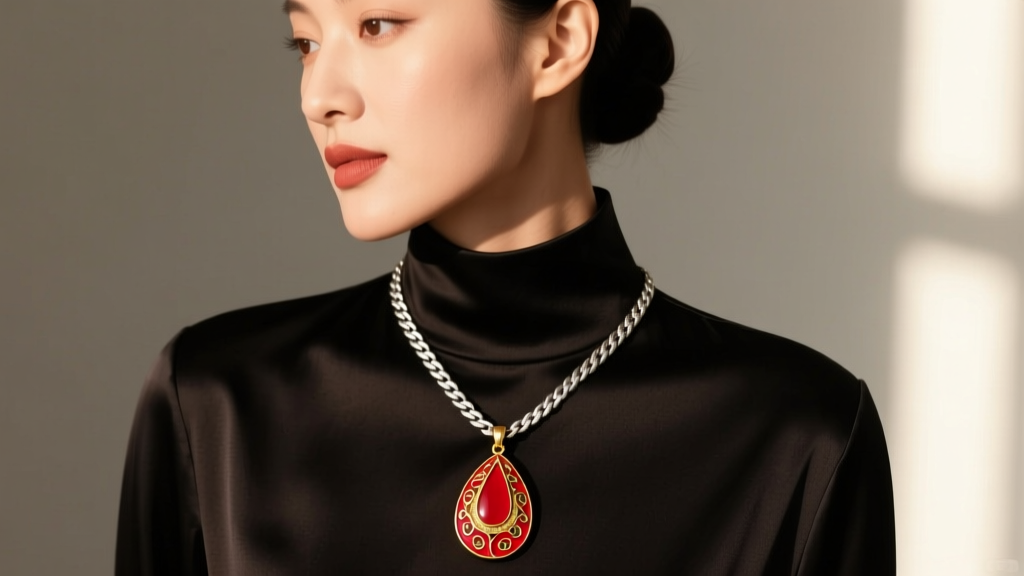
A common failure point when gifting enamel jewelry is pairing a heavy, glass-laden pendant with an inadequate chain. Vitreous enamel is dense, and a solid 25mm cloisonne pendant can easily weigh between 8 and 15 grams. If you pair this with a standard 0.9mm cable chain or a delicate snake chain, the metal will stretch, kink, or eventually snap under the pendulum effect of the pendant's weight.
To ensure structural longevity, follow these chain pairing rules:
- Gauge and Width: Opt for chains between 1.5mm and 2.5mm in width. This provides the necessary tensile strength to support the enamel piece without visually overpowering it.
- Chain Style: Wheat chains, box chains, and tightly woven rope chains are ideal. They distribute the weight of the bail evenly and resist kinking. Avoid herringbone or snake chains, which are notoriously fragile when subjected to the localized stress of a heavy pendant.
- Bail Sizing: Ensure the pendant's bail (the loop that connects to the chain) has an inner diameter of at least 3.5mm. Many artisan cloisonne pieces feature thick, hand-soldered bails that will not accommodate the clasps of thicker 2.5mm chains. If the bail is too small, a jeweler can easily add a jump ring, but it is better to verify dimensions prior to purchase.
Navigating Price Tiers and Authenticity
The market is currently flooded with 'cold enamel' pieces mislabeled as cloisonne. Cold enamel is actually a pigmented epoxy resin that is poured into metal molds and cured with UV light or heat. While it can mimic the look of glass, it lacks the depth, scratch resistance, and archival longevity of kiln-fired vitreous enamel. Here is how to budget for your gift based on authentic tiers:
Tier 1: Commercial Kiln-Fired ($80 - $250)
These pieces typically feature a copper base with slightly thicker, machine-stamped wires. The enamel is kiln-fired, but the color palette is often limited to opaque, single-tone fills. They are excellent for casual gifting, travel souvenirs, or younger recipients.
Tier 2: Artisan Silver ($300 - $800)
At this level, you are paying for the 925 sterling silver base and the microscopic precision of the wirework. Artisans in this tier utilize translucent enamels, allowing the silver backing to reflect light through the glass. Motifs are highly complex, often featuring gradient shading and multiple firing stages.
Tier 3: Master / Antique ($1,200+)
Reserved for serious collectors, these pieces may feature 18k or 22k gold bases, gemstone inlays integrated into the enamel, or verifiable provenance from historic workshops in regions renowned for the craft. Gifting a piece in this tier is akin to gifting fine art.
Critical Care and Failure Modes to Include with Your Gift
When presenting a cloisonne necklace, the unboxing experience should always include a bespoke care card. Because the recipient is wearing a piece of glass fused to metal, specific environmental hazards must be avoided. The Victoria and Albert Museum's conservation guidelines on enamels highlight the inherent vulnerabilities of glass-to-metal fusions.
Include these critical warnings in your gift presentation:
- Thermal Shock: Vitreous enamel and metal expand and contract at different rates when exposed to extreme temperature changes. Jumping into a freezing pool while wearing the necklace, or exposing it to intense, direct heat (like a sauna), can cause the glass to craze (develop micro-fractures) or pop entirely off the metal backing.
- Impact Vulnerability: Enamel ranks around 5.5 to 6.5 on the Mohs hardness scale. While it is highly resistant to scratching from daily wear, it is brittle. A sharp impact against a granite countertop or a tiled bathroom floor can chip or shatter the enamel.
- Chemical and Ultrasonic Dangers: Never clean cloisonne in an ultrasonic jewelry cleaner. The high-frequency vibrations can shatter the glass or loosen the adhesive if the piece features any secondary gemstone accents. Furthermore, harsh chemicals like chlorine and bleach can permanently dull the polished finish of the glass and aggressively tarnish the exposed metal wires.
To clean the piece, the recipient should only use a soft, lint-free microfiber cloth and mild, phosphate-free soap with lukewarm water, ensuring the piece is dried immediately to prevent water spots on the glass surface.
The Final Presentation
Gifting a cloisonne necklace in 2026 is a rejection of the disposable in favor of the enduring. By carefully selecting the appropriate base metal, pairing it with a structurally sound chain, and matching the motif to the emotional weight of the occasion, you are providing a wearable heirloom. Ensure the piece is presented in a hard-shell, velvet-lined box to protect the glass from impact during transit, and include a certificate detailing the specific enameling techniques used by the artisan. This level of intentionality transforms a beautiful object into a profound, lifelong memory.


