Aurora Borealis Crystal Necklace: Material Guide & Coating Comparison
Discover the science behind the aurora borealis crystal necklace. Compare AB coatings, glass vs. crystal properties, and learn to spot authentic pieces.

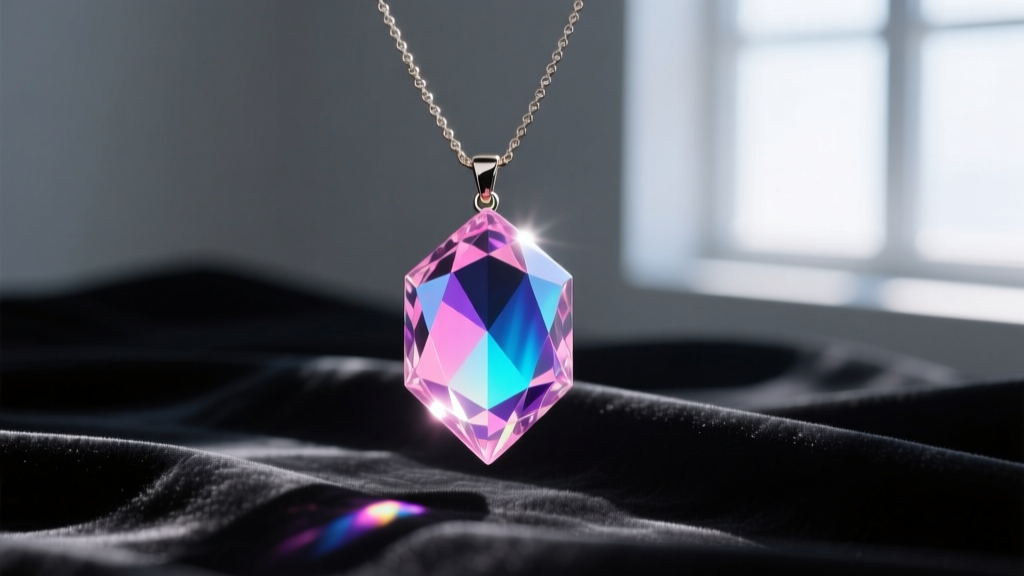
The Physics of Thin-Film Interference in AB Jewelry
When evaluating an aurora borealis crystal necklace, collectors and jewelers must look beyond the immediate rainbow flash to understand the material science driving the iridescence. The signature 'AB' finish is not a dye, paint, or foil backing. It is the result of thin-film interference, achieved through a process called vacuum vapor deposition. During manufacturing, the cut crystal is placed in a vacuum chamber where microscopic layers of metallic oxides—most commonly titanium dioxide or gold—are vaporized and bonded to the surface of the facets.
This metallic layer is astonishingly thin, typically measuring between 30 to 50 nanometers. When light strikes the coated surface, some of it reflects off the top of the metal layer, while the rest passes through and reflects off the crystal boundary beneath. The two light waves recombine and interfere with one another, amplifying specific wavelengths (usually blues, pinks, and golds) and canceling out others. Understanding this nanoscale engineering is critical because it directly dictates the durability, care requirements, and long-term value of your necklace.
Material Matrix: Crystal vs. Glass vs. Cubic Zirconia
Not every iridescent pendant on the market is crafted from genuine crystal. The term 'crystal' is frequently misused in mass-market jewelry to describe highly polished glass. To make an informed purchase, you must compare the base materials that receive the AB coating. The substrate dictates the refractive index (RI), which determines how aggressively the stone bends light and fuels the aurora effect.
| Material Substrate | Refractive Index (RI) | Mohs Hardness | Coating Adhesion | Typical Price Range |
|---|---|---|---|---|
| Soda-Lime Glass | 1.46 - 1.52 | 5.5 | Poor (Prone to flaking) | $10 - $45 |
| Leaded Crystal (Vintage) | 1.60 - 1.70 | 6.0 | Excellent | $50 - $200+ |
| Advanced Lead-Free Crystal | 1.54 - 1.58 | 6.5 | Excellent | $60 - $250 |
| Cubic Zirconia (CZ) | 2.15 - 2.18 | 8.0 - 8.5 | Moderate (Slick surface) | $30 - $120 |
According to the Gemological Institute of America (GIA), the primary distinction between glass and crystal lies in the optical clarity and dispersion. While vintage leaded crystal offers the highest RI, modern environmental and health standards have shifted the industry toward lead-free alternatives. The Swarovski Advanced Crystal standard, for instance, utilizes a proprietary barium oxide and zinc oxide blend to achieve high brilliance without the toxicity of lead, maintaining an excellent surface tension for vapor coating adhesion.
Brand Benchmarks: Swarovski vs. Preciosa
If you are investing in a premium aurora borealis crystal necklace, the market is dominated by two heritage manufacturers: Swarovski (Austria) and Preciosa (Czech Republic). While both utilize precision-cut crystal and vacuum deposition, their proprietary metallic oxide blends yield distinctly different visual signatures.
The Swarovski AB Signature
Swarovski's AB coating is renowned for its cool-toned iridescence. The vaporized titanium blend heavily emphasizes spectral shifts in aquamarine, violet, and icy pink. Because Swarovski cuts their crystal with mathematical precision (often utilizing X-ray guided saws), the facets are razor-sharp. This sharpness creates distinct, geometric bands of color rather than a cloudy wash.
The Preciosa AB Signature
Preciosa, the historic glassmaker from the Bohemian region, utilizes a slightly different metallic oxide recipe that leans warmer. A Preciosa AB necklace will typically flash vibrant golds, champagnes, and deep magentas. Furthermore, Preciosa often applies the coating to slightly more complex, multi-tiered facet arrangements, resulting in a 'crushed ice' aurora effect that scatters light more chaotically than Swarovski's structured geometry.
Failure Modes and Delamination Risks
The most common point of failure in any AB-coated jewelry is delamination—the peeling or clouding of the nanoscale metallic layer. Because the coating is measured in nanometers, it is highly vulnerable to chemical and mechanical degradation. Understanding these failure modes is essential for preserving your necklace.
- Acidic Degradation: Human sweat contains lactic acid and urea. Prolonged skin contact, especially in high heat, can slowly etch the metallic oxide layer, resulting in a permanent cloudy 'haze' that cannot be polished away.
- Sulfur Tarnishing: While the crystal itself is impervious to sulfur, trace elements in the AB coating can react with sulfur compounds found in lotions, perfumes, and even rubber jewelry displays, causing dark, irreversible spotting.
- Mechanical Abrasion: Storing an aurora borealis crystal necklace loose in a jewelry box allows the sharp facets of adjacent pieces to microscratch the AB coating. Once the coating is scratched, light scatters poorly, and the rainbow effect is localized and dulled.
Authentication and Visual Inspection
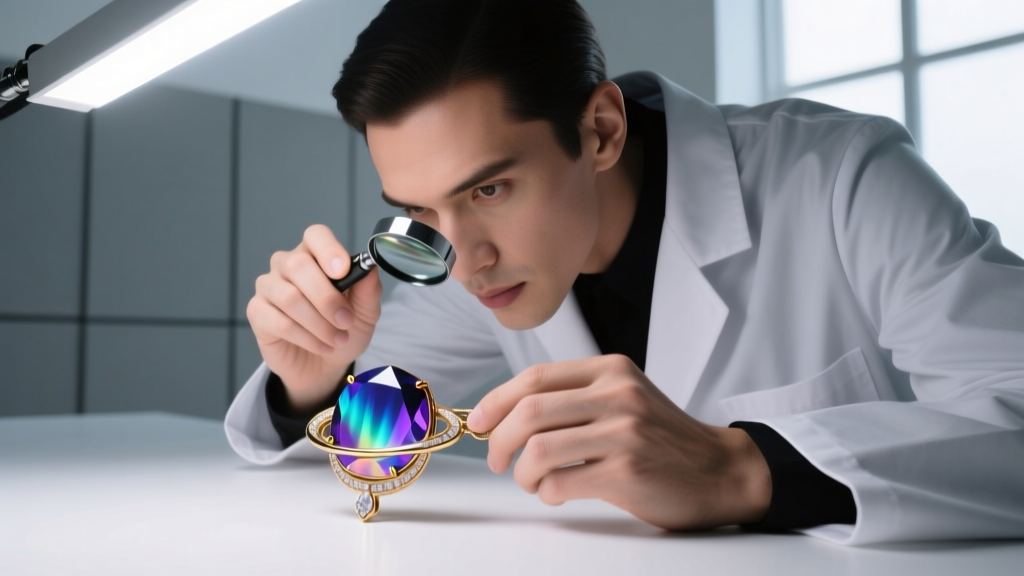
To authenticate a high-quality aurora borealis crystal necklace, bypass the packaging and inspect the stone's physical properties using a 10x jeweler's loupe. First, examine the facet junctions. Genuine machine-cut crystal will feature perfectly straight, razor-sharp lines where facets meet. Molded glass imitations, which are poured into forms rather than cut, will exhibit slightly rounded, soft edges where the facets intersect.
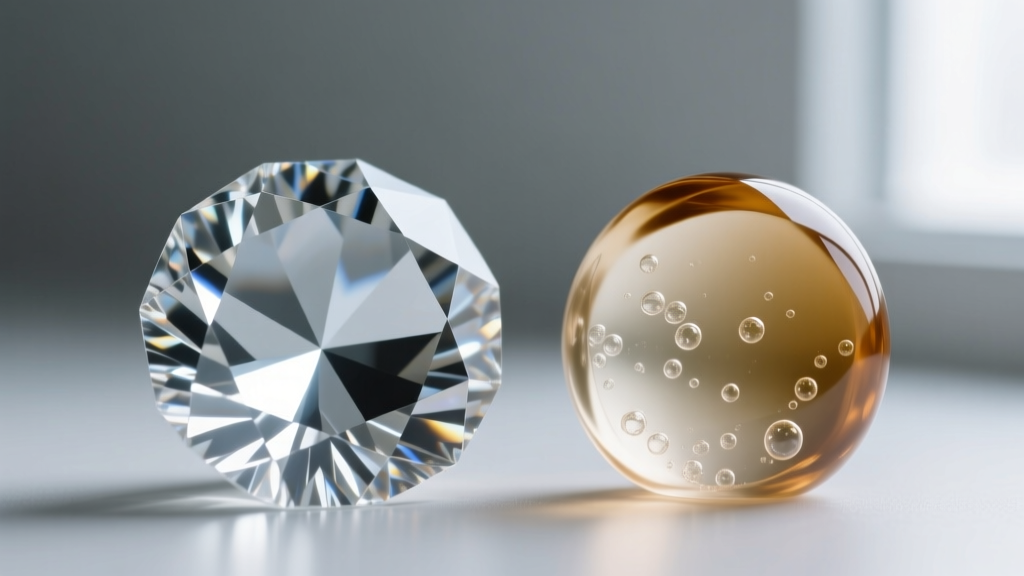
Next, look for internal characteristics. Genuine high-grade crystal is optically flawless. If you spot tiny, spherical air bubbles or swirling 'flow lines' inside the stone, you are looking at soda-lime glass. Finally, observe the AB coating under direct, single-source LED light. A premium coating will display a smooth, continuous gradient of color across the facet. Cheap, mass-produced imitations often use chemical dipping rather than vapor deposition, resulting in a splotchy, uneven iridescence that pools heavily at the bottom edges of the pendant.
Strict Care Protocols for Iridescent Finishes
Maintaining the optical integrity of an AB necklace requires abandoning traditional jewelry cleaning methods. Never use ultrasonic cleaners; the high-frequency cavitation bubbles will violently strip the nanoscale metallic coating from the crystal surface. Similarly, avoid commercial silver dips or ammonia-based glass cleaners, as their high pH will instantly dissolve the titanium dioxide layer.
Instead, adopt a dry-first maintenance routine. After wearing the necklace, gently wipe the pendant with a clean, lint-free microfiber cloth to remove skin oils and acidic residue. If the stone becomes heavily soiled, use a drop of pH-neutral dish soap diluted in distilled water. Dip a soft, natural-hair makeup brush into the solution, gently sweep the facets, and immediately rinse with distilled water. Pat dry with a microfiber cloth—never air dry, as tap water minerals will leave hard water spots that etch into the delicate AB finish over time.


