Silver Dangle Necklace Guide: Lengths, Layers & Necklines
Master the silver dangle necklace with our beginner guide. Learn ideal lengths, neckline pairings, and layering techniques for sterling silver pendants.


A silver dangle necklace is one of the most versatile, dynamic pieces you can add to your jewelry box. Unlike a static stud or a flush-fitting choker, a dangle necklace introduces movement, catching the light and drawing the eye downward to elongate the neck. However, styling a drop pendant requires more than just clasping it on. You have to account for gravity, neckline geometry, and chain tension.
Whether you are investing in your first piece of fine jewelry or looking to refine your daily layering strategy, this beginner-friendly explainer breaks down the exact mechanics, material grades, and styling frameworks you need to wear a silver dangle necklace with confidence in 2026.
Decoding Silver Grades: What You Are Actually Buying
Not all silver is created equal. When shopping for a silver dangle necklace, the metal grade dictates not only the price but how the piece will react to your skin's chemistry and the environment. According to the Gemological Institute of America (GIA), pure silver is too soft for daily wear jewelry, meaning it must be alloyed with other metals for structural integrity.
| Silver Grade | Composition | Tarnish Resistance | Best Use Case |
|---|---|---|---|
| .925 Sterling Silver | 92.5% Silver, 7.5% Copper | Low (Requires polishing) | Everyday wear, classic dangles |
| Argentium Silver | 93.5%+ Silver, Germanium | High (Tarnish-resistant) | Low-maintenance, high-shine pieces |
| Silver Plated | Brass/Copper core, thin Ag coat | None (Wears off over time) | Trend-driven, budget costume jewelry |
Expert Tip: If you live in a high-humidity climate or have acidic skin chemistry that turns standard .925 sterling silver black within weeks, upgrade to Argentium silver. The addition of germanium creates a transparent, self-healing oxide layer that virtually eliminates tarnish.
Bail Mechanics: Solving the 'Pendant Flip' Problem
The most common frustration beginners face with a silver dangle necklace is the 'pendant flip'—when the drop piece rotates backward, hiding the design against your chest. This is a physics issue related to the bail (the loop connecting the pendant to the chain).
If your dangle is attached via a simple, unsoldered jump ring, it has 360 degrees of rotational freedom. When you walk or lean forward, the center of gravity shifts, and the heavier back of the pendant swings forward. To prevent this, look for dangles featuring a soldered V-bail or a fixed tube bail. These designs lock the pendant into a forward-facing orientation by restricting lateral movement, ensuring your silver drop always faces outward.
The Physics of the Drop: Choosing the Right Length
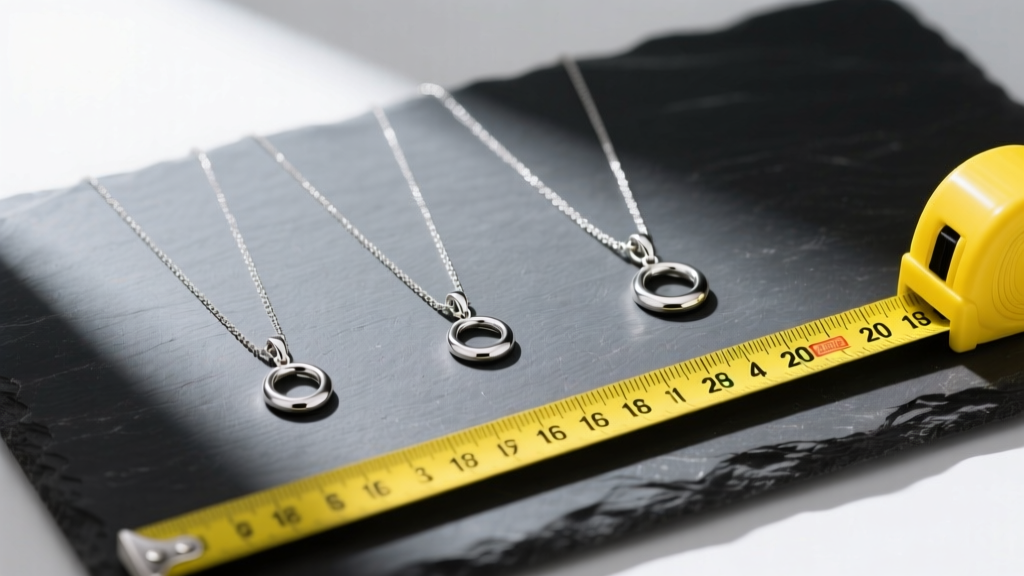
The length of your chain completely alters the visual weight and behavior of the dangle. A 16-inch chain will cause a heavy drop to swing sharply with every movement, while a 24-inch chain will allow it to rest quietly against the sternum.
- 16 Inches (Collarbone): Ideal for lightweight, delicate dangles (under 5 grams). The pendant sits in the hollow of the throat, drawing attention to the face. Best for open-collar shirts and summer dresses.
- 18 Inches (Princess): The universal standard. The dangle rests just below the collarbone. This length accommodates medium-weight pendants (5-12 grams) and works with almost every casual neckline.
- 20 to 24 Inches (Matinee): Designed for heavy, statement dangles (15+ grams). The extra length prevents the pendant from bouncing uncomfortably against the collarbone and allows it to lay flat over high-neck garments or sweaters.
Chain Gauge Warning: Never pair a heavy 15-gram silver dangle with a delicate 1.0mm cable chain. The concentrated kinetic energy of the swinging pendant will cause 'ovalization'—stretching the circular chain links into weak ovals that eventually snap. For dangles over 10 grams, use a minimum 2.5mm rolo or 3.0mm figaro chain to distribute the tension.
Neckline Pairings: A Visual Framework
Matching your silver dangle necklace to your outfit's neckline is about creating parallel lines and avoiding visual clutter. Here is a definitive framework for pairing your drops with common necklines:
The V-Neck
A V-neck creates a natural downward arrow. Mirror this geometry by choosing a silver dangle necklace with a Y-drop silhouette or a long, narrow teardrop pendant. The metal should follow the fabric's plunge without crossing over the hemline.
The Crew Neck
Crew necks have a tight, circular seam that clashes with jewelry resting directly on top of it. You have two choices: wear a short 16-inch dangle that sits entirely above the fabric line, or a 22-inch matinee dangle that rests entirely below it. Never let the pendant rest exactly on the collar seam.
The Scoop Neck
Because scoop necks offer a wide, horizontal canvas of skin, they are perfectly suited for wide dangle pendants, such as horizontal silver bars, geometric shields, or multi-stone drop clusters. Avoid long, skinny dangles here, as they will look lost in the negative space.
According to styling guidelines from the Jewelers of America, allowing your jewelry to interact seamlessly with your garment's architecture elevates a look from 'accessorized' to 'intentionally styled'.
Layering Your Silver Dangle Necklace Without Tangling
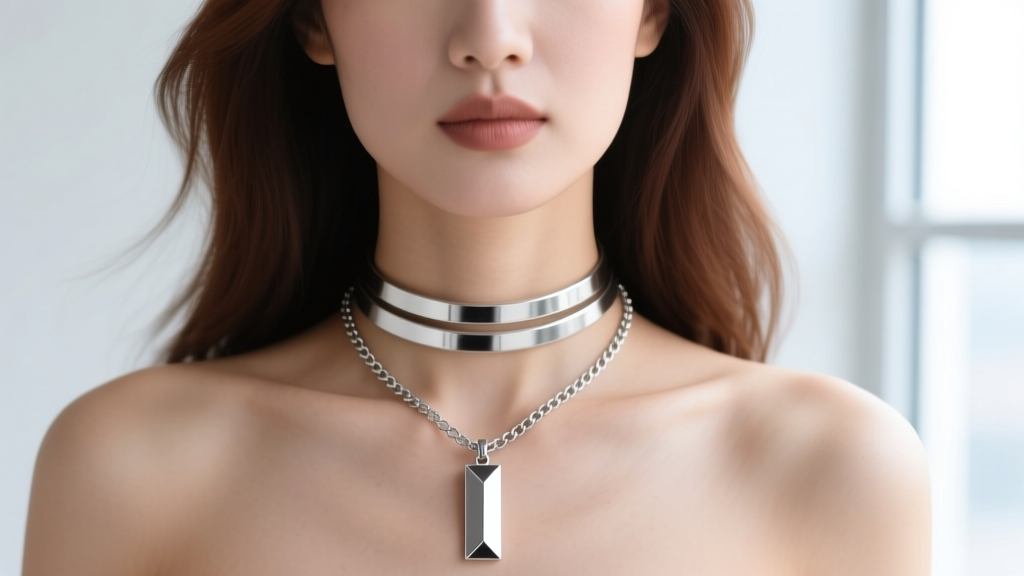
Layering is a staple of modern jewelry styling, but adding a dangle necklace to a layered stack introduces a major hazard: tangling. When chains are too close in length, the bail of the dangle will catch the links of the adjacent chain, resulting in a frustrating knot.
To layer a silver dangle necklace successfully, apply the Two-Inch Rule. There must be a minimum two-inch gap between the dangle chain and any other chain in your stack. For example, if your dangle necklace is 18 inches, your secondary chain should be 16 inches or shorter, or 20 inches or longer.
Furthermore, contrast your chain textures. If your dangle hangs from a smooth, reflective box chain, layer it with a matte, textured chain like a silver bead chain or a twisted rope chain. The difference in surface friction prevents the metals from sliding into one another and knotting up.
Maintenance: Preventing Tarnish and Snags
Silver dangle necklaces require specific care routines to maintain their structural integrity and shine. Because the pendant swings freely, it is highly susceptible to impacting hard surfaces (like granite countertops or steering wheels), which can dent soft .925 silver or chip inset gemstones.
When storing your necklace, never toss it loosely into a drawer. The swinging weight of the dangle will wrap around other jewelry, creating severe tangles. Instead, hang the necklace vertically on a jewelry stand, or lay it flat in a felt-lined box. To combat oxidation, place a 3M anti-tarnish strip inside your storage container. These strips absorb airborne sulfur compounds before they can react with the copper alloy in your sterling silver, keeping your dangle bright for months without the need for harsh chemical dips or abrasive polishing cloths.
By understanding the mechanics of bails, respecting chain gauge limits, and applying intentional neckline pairings, your silver dangle necklace will transition from a simple accessory to a masterfully styled focal point.


