Necklace Pouch Value Guide: Budget vs Premium Storage
Discover if a premium necklace pouch is worth the investment. We compare budget vs. anti-tarnish storage materials to protect your chains from damage.

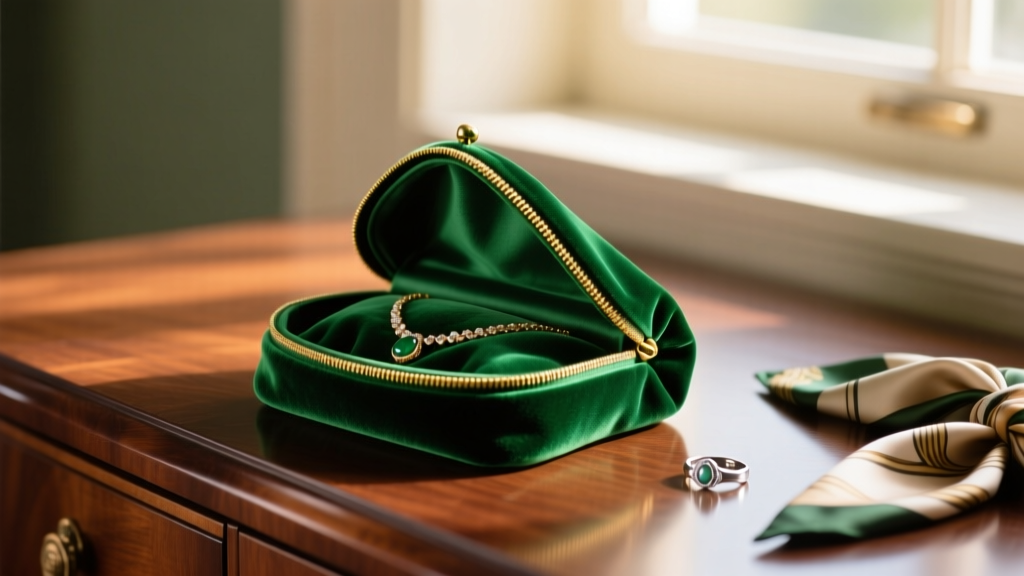
The Hidden Costs of Cheap Necklace Storage
When organizing a jewelry collection, the humble necklace pouch is often an afterthought. Many collectors opt for the $5 to $12 synthetic velvet or cotton drawstring bags found in bulk on mass-market e-commerce sites. However, as we evaluate jewelry care standards in 2026, the true cost of these budget-friendly storage solutions extends far beyond their initial price tag. Cheap pouches frequently suffer from structural and chemical flaws that actively degrade your necklaces over time.
The primary failure mode of budget cotton and synthetic velvet pouches is moisture trapping. Natural cotton fibers are highly hygroscopic, meaning they absorb and retain ambient humidity. When a silver or copper-alloy chain is sealed inside a damp cotton pouch, it creates a microclimate that accelerates oxidation. Furthermore, the friction coefficient of cheap, unlined synthetic velvet can cause micro-abrasions on high-karat gold (which is inherently soft) and delicate gemstones like opals or pearls. The drawstrings themselves, often finished with hard metal aglets or rough plastic toggles, can easily snag and kink delicate box chains or herringbone weaves if the pouch is jostled during travel.
Material Breakdown: What You Are Actually Paying For
To accurately assess value, we must look past the aesthetic exterior of a pouch and examine the textile engineering. The table below breaks down the most common necklace pouch materials available on the market, evaluating their true protective capabilities against their retail cost.
| Material Type | Price Range | Tarnish Inhibition | Scratch Risk | Best Use Case |
|---|---|---|---|---|
| Synthetic Velvet (Polyester) | $5 - $12 | None | Low-Medium | Hard gems, short-term travel |
| Untreated Microfiber | $10 - $20 | Low | Very Low | Daily wear gold, platinum |
| Zinc-Embedded Flannel | $30 - $65 | High (Sacrificial) | Very Low | Sterling silver, heirloom pieces |
| 100% Mulberry Silk | $25 - $45 | None | None | Pearls, opals, 22k/24k gold |
| Genuine Suede/Leather | $40 - $85 | None (Can off-gas) | Medium | Chunky chains, heavy pendants |
The Danger of PVC Linings
A critical red flag in budget pouches is the use of Polyvinyl Chloride (PVC) for clear windows or interior linings. PVC requires chemical plasticizers to remain flexible. Over time, these plasticizers off-gas, releasing acidic vapors that can permanently cloud porous gemstones, degrade the nacre on pearls, and cause rapid, severe tarnishing on silver. A premium pouch will always utilize polyethylene (PE) or untreated natural fabrics for any transparent or structural elements.
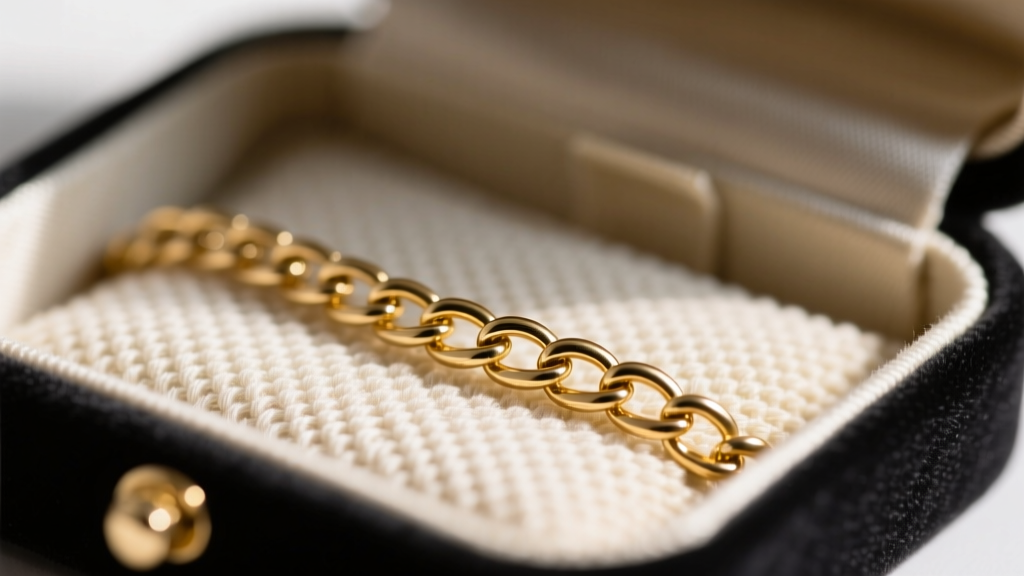
The Chemistry of Tarnish and Anti-Tarnish Pouches
To understand the value of a premium anti-tarnish necklace pouch, one must understand the chemistry of jewelry degradation. According to Scientific American, silver tarnish is not caused by oxygen, but by hydrogen sulfide in the atmosphere reacting with silver to form silver sulfide, a dark, dull layer on the metal's surface.
Premium anti-tarnish pouches, such as those utilizing Pacific Silvercloth or similar zinc-embedded polymer technologies, do not merely block air; they actively intercept corrosive gases. The zinc particles woven into the flannel act as a sacrificial anode. Because zinc is more reactive than silver, the hydrogen sulfide binds to the zinc instead of your necklace. This means the pouch is actively sacrificing its own embedded minerals to preserve your jewelry. Once the zinc is fully saturated (which typically takes 3 to 5 years depending on ambient pollution), the pouch must be replaced. This consumable nature is a key factor in the long-term budget assessment of premium storage.
Budget vs. Premium: A 5-Year Value Assessment
Let us apply a practical decision framework to the financial reality of necklace storage. Assume you own a $250 sterling silver pendant necklace and a $400 18k gold chain.
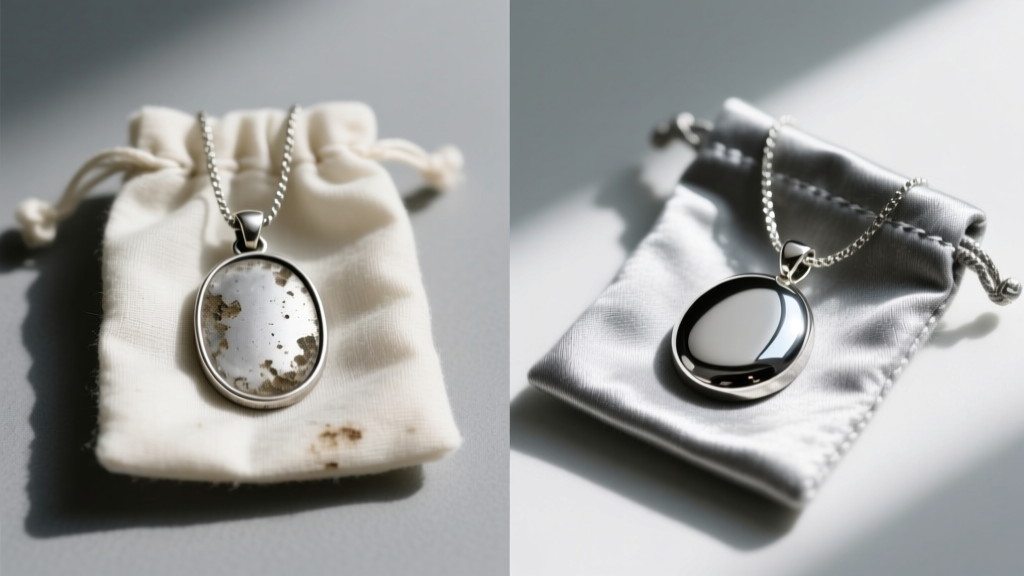
- The Budget Route ($10 initial cost): You store the silver necklace in a standard cotton drawstring pouch. Due to trapped moisture and lack of gas interception, the silver heavily tarnishes within 8 months. To restore it, you must take it to a jeweler for professional polishing and rhodium flashing, which costs between $35 and $60. Polishing also removes a microscopic layer of silver each time, degrading the piece's structural integrity over a decade.
- The Premium Route ($45 initial cost): You store the necklace in a zinc-embedded anti-tarnish pouch. The piece remains bright for 4 years without requiring chemical dips or abrasive polishing. You retain 100% of the metal's mass and save $100+ in maintenance fees.
When viewed through a 5-year lens, the $45 premium pouch yields a net positive return on investment by eliminating maintenance costs and preserving the exact weight and finish of your precious metals.
How to Match the Pouch to Your Necklace
Value is highly contextual. A $50 anti-tarnish pouch is a waste of money for a pure platinum chain, while a $5 velvet pouch is a disaster for a natural pearl pendant. Use this framework to allocate your storage budget effectively:
1. Porous Organics (Pearls, Coral, Opals)
Organic gems require moisture to prevent cracking and are highly susceptible to chemical damage. The Gemological Institute of America (GIA) explicitly warns against storing pearls in airtight plastic environments or alongside hard metals. The Value Pick: 100% Mulberry silk pouches ($25-$45). Silk is breathable, retains a safe level of ambient moisture, and has a friction coefficient so low it will never scratch delicate nacre.
2. Sterling Silver and Copper Alloys
These metals are highly reactive to sulfur and humidity. The Value Pick: Zinc-embedded flannel or carbon-infused microfiber pouches ($30-$65). The premium price is entirely justified by the chemical interception properties that save you hours of polishing and the cost of professional refinishing.
3. High-Karat Gold (22k, 24k) and Platinum
Pure gold and platinum do not tarnish, but high-karat gold is incredibly soft and prone to micro-scratches. Platinum is durable but can develop a patina from friction. The Value Pick: Untreated, ultra-fine microfiber pouches ($10-$20). You do not need to pay the premium for anti-tarnish technology here; your budget is better spent on a pouch with a buttery-soft, lint-free interior and a smooth, toggle-free drawstring to prevent physical abrasion.
Final Verdict on Necklace Pouch Investments
Ultimately, assessing the value of a necklace pouch requires shifting your perspective from the cost of the accessory to the cost of the assets it protects. While budget pouches are perfectly adequate for fashion jewelry, stainless steel, or hardened titanium chains, they represent a false economy for fine jewelry. By investing in specialized, material-specific pouches—particularly those featuring sacrificial anti-tarnish technology or pure silk linings—you are effectively purchasing an insurance policy that preserves the financial and sentimental value of your collection for decades to come.


