Envelope Necklace Troubleshooting: Hinge Fixes & Care
Is your envelope necklace stuck or broken? Learn expert troubleshooting tips for hinges, clasps, tarnish, and chain tangling to restore your pendant.

The Mechanical Complexity of the Envelope Necklace
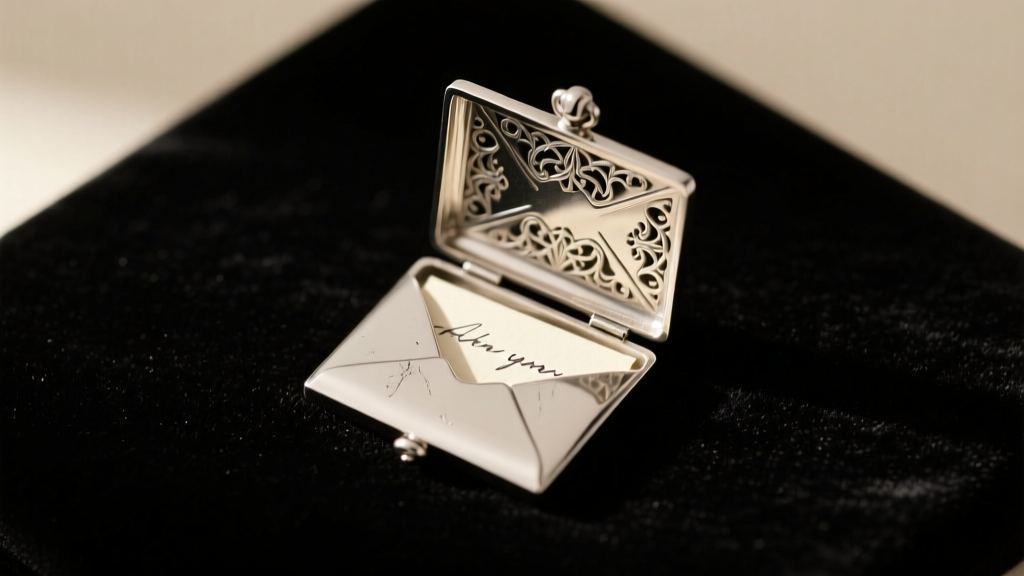
An envelope necklace is far more than a simple decorative pendant; it is a piece of micro-engineering. Whether you own a vintage 1940s sweetheart locket designed to hold a wartime photograph or a contemporary 3D-milled brass piece, the inclusion of moving parts introduces unique failure points. Unlike solid cast pendants, an envelope necklace relies on microscopic friction hinges, delicate catch mechanisms, and asymmetrical weight distribution. When these components fail, the sentimental value of the piece often far outweighs its scrap metal value, making professional or careful DIY repair essential.
Troubleshooting an envelope necklace requires an understanding of jewelry metallurgy, mechanical tolerances, and proper tool usage. Forcing a stuck hinge or using harsh chemical dips can permanently destroy the piece, especially if it features guilloché enamel or fragile paper inserts. This guide provides a comprehensive, step-by-step framework for diagnosing and repairing the most common issues associated with envelope-style pendants.
Troubleshooting Hinge and Clasp Failures
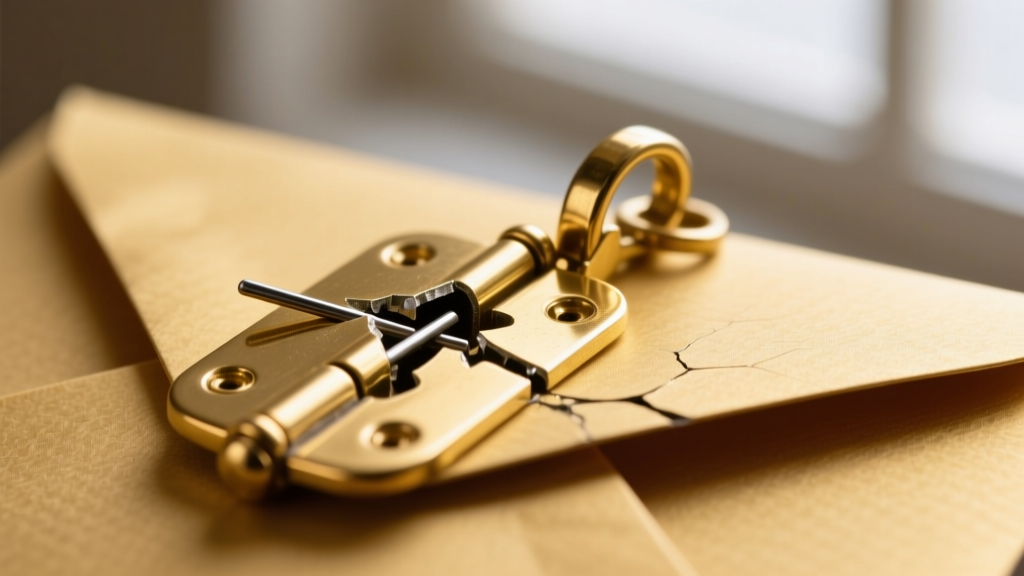
The most frequent point of failure on any envelope necklace is the hinge that allows the 'flap' to open, or the micro-clasp that keeps it securely shut. Because these components are often less than 2 millimeters in size, they are highly susceptible to debris accumulation, metal fatigue, and accidental impact.
The Stuck Hinge: Lubrication vs. Realignment
If your envelope pendant refuses to open, your first instinct might be to apply a household lubricant like WD-40. Never do this. Household solvents attract microscopic dust and leave behind a gummy residue that will permanently seize a micro-hinge. Furthermore, if the hinge pin is bent, forcing the flap will snap the pot metal or silver casing.
Instead, use a 0.05mm feeler gauge to gently check for debris in the hinge gap. If the hinge is simply dry, apply a microscopic drop of synthetic watch oil (such as Moebius 9010) using a fine oiler pin. Allow it to wick into the joint for 15 minutes before gently testing the movement. If the hinge remains stuck, the 0.8mm brass or steel pin has likely bent. At this stage, the pin must be carefully pushed out using a precision punch tool, straightened, and re-inserted—a task best left to a bench jeweler with a microscope.
Reshaping a Bent Friction Catch
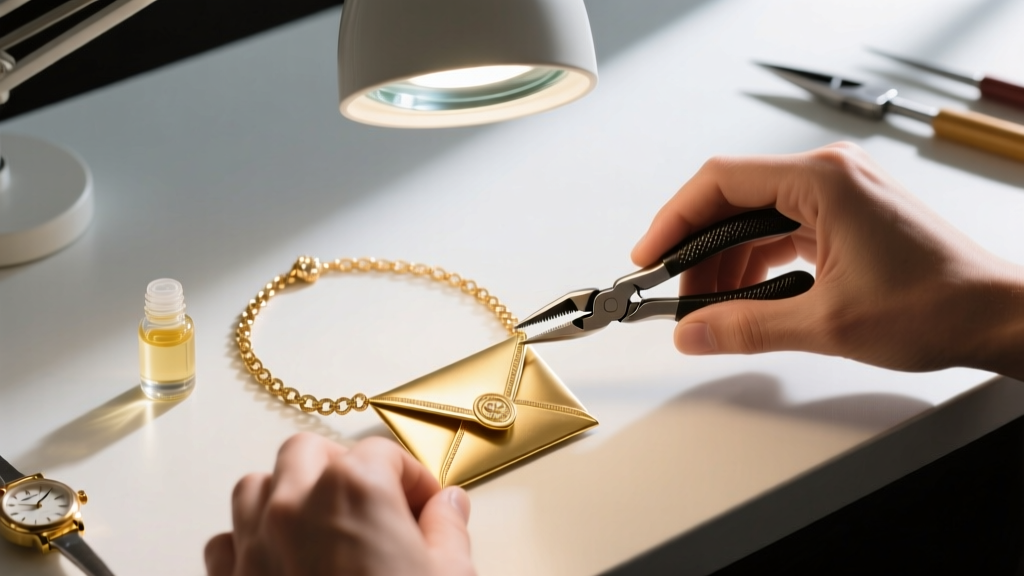
The 'flap' of an envelope necklace usually secures via a tiny friction catch—a small metal tab that snaps into a corresponding groove. Over time, repeated opening and closing can cause this tab to bend outward, preventing the locket from staying shut. To fix this, secure the pendant in a wooden clamp and use nylon-jaw pliers to gently squeeze the catch tab back into alignment. Nylon jaws are critical here; standard steel pliers will mar the silver or gold plating, leaving permanent tool marks.
Material Degradation and Tarnish Management
The longevity of your envelope necklace is heavily dictated by its base metal. According to the FTC Jewelry Guides, manufacturers must accurately stamp and disclose metal content, but many vintage or imported pieces lack proper hallmarks. Identifying your metal is the first step in troubleshooting surface degradation.
| Material Grade | Mohs Hardness | Common Failure Mode | Repair Difficulty |
|---|---|---|---|
| Zinc Alloy (Pot Metal) | 2.5 - 3.0 | Hinge snapping, irreversible pitting | Very High (Often unrepairable) |
| 925 Sterling Silver | 2.5 - 3.0 | Sulfide tarnish, soft hinge wear | Low (Easily polished and soldered) |
| 14k Gold-Filled | Varies by core | Delamination if polished aggressively | Medium (Requires careful buffing) |
| Solid 14k/18k Gold | 3.0 - 4.0 | Scratching, catch fatigue | Low (Highly malleable and durable) |
For sterling silver envelope necklaces, tarnish can quickly build up inside the microscopic crevices of the hinge, acting like cement. To remove it without dismantling the piece, use a soft horsehair brush dipped in a mild solution of warm water and phosphate-free dish soap. Avoid commercial silver dips, as the harsh thiourea chemicals can seep into the hinge and cause long-term corrosion, eventually turning the silver brittle.
Solving the Chain Tangling and Flipping Problem
A uniquely frustrating issue with envelope necklaces is their tendency to flip upside down and tangle in the chain. This is not a defect; it is a matter of physics. Envelope pendants are typically wide, flat, and top-heavy. If the center of gravity sits too high relative to the bail (the loop the chain passes through), the pendant will constantly rotate.
Optimizing the Bail and Chain Pairing
To troubleshoot this, examine the interior of the bail. If it is rough or unfinished, it will create friction against the chain, causing the chain to twist and knot. A jeweler can polish the bail interior using a tiny musket buff and Zam polishing compound to ensure a frictionless glide.
Next, evaluate your chain. Thick, rigid chains (like box chains or thick ropes) restrict the pendant's movement, forcing it to flip awkwardly. The ideal pairing for a heavy envelope pendant is a 1.2mm to 1.5mm flat cable chain or a delicate curb chain. These styles drape fluidly and allow the pendant to hang naturally. For expert chain sourcing and structural specifications, bench jewelers frequently consult technical catalogs from suppliers like Rio Grande to match the exact tensile strength and link soldering requirements for heavy pendants.
Cleaning Protocols: Protecting Inserts and Enamel
Many envelope necklaces function as lockets, hiding folded paper notes, photographs, or locks of hair inside. Others feature delicate guilloché enamel on the exterior flap. Both of these elements dictate strict limitations on how you can clean and troubleshoot the piece.
- Never use ultrasonic cleaners: The high-frequency cavitation bubbles will instantly shred vintage paper inserts and can cause microscopic fractures in enamel, leading to chipping.
- Avoid steam cleaners: Steam will warp paper photographs and can force moisture behind the enamel, causing the glass-like finish to lift from the metal backing.
- Use dry methods: For exterior cleaning, use a dry, lint-free microfiber cloth. For deep crevices, a wooden toothpick (which is softer than silver and gold) can safely scrape out compacted skin oils and lotion without scratching the metal.
When to Seek Professional Bench Repair
While minor hinge lubrication and catch realignment can be performed at home with the right tools, certain failures require a professional laser welder. If the hinge barrel itself has cracked, or if the bail has sheared off the top of the envelope, traditional torch soldering is often too risky. The heat required to flow silver or gold solder can melt the enamel flap or scorch the paper insert inside.
"Laser welding has revolutionized locket and envelope necklace repair. By focusing a high-energy beam on a microscopic point, we can fuse a cracked 14k gold hinge barrel without raising the ambient temperature of the pendant enough to damage the fragile paper message hidden inside."
— Master Bench Jeweler Certification Guidelines
Expect to pay between $45 and $85 for a professional laser weld on a precious metal envelope necklace, while a full hinge pin replacement typically ranges from $30 to $60. By understanding the mechanics and material science of your jewelry, you can accurately diagnose the issue and choose the safest, most effective path to restore your cherished envelope necklace to perfect working order.


