How to Authenticate Famous Necklace Brands: Step-by-Step Guide
Learn how to authenticate famous necklace brands like Cartier and Van Cleef with our step-by-step guide on hallmarks, serial numbers, and clasps.

The 2026 Landscape: Superfakes and the Secondary Market
The secondary market for luxury jewelry has exploded, and with it, the sophistication of counterfeit manufacturing. In 2026, the term 'superfake' is no longer just a buzzword; it is a genuine threat to collectors and everyday buyers alike. Modern counterfeiters utilize 5-axis CNC machining and 3D laser printing to replicate the exact weight, dimensions, and even the specific gravity of 18k gold alloys used by top-tier maisons. When learning how to authenticate famous necklace brands, relying on a simple weight test or a visual glance is no longer sufficient. You must adopt a gemological approach, scrutinizing micro-mechanics, laser-inscription kerning, and stone-setting tolerances. This step-by-step guide will equip you with the expert frameworks needed to verify pieces from heritage houses like Cartier, Van Cleef & Arpels, Tiffany & Co., and Bulgari.
Step 1: Decoding Hallmarks and Maker's Marks
The foundation of authentication begins with the hallmark. However, superficial fakes often stamp generic '750' or '18K' marks. True authentication requires examining the assay marks, maker's marks, and the typography used by the brand.
Cartier: The Eagle and the Font
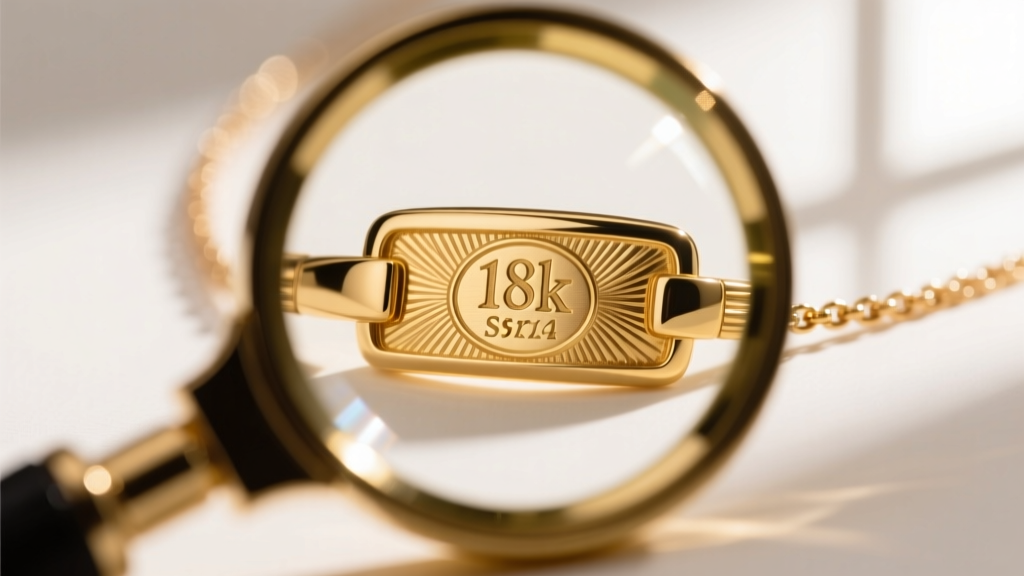
For Cartier necklaces manufactured in France, you must look for the French eagle head hallmark, which certifies 18k gold. Under a 10x triplet loupe, the eagle's profile should be sharply defined, not blurred or shallow. Furthermore, Cartier uses a highly specific, proprietary serif font for their logo stamp. Counterfeits often fail to replicate the precise kerning between the 'r' and the 't', or the exact depth of the laser engraving. According to the Sotheby's Fine Jewelry Department, authentic Cartier engravings are deeply and cleanly milled, whereas fakes often show microscopic pitting or uneven floors inside the letter grooves.
Van Cleef & Arpels: The JAR Stamp and Assay Marks
Van Cleef & Arpels (VCA) pieces feature a distinct maker's mark: a lozenge containing the initials 'JAR' (representing the historic jeweler's mark) alongside the VCA hallmark. On Alhambra necklaces, these stamps are typically located on the flat side of the clasp or the small gold tag near the pendant. The stamping must be perfectly centered and flush. If the hallmark appears stamped at an angle or bleeds over the edge of the metal, it is an immediate red flag.
Step 2: Analyzing Clasp Mechanics and Hardware
Hardware mechanics are where superfakes most frequently fail. Replicating the exact spring tension of a box clasp or the threading of a screw mechanism requires proprietary engineering that counterfeit syndicates rarely possess.
The Cartier Love and Juste un Clou Screw Threads
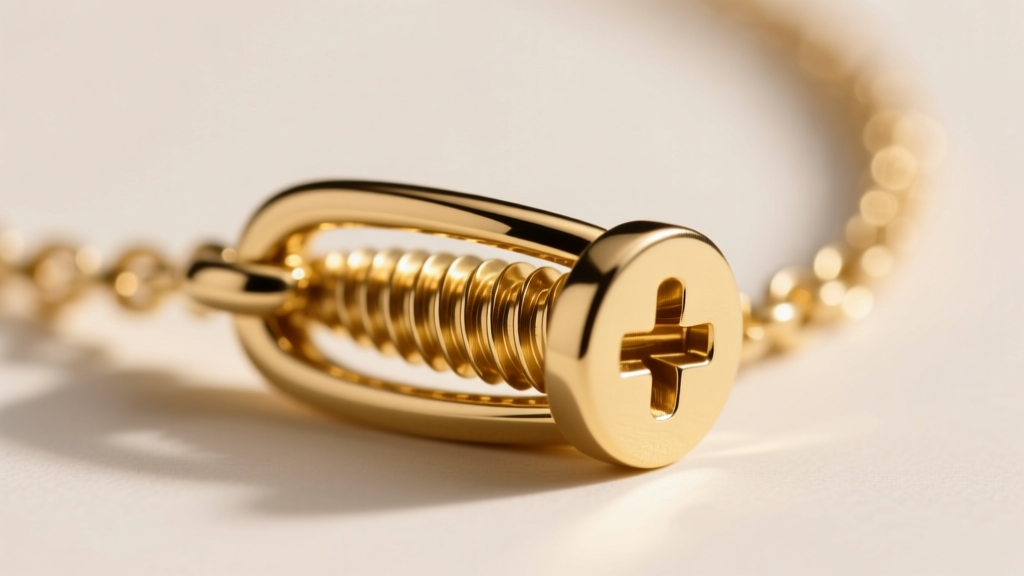
On Cartier Love necklaces and Juste un Clou pendants, the screw mechanisms are functional, not just decorative. When using the provided screwdriver, the threading should engage smoothly with zero wobble. Under magnification, the threads on an authentic piece are deeply cut with a flat, polished floor. Fakes often feature shallow, V-shaped threads that strip easily. Additionally, the screw head on the pendant or clasp must sit perfectly flush with the surrounding metal; any protrusion or gap indicates poor CNC tolerances.
| Hardware Feature | Authentic Designer Necklace | Counterfeit / Superfake |
|---|---|---|
| Screw Threading | Deep, flat-floored, smooth engagement | Shallow, V-shaped, prone to stripping |
| Box Clasp Spring | High-tension, audible click, seamless flush fit | Weak tension, rattles, visible gaps |
| Jump Ring Soldering | Laser-welded, invisible seam | Torch-soldered, visible porous blobs |
| Chain Link Welds | Flush, smooth to the touch, no snagging | Rough, raised weld spots that catch on silk |
Step 3: Gemstone and Material Verification
When authenticating famous necklace brands that utilize hardstones or pavé diamonds, material science becomes your best tool. The Gemological Institute of America (GIA) continually emphasizes that microscopic inclusion mapping and spectral analysis are the only foolproof ways to verify gemstones, but visual cues can help you spot fakes early.
VCA Alhambra: Malachite, Onyx, and Mother of Pearl
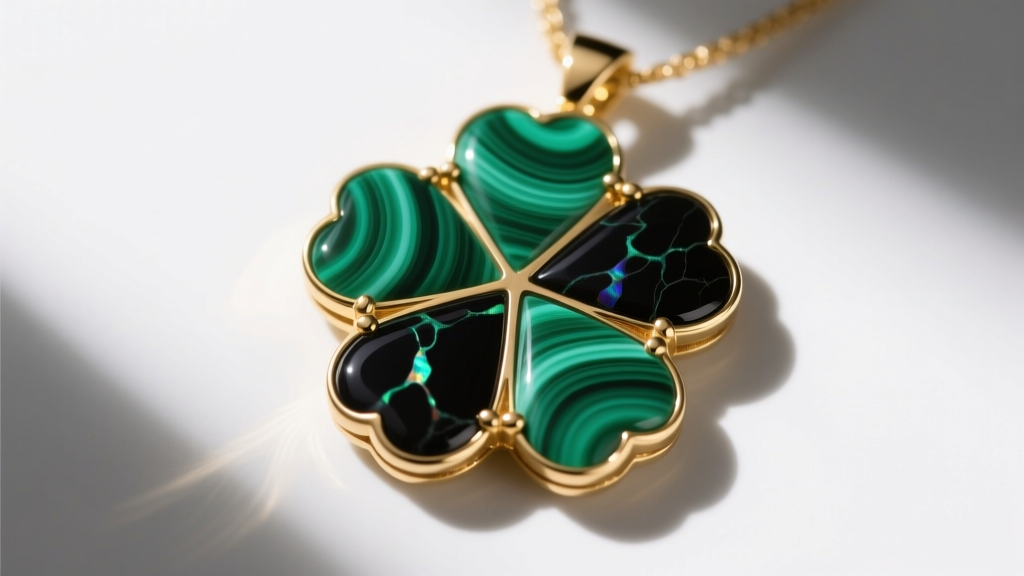
Van Cleef & Arpels is famous for its use of vibrant hardstones. Genuine malachite features natural, non-repeating banding with varying shades of deep and light green. Counterfeiters often use dyed howlite or agate, which under a loupe will reveal unnatural, uniform banding or dye concentrations in the stone's micro-fissures. Furthermore, authentic VCA stone inlays are cut to exact tolerances and set flush within the gold bezel without the use of visible adhesives. If you see a thin line of epoxy or a gap between the stone and the gold bezel, the piece is fraudulent.
Tiffany & Co. and Bulgari: Diamond Pavé Standards
For diamond-encrusted necklaces like the Bulgari Serpenti or Tiffany Victoria, examine the setting technique. Top-tier maisons use precise pavé or bezel settings where the metal beads holding the diamonds are perfectly rounded and uniform. The diamonds themselves should be matched in color and clarity (typically VS clarity and F-G color for major brands). Fakes often use lower-grade commercial diamonds or moissanite, which can be identified by their doubled facet lines or overly fiery dispersion under direct light.
Step 4: Serial Number Formatting and Database Checks
Every modern luxury necklace comes with a unique serial number, but the format is strictly regulated by the brand.
- Cartier: Modern serial numbers typically consist of two letters followed by four numbers (e.g., OK1234), or a 6-digit numeric code for specific collections. The engraving should be crisp, filled with a contrasting lacquer, and perfectly aligned.
- Van Cleef & Arpels: VCA serial numbers usually follow a format of two letters and four to five numbers (e.g., JE12345). They are often laser-engraved on the clasp or the small gold tag adjacent to the pendant.
- Tiffany & Co.: Tiffany utilizes a mix of serial numbers and specific SKU codes, often located on the back of heart tags or the interior of box clasps. The font is a highly specific sans-serif that fakes frequently get wrong.
While you cannot directly access a brand's private database, you can cross-reference the serial number format and font with verified archival sales from major auction houses. If a seller claims a Cartier necklace from 2015 has a serial number format introduced in 2022, the piece is a fake.
Quick Reference Authentication Checklist
Before finalizing any purchase on the secondary market, run the necklace through this mandatory checklist:
- Weight and Dimensions: Does the piece match the exact gram weight and millimeter dimensions listed on the brand's official specification sheet? (Tolerance should be within 0.5 grams).
- Magnet Test: Does the clasp spring mechanism contain steel? (A slight magnetic pull on the clasp spring is normal, but the chain and pendant must be completely non-magnetic).
- Typography Check: Are the brand logo, '750' stamp, and serial number using the correct proprietary fonts with flawless kerning?
- Stone Flush Test: Run a piece of silk fabric over the hardstone inlays or diamond pavé. Authentic pieces will glide smoothly; fakes will snag due to poor setting tolerances.
- Acoustic Resonance: Gently tap the gold clasp. High-density 18k gold produces a dull, solid thud, whereas hollow or plated fakes will emit a higher-pitched, tinny ring.
When to Seek Professional Gemological Appraisal
While this guide provides a robust framework for spotting superfakes, the counterfeit industry evolves rapidly. If you are investing in a high-carat diamond necklace or a rare vintage piece from a famous necklace brand, visual inspection is not enough. Always request that the piece be evaluated by an independent, certified gemologist who can perform advanced tests, such as X-ray fluorescence (XRF) to verify the exact metallurgical composition of the gold alloy, and microscopic inclusion mapping to confirm the origin of the gemstones. Protecting your investment requires moving beyond surface-level aesthetics and embracing the rigorous science of fine jewelry authentication.


