Anatomy of a Clover Diamond Necklace: Expert Buying Guide
Explore the technical anatomy of a clover diamond necklace. Learn about diamond grading, setting styles, chain gauges, and authentication markers.

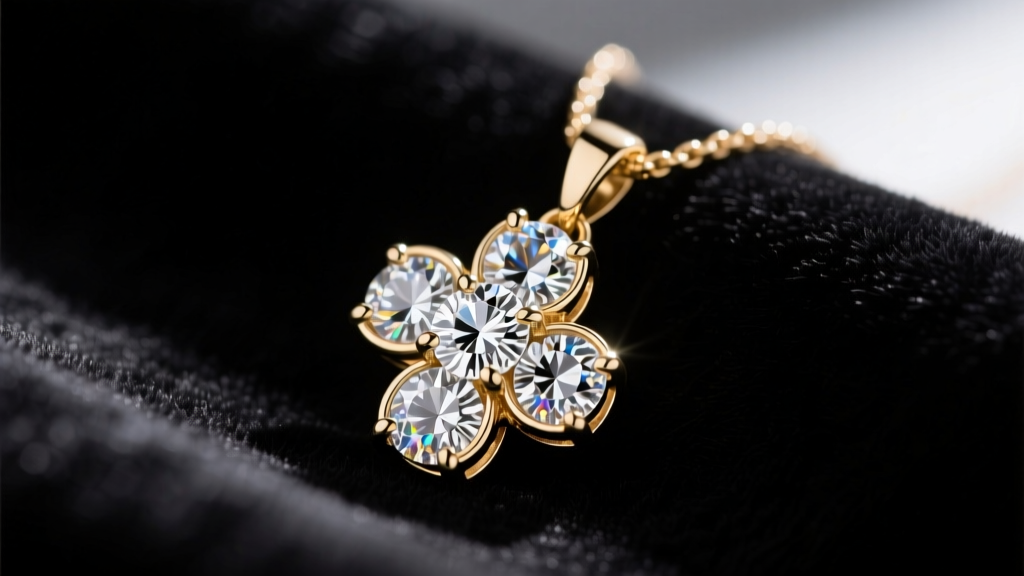
The quatrefoil, universally recognized as the clover motif, represents a pinnacle of symmetrical jewelry design. While heritage houses popularized the silhouette, the modern clover diamond necklace has evolved into a complex exercise in metallurgical stability and precision stone setting. For serious collectors and bespoke enthusiasts, evaluating these pieces requires looking past the aesthetic appeal and examining the structural engineering, diamond melee quality, and chain tensile strength that dictate the necklace's longevity and value.
The Architecture of the Quatrefoil Motif
The fundamental challenge of crafting a high-end clover pendant lies in its geometric rigor. The four lobes must be mathematically identical, requiring Computer-Aided Design (CAD) modeling with tolerances held to +/- 0.02mm. During the lost-wax casting process, the sprue (the channel through which molten metal flows) must be strategically placed at the pendant's bail or hidden edge. Poor sprue placement leads to porosity—microscopic air pockets trapped within the gold or platinum lobes—which compromises the structural integrity of the metal and creates weak points where the pavé setting can eventually collapse.
Master jewelers utilize X-ray radiography on bespoke clover pendants to ensure the internal density of the metal is uniform before a single diamond is set. This step is critical; a porous lobe will not withstand the pressure of the setting tools, leading to warped metal and loose stones.
Melee Diamond Selection and Light Performance
The brilliance of a clover diamond necklace is entirely dependent on the quality of the melee diamonds (stones weighing between 0.01 and 0.05 carats). Mass-market manufacturers often utilize "single-cut" melee, which feature only 17 or 18 facets. In contrast, luxury and bespoke clover pendants mandate "full-cut" melee, boasting the standard 57 or 58 facets of a larger round brilliant diamond. This facet density is crucial for maximizing light return in stones as small as 1.2mm to 1.5mm in diameter.
Color and Clarity Targets
Because the human eye easily detects color mismatches across a continuous pavé surface, high-end clover necklaces strictly utilize melee in the F-G color range. Clarity is typically graded at VS1 to VS2. While inclusions in melee are rarely visible to the naked eye, heavy inclusions (like large carbon spots or surface-reaching feathers) can cause the stone to fracture under the pressure of the setting burin.
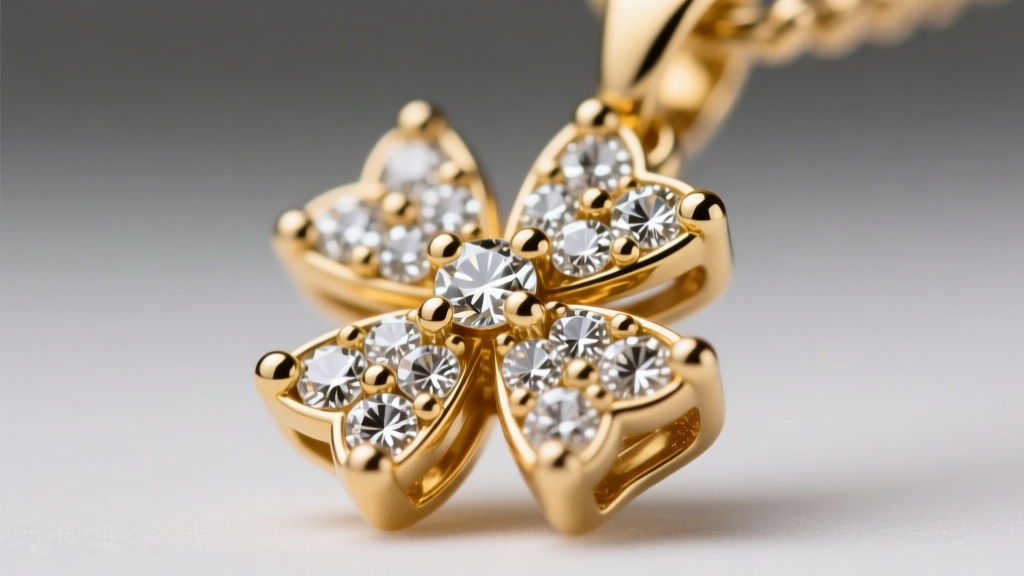
Pavé Setting Techniques: Bright Cut vs. Micro-Pavé
The method used to secure the diamonds fundamentally alters the visual texture and durability of the clover pendant.
- Bright Cut Pavé: The setter uses a graver to carve out a bright, reflective wall of metal around the stones. This creates a highly durable setting with larger, more robust prongs (often 1.0mm to 1.2mm), making it ideal for everyday wear.
- Micro-Pavé: Utilizes microscopic metal beads (approximately 0.6mm to 0.8mm) to secure the stones, minimizing the visible metal and maximizing diamond coverage. While visually stunning, micro-pavé on the outer edges of a clover lobe is highly susceptible to snagging and prong wear.
According to the Gemological Institute of America (GIA), the precision of the melee cut and the symmetry of the setting are the primary drivers of light performance in pavé jewelry, often outweighing the marginal benefits of higher color grades.
Chain Metallurgy and Tensile Strength
A heavy, diamond-encrusted clover pendant requires a chain engineered for high tensile strength. The standard 0.7mm chains found in commercial jewelry are wholly inadequate and prone to snapping under the dynamic load of a solid gold pendant. Expert jewelers recommend a minimum gauge of 0.9mm to 1.1mm for a clover diamond necklace.
Cable chains and box chains are the preferred architectures. Box chains, with their interlocking square links, offer superior tensile strength and resist kinking, though they can be difficult to repair if a link fails. The clasp must also be proportionate; a hidden box clasp with a secondary figure-eight safety catch is the industry standard for high-value pendants, ensuring the piece remains secure even if the primary locking mechanism fails.
Material Alloys and Metallurgical Stability
The choice of metal dictates the necklace's hardness, weight, and long-term maintenance requirements. Below is a technical comparison of the standard alloys used in luxury clover pendants.
| Alloy | Vickers Hardness (HV) | Density (g/cm³) | Maintenance Profile |
|---|---|---|---|
| 18k Yellow Gold (75% Au) | 125 - 135 HV | 15.5 | Low; requires occasional polishing. |
| 18k White Gold (Nickel/Palladium) | 135 - 145 HV | 15.8 | High; requires rhodium re-plating every 12-18 months. |
| 950 Platinum (95% Pt, 5% Ru) | 135 - 150 HV | 21.4 | Medium; develops a patina, requires repolishing. |
Platinum's higher density provides a reassuring heft and superior prong durability, as the metal displaces rather than flakes away when scratched. However, 18k white gold remains the most popular choice for diamond clover necklaces due to its bright, reflective under-gallery, which enhances the perceived brilliance of the melee diamonds.
Authentication and Hallmark Forensics
The secondary market for luxury clover necklaces is heavily saturated with high-grade counterfeits. Authentication requires a forensic approach to hallmarking and serial tracking. Authentic pieces from major heritage houses will feature a laser-inscribed serial number on the bail or the edge of the pendant, which must match the accompanying certificate of authenticity.
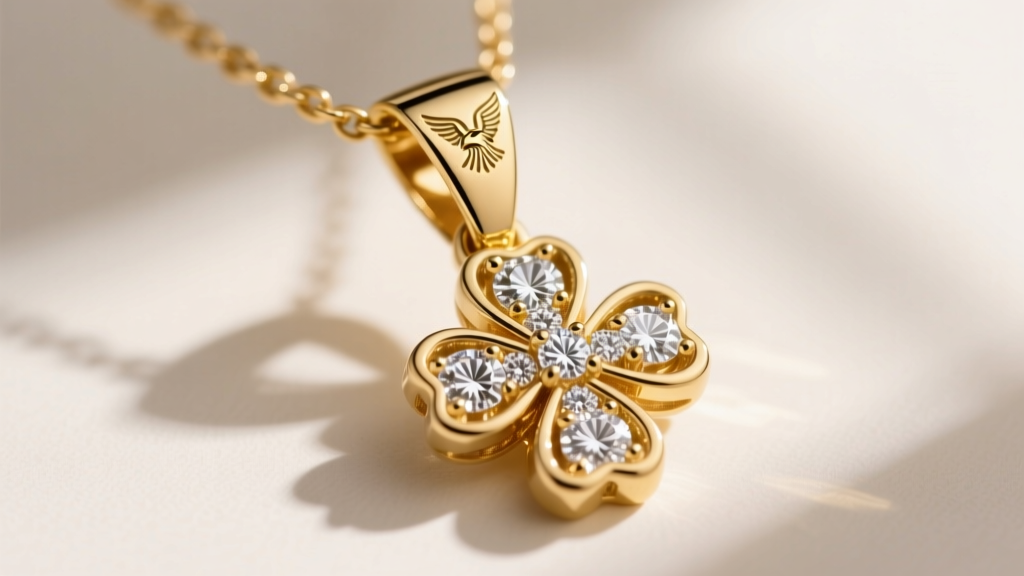
In the European market, the French Eagle Head hallmark is legally required for all 18k gold jewelry. This stamp is incredibly small (often less than 1mm) and must be applied by an assay office. Counterfeiters often use laser etching to mimic this stamp, but under 30x magnification, a genuine stamped hallmark will show metal displacement and crisp, deep edges, whereas a fake laser etch will appear shallow with burnt or melted margins. For more on identifying authentic laser inscriptions, refer to the GIA's guide on laser inscription technology.
Long-Term Maintenance and Failure Modes
Even the most meticulously crafted clover diamond necklace is subject to mechanical degradation. The most common failure mode is prong shear on the outermost lobes, which frequently come into contact with clothing and hard surfaces. Owners should have the pavé beads inspected under magnification every 12 months.
Furthermore, cleaning requires caution. While ultrasonic cleaners are safe for solid gold and untreated diamonds, they can shake loose melee stones if the micro-pavé beads have worn thin. Steam cleaners should be avoided if the clover pendant incorporates any secondary gemstone materials, such as mother-of-pearl, malachite, or onyx, which are often paired with diamonds in the quatrefoil design and are highly sensitive to sudden thermal shock and chemical exposure.


