Ring Necklace Meaning & Care: Protecting Sentimental Pendants
Discover the ring necklace meaning and learn expert care tips to protect sentimental promise rings, memorial bands, and pendant chains from daily wear.

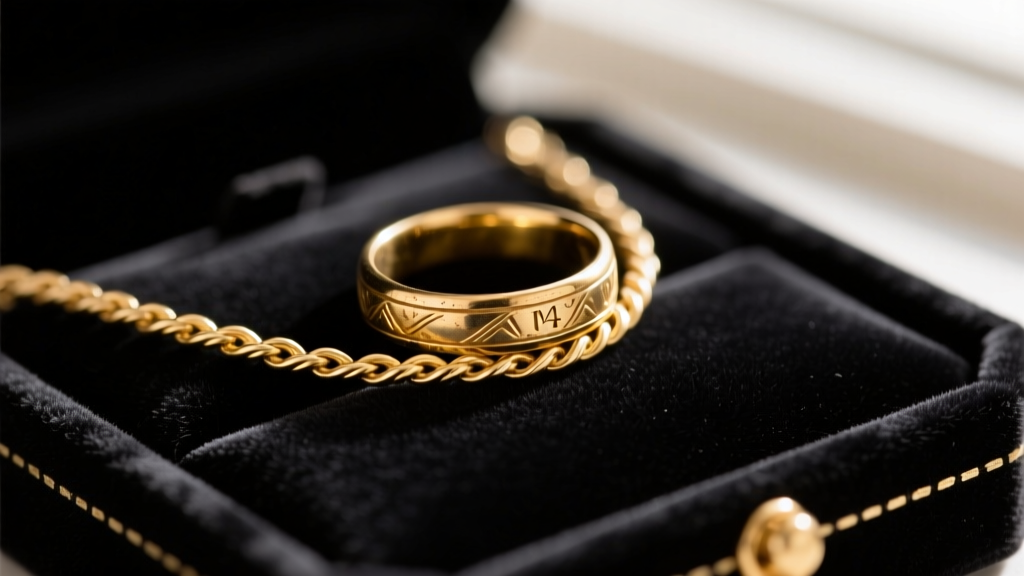
The decision to wear a ring on a chain is rarely just a fashion choice; it is almost always driven by deep emotional significance. Whether it is a promise ring from a partner, a wedding band belonging to a late spouse, or a family heirloom temporarily removed due to finger swelling, the ring necklace meaning is rooted in keeping a cherished bond close to the heart. However, wearing a ring as a pendant introduces severe mechanical and chemical challenges that standard necklace care guides often ignore.
As of 2026, jewelry insurance appraisals for sentimental pieces increasingly factor in the structural risks of wearing heavy bands on delicate chains. The friction between a ring's shank and a chain's links can lead to catastrophic failure, resulting in the loss of irreplaceable items. This comprehensive guide explores the symbolism behind the ring necklace trend and provides advanced, metallurgical-level maintenance protocols to ensure your sentimental pendant survives a lifetime of daily wear.
The Ring Necklace Meaning: Symbolism and Sentiment
Before diving into maintenance, it is crucial to understand why rings are transitioned to necklaces. The ring necklace meaning generally falls into three distinct categories, each presenting unique care challenges based on the ring's origin and material:
- Memorial and Bereavement Bands: Wearing a late spouse's wedding band. These are often vintage pieces featuring older alloy mixes, porous gemstones (like turquoise or opals), or delicate enamel work that cannot withstand modern chemical cleaners.
- Promise and Purity Rings: Often worn by younger individuals or those in long-distance relationships. These rings are frequently made of alternative metals like tungsten or titanium, which are incredibly hard and can easily saw through softer precious metal chains.
- Medical and Sizing Necessity: Pregnancy, chemotherapy, or arthritis can cause severe finger swelling. Wearing an engagement or wedding ring on a chain keeps the diamond safe while accommodating physical changes. These rings often feature complex pavé settings that trap skin oils and lotions against the chest.
The Friction Problem: Metal-on-Metal Wear
The most critical threat to a ring necklace is the 'guillotine effect.' A ring acts as a heavy, sliding pendulum. Every time you move, the inner shank of the ring grinds against the individual links of the chain. If the ring is harder than the chain, it will slowly file through the metal until the chain snaps.
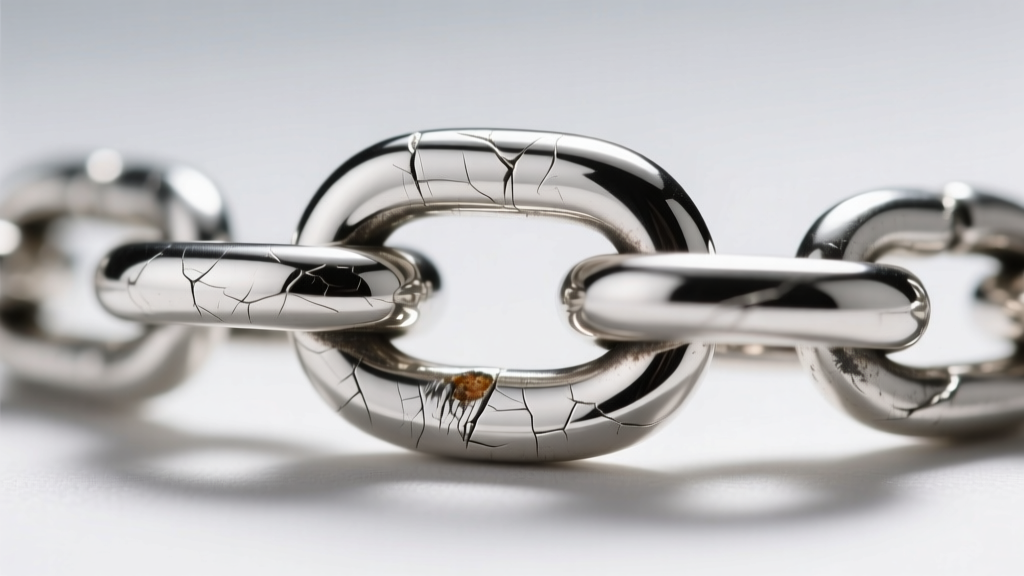
According to the Gemological Institute of America (GIA), understanding the Mohs scale of mineral hardness is vital for jewelry care, but it applies equally to metals. Platinum (Mohs 4.0-4.5) and Tungsten Carbide (Mohs 7.5-8.0) will effortlessly destroy a 14k gold chain (Mohs 2.5-3.0) within six to twelve months of daily wear.
Material Hardness and Chain Pairing Matrix
| Ring Material | Approx. Mohs Hardness | Recommended Chain Material | Minimum Chain Gauge |
|---|---|---|---|
| Tungsten Carbide | 7.5 - 8.0 | Stainless Steel or Titanium | 2.0mm (12-gauge) |
| Platinum | 4.0 - 4.5 | Platinum or 18k White Gold | 1.5mm (14-gauge) |
| 14k Yellow Gold | 2.5 - 3.0 | 14k Gold or Platinum | 1.2mm (16-gauge) |
| Sterling Silver | 2.5 - 3.0 | Sterling Silver (Rhodium plated) | 1.2mm (16-gauge) |
Note: Never hang a tungsten or titanium ring on a gold or silver chain. The disparity in hardness guarantees chain failure.
Specialized Cleaning Protocols for Sentimental Rings
Rings worn on the chest are exposed to a unique cocktail of sweat, perfumes, body lotions, and dead skin cells. Because the ring sits flat against the sternum, the basket and gallery (the underside of the ring) trap debris, dulling diamonds and degrading metal alloys over time.
The Safe Soak Method
For standard diamond, sapphire, or ruby rings set in gold or platinum, follow this protocol recommended by Jewelers of America:
- Mix one cup of distilled water (tap water contains chlorine and minerals that can spot precious metals) with three drops of pH-neutral liquid dish soap (like original Dawn).
- Submerge the ring and chain for exactly 15 minutes. Do not exceed this, as prolonged soaking can weaken the adhesives used in some older or tension-set stones.
- Use a brand-new, extra-soft baby toothbrush to gently agitate the gallery and prongs. Brush in a circular motion, never aggressively scrubbing the prongs, which can bend them.
- Rinse under a gentle stream of lukewarm distilled water, ensuring the drain is securely plugged.
- Dry with a lint-free microfiber cloth. Avoid paper towels, as their wood-pulp fibers can cause micro-scratches on high-polish gold.
What to Avoid: The Ultrasonic Danger
Never place a memorial ring or vintage heirloom in an ultrasonic cleaner without a professional assessment. Ultrasonic cavitation creates high-frequency vibrations that can shatter porous stones (emeralds, opals, pearls, turquoise) and completely strip the vitreous enamel often found in Victorian and Edwardian mourning rings. Furthermore, if the ring's prongs are already worn thin from friction against the chain, the ultrasonic vibrations can shake the center stone completely loose.
Upgrading Your Hardware: Bails, Buffers, and Clasps
The most effective way to maintain a ring necklace is to eliminate the metal-on-metal friction entirely. You can achieve this through strategic hardware upgrades that preserve the ring's integrity while maintaining the necklace's aesthetic.
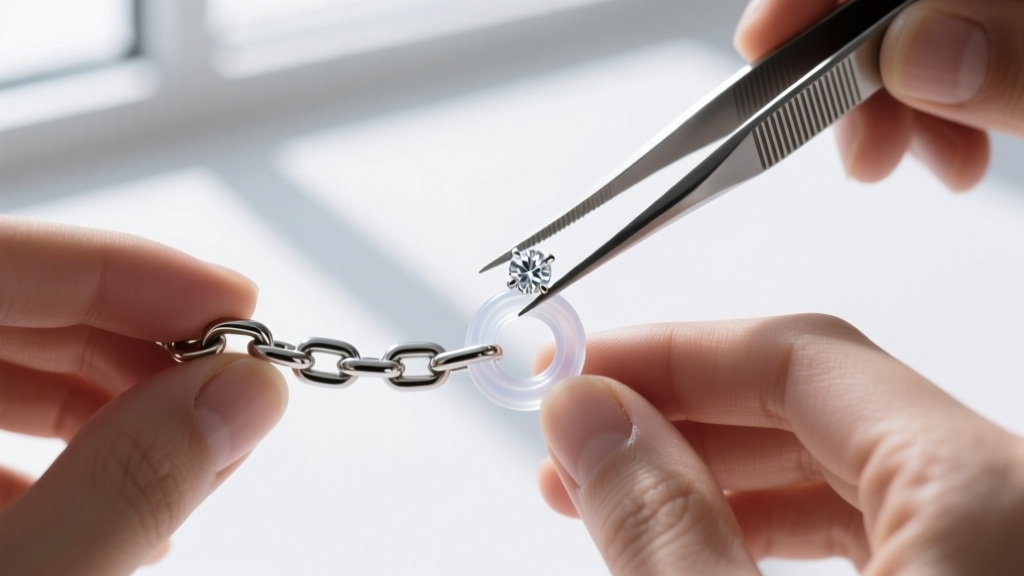
The Silicone O-Ring Buffer Technique
For a fraction of a cent, you can save a thousand-dollar chain. Purchase small, clear silicone O-rings (size #10 or #12, typically found in hardware or plumbing sections). Thread the O-ring onto the chain first, then thread the ring. The silicone acts as a shock absorber, preventing the metal shank from directly striking and grinding the chain links. Replace the O-ring every six months as it degrades from skin oils and friction.
Investing in a Proper Bail
Threading a ring directly onto a chain is a temporary solution. For permanent wear, have a jeweler attach a locking tube bail or a screw-top pendant bail to the ring's shank. A bail creates a dedicated, reinforced loop for the chain to pass through, distributing the weight evenly and preventing the chain from kinking. Ensure the bail is laser-welded to the ring, as traditional soldering can sometimes damage heat-sensitive gemstones or alter the temper of the metal.
Clasp Security
Standard spring-ring clasps are insufficient for heavy rings. The weight of a wedding band will constantly pull on the delicate spring mechanism, eventually causing it to fail. Always upgrade to a locking lobster claw clasp or a box clasp with a figure-eight safety latch. According to FTC Jewelry Guidelines, ensuring your findings match the karatage and structural integrity of your primary piece is essential for accurate valuation and safety.
Storage and Preservation: Keeping the Memory Intact
How you store your ring necklace when it is not on your body is just as important as how you clean it. Tossing a ring necklace into a communal jewelry box is a recipe for disaster. The heavy ring will swing around, tangling with and scratching other delicate chains, bracelets, and gemstones.
Expert Storage Rule: A ring necklace must always be stored individually, suspended or laid perfectly flat, in a climate-controlled environment to prevent both mechanical tangling and chemical tarnishing.
For silver chains, store the necklace in a Pacific Silvercloth pouch. This specialized fabric is embedded with microscopic silver particles that absorb sulfur and moisture from the air, preventing the sterling silver from oxidizing and turning black. For gold and platinum pieces, use individual polyethylene zip-lock bags. Polyethylene is chemically inert and will not off-gas chemicals that could degrade porous stones or pearls. Include a small strip of 3M Anti-Tarnish paper in the bag for added protection against environmental pollutants.
Ultimately, understanding the ring necklace meaning goes beyond the emotional attachment; it requires a physical commitment to preserving the artifact. By respecting the metallurgical properties of your jewelry, upgrading your hardware to mitigate friction, and adhering to strict, chemical-safe cleaning protocols, you ensure that your sentimental pendant remains secure and brilliant for generations to come.


