Clover Necklace Value Guide: Is It Worth It in 2026?
Discover if a clover necklace is worth the investment. We break down 2026 pricing tiers, material grades, and value assessment for every budget.

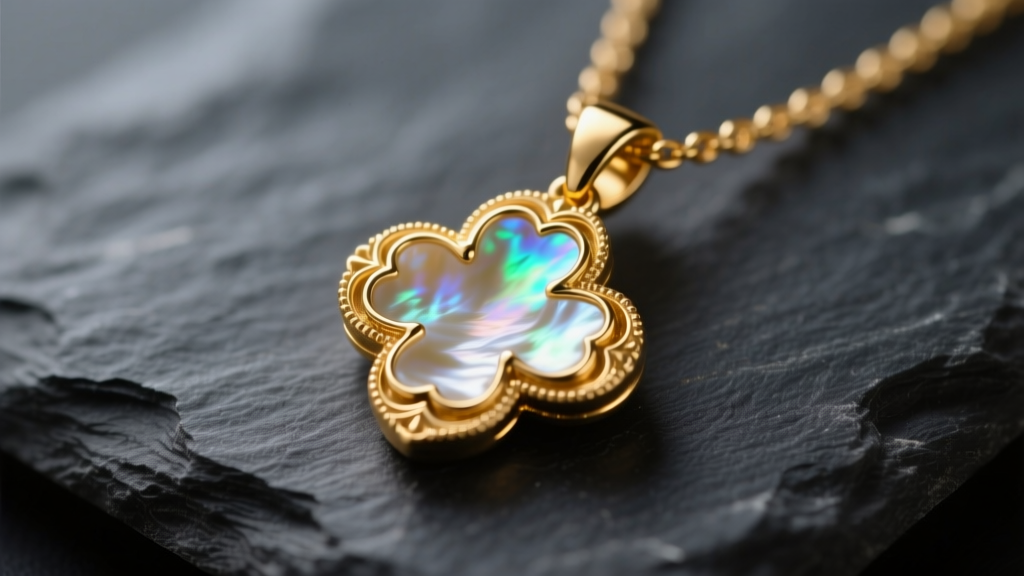
The Clover Necklace Phenomenon: Iconic Design vs. Market Saturation
The clover motif—popularized in 1968 by Van Cleef & Arpels with their iconic Alhambra collection—has transcended its luxury origins to become a universal jewelry staple. As we navigate the 2026 jewelry market, the democratization of this design means you can find a clover necklace at virtually any price point, from $15 fast-fashion alloys to $15,000 high-jewelry diamond pavé pieces. But this market saturation creates a massive value-assessment problem for consumers. How do you distinguish between a generational heirloom, a reliable demi-fine daily wearer, and a disposable trend piece destined to turn your skin green?
Assessing the true value of a clover necklace requires looking past the brand name and deeply analyzing the metallurgy, gemological properties of the inlay stones, and structural integrity of the chain. This guide provides a rigorous, data-driven framework to help you evaluate clover necklaces across all budget tiers.
Decoding the Price Tiers: What Are You Actually Paying For?
The market is broadly segmented into three distinct tiers. Understanding the manufacturing shortcuts taken at the lower end is crucial for making an informed purchase.
| Tier | Price Range | Base Metal & Plating | Stone Inlay Quality | Expected Lifespan |
|---|---|---|---|---|
| Fashion / Mass Market | $15 - $80 | Brass or Zinc Alloy; Flash-plated (0.1 microns) | Epoxy resin, dyed glass, or plastic | 3 - 12 Months |
| Demi-Fine / Accessible Luxury | $150 - $600 | Sterling Silver; Gold Vermeil (2.5+ microns) | Genuine Mother of Pearl, Onyx, Malachite | 3 - 10 Years |
| Fine Jewelry / Investment | $3,500 - $10,000+ | Solid 18k Gold or Platinum | Ethically sourced hardstones, Diamonds | Generational / Heirloom |
In the fashion tier, manufacturers utilize "flash plating," a process that deposits a microscopic layer of gold (often less than 0.1 microns) over a brass base. Once this layer wears off from friction and skin acidity, the underlying copper reacts with sweat, causing galvanic corrosion and the dreaded green skin effect. Conversely, the Federal Trade Commission (FTC) Jewelry Guides strictly regulate the term "Vermeil," requiring a sterling silver base and a minimum of 2.5 microns of 10k or higher gold, ensuring significantly greater longevity.
Material Deep-Dive: The Gemological Reality of Clover Stones
The inlay stone is the focal point of any clover necklace, but not all stones are created equal. Budget and mid-tier necklaces typically rely on three materials: Mother of Pearl (MOP), Malachite, and Onyx. Their chemical compositions dictate how they will survive daily wear.
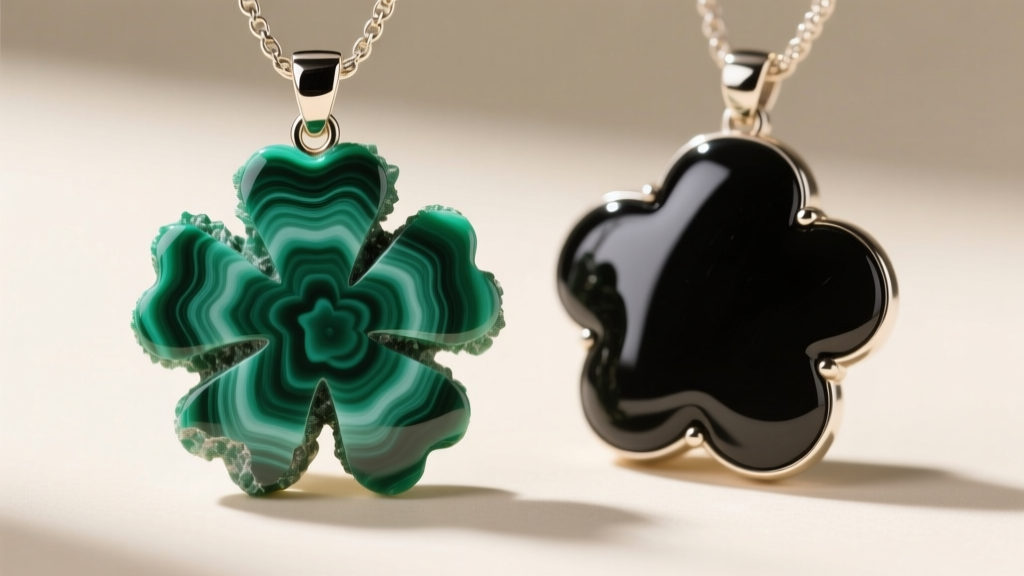
The Hard Stone vs. Soft Stone Dilemma
- Mother of Pearl (Mohs 2.5 - 3.0): An organic gem composed of calcium carbonate. It is highly susceptible to etching from lactic acid in human sweat and acidic cosmetics. Over time, cheap MOP inlays will lose their luster and develop a chalky, matte surface if worn daily without cleaning.
- Malachite (Mohs 3.5 - 4.0): A copper carbonate hydroxide mineral prized for its vivid green banding. According to the GIA Gem Encyclopedia, malachite is highly sensitive to heat, acids, and even prolonged exposure to hot water. It requires a protective bezel and careful maintenance.
- Black Onyx (Mohs 6.5 - 7.0): A dyed chalcedony that offers superior durability. Onyx is the most practical choice for a "never take it off" daily wear clover necklace, as it resists scratching and chemical degradation far better than MOP or malachite.
Setting Mechanics: Glued vs. Burnished Bezel
A hidden indicator of value is how the stone is secured. Mass-market clover necklaces use industrial epoxy to glue the stone into a shallow metal tray. This epoxy degrades under UV light and thermal shock (like washing your hands in hot water), causing the stone to pop out. High-value demi-fine and fine jewelry pieces utilize a mechanical burnished bezel, where the gold or silver lip is physically folded and pressed over the edge of the stone to lock it in place permanently.
Chain Integrity and Clasp Mechanics: The Hidden Cost Cutters
When assessing value, consumers obsess over the pendant but ignore the chain. In 80% of budget necklace failures, the chain snaps or the clasp fails long before the pendant degrades.
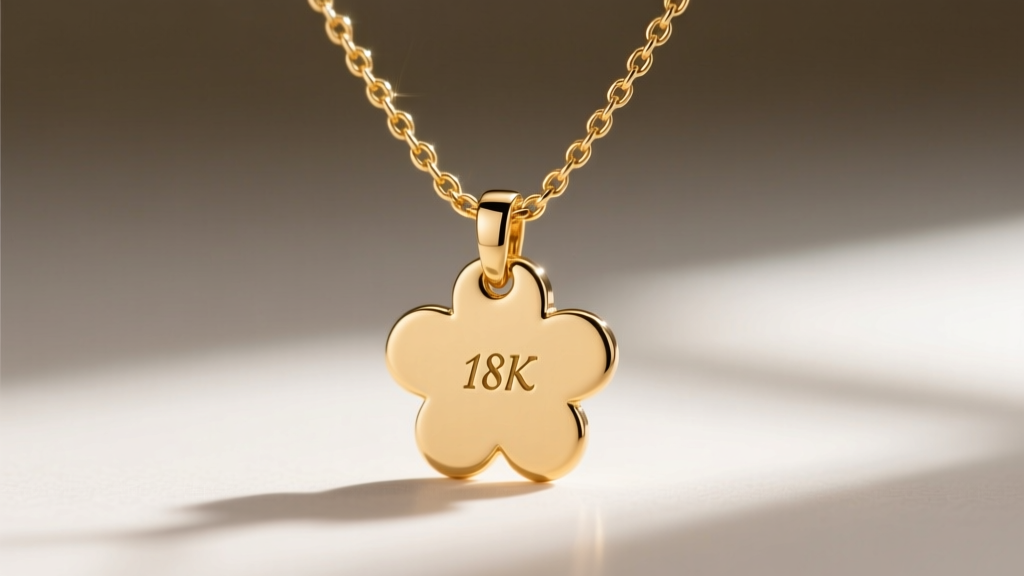
Gauge and Link Structure: Avoid chains thinner than 0.8mm. A high-quality demi-fine or solid gold clover necklace should feature a cable or rolo chain between 1.0mm and 1.5mm in thickness. Furthermore, inspect the jump rings (the small circles connecting the clasp to the chain). If the jump ring has a visible slit and is not soldered shut, it will eventually pull apart under the weight of the stone pendant.
Clasp Hardware: Spring-ring clasps are standard on sub-$100 necklaces; they are difficult to operate one-handed and contain an internal steel spring that will rust if exposed to water. A robust lobster clasp, cast entirely in sterling silver or solid gold, is a hallmark of a necklace built for long-term value.
Budgeting Framework: Matching Value to Your Wear Habits
To determine if a clover necklace is "worth it," you must align the material tier with your specific lifestyle and wearing habits.
The Occasional Wearer (Events, Office, Dinners): If you plan to wear the necklace 1-2 times a week and store it in a dry, anti-tarnish pouch, a $200-$400 Sterling Silver Vermeil piece with genuine Mother of Pearl offers exceptional aesthetic value without the fine jewelry markup.
The Daily Wearer (Showers, Gym, Sleep): If you want a permanent fixture on your neckline, vermeil and malachite will fail you within two years. You must invest in Solid 14k or 18k Gold paired with Black Onyx or White Agate. The upfront cost ($1,500 - $4,000) amortizes to pennies per day over a lifetime of indestructible wear.
Final Verdict: Assessing Long-Term Value in 2026
Is a clover necklace worth the investment? The answer depends entirely on your definition of value. If you are purchasing a high-end luxury clover necklace from a heritage brand, you are paying a premium for brand equity, heritage, and secondary market resale value (which often retains 70-85% of its retail price). However, if you are seeking the aesthetic beauty of the motif, the 2026 demi-fine market offers incredible intrinsic value. By demanding a sterling silver base, a minimum 2.5-micron gold vermeil finish, a mechanical bezel setting, and a 1.2mm soldered chain, you can secure a clover necklace that delivers a decade of luxury wear for a fraction of the fine jewelry cost.


