The Elegant Black Choker Necklace: A Material Guide
Discover how to select the perfect elegant black choker necklace. We compare black rhodium, ceramic, titanium, and velvet for durability and style.

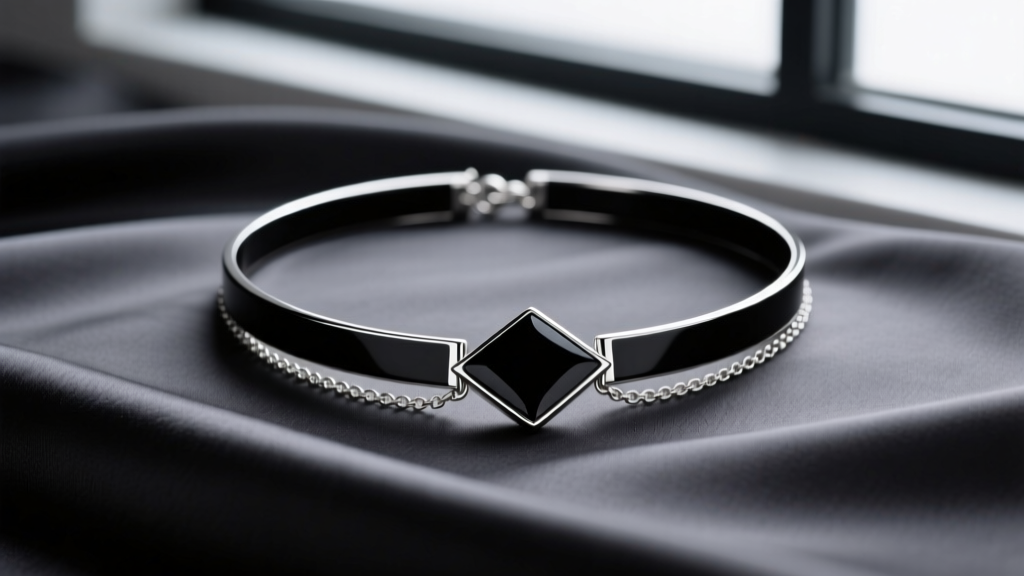
The Shift to Dark Aesthetics in Fine Jewelry
The modern jewelry landscape has fully embraced the dark aesthetic, moving far beyond the gothic subcultures of the past. Today, an elegant black choker necklace is a staple of high-fashion and minimalist wardrobes alike. However, achieving a true, deep black in metallurgy and jewelry design is surprisingly complex. Unlike yellow gold or sterling silver, black is rarely a natural metal color; it is almost always the result of advanced surface treatments, alloys, or alternative materials. Choosing the right material dictates not only the price but the longevity, skin compatibility, and maintenance requirements of the piece. This guide breaks down the exact material properties, failure modes, and pricing structures of the most popular black choker materials available in 2026.
Core Materials for Black Chokers: A Deep Dive
Black Rhodium-Plated Sterling Silver
Rhodium is a platinum-group metal traditionally used to plate white gold and silver to a bright, mirror-like finish. To create black rhodium, jewelers alloy the rhodium with ruthenium or indium during the electroplating process. The result is a stunning, gunmetal-to-onyx finish that retains the precious metal prestige of sterling silver.
Technical Specifications: Standard commercial black rhodium plating is incredibly thin, usually between 0.1 and 0.2 microns. High-end luxury brands will apply a thicker layer of 0.5 to 1.0 microns over a nickel-free palladium barrier layer. The Vickers hardness (HV) of black rhodium is approximately 130-150 HV, which is significantly softer than pure bright rhodium (800 HV). This means black rhodium is highly susceptible to micro-scratches and friction wear.
Real-World Maintenance: According to industry standards from suppliers like Rio Grande, plating wears fastest at high-friction areas like the clasp and the links resting against the collarbone. Expect to re-plate a black rhodium choker every 12 to 18 months with daily wear, a service that typically costs between $45 and $85.
High-Tech Black Ceramic (Zirconia)
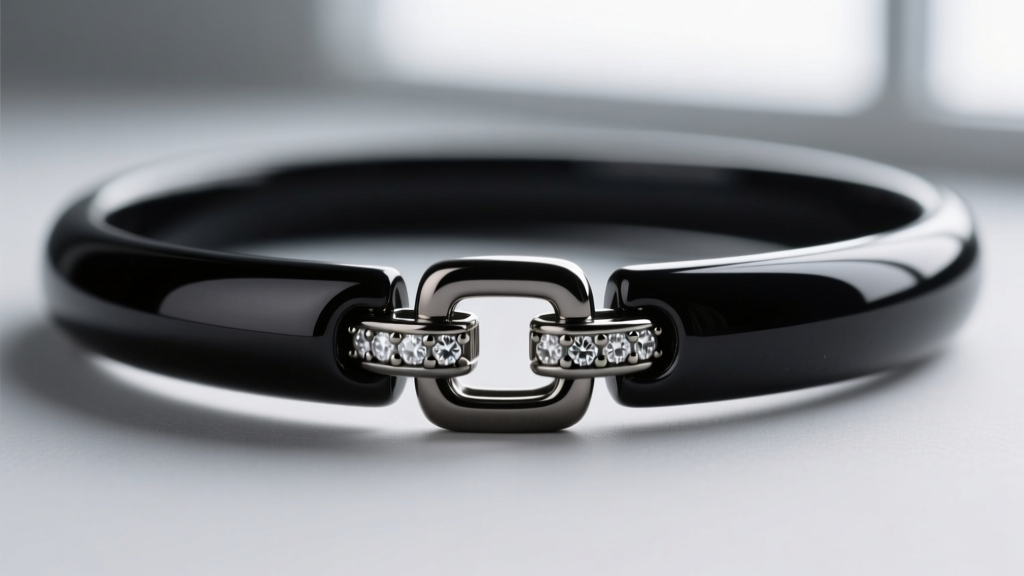
For those seeking a scratch-proof alternative to plated metals, black ceramic is the premier choice. Jewelry-grade black ceramic is not kiln-fired clay; it is high-tech yttria-stabilized tetragonal zirconia polycrystal (Y-TZP). The Gemological Institute of America (GIA) notes that advanced ceramics like zirconia are increasingly favored in horology and fine jewelry for their extreme durability and hypoallergenic properties.
Technical Specifications: Zirconia boasts a Mohs hardness of 8.5 to 9.0, meaning it can only be scratched by diamond or moissanite. It is completely impervious to sweat, sebum, and UV degradation. The material is formed via injection molding and sintered at 1400°C, resulting in a bending strength of 900-1200 MPa. However, its critical weakness is its brittleness; while it resists scratching, a sharp drop onto a hard tile floor can cause it to shatter.
Anodized and PVD-Coated Titanium
Titanium is the undisputed king of biocompatibility. When crafted into an elegant black choker necklace, it offers a featherweight feel that makes it ideal for 14-inch to 16-inch choker lengths that sit tightly against the neck. The black color is achieved either through anodizing (using electricity to thicken the oxide layer) or Physical Vapor Deposition (PVD).
Technical Specifications: PVD coating is vastly superior for black jewelry. By vaporizing titanium carbonitride (TiCN) in a vacuum chamber, a microscopic layer (2-4 microns) is bonded to the Grade 23 (Ti 6Al-4V ELI) titanium base. This PVD layer achieves a staggering 3000 HV, making it virtually scratch-proof in daily wear. Anodized black titanium, conversely, is merely a surface optical illusion created by the oxide layer and can easily be rubbed off by abrasive clothing or polishing cloths.
Velvet and Silk (The Textile Approach)
Not all elegant black choker necklaces are rigid. Velvet chokers offer a romantic, vintage-inspired look. However, material composition matters immensely. Silk velvet is a protein fiber that breathes well but degrades rapidly when exposed to the alkaline pH of human sweat. Rayon or synthetic blend velvets hold black dye much better and resist sebum staining, though they lack the temperature-regulating properties of natural silk. The primary failure point in textile chokers is the metal hardware (clasps and jump rings), which are often made of base metals that cause contact dermatitis.
Material Comparison Matrix
| Material | Hardness / Durability | Coating / Composition | Hypoallergenic Rating | Est. Price Range (USD) |
|---|---|---|---|---|
| Black Rhodium Silver | 150 HV (Prone to wear) | 0.5μm Rhodium/Ruthenium over 925 Ag | Moderate (Check barrier layer) | $180 - $650 |
| Black Ceramic (Y-TZP) | 9.0 Mohs (Scratch-proof) | Solid Zirconium Dioxide | Excellent (100% Inert) | $250 - $900 |
| PVD Black Titanium | 3000 HV (Extreme) | TiCN PVD over Grade 23 Ti | Excellent (Medical Grade) | $90 - $350 |
| Synthetic Velvet | Low (Fraying/Staining) | Rayon/Polyester blend | Depends on clasp metal | $25 - $120 |
Skin Sensitivity, Tarnish, and Real-World Failure Modes
When wearing a choker, the jewelry is in constant, tight contact with the skin, making biocompatibility critical. The American Academy of Dermatology identifies nickel as the leading cause of contact dermatitis in jewelry. Because black rhodium is an alloy, some cheaper formulations use a nickel flash layer beneath the black plating to improve adhesion. As the black rhodium wears away at the clasp, the nickel is exposed, leading to severe rashes. Always verify that the jeweler uses a palladium or fine silver barrier layer beneath the black rhodium.
Common Failure Modes:
- Clasp Friction Wear (Rhodium): The constant opening and closing of the lobster clasp strips the black plating down to the bright silver underneath within 6 months. Solution: Opt for a black ceramic or PVD titanium clasp mechanism, even if the chain is silver.
- Torque Snapping (Ceramic): Zirconia has high compressive strength but low tensile strength. If a ceramic choker is caught on a door handle and yanked, the links will snap cleanly. Solution: Ensure the choker features a titanium safety-chain or a breakaway magnetic clasp.
- Sebum Staining (Velvet & Porous Stones): Natural skin oils will permanently darken and stiffen velvet ribbons and porous stones like black onyx or obsidian. Solution: Remove textile and porous stone chokers before exercising or applying heavy perfumes.

Styling and Neckline Pairings for Dark Metals
The visual weight of an elegant black choker necklace requires strategic styling. Because black absorbs light rather than reflecting it, it creates a stark, grounding contrast against the skin.
For V-necklines and scoop necks, a 14-inch black ceramic or velvet choker sits perfectly above the collarbone, drawing the eye upward and framing the face without competing with the garment's geometry. Conversely, pairing a black choker with a high-neck turtleneck or a collared button-down creates a layered, avant-garde silhouette. In these cases, a matte black PVD titanium chain offers a subtle, industrial texture that prevents the outfit from looking overly formal. Avoid pairing black rhodium with bright yellow gold jewelry, as the contrast often makes the black metal look tarnished rather than intentionally dark. Instead, mix black metals with white gold, platinum, or oxidized silver for a cohesive, monochromatic palette.
Conclusion
Selecting the right elegant black choker necklace requires looking past the initial aesthetic and examining the metallurgy. If you desire the prestige of precious metals and don't mind periodic maintenance, black rhodium-plated sterling silver is unmatched in its luxury appeal. For a modern, scratch-proof, and entirely hypoallergenic option, high-tech black ceramic or PVD-coated titanium offer superior longevity. By understanding the specific hardness ratings, plating thicknesses, and failure modes of these materials, you can invest in a dark aesthetic piece that remains as striking on day one thousand as it was on day one.


