Coat of Arms Necklace Trends 2026: The Heraldic Revival
Discover the 2026 coat of arms necklace trend. Explore heraldic jewelry styling, bespoke enamel techniques, and how to modernize ancestral pendants.

The 2026 Heraldic Revival: Beyond Traditional Signets
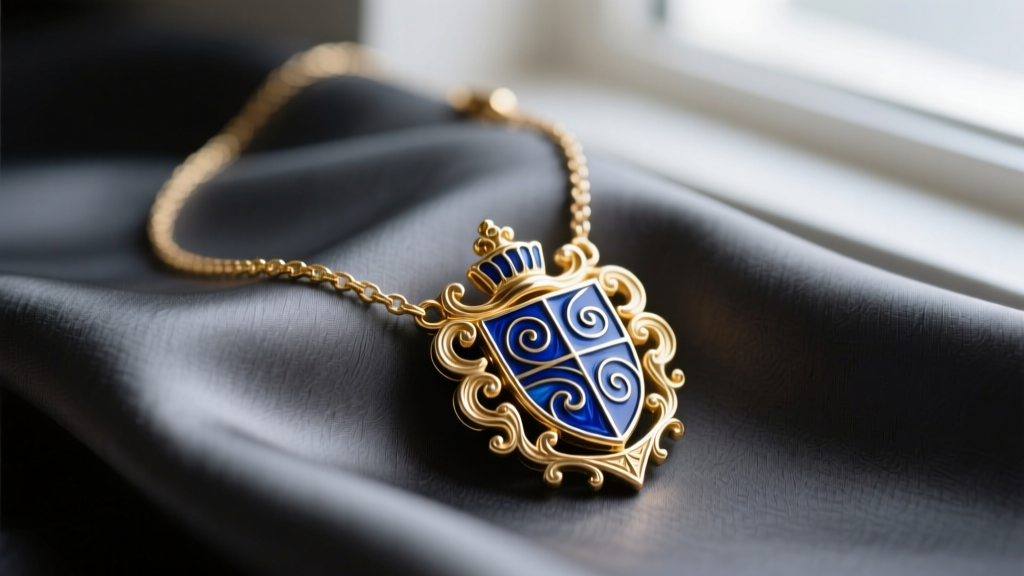
In 2026, the fine jewelry landscape is experiencing a definitive shift away from generic monogram pendants and minimalist initial discs toward deeply personalized, historically rooted motifs. The coat of arms necklace has emerged as the cornerstone of the "Heritage Core" aesthetic, bridging the gap between archival family history and contemporary quiet luxury. No longer confined to heavy, oversized signet rings worn by aristocrats, modern heraldic jewelry translates complex ancestral crests into delicate, wearable art. This trend is driven by a consumer desire for permanent, meaningful storytelling in an era of mass-produced fast fashion. Today’s coat of arms necklace is an exercise in micro-sculpture, requiring advanced CAD modeling and traditional enameling techniques to capture centuries-old symbolism in a 14-millimeter canvas.
Material Breakdown: Enamel, Alloys, and Archival Plating
The defining feature of a premium coat of arms necklace is its use of color to denote heraldic tinctures. In traditional heraldry, the "Rule of Tincture" dictates that metals (gold/silver) should not be placed on metals, and colors (azure/blue, gules/red, sable/black) should not touch colors. Jewelry designers adhere to this by using contrasting metal alloys against vivid enamel backgrounds.
Guilloché vs. Cold Enamel
Understanding the enamel technique is critical when evaluating the price and longevity of a heraldic pendant. According to the Gemological Institute of America (GIA), true vitreous enamel is made of fused glass powder, fired in a kiln at temperatures exceeding 800°C. This creates a hard, luminous finish that will not yellow or degrade over centuries. Guilloché enamel, where the glass is fused over an engine-turned, geometrically engraved metal base, offers a mesmerizing depth that flat cold enamel cannot replicate. Conversely, cold enamel (epoxy resin) is common in sub-$150 pieces. While initially vibrant, cold enamel is prone to UV yellowing, chipping upon impact, and chemical degradation from perfumes.
Metal Grades and Tarnish Resistance
For the metal base, 14k gold (58.5% pure) remains the industry standard for heraldic pendants due to its optimal balance of rich color and structural hardness. 18k gold (75% pure) offers a deeper yellow hue but is softer, making the microscopic prongs that separate enamel cells (cloisons) more susceptible to bending. Sterling silver (925) is a viable budget option, but sulfur in the environment will cause the silver to tarnish, which can darken the microscopic crevices of a complex crest, requiring frequent polishing that risks damaging adjacent enamel.
| Tier | Material Base | Enamel Type | Price Range (USD) | Durability Profile |
|---|---|---|---|---|
| Accessible | Brass / 925 Silver | Cold Epoxy Resin | $65 - $180 | Low (Prone to UV yellowing and chipping) |
| Fine Jewelry | 14k Solid Gold | Vitreous / Champlevé | $850 - $2,400 | Archival (Generational wear) |
| Bespoke Heritage | 18k / 22k Gold | Guilloché / Plique-à-jour | $3,500 - $8,500+ | Museum Grade (Heirloom investment) |
Sizing and Proportion: The Micro-Heraldry Movement
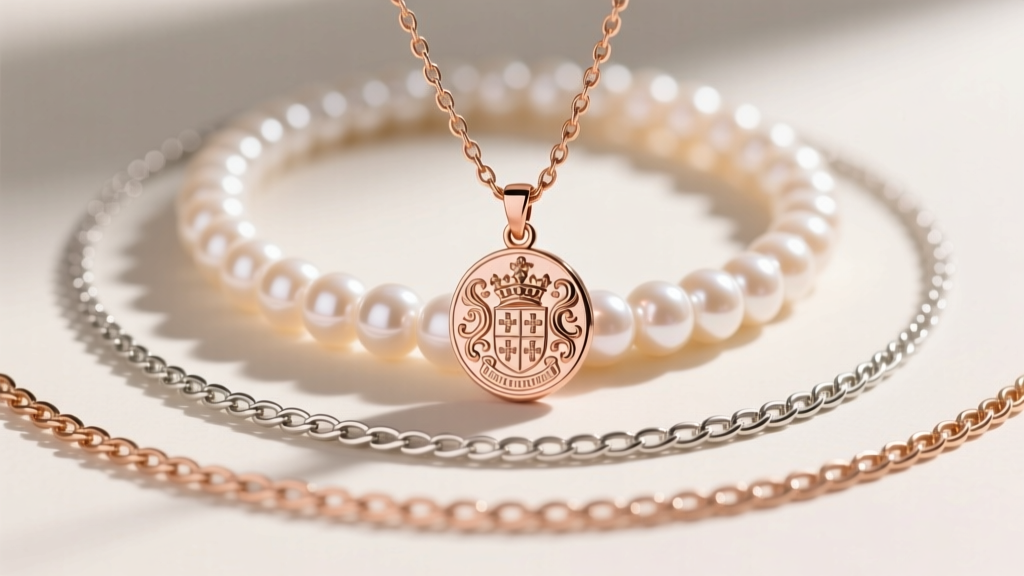
The most significant design evolution in 2026 is the "Micro-Heraldry" movement. While vintage crests were often stamped onto 25mm or 30mm pendants, modern styling favors diminutive proportions ranging from 10mm to 14mm. This reduction in scale transforms the coat of arms necklace from a loud statement piece into an intimate, discoverable detail. However, shrinking a complex crest—complete with rampant lions, chevron shields, and scrollwork mottos—presents severe manufacturing challenges.
To maintain legibility at 12mm, jewelers are abandoning flat laser engraving in favor of 3D cast relief. Laser engraving on a flat disc results in shallow, two-dimensional lines that fill with skin oils and lose contrast. A true 3D relief requires a master wax model, often milled via high-precision CNC machines or printed in castable photopolymer resin, allowing the shield to have a convex curve that catches the light and gives the heraldic beasts actual physical depth. Because of the weight of solid gold, a 12mm convex pendant typically weighs between 1.8 and 2.5 grams, requiring a chain with a minimum thickness of 1.0mm to prevent the bail from wearing through the links over time.
"The modern consumer doesn't want to wear their family history as a billboard; they want it as a talisman. The 12mm micro-crest is the ultimate expression of quiet luxury—meaningful to the wearer, but subtle enough to layer with everyday essentials." — Archival Jewelry Trend Forecast, 2026
Styling Framework: Integrating Ancestral Motifs
Styling a coat of arms necklace in 2026 relies on juxtaposition. The historical weight of the pendant is intentionally offset by modern, fluid chain styles and contemporary necklines.
- The Asymmetrical Layer: Pair a 14mm coat of arms pendant on a 16-inch 1.2mm box chain with a simple, unadorned 18-inch snake chain. The rigid structure of the box chain highlights the geometric shield, while the fluid snake chain adds a liquid metal contrast.
- Texture Clashing: Heraldic gold and enamel look exceptionally striking when layered with organic materials. A freshwater pearl choker (4mm beads) provides a soft, luminescent backdrop that makes the sharp, metallic lines of the crest pop.
- Neckline Pairing: Avoid high collars or busy ruffled blouses, which compete with the intricate details of the crest. The ideal canvas is a deep V-neck silk camisole or a structured, wide-neck cashmere sweater that leaves the collarbone entirely exposed, allowing the pendant to rest flat against the skin without flipping.
Sourcing Bespoke vs. Heritage Brands
For those seeking an authentic family crest, the bespoke route is often mandatory, as commercial jewelers only stock generic "name-based" crests that are historically inaccurate. Commissioning a bespoke coat of arms necklace requires navigating a specialized design process. According to the The Heraldry Society, accurate blazoning (the formal description of a coat of arms) is essential before any metal is cast.
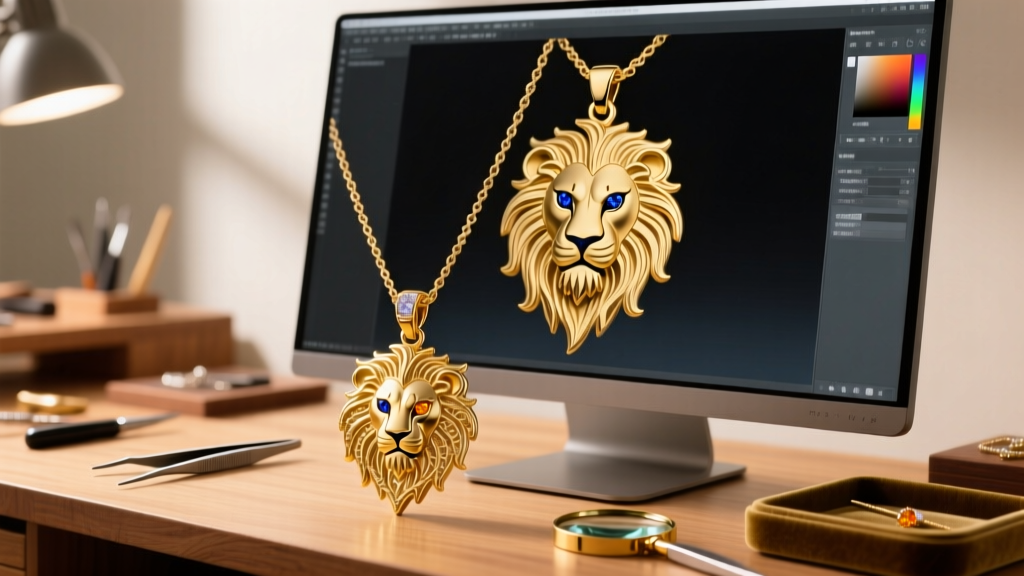
When working with a bespoke jeweler, you must provide a high-resolution vector file (.AI or .EPS) of your crest. Raster images (JPEGs) lose critical line data when scaled down to 12mm. Expect to pay a CAD (Computer-Aided Design) modeling fee ranging from $250 to $500, which covers the digital sculpting of the shield, the helm, and the mantling. Once the 3D file is approved, the piece is printed in wax, invested in plaster, and cast via the lost-wax method. The Victoria and Albert Museum (V&A) notes that traditional champlevé enameling—where troughs are carved into the metal and filled with glass powder—remains the most historically accurate method for heraldic jewelry, though it adds significant labor costs to the final piece.
Care and Preservation of Enamel Heraldry
The intersection of microscopic gold prongs and fused glass makes the coat of arms necklace uniquely vulnerable to improper maintenance. Never place an enameled heraldic pendant in an ultrasonic cleaner. The high-frequency vibrations can cause microscopic fractures in the vitreous enamel, leading to sudden, irreparable shattering or "crazing" (a network of fine cracks). Furthermore, commercial silver dips and harsh chemical polishes will strip the oxidation from the recessed areas of the crest, destroying the contrast that gives the 3D relief its legibility.
To clean your pendant, use a solution of lukewarm water and a single drop of pH-neutral dish soap. Gently agitate the water, submerge the necklace for three minutes, and use a soft-bristled baby toothbrush to lightly sweep away sebum and lotion buildup from the crevices of the shield. Rinse with distilled water to prevent hard water spots on the enamel, and pat dry with a microfiber cloth. Store the necklace flat in a velvet-lined box; hanging a heavy cast pendant by its chain for long periods can slowly distort the jump ring connecting the bail to the shield.


