The Jewish Cross Necklace: Messianic & Jerusalem Guide
Explore the technical details, material grades, and history of Messianic and Jerusalem Jewish cross necklaces in this expert buying guide.

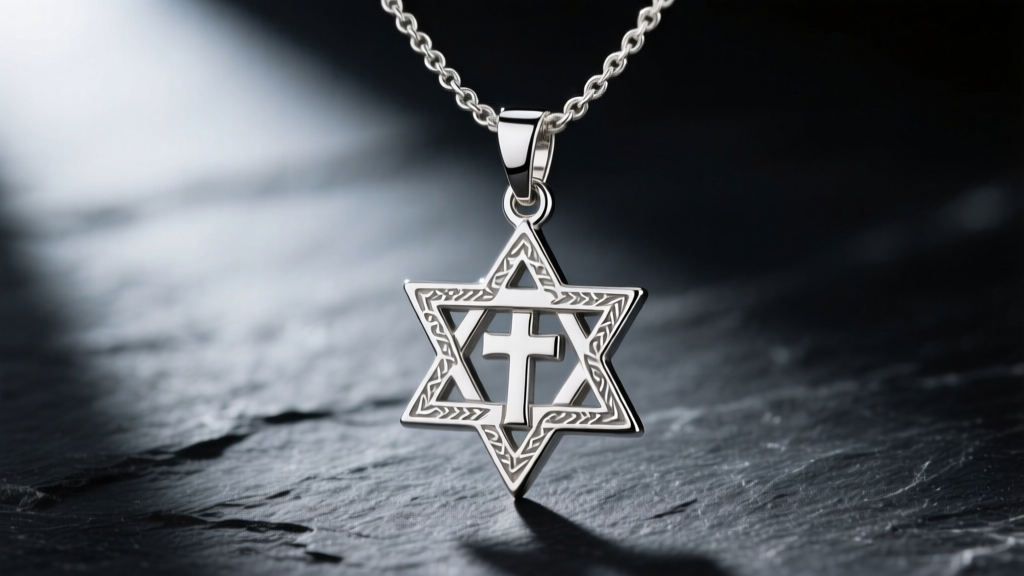
The term jewish cross necklace presents a fascinating intersection of theology, history, and metallurgy. In traditional Judaism, the cross is not utilized as a religious symbol. Therefore, when master jewelers, antique collectors, and theologians use this specific search term, they are almost exclusively referring to two distinct categories of jewelry: Messianic Jewish jewelry (which synthesizes the Star of David with the cross to represent Yeshua) and Jerusalem or Holy Land crosses (historical and geographical artifacts tied to the physical region of Israel). Understanding the technical specifications, material grades, and hallmarking laws of Israeli-made jewelry is critical for making an informed, authentic purchase in today's market.
Decoding the Designs: Messianic vs. Jerusalem Crosses
To buy intelligently, you must first identify the specific architectural geometry of the pendant. The two primary designs require entirely different casting techniques and structural supports.
The Messianic Synthesis
Messianic pendants often utilize a complex geometric overlay. The most common technical execution involves a standard Magen David (hexagram) where the vertical axis is elongated to form a Latin cross, or a cross embedded within the negative space of the star. Because these designs feature multiple intersecting planes and delicate negative space, they are highly susceptible to warping if cast in thin gauges. Expert jewelers recommend a minimum metal weight of 4.5 grams for sterling silver Messianic pendants to ensure the intersecting joints do not snap under the tension of a heavy chain.
The Jerusalem Cross (Crusader Cross)
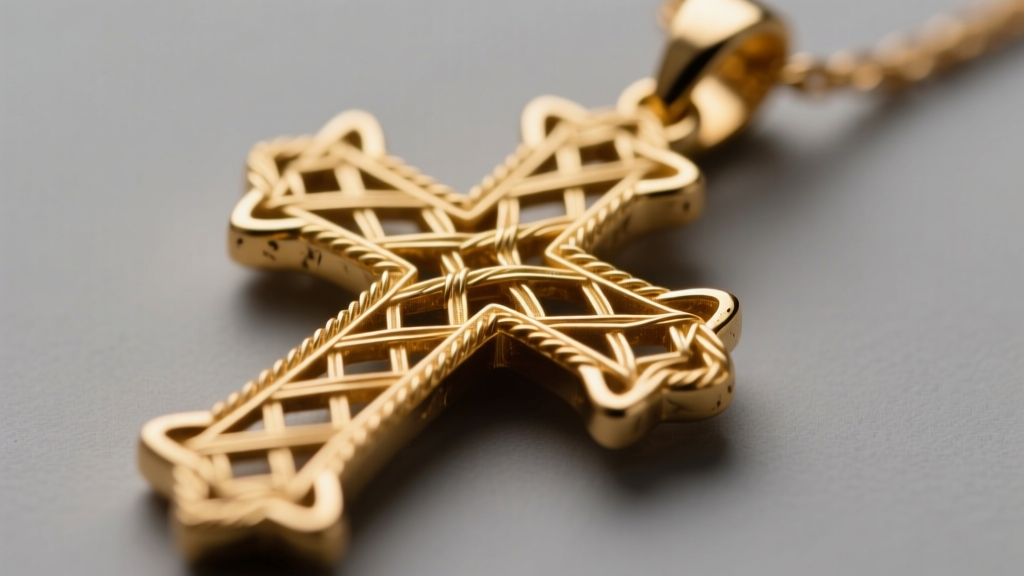
The Jerusalem cross is a historical symbol consisting of one large central Greek cross surrounded by four smaller Greek crosses. While its origins are tied to the Crusader Kingdom of Jerusalem, it is heavily featured in Holy Land jewelry markets, often crafted by local Christian and Jewish artisans in the Old City. According to the Israel Museum, variations of this cross have been found in regional archaeological digs dating back to the Byzantine era. Modern iterations often feature intricate filigree work that requires high-karat gold to prevent the fine wires from becoming brittle.
Metallurgy & Material Grades in Israeli Jewelry
The Israeli jewelry market operates under strict metallurgical standards, but tourist markets can sometimes blur the lines between solid precious metals and plated alternatives. Here is a technical breakdown of what to expect when sourcing a jewish cross necklace from the region.
- 925 Sterling Silver: The baseline standard for Holy Land jewelry. Authentic Israeli silver must contain exactly 92.5% pure silver and 7.5% copper or zinc alloy. Look for a millesimal fineness stamp of '925' alongside a registered maker's mark.
- 14k Gold (585): 14-karat gold is the most popular choice for everyday wear in Israel due to its superior tensile strength compared to 18k or 24k gold. It resists the scratching and deformation that can ruin the fine details of a Jerusalem cross.
- Olive Wood Inlays: Many Holy Land crosses feature Bethlehem olive wood inlaid into a silver frame. The technical challenge here is the coefficient of expansion; wood expands and contracts with humidity changes. High-quality pieces use a floating inlay technique or micro-prong settings to prevent the wood from cracking the silver bezel during seasonal shifts.
| Material Grade | Avg. Weight | Price Range (USD) | Tarnish Resistance | Best Use Case |
|---|---|---|---|---|
| 925 Sterling Silver | 4.0g - 8.0g | $45 - $120 | Low (Requires polishing) | Everyday Messianic wear |
| 14k Solid Gold (585) | 3.5g - 7.0g | $350 - $800 | High | Heirloom Jerusalem crosses |
| Silver & Olive Wood | 6.0g - 12.0g | $60 - $150 | Medium (Wood requires oiling) | Souvenir & lightweight wear |
The Eilat Stone Factor: Gemstone Inlay Technicalities
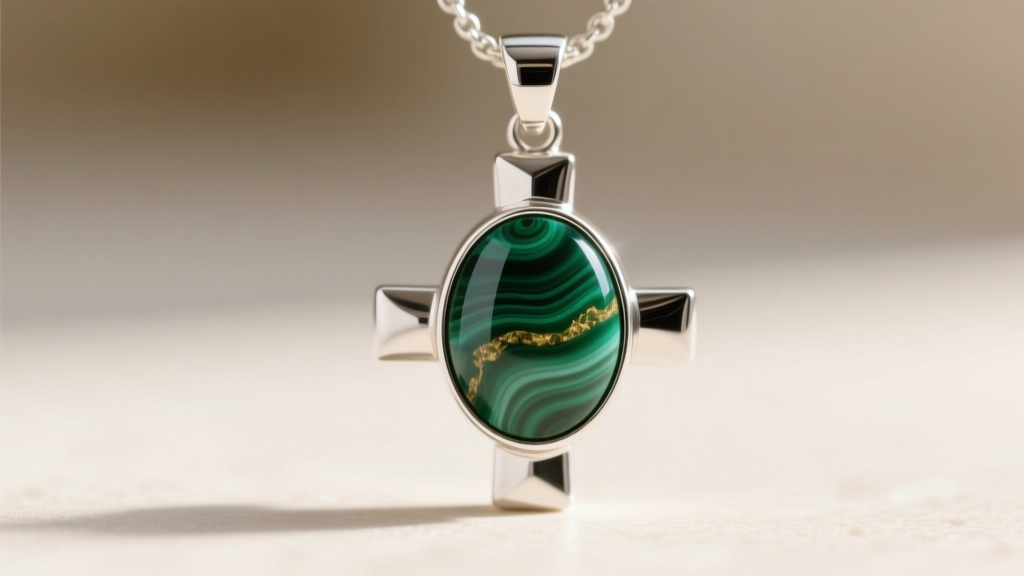
No deep dive into Holy Land jewelry is complete without discussing the Eilat stone. Often mistakenly called a gemstone, the Eilat stone is actually a rare, localized rock composed of a mixture of malachite, azurite, chrysocolla, and turquoise, mined historically near the Gulf of Eilat. It is frequently used as the cabochon centerpiece in high-end Jerusalem cross necklaces.
From a gemological perspective, the Eilat stone presents unique setting challenges. According to the Gemological Institute of America (GIA), the varying minerals within the stone have different Mohs hardness ratings (ranging from 3.5 to 6.0). This means that traditional prong settings will inevitably cause the softer azurite bands to wear away or chip over time. An expertly crafted jewish cross necklace featuring an Eilat stone must utilize a flush bezel setting with a slightly domed cabochon to protect the edges of the stone from impact damage. If you see an Eilat stone held in by four delicate prongs, walk away—it is a structural failure waiting to happen.
Chain Mechanics & Failure Modes
The pendant is only half the equation. The chain you select must support the specific weight and bail size of your cross. The most common point of failure in religious jewelry is the jump ring connecting the pendant to the chain, or the clasp mechanism itself.
Gauge Sizing and Chain Types
For a standard 5-gram Messianic silver pendant, a 1.0mm to 1.2mm Box Chain or Wheat (Spiga) Chain is technically optimal. Box chains offer a modern, geometric aesthetic that complements the sharp lines of the Star of David, while Wheat chains provide superior tensile strength due to their interlocking, woven links. Avoid snake chains entirely; their rigid tubular structure makes them highly susceptible to permanent kinking if bent while sleeping.
Clasp Engineering
Standard spring-ring clasps are notorious for failing on heavy pendants due to the degradation of the internal tension spring over time. For any Jerusalem or Messianic cross exceeding 6 grams, insist on a solid lobster clasp with a soldered jump ring on the opposite end. A soldered jump ring (where the gap is fused shut with silver or gold solder) prevents the chain from slowly working its way through the microscopic gap of a standard split ring, which is the leading cause of lost pendants.
Authenticity & SII Hallmark Verification
As of 2026, verifying the origin and purity of Israeli jewelry requires an understanding of the Standards Institution of Israel (SII) hallmarking protocols. While Israel does not have a mandatory government assay office system identical to the UK's, reputable manufacturers adhere to strict international fineness standards and register their unique maker's marks.
When inspecting a high-value jewish cross necklace, use a 10x jeweler's loupe to examine the bail (the loop at the top of the pendant). You should see:
- The Maker's Mark: Usually a stylized letter or symbol inside a shield or rectangle, registered to the specific workshop in Jerusalem or Tel Aviv.
- The Fineness Stamp: '925' for silver or '585' / '14K' for gold. Be highly suspicious of stamps that read 'SP' (Silver Plated) or 'EP' (Electroplated) on pieces marketed as solid Holy Land silver.
- The Origin Stamp: Many authentic pieces will include a microscopic 'Israel' or 'Jerusalem' stamp on the back plate of the cross, though this is often worn away on vintage or antique pieces.
Expert Tip: If purchasing a vintage Jerusalem cross from an antique dealer, request a non-destructive XRF (X-ray Fluorescence) scan. This will verify the exact elemental composition of the gold or silver alloy without damaging the historical patina of the piece.
Whether you are seeking a Messianic symbol of faith or a historically rich Jerusalem cross, prioritizing structural integrity, proper gemstone setting techniques, and verifiable metallurgy will ensure your necklace remains a lasting heirloom rather than a fragile souvenir.


