Clover Shaped Necklace Pricing 2026: Budget to Fine Jewelry
Assess the true value of a clover shaped necklace in 2026. Compare pricing tiers, material grades, and stone durability from budget vermeil to fine 18k gold.

The Anatomy of a Clover Shaped Necklace
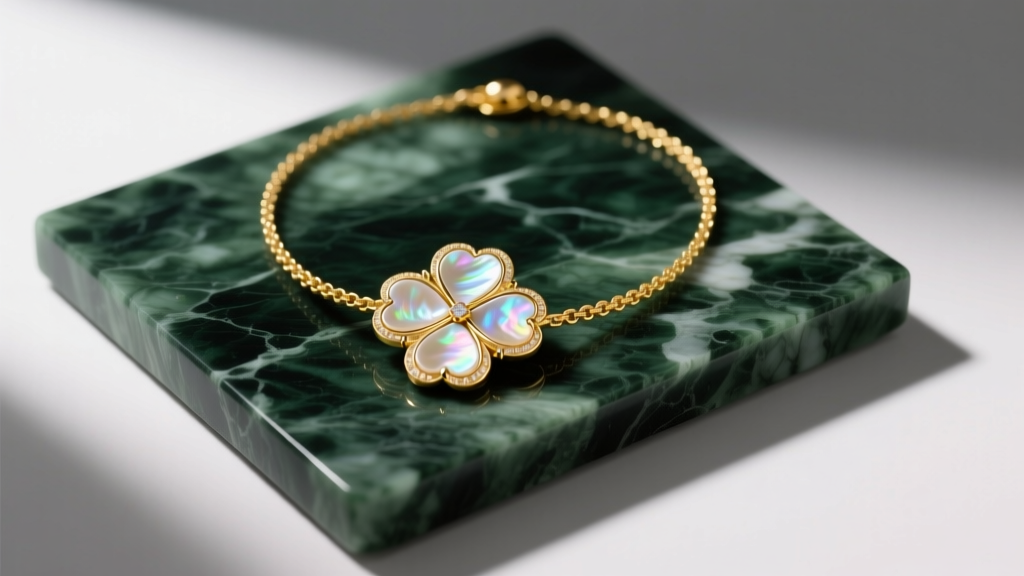
The quatrefoil, universally recognized as the clover motif, has dominated pendant jewelry since the late 1960s. While Van Cleef & Arpels holds the trademark for their specific Alhambra design, the broader market is flooded with thousands of variations of the clover shaped necklace. For consumers in 2026, navigating this saturated market requires looking past the silhouette and evaluating the metallurgy, stone calibration, and hardware integrity. A clover pendant is essentially a geometric bezel setting housing a calibrated cabochon. The value of the piece is entirely dictated by how well those three components—the gold frame, the inlay material, and the suspension chain—are executed.
Material Grades & Stone Durability: The Hidden Value Drivers
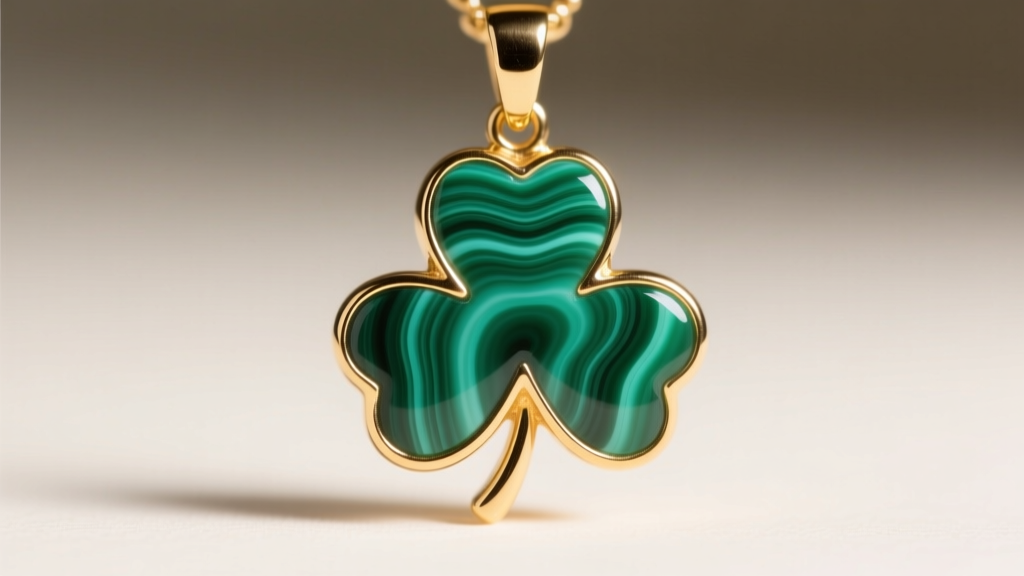
The most common mistake buyers make when assessing a clover shaped necklace is focusing solely on the gold karat while ignoring the inlay material. The semi-precious stones used in these pendants vary wildly in their Mohs hardness, porosity, and structural integrity. According to the Gemological Institute of America (GIA), materials like malachite require vastly different care and setting techniques than black onyx.
Failure Modes by Inlay Material
- Malachite (Mohs 3.5 - 4.0): Highly porous and sensitive to acids, including human sweat and cosmetics. Failure mode: The stone absorbs skin oils and turns dull or develops micro-fractures along its natural banding. Requires a completely sealed bezel back.
- Mother of Pearl (Mohs 2.5 - 3.0): Organic and relatively soft. Failure mode: Surface scratching and delamination if exposed to harsh ultrasonic cleaners or chlorine. High-quality MOP should exhibit a deep, iridescent luster without chalky dead spots.
- Black Onyx (Mohs 7.0): Almost always dyed gray agate. While harder, it is brittle. Failure mode: Chipping at the girdle edge if the gold bezel lip is too thin (under 0.5mm) to absorb impact shocks.
- Carnelian (Mohs 6.5 - 7.0): Heat-treated chalcedony. This is the most durable and scratch-resistant option for daily wear, maintaining its polished finish even with minimal care.
2026 Pricing Tiers: What You Should Actually Pay
To accurately assess the value of a clover shaped necklace, we must segment the market into four distinct tiers. Pricing in 2026 reflects the current spot price of gold (averaging $2,150/oz) and the rising costs of ethically sourced lapidary materials.
| Tier | Base Metal & Finish | Inlay Material | Expected Price Range | Value Verdict |
|---|---|---|---|---|
| Fashion | Brass with flash plating (0.05µm) | Resin, Enamel, or Glass | $30 - $80 | Poor long-term value; plating wears off in months. |
| Demi-Fine | 925 Sterling Silver, 2.5µm 18k Vermeil | Genuine MOP or Onyx | $120 - $280 | Good entry-level; requires careful maintenance. |
| Entry Fine | Solid 14k Gold (Yellow, White, or Rose) | Calibrated Carnelian, Onyx, MOP | $450 - $950 | Excellent material ROI; heirloom durability. |
| Luxury Designer | Solid 18k Gold with diamond pavé accents | Premium matched stones | $3,800 - $7,500+ | Brand equity pricing; poor raw material ROI. |
Vermeil vs. Solid Gold: Long-Term Value Assessment
If you are operating in the $150 to $300 budget range, you will encounter heavy gold vermeil. The Federal Trade Commission (FTC) Jewelry Guides mandate that for a piece to be legally sold as "vermeil" in the United States, it must have a sterling silver base and a gold plating of at least 2.5 microns thick. Many budget clover necklaces use flash plating (less than 0.1 microns), which will rub off on the high-friction edges of the clover bezel within six months of daily wear.
However, the true hidden cost of a clover shaped necklace often lies in the chain and hardware. A standard clover pendant weighs between 3.5 and 5.5 grams. Suspending this weight requires a chain with adequate tensile strength. Budget brands frequently pair heavy pendants with 0.6mm hollow-cable chains that snap under the pendant's pendulum swing. For genuine value, ensure the necklace features a minimum 1.0mm to 1.2mm solid cable or rolo chain, secured with a 5mm lobster clasp rather than a fragile spring-ring.
How to Spot Overpriced "Dupes" and Underpriced Fakes
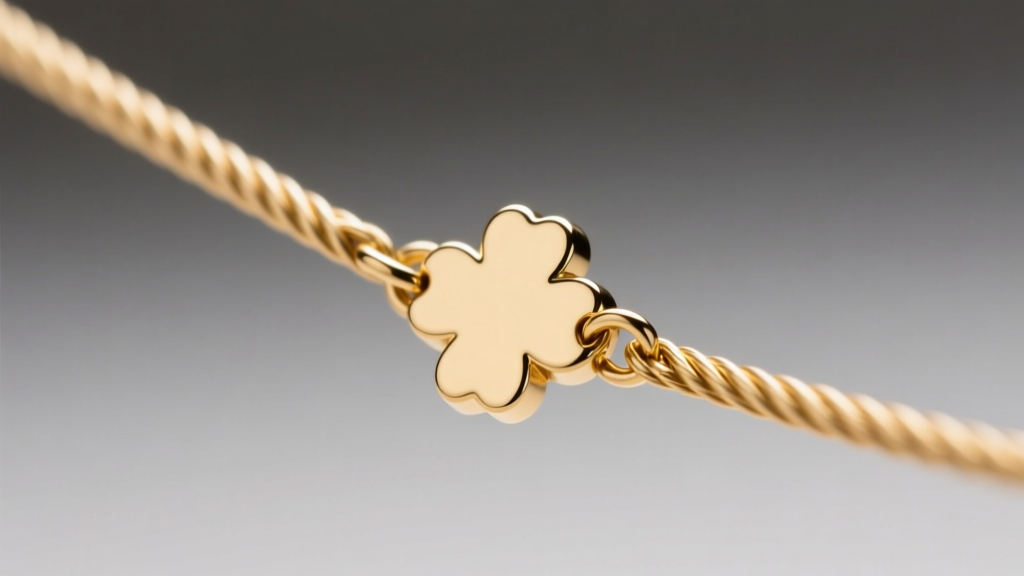
The secondary market and direct-to-consumer platforms are rife with misleading listings. When evaluating a clover shaped necklace marketed as "solid gold," look for the following red flags:
- The Hollow Back Trick: Turn the pendant over. High-end fine jewelry features a solid gold back or an intricately pierced openwork back. If the back is deeply hollowed out to save on gold weight, the pendant will dent easily and trap moisture against the stone, degrading the adhesive.
- Bezel Push Marks: Examine the gold lip wrapping around the stone. Hand-finished fine jewelry will have a smooth, continuous bezel. Mass-produced dupes often show visible tool marks, gaps, or uneven pressure points where the metal was machine-pressed over the cabochon.
- Stone Backing: Genuine malachite and onyx should not have foil backings. If you can see a reflective metallic layer beneath a translucent stone like carnelian or white agate, it is a composite stone designed to mimic a more expensive material.
"A true investment in a clover motif necklace isn't about acquiring a recognizable shape; it's about securing a masterclass in lapidary calibration. The stones must be cut to exact millimeter tolerances so the gold bezel can secure them without relying on industrial epoxies." — Master Jeweler & Appraiser
Final Verdict: Which Tier Offers the Best ROI?
For the vast majority of buyers in 2026, the Entry Fine Jewelry tier ($450 - $950) offers the absolute best return on investment. At this price point, you are paying for solid 14k gold that will never tarnish or flake, paired with genuine, ethically sourced semi-precious stones. You avoid the massive brand markups of the luxury designer tier, while entirely bypassing the planned obsolescence of demi-fine vermeil.
When shopping for your clover shaped necklace, prioritize a solid 14k gold frame, a durable carnelian or onyx inlay, and a chain gauge no thinner than 1.0mm. By focusing on these structural metrics rather than just the aesthetic silhouette, you ensure your pendant remains a staple in your wardrobe for decades, rather than a fleeting seasonal trend.


