Beyond The Necklace Guy De Maupassant PDF: Assessing Jewelry Value
Discover the gemological lessons in The Necklace by Guy de Maupassant. Learn how to assess diamond value, avoid appraisal traps, and buy smart.

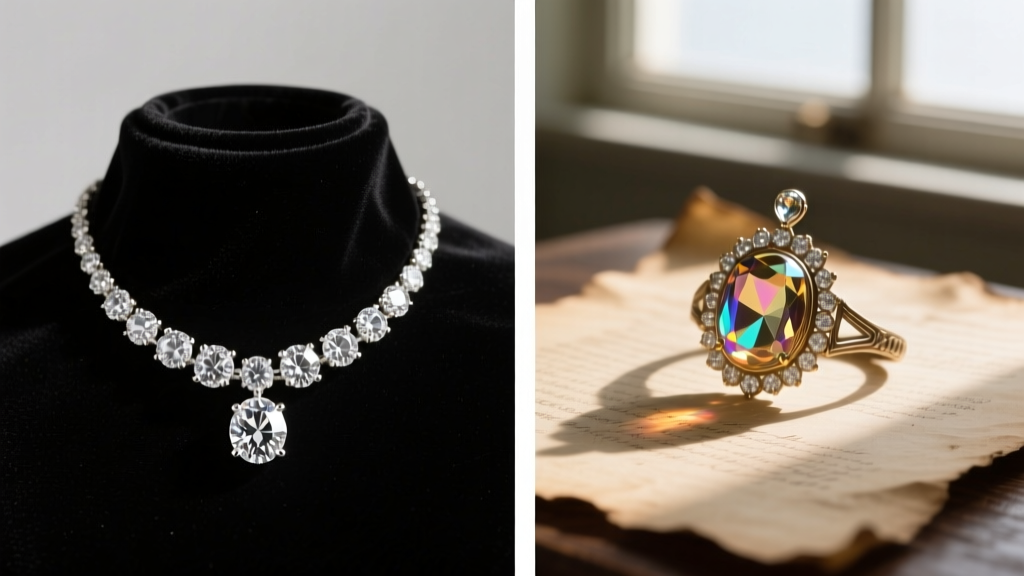
The Literary Masterclass in Jewelry Valuation
Every semester, thousands of high school and college students search for the necklace guy de maupassant pdf to analyze its timeless themes of vanity, class struggle, and devastating irony. The 1884 short story follows Mathilde Loisel, a woman who borrows what she believes to be a magnificent diamond necklace from her wealthy friend, Madame Forestier. After losing it, Mathilde and her husband plunge themselves into crippling, decade-long poverty to purchase a 36,000-franc replacement, only to eventually discover that the original was 'paste'—costume jewelry worth a mere 500 francs.
While literary critics focus on the moral implications of Mathilde's pride, gemologists and jewelry appraisers read the story as a catastrophic failure of material valuation. The Loisels' financial ruin was not caused by bad luck; it was caused by a fundamental inability to distinguish between high-end simulants and natural gemstones, compounded by a lack of professional appraisal. Today, the gap between natural diamonds, lab-grown alternatives, and high-quality simulants is more complex than ever. Understanding how to assess the true value of a necklace is essential to avoiding a modern-day Mathilde Loisel financial trap.
The Gemology of 'Paste': What Was Madame Forestier's Necklace?
To understand the baseline of jewelry deception, we must look at what 'paste' actually meant in the late 19th century. Paste jewelry was not cheap plastic or low-grade glass. It was crafted from 'strass,' a specialized leaded glass invented by Georges Frédéric Strass in the 1700s. By adding lead oxide to the glass mixture, artisans achieved a refractive index (RI) of approximately 1.70, giving the stones a brilliant sparkle that closely mimicked the fire of natural diamonds under the warm, flickering candlelight of Parisian ballrooms.
However, strass has a Mohs hardness of only 5.5, making it highly susceptible to scratching, and it lacks the dispersion (fire) of true carbon diamonds. In 1884, a master jeweler could fashion a convincing 500-franc paste necklace that would easily fool an untrained eye at a distance. Today, the equivalent deception is far more sophisticated. Modern simulants like Cubic Zirconia (CZ) and Moissanite possess optical properties that can genuinely challenge even experienced jewelers without the aid of specialized testing equipment.
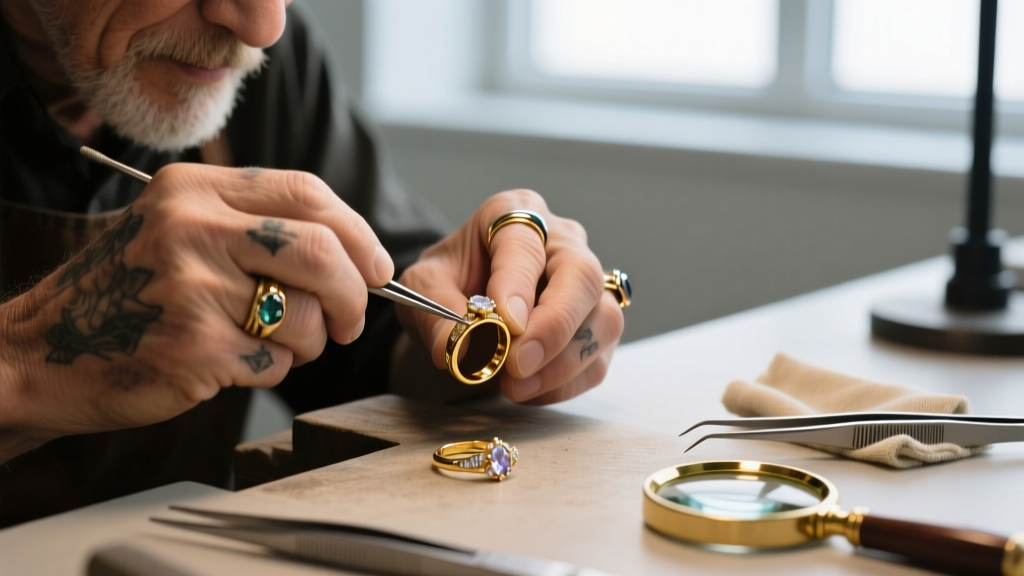
The Modern Simulant Spectrum: Value vs. Illusion
If Mathilde Loisel were shopping for a replacement necklace today, she would be faced with a spectrum of diamond alternatives. Evaluating the budget and intrinsic value of these materials requires looking at their refractive index, durability, and current market pricing. Below is a comparative assessment of necklace center stones and pave accents in the 2026 market.
| Material | Refractive Index (RI) | Mohs Hardness | Avg. Cost per Carat | Longevity in Daily Wear |
|---|---|---|---|---|
| Lead Glass (Paste) | 1.70 | 5.5 | < $1 | Poor (Scratches/Clouds) |
| Cubic Zirconia (CZ) | 2.15 | 8.0 | $1 - $5 | Fair (Edges abrade) |
| Moissanite | 2.65 | 9.25 | $100 - $300 | Excellent |
| Lab-Grown Diamond | 2.42 | 10.0 | $300 - $800 | Perfect |
| Natural Diamond | 2.42 | 10.0 | $3,000 - $10,000+ | Perfect |
As noted by the Gemological Institute of America (GIA), moissanite's double refraction and higher RI give it a 'disco ball' effect that differs from a diamond's single refraction. However, to a layperson at a gala, a high-quality moissanite pendant is virtually indistinguishable from a natural diamond, yet it costs roughly 95% less. The Loisels' fatal error was assuming that visual equivalence at a social event dictated intrinsic financial value.
The Appraisal Trap: Replacement Cost vs. Resale Value
The crux of the tragedy in Maupassant's story is the 36,000 francs the Loisels paid for the replacement necklace. In today's currency, adjusted for inflation and the modern diamond market, this equates to well over $150,000. They purchased a heavy, multi-carat natural diamond choker from a high-end retail jeweler, paying the maximum retail premium.
Understanding Jewelry Markups and Insurance
When assessing the budget for a fine jewelry necklace, buyers must understand the difference between retail replacement value and fair market (resale) value. High-end jewelry stores often mark up natural diamond necklaces by 100% to 300% over wholesale costs to cover overhead, branding, and showroom experiences. If Mathilde had lost a real diamond necklace and tried to claim it on an insurance policy, the payout would likely be based on a documented appraisal, not the inflated retail receipt.
The Federal Trade Commission (FTC) advises consumers to always seek independent grading reports for significant diamond purchases. A necklace featuring a center stone over 0.50 carats should always be accompanied by a GIA or AGS (American Gem Society) dossier or full certificate. This document verifies the 4Cs (Cut, Color, Clarity, Carat) and ensures you are paying for actual gemological metrics, not just a luxury brand name. Without this paperwork, you are essentially buying 'paste' with a diamond price tag.

Assessing the Metal: Chain Weight and Purity Metrics
While gemstones capture the imagination, the precious metal chain often constitutes a significant portion of a necklace's intrinsic, liquid value. Unlike diamonds, which suffer massive retail-to-resale depreciation, gold and platinum are traded on global commodities markets. When evaluating estate or vintage necklaces, the metal alone can sometimes outvalue the gemstones.
- 14K Gold (58.5% pure): The standard for durable, everyday chain necklaces (like cable or figaro chains). It resists bending and scratching, making it ideal for holding heavy pendants.
- 18K Gold (75% pure): Softer, richer in color, and more expensive. Often used in high-end European designer necklaces and delicate bezel-set pendants.
- Platinum (95% pure): Extremely dense and durable. A platinum tennis necklace will weigh significantly more than its gold counterpart, adding thousands of dollars in raw melt value alone.
To assess the value of a gold chain, you must calculate its melt value. Weigh the necklace in grams, multiply by the purity percentage (e.g., 0.585 for 14K), and then multiply by the current spot price of gold per gram. If a jeweler is selling a 20-gram 14K gold rope chain for $3,000, but the raw gold value is only $800, you are paying a $2,200 premium for the craftsmanship and brand. There is nothing inherently wrong with this, provided you view it as an art purchase rather than a financial investment.
Verifying Hallmarks and Avoiding Counterfeits
Madame Forestier's paste necklace was likely set in gold-filled or silver settings, masked to look like solid gold. Today, counterfeiters use tungsten cores plated in thick layers of 18K gold to deceive buyers. When purchasing pre-owned or estate diamond necklaces, always use a strong neodymium magnet. Gold and platinum are non-magnetic; if the chain clasp or links exhibit magnetic pull, the core is likely steel or tungsten. Furthermore, inspect the hallmark stamps with a 10x triplet loupe. Genuine stamps are crisp and deeply engraved, while counterfeit stamps often appear shallow, blurred, or laser-etched poorly.
Conclusion: The True Cost of Assumption
The enduring legacy of searching for the necklace guy de maupassant pdf lies in its brutal lesson on the cost of assumptions. Mathilde Loisel assumed that wealth equated to authenticity, and that visual brilliance equated to financial ruin. In the modern jewelry market, the line between natural, lab-grown, and simulated stones is entirely defined by microscopic inclusions, laser inscriptions, and thermal conductivity—not by the naked eye.
Whether you are budgeting for a $500 moissanite solitaire pendant, investing in a $15,000 natural diamond tennis necklace, or simply trying to appraise a vintage heirloom, the rule remains absolute: never assign financial value based on aesthetic assumption. Demand GIA certifications, weigh the precious metals, understand the retail markup, and protect your assets with proper insurance appraisals. By doing so, you ensure that your jewelry remains a source of joy and elegance, rather than a decade-long sentence of unnecessary debt.


