Cobra Necklace Anatomy: Materials, Gauges, and Care
Explore the technical anatomy of the cobra necklace. Learn about metal grades, gauge thicknesses, kink prevention, and clasp mechanics for snake chains.

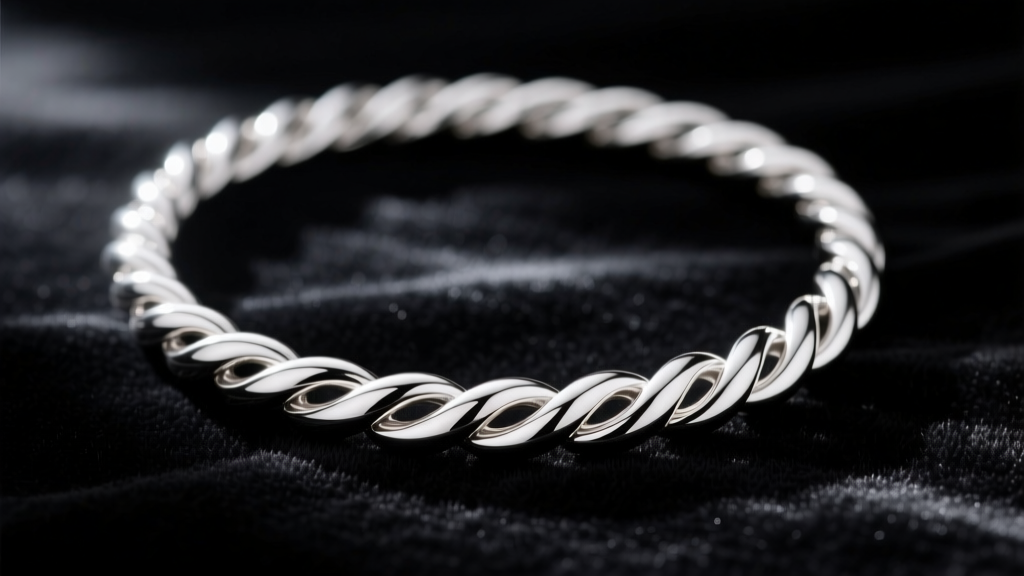
What Defines a Cobra Necklace? Manufacturing and Structure
In the lexicon of fine jewelry, the term "cobra necklace" is frequently—and often incorrectly—used interchangeably with the standard tubular snake chain. However, from a technical manufacturing perspective, a true cobra chain (particularly the highly prized Brazilian or flat cobra mesh) possesses a distinct structural anatomy. Unlike a round snake chain, which is formed by winding a continuous wire into a tight helix, a flat cobra chain is constructed from densely packed, interlocking links that are drawn through a series of progressively smaller draw plates and then flattened. This process creates a fluid, fabric-like drape with a highly reflective, continuous surface.
The structural integrity of a cobra necklace relies entirely on the precision of its link tension. Because the links are laid flat and tightly woven, the chain exhibits a unique "liquid metal" behavior. It moves with zero friction against the skin, making it exceptionally comfortable, but this same structural density makes it highly susceptible to specific mechanical failures if mishandled. Understanding the metallurgy and mechanics of the cobra weave is essential for both jewelry collectors and designers aiming for longevity.
Material Grades and Metallurgical Realities
The performance of a cobra necklace is dictated by its base alloy. Because the chain relies on a high-polish surface to achieve its signature look, the metal's hardness and tarnish resistance are paramount.
Sterling Silver (925) and Rhodium Plating
Sterling silver is an alloy containing 92.5% pure silver and 7.5% copper. The copper provides the necessary tensile strength, but it also introduces a vulnerability: oxidation. A raw 925 silver cobra necklace will develop a patina (tarnish) when exposed to sulfur compounds in the air. To combat this, high-end manufacturers apply a micro-layer of rhodium plating. Rhodium, a platinum-group metal, boasts a Vickers Hardness (HV) of over 800, compared to silver's HV of roughly 60. This plating not only creates a brilliant, mirror-like finish but also acts as a sacrificial shield against micro-scratches that can dull the cobra weave's continuous reflection. According to the The Assay Office, verifying the hallmark is critical, as hollow-core silver chains may lack the structural mass to support heavy rhodium electroplating without flaking.
Solid Gold Alloys: 14k vs. 18k
When selecting a gold cobra necklace, the karat weight directly impacts the chain's resistance to kinking. Pure 24k gold is far too malleable for a cobra weave. 18k gold (75% gold) offers a rich color but has a lower Vickers Hardness (approx. 90-110 HV). Conversely, 14k gold (58.5% gold) is alloyed with higher percentages of zinc, silver, or copper, raising its hardness to 120-150 HV. As detailed by the Gemological Institute of America (GIA), this increased hardness makes 14k gold structurally superior for cobra chains under 2.0mm in thickness, as it better resists the plastic deformation that leads to kinking.
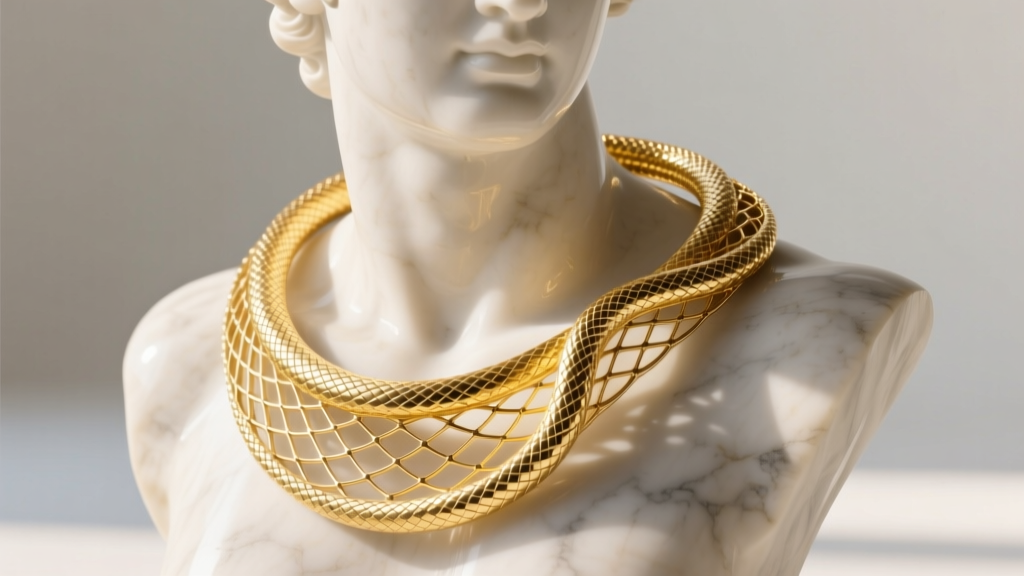
Gauge Thickness and Structural Integrity
The gauge (thickness) of a cobra necklace determines its tensile strength, its ability to support pendants, and its overall drape. Because the flat cobra weave distributes weight differently than a round cable chain, selecting the correct millimeter width is critical for your intended use case.
| Gauge (mm) | Weight Category | Max Pendant Load | Structural Notes & Best Use |
|---|---|---|---|
| 0.8mm - 1.0mm | Ultra-Delicate | 2 - 3 grams | Highly prone to kinking. Best for minimalist layering without pendants. Cannot withstand lateral shear stress. |
| 1.2mm - 1.5mm | Standard | 5 - 8 grams | The most common retail size. Offers a fluid drape and can support small, lightweight solitaire pendants. |
| 2.0mm - 2.5mm | Medium / Statement | 12 - 18 grams | Excellent structural integrity. The interlocking links are thick enough to resist minor bending. Ideal for medium-weight gemstone pendants. |
| 3.0mm - 5.0mm+ | Heavy / Solid | 30+ grams | Functions as a standalone statement piece. Extremely resistant to kinking due to the mass of the individual links. Requires heavy-duty clasps. |
Common Failure Modes: Kinking and Clasp Fatigue
Despite its beauty, the cobra necklace has two distinct mechanical vulnerabilities that every owner must understand.
The Physics of Kinking
Kinking is the catastrophic failure of a cobra chain. Because the links are densely packed and flattened, the chain has a strict "minimum bend radius." If the chain is folded sharply, bent backward, or slept in, the metal links undergo plastic deformation. They yield past their elastic limit and lock into the deformed position. Unlike a standard cable chain, which can be untangled, a kink in a cobra chain permanently disrupts the surface tension and light reflection. While a master jeweler can sometimes carefully massage a minor kink using specialized nylon-jawed pliers, a severe kink requires cutting the chain, removing the deformed links, and laser-soldering it back together—a process that often leaves a visible, rigid scar in the fluid drape.
Clasp Shear Stress and Fatigue
The clasp is the weakest link in any necklace, but it is particularly vulnerable on heavier cobra chains. A 2.5mm solid silver cobra choker can easily weigh 35 grams. If secured with a standard spring-ring clasp, the sheer weight of the chain exerts constant lateral shear stress on the tiny internal steel spring and the microscopic solder joint holding the ring closed. Over time, this leads to metal fatigue and spontaneous clasp failure.
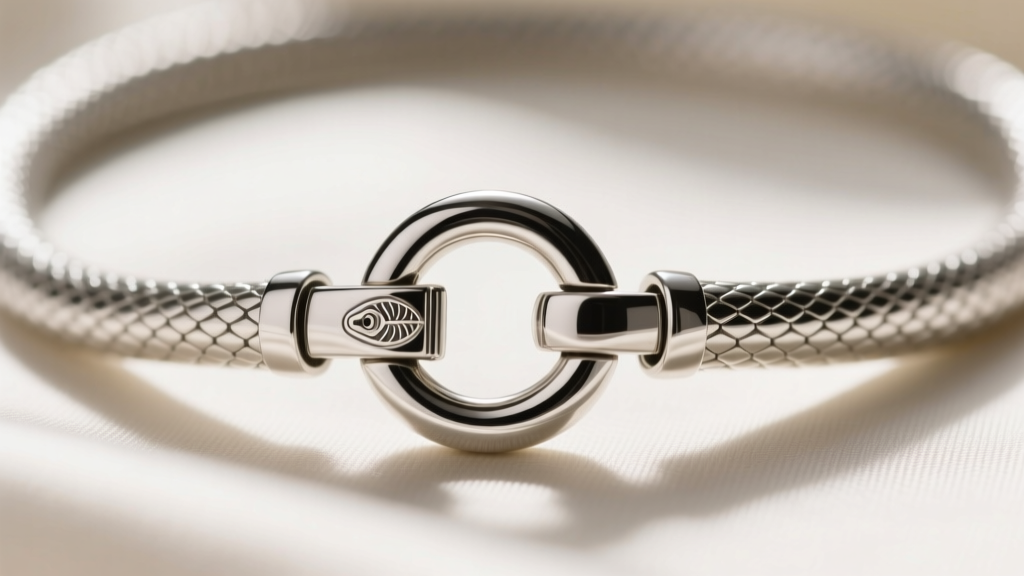
For any cobra necklace exceeding 1.5mm in thickness, a box clasp with a double figure-eight safety catch is non-negotiable. A box clasp utilizes a V-shaped tongue that compresses and clicks into a square housing, distributing the tensile load across the entire width of the metal housing rather than a single solder point. The secondary figure-eight wire acts as a failsafe, catching the opposing ring if the primary mechanical tongue wears down or accidentally depresses.
Expert Maintenance and Storage Protocols
Proper maintenance of a cobra necklace requires abandoning standard jewelry cleaning habits in favor of protocols that respect the chain's unique geometry.
- Ultrasonic Cleaner Warnings: While ultrasonic cleaners are excellent for solid cast jewelry, they can be destructive to hollow-core or loosely tensioned cobra chains. The high-frequency cavitation can shake loose internal solder joints at the clasp. Furthermore, if the tubular elements have microscopic breaches, the cleaning fluid can become trapped inside, leading to internal corrosion that is impossible to rinse out.
- Chemical Dips: Avoid silver dip solutions. These highly acidic thiourea-based chemicals strip the rhodium plating and can leave chemical residues trapped in the microscopic crevices of the flat cobra weave, accelerating future tarnishing.
- Proper Cleaning Method: Use a few drops of pH-neutral dish soap in lukewarm water. Gently agitate the chain with your fingers (never use a bristled brush, which will scratch the high-polish surface). Rinse thoroughly with distilled water to prevent hard water spotting, and pat dry with a lint-free microfiber cloth.
- Storage Physics: Never store a cobra necklace in a crumpled pile in a jewelry box. It must either be hung vertically on a necklace bust or laid perfectly flat in a dedicated, fabric-lined tray. Hanging allows gravity to maintain the chain's natural linear tension, preventing the micro-bends that lead to kinking.
"A cobra chain is essentially a piece of metallic fabric. Treat it with the same spatial awareness you would give to a delicate silk garment—never fold it sharply, and never let it bear weight it wasn't engineered to support."
For comprehensive guidelines on maintaining high-polish precious metals, refer to the GIA Care and Cleaning guidelines, which emphasize the importance of gentle, non-abrasive handling for textured and woven chains. By respecting the metallurgical and mechanical realities of the cobra weave, you ensure that its liquid drape and mirror finish endure for decades.


