Cock Necklace Trends: Styling Zodiac & Vintage Motifs
Explore the 2026 resurgence of the cock necklace. Learn how to style rooster motifs, from French Gallic symbols to Chinese Zodiac gold pendants.

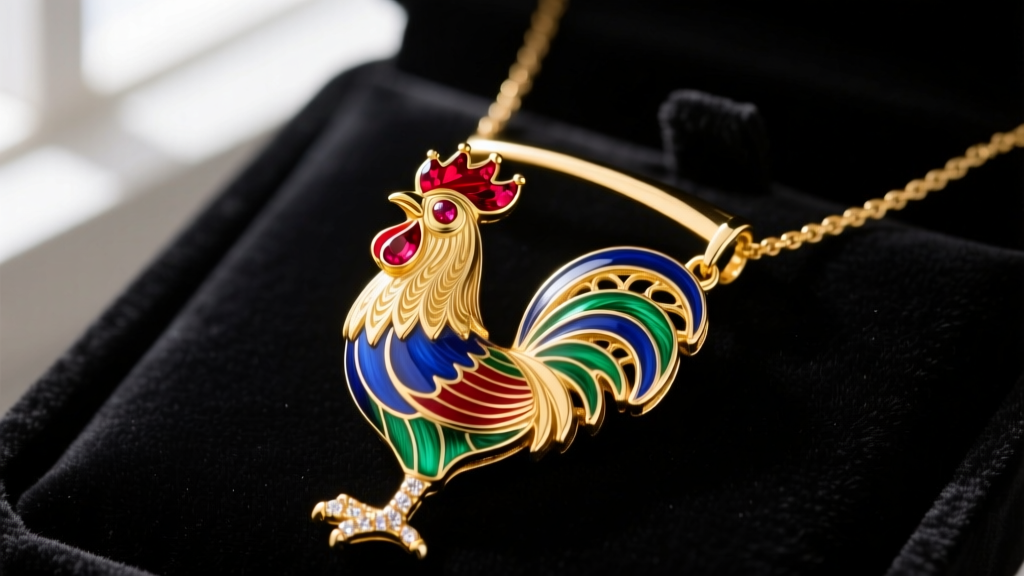
The Resurgence of Avian Motifs in 2026 Jewelry
The jewelry landscape of 2026 has decisively pivoted away from the ultra-minimalist 'quiet luxury' trend, embracing what industry insiders are calling 'narrative maximalism.' At the forefront of this shift is the cock necklace—a bold, historically rich rooster pendant that bridges the gap between rural 'farmcore' aesthetics and high-end zodiac symbolism. Unlike generic animal pendants, the rooster motif demands intricate metallurgical work to capture the sweeping architecture of tail feathers and the aggressive, proud posture of the bird. Whether sourced as an antique Victorian farmyard piece or commissioned as a bespoke Chinese Zodiac talisman, the cock necklace has become a definitive statement piece for collectors and trendsetters alike.
According to the GIA Gem News archives, avian and animalier motifs historically surge in popularity during periods of cultural transition, serving as talismans of vigilance, renewal, and pride. Today's designers are leveraging advanced CAD modeling alongside traditional lost-wax casting to push the boundaries of how these asymmetrical pendants hang and interact with light.
Decoding the Symbolism: Gallic vs. Zodiac
When shopping for a cock necklace, it is crucial to understand the two primary design lineages that dominate the market. The stylistic differences between these two traditions dictate everything from the metal choice to the gemstone accents.
The French Coq Gaulois (Gallic Rooster)
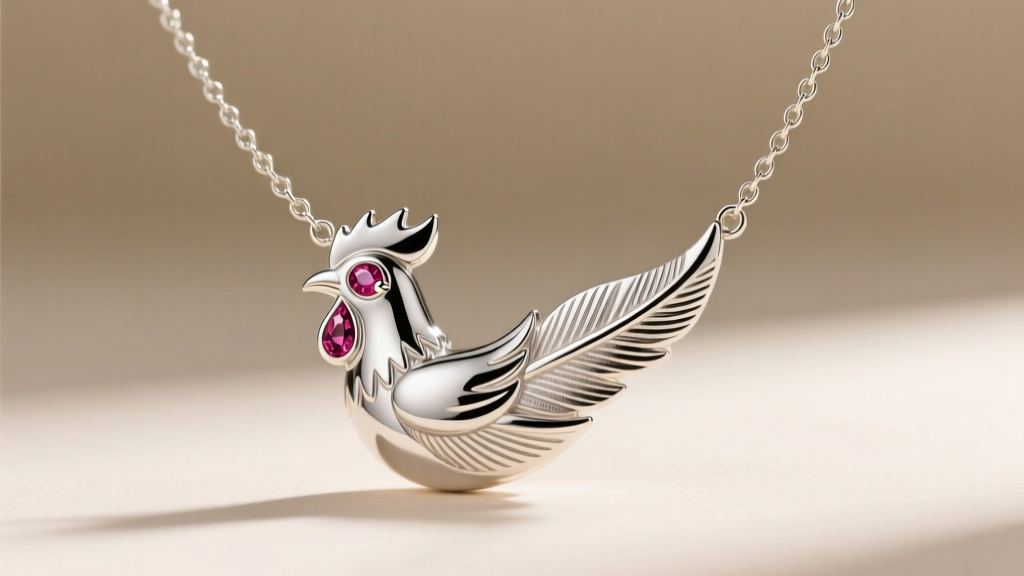
Rooted in French national identity, the Gallic rooster is a staple of Art Nouveau and Belle Époque jewelry. Historical pieces often feature the rooster in mid-crow, with hyper-stylized, whiplash-curve tail feathers. High-end maisons like Boucheron Heritage archives showcase how early 20th-century jewelers used plique-à-jour enamel to create translucent, stained-glass effects on the rooster's wings. In 2026, modern interpretations of the Coq Gaulois favor oxidized sterling silver and rose gold, emphasizing the textured, hand-engraved plumage over heavy gemstone pavé.
The Chinese Zodiac Rooster
As the tenth animal in the Chinese Zodiac, the rooster symbolizes punctuality, fidelity, and solar energy. Zodiac cock necklaces are traditionally crafted in high-karat gold (18k or 22k) to maximize the warm, sun-like reflection of the metal. Contemporary 2026 designs frequently incorporate cabochon jade, sunstones, or carved coral to represent the sunrise. These pendants are typically heavier, denser, and feature a more upright, statuesque posture compared to the dynamic, leaning poses of their European counterparts.
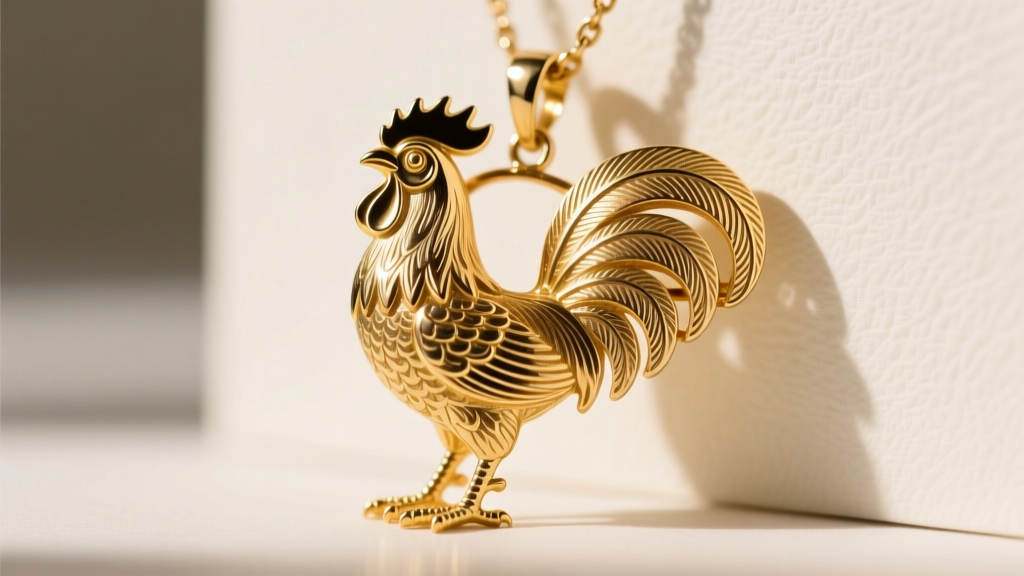
Material Grades and Craftsmanship Specifications
The complexity of a rooster's anatomy—specifically the comb, wattle, and layered tail coverts—requires specific material choices to ensure longevity and detail retention. Below is a breakdown of the most common material grades used in premium cock necklaces this year.
| Material | Technique | Durability & Wear | Price Range (USD) |
|---|---|---|---|
| 18k Yellow Gold | Lost-Wax Casting | High; excellent for retaining sharp feather details. Resists tarnish. | $1,200 - $4,500 |
| Sterling Silver (925) | Oxidized & Hand-Engraved | Medium; requires periodic polishing. Oxidization highlights feather depth. | $150 - $650 |
| Plique-à-jour Enamel | Translucent glass over gold lattice | Low; highly fragile and impact-sensitive. Reserved for occasional wear. | $2,500 - $8,000+ |
| 22k Gold & Type-A Jade | Bezel setting & Carving | High; jade is tough (nephrite) but gold is soft and prone to scratching. | $3,000 - $12,000 |
Chain Engineering: Bail Placement and Tensile Strength
The most common failure point in any asymmetrical animal pendant is the bail—the loop that connects the piece to the chain. A rooster pendant is notoriously top-heavy and rear-heavy due to the volume of the tail feathers. If a jeweler simply attaches a standard bail to the top of the comb, the pendant will inevitably flip upside down, resting awkwardly against the wearer's chest.
Expert jewelers in 2026 solve this physics problem by utilizing a 'yoke bail' or a 'hidden integrated bail' placed precisely over the pendant's center of gravity, which usually sits mid-back, between the wings. When evaluating a cock necklace, always check the bail placement. It should allow the rooster to hang perfectly parallel to the floor when suspended from a single thread.
Matching the Chain to the Pendant Weight
Because a detailed gold or silver rooster pendant typically weighs between 15 and 35 grams, delicate chains like the 1.0mm cable or rope chains are structurally insufficient and will snap under the pendulum effect of daily movement. For optimal security and aesthetic balance, adhere to these chain specifications:
- Wheat (Spiga) Chain (2.5mm - 3.5mm gauge): The absolute best choice for heavy pendants. The woven, directional links offer immense tensile strength and resist kinking, providing a rustic texture that complements farmyard motifs.
- Box Chain (2.0mm - 3.0mm gauge): Offers a clean, modern contrast to vintage-style pendants. Ensure the links are soldered; hollow box chains will crush under a 20g+ rooster pendant.
- Rope Chain (3.5mm+ gauge): Highly reflective and luxurious, but ensure the interior of the pendant's bail is polished smooth, as rope chains are prone to snagging and fraying against rough cast metal.
Authentication: Antique Farmyard vs. Modern Reproductions
The secondary market is currently flooded with 3D-printed reproductions of Victorian and Edwardian 'farmyard jewelry'—a genre that featured domestic animals like roosters, pigs, and horses. To ensure you are purchasing a genuine antique rather than a 2026 CAD replica, you must examine the surface finish and hallmarking.
According to the Lang Antiques University, genuine late 19th-century gold jewelry often features a 'bloom finish.' This was achieved by boiling the finished piece in a mild acid bath, which removed surface copper and left a microscopic layer of pure, 24k gold, giving the piece a soft, velvety, matte appearance. Modern reproductions almost universally feature a high-polish or standard matte sandblast finish, lacking the distinct, warm luster of a true bloom. Furthermore, inspect the underside of the tail feathers. Antique pieces cast in vulcanized rubber molds or hand-fabricated from sheet metal will show subtle tool marks or filing lines, whereas modern SLA 3D-printed castings often reveal microscopic 'stepping' lines in recessed areas that were not properly polished by the caster.
Styling Your Cock Necklace
Due to its intricate silhouette, a cock necklace should be treated as a focal point rather than a layering piece. In 2026, the prevailing style rule is to let the pendant rest on the sternum, utilizing a 20-inch or 22-inch chain length. This drops the piece below the collarbone, preventing the elaborate tail feathers from catching on silk blouses or wool lapels. Pair an 18k gold zodiac rooster with a simple, high-necked merino wool sweater to allow the warm gold tones to pop, or contrast an oxidized silver Gallic rooster against a crisp, unbuttoned white linen shirt for an effortless, artisanal aesthetic.


