Disc Necklace Gold: Solid, Filled, and Vermeil Compared
Compare disc necklace gold options: solid 14k, gold filled, and vermeil. Learn material properties, durability, and how to avoid tarnishing.

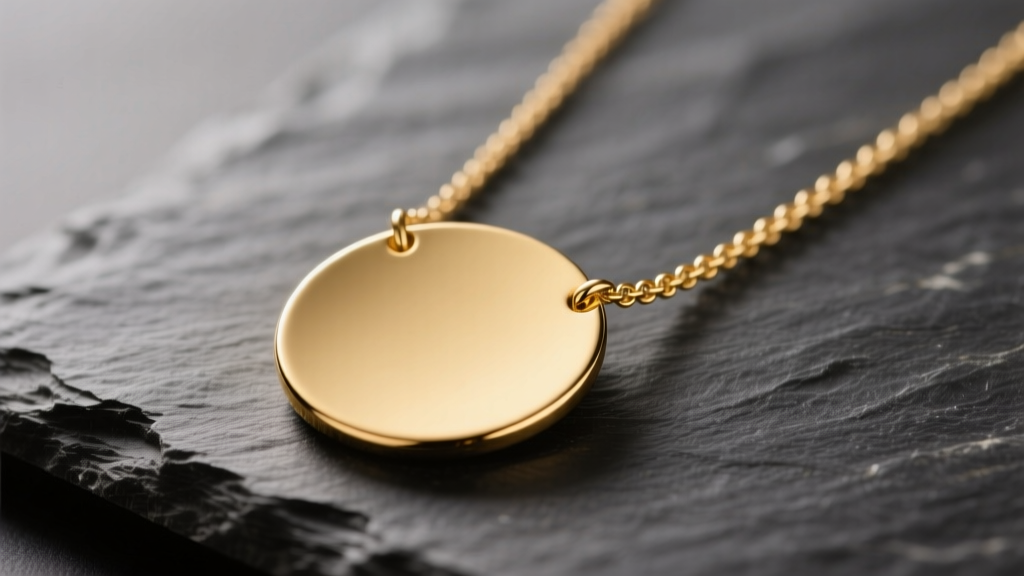
When shopping for a minimalist staple, the disc necklace gold market offers a dizzying array of options. At first glance, a simple 15mm gold circle on a delicate chain looks identical whether it costs $25 or $350. However, the metallurgical reality beneath that reflective surface dictates how the piece will age, react to your skin, and survive daily wear.
Flat disc pendants present a unique challenge in jewelry design. Unlike textured or faceted pendants that hide micro-abrasions, a mirror-finished disc acts as a canvas for every scratch, dent, and patch of wear. Understanding the material composition is not just about avoiding tarnish; it is about structural integrity. In this guide, we break down the exact material grades, manufacturing processes, and failure modes of the four primary gold finishes used in disc necklaces today.
The Unique Metallurgical Challenge of Flat Discs
Before diving into specific alloys, it is crucial to understand why disc pendants wear differently than other shapes. A standard 15mm to 20mm flat disc rests directly against the skin and clothing, creating a high-friction zone. The flat planes are highly susceptible to 'edge wear'—the gradual thinning of the outer rim where the pendant rubs against the jump ring or collarbone.
Furthermore, most gold discs are stamped or struck from sheet metal. The hardness of the underlying alloy (measured on the Vickers scale) determines how deeply the disc will scratch when it comes into contact with zippers, keys, or other jewelry. Therefore, the karat weight and base metal are the true indicators of a disc necklace's lifespan.
Decoding the Disc Necklace Gold Market
Solid Gold (14k vs. 18k)
Solid gold is an alloy of pure gold and strengthening metals like copper, zinc, and silver. For disc necklaces, the choice between 14k and 18k is a trade-off between color and durability.
- 14k Solid Gold (58.5% Gold): With a Vickers hardness of approximately 120-140 HV, 14k gold is the superior choice for everyday disc pendants. It resists deep scratching and maintains its structural integrity at the jump ring hole, which is a common stress point. Expect to pay between $150 and $400 for a quality 14k solid gold disc on an 18-gauge (1.0mm) cable chain.
- 18k Solid Gold (75% Gold): Offering a richer, deeper yellow hue, 18k gold is softer (around 90-110 HV). While beautiful, an 18k disc will accumulate micro-scratches much faster, giving it a matte 'patina' over time. It is also significantly more expensive, often ranging from $300 to $800+.
Gold Filled (The Mechanical Standard)
Gold filled jewelry is heavily regulated by the FTC. To be stamped 'GF', the item must contain at least 5% gold by weight, mechanically bonded to a brass core using extreme heat and pressure. A '14/20 GF' disc necklace features a thick outer layer of 14k gold that is hundreds of times thicker than standard plating. Because the gold layer is substantial (often 20 to 50 microns), gold filled discs can withstand years of friction before the brass core is exposed. Pricing typically ranges from $40 to $90, making it the best value for non-engraved everyday wear.
Gold Vermeil (The Sterling Compromise)
Vermeil (pronounced ver-may) requires a base of 925 sterling silver, electroplated with a minimum of 2.5 microns of gold (usually 14k or 18k). While the sterling silver base prevents the green skin reactions associated with brass or copper, the 2.5-micron gold layer is still relatively thin. A vermeil disc necklace will eventually wear through to the silver beneath at the high-friction edges. It is an excellent choice for those with severe base-metal allergies, priced between $60 and $120.
Flash Plated (The Fast-Fashion Trap)
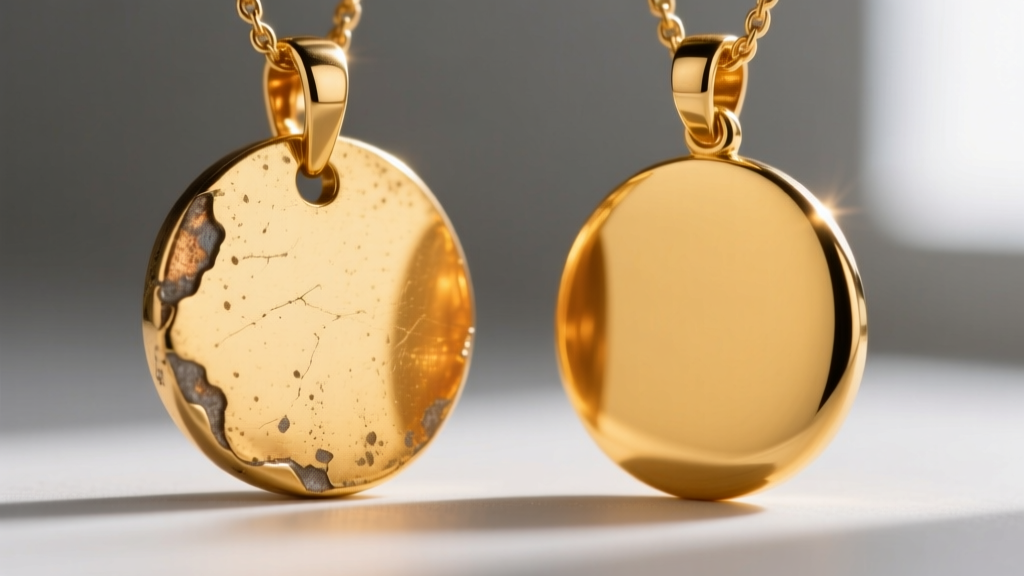
Often marketed simply as 'gold dipped' or 'gold tone', flash plating involves depositing less than 0.5 microns of gold over a cheap brass or copper alloy. On a flat disc pendant, this microscopic layer can wear through in a matter of weeks, especially if exposed to sweat, perfume, or the natural oils of the skin. Once the brass is exposed, it will oxidize rapidly and turn the skin green. These pieces usually cost $15 to $30 and should be treated as temporary accessories.
Comparative Data: Longevity, Hardness, and Cost
To make an informed decision, refer to the data table below comparing the core material properties of each option.
| Material Type | Base Metal | Gold Thickness / Purity | Estimated Lifespan (Daily Wear) | Avg. Price Range |
|---|---|---|---|---|
| Solid 14k Gold | None (Alloy) | 58.5% Pure Gold | Lifetime (Generational) | $150 - $400 |
| Solid 18k Gold | None (Alloy) | 75.0% Pure Gold | Lifetime (Prone to scratching) | $300 - $800+ |
| Gold Filled (14/20) | Jeweler's Brass | 20 - 50+ microns | 3 - 10 Years | $40 - $90 |
| Gold Vermeil | 925 Sterling Silver | Min. 2.5 microns | 1 - 3 Years | $60 - $120 |
| Gold Plated | Brass / Copper | < 0.5 microns | 1 - 6 Months | $15 - $30 |
Real-World Failure Modes for Disc Pendants
As a jewelry specialist, I frequently evaluate damaged returns. Disc necklaces fail in three highly specific ways depending on their material:
- Jump Ring Elongation: On vermeil and plated discs, the hole where the chain attaches is often punched out of the thin sheet metal. Over time, the friction of the chain's jump ring acts like a tiny saw, slowly cutting through the soft gold layer and eventually snapping the pendant off. Solid 14k gold resists this due to its higher tensile strength.
- Edge Delamination: On poorly manufactured gold filled or plated discs, the gold layer can begin to peel or flake at the outer rim. This happens when the mechanical bonding process fails to seal the edges of the stamped sheet metal.
- Sweat Corrosion: The slightly acidic nature of human sweat (pH 4.5 to 7.0) will rapidly degrade flash-plated brass cores. Once the sweat penetrates the microscopic gold layer, the brass corrodes from the inside out, causing the disc to warp or crack.

The Engraving Dilemma: Why Material Dictates Customization
Initial and date engravings are massively popular for disc necklaces, but the material you choose will dictate the engraving method and result.
If you are purchasing a gold vermeil or plated disc, laser engraving is a massive risk. The laser burns away the top layer of gold to reveal the silver or brass beneath. Because the contrast between the gold and the base metal is often low, the engraving can look muddy. Worse, diamond-tipped rotary engraving will completely strip the gold away, leaving a wide, tarnish-prone trench in the metal.
For solid gold or gold filled discs, deep rotary engraving is highly recommended. Because the gold color goes all the way through (solid) or is exceptionally thick (filled), the engraved grooves will match the color of the pendant, and the structural integrity of the disc will not be compromised. According to the Gemological Institute of America (GIA), understanding the depth of your gold layer is paramount before subjecting the piece to any abrasive customization techniques.
Final Verdict: Matching Material to Lifestyle
Choosing the right disc necklace gold material comes down to your budget, skin chemistry, and wearing habits. If you plan to wear the necklace 24/7, including in the shower and at the gym, Solid 14k Gold is the only option that guarantees zero tarnishing, green skin, or edge wear. It is an investment piece that can eventually be passed down.
If you want the look of solid gold without the high entry price, and you do not require heavy engraving, 14/20 Gold Filled is the undisputed champion of durability in the mid-tier market. It provides a thick, resilient gold layer that survives years of daily friction. Always verify the manufacturer's compliance with Federal Trade Commission (FTC) jewelry guidelines to ensure you are getting true gold filled rather than mislabeled heavy plating.
Avoid flash-plated discs entirely if you have sensitive skin or want a piece that survives beyond a single season. By prioritizing material properties over fleeting trends, your minimalist gold disc will remain a flawless, reflective staple in your wardrobe for years to come.


