Mastering Chain Necklace Lengths: A Beginner's Sizing Guide
Discover the ultimate guide to chain necklace lengths. Learn how to measure, match necklines, and choose the right gauge for pendants.

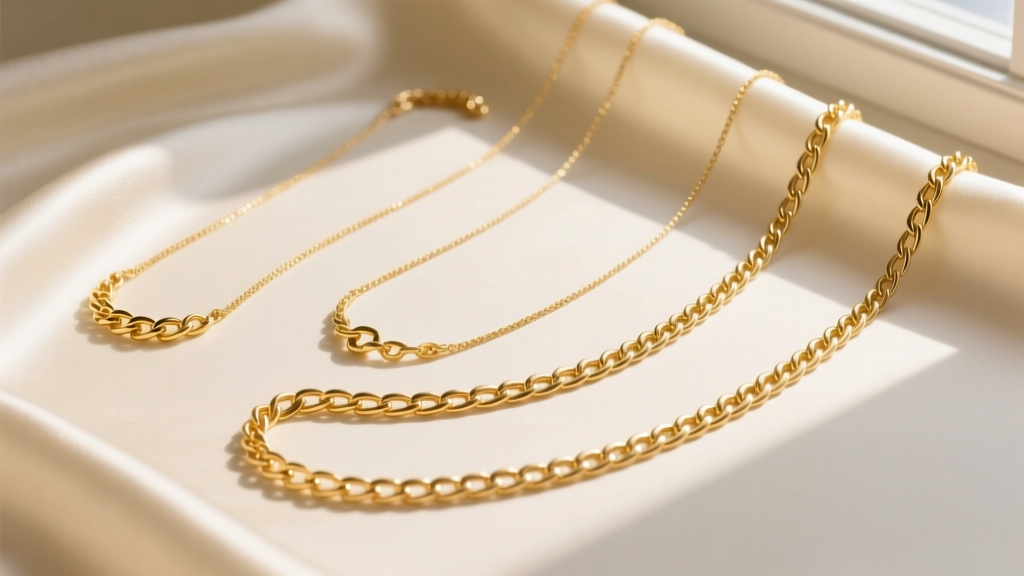
Choosing the right jewelry can feel overwhelming, especially when you are bombarded with terms like "princess," "matinee," and "opera." If you have ever ordered a piece online only to find it sits awkwardly on your collarbone or dangles too close to your waist, you are not alone. Understanding standard chain necklace lengths is the foundational skill of jewelry styling. It dictates how a piece frames your face, interacts with your wardrobe, and supports the weight of your favorite pendants.
This beginner-friendly explainer will demystify the sizing chart, teach you how to measure your neck accurately, and provide actionable frameworks for pairing specific lengths with everyday necklines. Whether you are buying a delicate 14-inch gold choker or a heavy 24-inch stainless steel streetwear piece, mastering these dimensions will ensure your jewelry always looks intentional.
The Standard Chain Necklace Lengths Chart
The jewelry industry relies on a standardized set of measurements, typically ranging from 14 inches to 36 inches. According to the International Gem Society, these standard sizes are designed to hit specific anatomical landmarks on the average adult body. Below is a comprehensive breakdown of where each length falls and its traditional styling name.
| Length (Inches) | Style Name | Where It Falls | Best Use Case |
|---|---|---|---|
| 14" | Collar | Tightly around the base of the neck | Formal wear, statement pieces, petite frames |
| 16" | Choker | Base of the neck / upper collarbone | Everyday wear, crew necks, casual styling |
| 18" | Princess | Mid-collarbone / upper chest | The universal standard, pendant necklaces, V-necks |
| 20" - 24" | Matinee | Upper chest to bust line | Business attire, layering, deep V-necks |
| 28" - 36" | Opera | Bust line to waist | Evening wear, streetwear, double-wrap layering |
Pro Tip: If you are shopping for men's jewelry, the baseline shifts. An 18-inch chain is often too tight for an average adult male, with 20 inches serving as the standard "choker" equivalent and 22 to 24 inches acting as the universal everyday length.
How to Measure Your Neck for the Perfect Fit
Do not rely on guesswork or hold a ruler up to your chest. To truly understand how chain necklace lengths will look on your unique anatomy, you need to measure your "drop." Here is the most accurate method used by professional jewelers:
- Use a flexible measuring tape: A soft tailor's tape is essential. If you do not have one, use a piece of string and measure it against a standard metal ruler afterward.
- Wrap and mark: Wrap the tape around your neck where you want the chain to sit. Look in a mirror to ensure it is level.
- The Two-Finger Rule: Slide two fingers under the tape. This ensures the chain will not feel suffocating or restrict your movement when you sit down or eat.
- Account for clasps: Remember that a bulky lobster clasp adds about 0.5 inches to the overall drop, while a seamless spring-ring or hidden box clasp keeps the measurement exact.

For a highly reliable baseline, Blue Nile recommends taking an existing necklace that fits you perfectly, laying it flat on a table, and measuring it from end to end, including the clasp. This gives you a tangible reference point for future online purchases.
Matching Chain Necklace Lengths to Necklines
A chain is only as good as the outfit it complements. The interplay between the metal and the fabric of your clothing can elevate a look or create visual clutter. Here is a practical decision framework for matching lengths to common necklines.
Crew Necks and T-Shirts
Crew necks create a high, rounded visual barrier. To avoid the "tangled" look, you have two options: go short or go long. A 14-inch collar or 16-inch choker sits cleanly above the fabric line, creating a crisp, layered effect. Alternatively, a 24-inch matinee chain drops below the collar entirely, elongating the torso. Avoid 18-inch chains with tight crew necks, as they will compete directly with the hem of the shirt.
V-Necks and Wrap Dresses
V-necks are designed to elongate the neck and draw the eye downward. Your jewelry should mimic this geometry. An 18-inch princess chain with a small, directional pendant (like a teardrop or marquis cut) perfectly mirrors the V-shape of the neckline. For deeper plunging V-necks, step up to a 20-inch or 22-inch chain to ensure the pendant rests visibly against the skin rather than hiding beneath the fabric.
Button-Downs and Collared Shirts
When wearing collared shirts, the collar itself acts as a frame. A 16-inch choker worn inside the collar (with the top button undone) offers a sophisticated, European aesthetic. If you prefer a more relaxed, bohemian look, opt for a 24-inch chain worn entirely outside the shirt, perhaps layered with a second, slightly shorter chain to add texture to the monochromatic fabric.
Factoring in Pendant Weight and Chain Gauge
One of the most common beginner mistakes is ignoring the relationship between chain gauge (thickness) and pendant weight. Chain necklace lengths are not static; they are dynamic and change based on the physical load they carry.
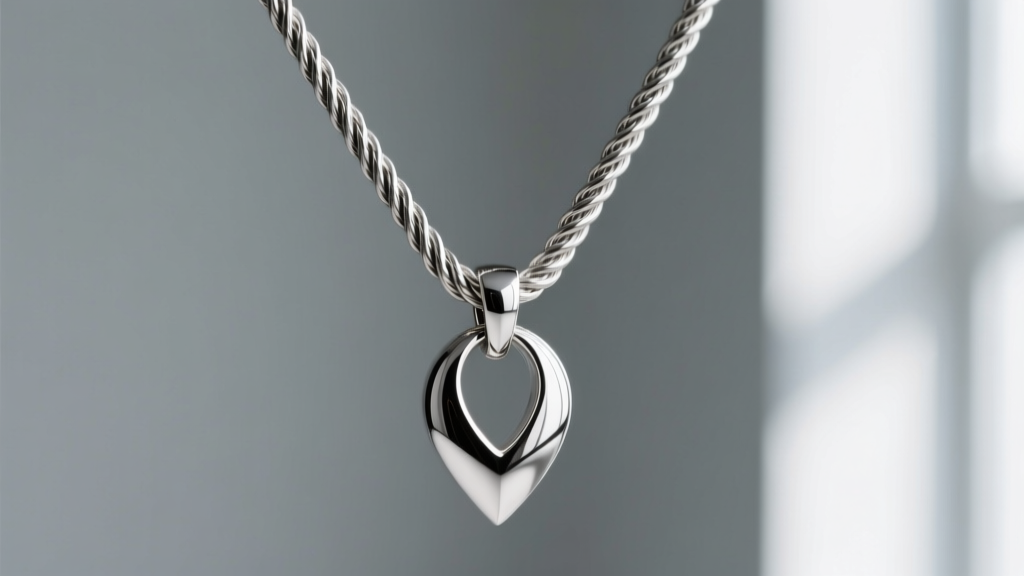
Consider the physics of a 1mm cable chain. If you hang a heavy 15-gram solid gold pendant on an 18-inch 1mm chain, the weight will pull the delicate links taut, forcing the chain into a deep, narrow V-shape. Visually and functionally, that 18-inch chain will now sit like a 20-inch or 22-inch chain. Conversely, a rigid 4mm Cuban link chain has enough structural integrity to hold its rounded U-shape around the collarbone, even when supporting a moderate pendant.
- Lightweight Pendants (Under 5g): Safe for 0.8mm to 1.5mm chains (cable, box, or serpentine). The length will remain mostly true to size.
- Medium Pendants (5g - 15g): Require 1.5mm to 2.5mm chains (rope, curb, or wheat). Expect a 0.5-inch to 1-inch visual drop elongation.
- Heavy Statement Pieces (15g+): Demand 3mm+ chains (thick rope, Figaro, or heavy Cuban). Do not use delicate chains, as the sheer weight will eventually warp the links or snap the clasp.
Pro Tips for Layering Different Lengths
Layering is a dominant trend, but it requires mathematical precision to avoid a tangled mess. The golden rule of layering chain necklace lengths is the Two-Inch Minimum Gap.
If your base layer is a 16-inch choker, your second chain must be at least 18 inches, and your third should be 20 or 22 inches. If the gap is smaller than two inches, the clasps and links will constantly catch on one another, causing friction damage and visual clutter. Furthermore, vary your textures. Pair a delicate 16-inch box chain with a thicker 18-inch rope chain, and finish with a 20-inch beaded or pendant chain. This contrast in gauge and texture ensures each individual piece is visible and contributes to a cohesive, curated aesthetic.
By understanding these precise measurements, gauge dynamics, and styling frameworks, you can confidently navigate any jewelry counter or online catalog. The right length transforms a simple metal chain from a mere accessory into a defining element of your personal style.


