Coffee Necklace Value Guide: Budget vs Luxury 2026
Is a coffee necklace worth the investment? We compare resin bean pendants vs. solid gold and silver to help you find the best value in 2026.

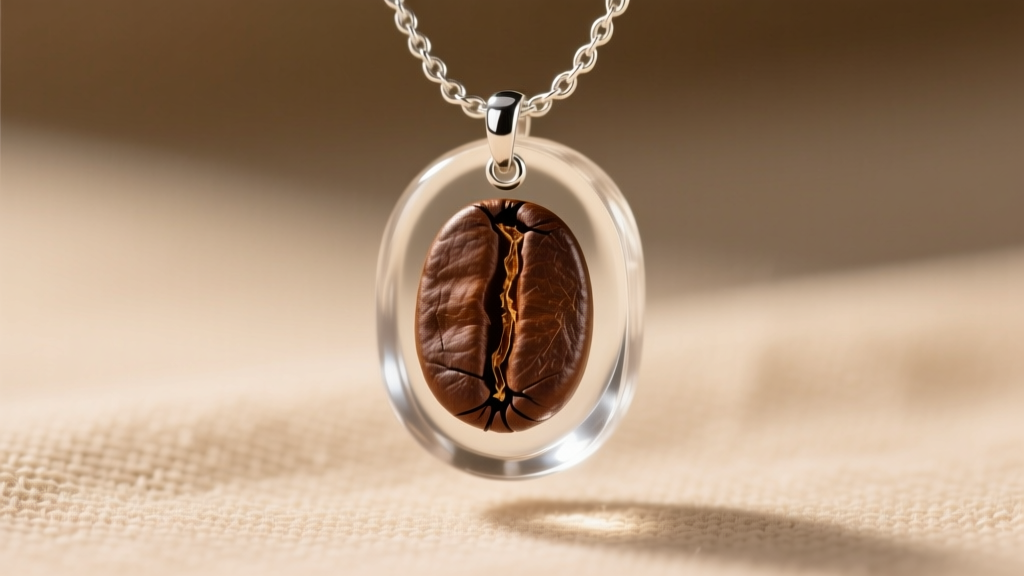
The 'Coffee Necklace' Market: Organic Beans vs. Precious Metals
Coffee culture has transcended the mug, evolving into a lifestyle aesthetic where the 'coffee necklace' serves as a personal talisman for baristas, roasters, and caffeine aficionados. But as this niche grows in 2026, so does the disparity in quality and pricing. Walk into any artisan market or browse online jewelry boutiques, and you will find coffee bean necklaces ranging from $15 to over $400. For the budget-conscious buyer, this massive price gap raises a critical question: are you paying for genuine craftsmanship and lasting materials, or simply a novelty markup?
To accurately assess the value of a coffee necklace, we must divide the market into two distinct categories: organic resin-encased beans and precious metal castings. Each category possesses unique material properties, failure modes, and cost-per-wear metrics that dictate its true value.
Material Breakdown & Failure Modes
Tier 1: Resin-Encased Organic Coffee Beans (Budget & Artisan)
Authentic coffee bean jewelry relies on real, roasted beans suspended in clear resin. The visual appeal is undeniable, offering a rustic, organic charm that metal cannot replicate. However, from a materials science perspective, combining organic matter with synthetic polymers presents significant challenges.
Coffee beans naturally contain 10% to 15% lipids (oils). When an artisan simply drops a roasted bean into standard epoxy resin, these oils slowly migrate outward over time. This lipid leaching creates a cloudy, yellowish halo around the bean, typically visible within 6 to 12 months of wear. High-value artisan pieces mitigate this by applying a cyanoacrylate (CA glue) barrier coat or a PVA (polyvinyl alcohol) sealant to the bean before the final UV-resistant polyurethane pour. If a budget brand skips this crucial sealing step to save time, the necklace's aesthetic lifespan is severely compromised.
Primary Failure Modes: UV yellowing of the resin matrix, moisture ingress causing internal mold if the bean's porous surface isn't pre-sealed, and structural cracking if the bean was roasted too dark, making it overly brittle.
Tier 2: Cast Sterling Silver & 14k Gold Coffee Beans (Luxury & Heirloom)
For buyers seeking permanence, precious metal coffee bean pendants are the standard. These are typically created using the lost-wax casting method, which allows for the intricate replication of the bean's central crevice and textured skin. The value here is intrinsically tied to metal purity, weight, and casting quality.
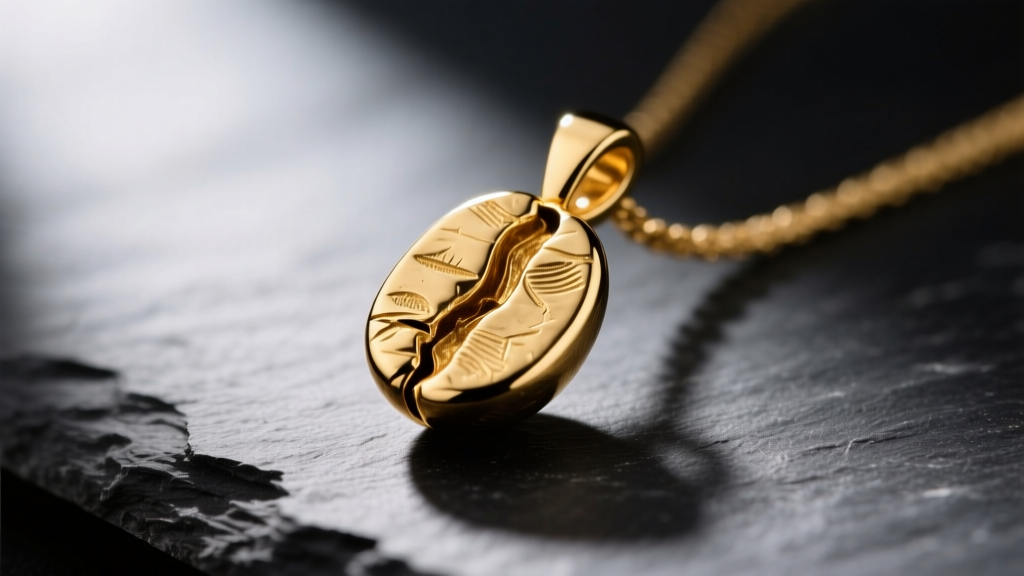
A realistic 3D coffee bean pendant measuring approximately 12mm by 8mm will weigh roughly 2.5 to 3.5 grams in solid 925 sterling silver. In 14k solid gold, that same volume weighs between 4.5 and 5.5 grams due to gold's higher specific gravity. Budget brands often cut costs by hollowing out the back of the bean or using extremely thin 3D-printed resin waxes for casting, resulting in lightweight, easily dented pendants that lack the satisfying drape of solid metal.
Primary Failure Modes: Silver sulfide tarnishing (requiring regular polishing), porosity in the metal casting (visible as tiny pits on the bean's surface), and gold plating wearing off on the high-friction edges if the piece is vermeil rather than solid gold.
2026 Pricing & Value Matrix
To help you navigate the market, we have compiled a comprehensive value matrix based on current 2026 pricing, material longevity, and skin safety. According to the Federal Trade Commission Jewelry Guides, terms like 'gold' or 'silver' must be accompanied by accurate purity marks, so always verify hallmarks before purchasing metal pieces.
| Material Composition | Average 2026 Price Range | Expected Lifespan | Primary Failure Mode | Skin Safety |
|---|---|---|---|---|
| Resin Bean & Base Metal Chain | $15 - $35 | 1 - 3 Years | Chain tarnishing, resin UV yellowing | Poor (Nickel allergy risk) |
| Resin Bean & 925 Silver Chain | $40 - $75 | 5 - 10 Years | Resin clouding from lipid leaching | Excellent (Hypoallergenic) |
| Solid 925 Sterling Silver Bean | $45 - $110 | Lifetime (with care) | Surface tarnishing, clasp fatigue | Excellent |
| Gold Vermeil over Silver | $60 - $130 | 2 - 5 Years | Gold layer wearing off on edges | Good (Until plating wears) |
| Solid 14k Gold Bean | $280 - $450+ | Heirloom / Lifetime | Chain stretching if gauge is too thin | Excellent |
Hardware & Chain Assessment: Where Budget Brands Cut Corners
A pendant is only as secure as the chain and clasp holding it. This is where the true 'value' of a budget coffee necklace often collapses. A solid metal coffee bean pendant, while small, is surprisingly dense. A 4-gram 14k gold bean exerts constant downward pressure on the chain's weakest links.
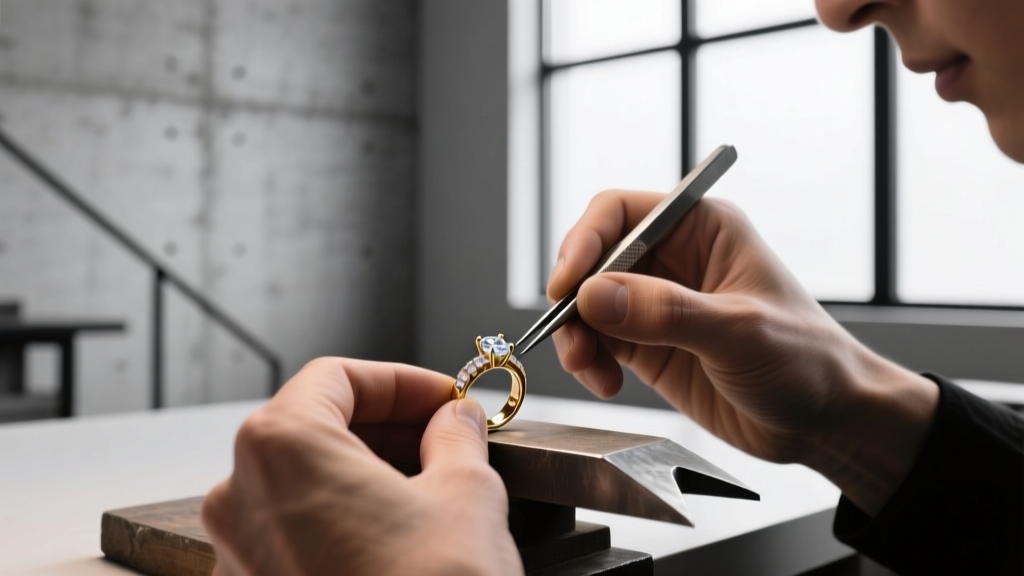
Many budget brands pair heavy pendants with delicate 0.8mm cable chains to maintain profit margins. This is a critical engineering flaw. A 0.8mm chain has a low tensile break point, and daily micro-snags on clothing will rapidly fatigue the soldered links. The Jewelers of America frequently advises consumers to match chain tensile strength to pendant weight.
- The 0.8mm Cable Chain: Avoid for metal coffee beans. Prone to kinking and snapping under the 3-5 gram weight of a solid bean pendant.
- The 1.2mm Box Chain: The ideal middle ground. The interlocking square links distribute weight evenly and resist kinking, offering excellent durability for silver pendants.
- The 1.5mm Rope Chain: Best for solid 14k gold beans. The twisted links provide superior tensile strength and a premium aesthetic that complements the rich tones of gold.
Furthermore, inspect the clasp. Budget necklaces rely on spring-ring clasps, which feature an internal steel spring that easily corrodes when exposed to sweat and humidity, eventually failing to close. A high-value necklace will always utilize a solid lobster clasp, which offers a more secure locking mechanism and longer mechanical lifespan.
The Cost-Per-Wear (CPW) Calculation
To objectively determine if a coffee necklace is a smart financial decision, apply the Cost-Per-Wear (CPW) formula. This metric strips away the initial sticker shock and reveals the true daily cost of the jewelry.
CPW Formula: Total Price ÷ (Estimated Days Worn Per Year × Expected Lifespan in Years)
Let us compare a $25 resin-and-base-metal necklace against a $90 solid 925 sterling silver coffee bean necklace.
The Budget Resin Piece: You wear it twice a week (104 days a year). Due to sweat degrading the base metal chain and the resin yellowing, it lasts 1.5 years.
Calculation: $25 ÷ (104 × 1.5) = $0.16 per wear.
The Solid Silver Piece: You wear it four times a week (208 days a year). Sterling silver is highly durable and hypoallergenic, easily lasting 10 years with basic polishing.
Calculation: $90 ÷ (208 × 10) = $0.04 per wear.
While the silver necklace requires a higher upfront investment, its CPW is four times lower than the budget alternative, making it the vastly superior financial choice for anyone who plans to wear their coffee necklace regularly.
Final Verdict: Which Coffee Necklace Should You Buy?
The 'best' coffee necklace depends entirely on your wearing habits and budget constraints. If you are purchasing a novelty gift, a festival accessory, or a temporary novelty item, a $20 to $35 resin-encased bean is perfectly acceptable—provided you understand it is a disposable fashion item, not an heirloom. Ensure the artisan has properly sealed the bean to prevent premature clouding.
However, if you are a coffee professional, a daily wearer, or someone with sensitive skin, the budget resin options will ultimately disappoint. Investing $50 to $120 in a solid 925 sterling silver coffee bean pendant on a 1.2mm box chain provides exceptional value, hypoallergenic security, and a cost-per-wear that easily justifies the initial expense. For those with a higher budget seeking a lifetime piece, a solid 14k gold casting remains the ultimate expression of coffee culture, provided it is paired with a heavy-duty rope chain and a secure lobster clasp.


