Coin Holder Necklace Buying Guide: Budget vs Fine Jewelry
Compare coin holder necklace options across budgets. We analyze sterling silver vs. 14k gold bezels, chain weights, and long-term value retention.

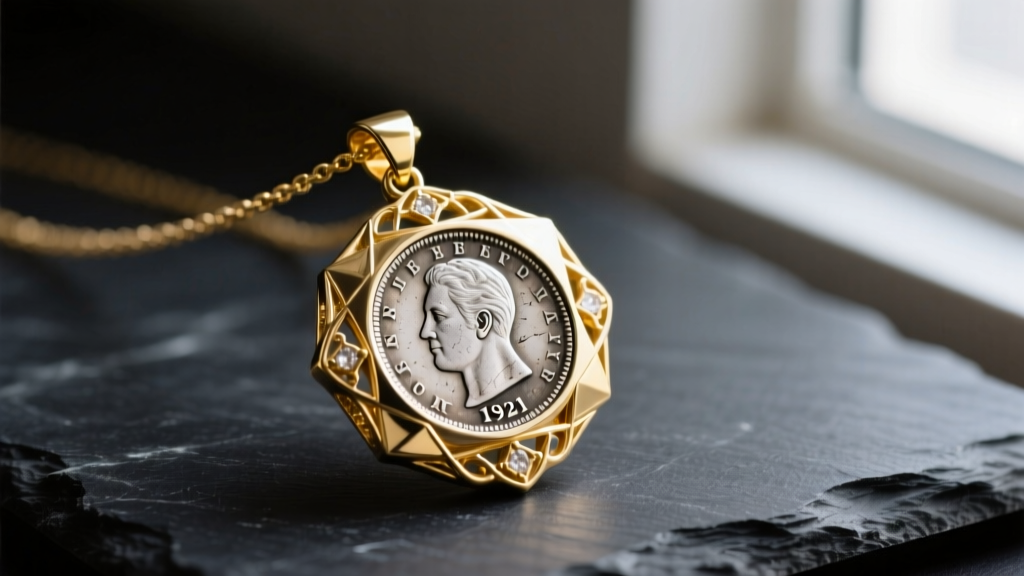
The True Cost of Coin Jewelry: Beyond the Melt Value
As precious metal prices continue their upward trajectory into 2026, the appeal of the coin holder necklace has shifted from a mere sentimental keepsake to a wearable asset. However, evaluating the true value of a coin pendant requires looking far beyond the intrinsic melt value of the coin itself. The hardware that secures your numismatic piece—the bezel, the bail, the jump rings, and the chain—dictates both the safety of your investment and its long-term aesthetic durability.
Many buyers make the critical mistake of pairing a heavy, valuable coin (like a 1-ounce American Silver Eagle or a vintage Morgan Dollar) with a budget-tier, mass-produced bezel and a lightweight chain. This results in catastrophic hardware failure. According to manufacturing standards outlined by the Jewelers of America, dynamic load (the force exerted when a pendant swings) can multiply the static weight of a coin by three to five times. In this comprehensive budget and value assessment, we break down exactly what you should pay for a coin holder necklace based on material grades, structural integrity, and craftsmanship.
Anatomy of a Coin Holder: Where the Money Goes
Before assessing price tiers, you must understand the structural components of a high-quality coin holder. A premium piece is not simply cast in a mold; it is fabricated, soldered, and work-hardened.
- The Bezel Wire: This is the metal lip that wraps around the coin's edge. For a standard 38.1mm Morgan Dollar, the inner diameter of the bezel must be machined to exactly 38.3mm. Too tight, and the coin will buckle under temperature changes; too loose, and the coin will rattle, destroying its reeded edge over time.
- The Bail: The loop that connects the bezel to the chain. Budget pendants use glued or cast-in-place bails, which are notorious failure points. Fine jewelry bezels feature a separately fabricated, hand-soldered bail that can withstand heavy pendulum stress.
- The Jump Ring: The connecting ring between the bail and the chain. This must be a solid, soldered-closed ring. Open split rings will eventually pull apart under the weight of a heavy coin.
Budget Tier ($30 - $150): Sterling Silver and Base Metals
The entry-level market for a coin holder necklace is dominated by .925 sterling silver, brass, and nickel-silver alloys. While these options are accessible, they come with strict limitations regarding coin weight and longevity.
Sterling Silver (.925) Bezels
Sterling silver is an excellent choice for lightweight coins, such as Roosevelt dimes, Washington quarters, or foreign fractional currency weighing under 15 grams. However, silver is a relatively soft metal. Budget manufacturers often use 22-gauge or 20-gauge bezel wire to save on material costs. If you place a 31.1-gram (1 troy ounce) coin into a 20-gauge silver bezel, the metal will eventually warp, and the prongs or lips will pull away from the coin's face.
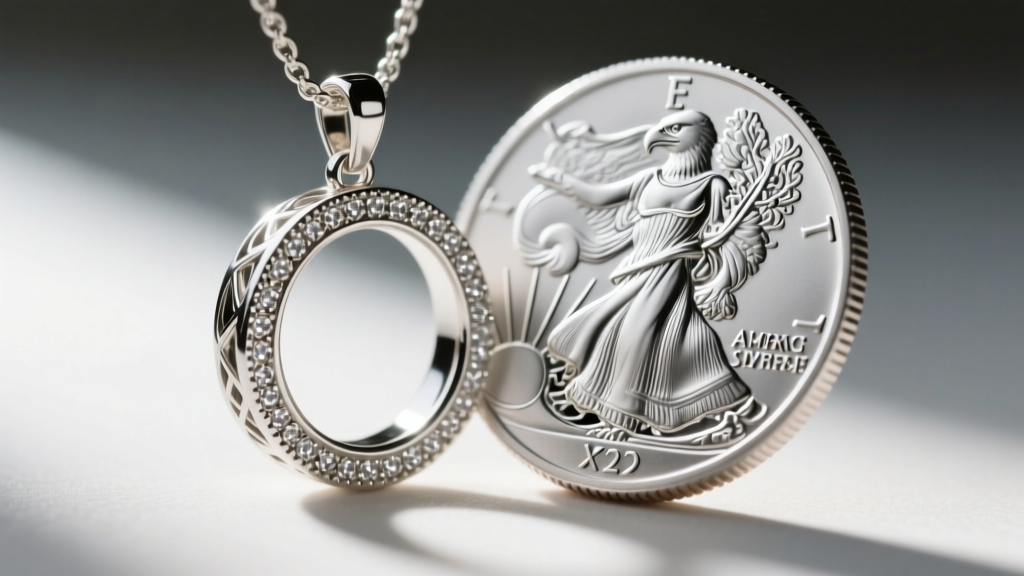
Common Failure Modes in Budget Hardware
When shopping in the sub-$100 range, inspect the clasp and chain connections closely. Budget coin necklaces frequently utilize spring-ring clasps. A spring ring is entirely inadequate for any coin weighing more than 20 grams; the internal spring mechanism will fatigue and snap. Furthermore, budget chains (like 1.5mm box chains) have microscopic solder points at the clasp that will tear under dynamic stress. If you are buying a budget silver holder, plan to immediately upgrade the chain and clasp to a heavy-duty lobster trigger.
Mid-Tier & Fine Jewelry ($350 - $1,200+): 14k and 18k Gold
For heirloom coins, ancient Roman denarii, or high-value modern bullion, stepping up to a solid gold coin holder necklace is not just an aesthetic choice—it is a structural necessity. The Gemological Institute of America (GIA) notes that alloying pure gold with metals like copper, zinc, and silver drastically increases its tensile strength and scratch resistance.
14k Gold: The Sweet Spot for Durability and Value
14k gold (58.5% pure gold) is the undisputed champion for heavy coin bezels. It is typically fabricated using 16-gauge or 18-gauge wire, providing immense rigidity. A 14k yellow gold bezel designed for a Morgan Dollar will weigh between 8 and 12 grams on its own. The retail price for the hardware alone generally ranges from $450 to $850, reflecting both the gold content and the specialized labor required to solder the bezel without transferring heat to the coin (which could damage numismatic patinas or proof finishes).
18k Gold: Premium Aesthetics, Softer Wear
18k gold (75% pure) offers a richer, deeper yellow hue and holds a higher intrinsic melt value. However, it is noticeably softer than 14k. If you choose an 18k gold coin holder necklace for a heavy coin, ensure the jeweler uses a thicker 14-gauge bezel wire and work-hardens the metal during the polishing process. Expect to pay a 40% to 60% premium over 14k options, primarily driven by the higher gold weight rather than additional labor.
Comparative Value Matrix: Metal Grades and Chain Weights
To help you assess whether a quote from a jeweler or an online listing represents fair market value, consult the matrix below. This data reflects 2026 market averages for fabricated, soldered bezels (excluding the cost of the coin and the chain).
| Metal Grade | Bezel Wire Gauge | Max Recommended Coin Weight | Avg. Retail Price (Bezel Only) | Long-Term Value Retention |
|---|---|---|---|---|
| Brass / Base Alloy | 20g - 22g | < 10g (Dimes, Small Tokens) | $15 - $35 | Poor (Tarnishes, zero scrap value) |
| .925 Sterling Silver | 18g - 20g | Up to 30g (Half Dollars) | $60 - $140 | Moderate (Utility + low scrap) |
| 10k Solid Gold | 18g | Up to 40g | $180 - $280 | Low (High labor markup vs. melt) |
| 14k Solid Gold | 16g - 18g | 50g+ (Morgans, 1oz Eagles) | $450 - $850 | High (Intrinsic + Heirloom durability) |
| 18k Solid Gold | 14g - 16g | 50g+ (Requires thick wire) | $700 - $1,300+ | Very High (Premium melt value) |
Sizing and Weight: Matching the Chain to the Coin
The most frequent point of failure in a coin holder necklace is not the bezel itself, but the chain supporting it. A common scenario involves a buyer purchasing a beautiful 14k gold bezel for a 1-ounce Gold Eagle (which weighs 33.9 grams), only to hang it on a delicate 2mm rope chain. Within months, the chain's micro-welds will fracture.
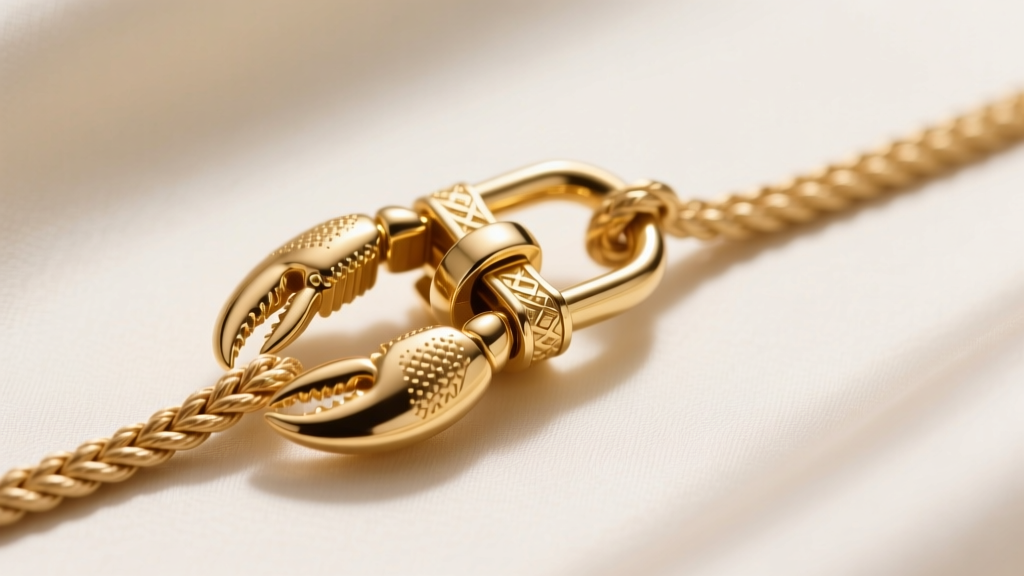
Calculating Dynamic Load Requirements
When evaluating the total budget for your necklace, you must allocate funds for a chain that matches the pendant's mass. Use the following framework to select your chain:
- Coins under 15 grams (e.g., Quarters, Dimes): A 2.0mm to 2.5mm Box or Wheat chain is sufficient. Ensure the clasp is a standard 5mm or 7mm lobster claw.
- Coins 15g to 30g (e.g., Half Dollars, Ancient Bronze): Upgrade to a 3.0mm to 3.5mm Figaro or Curb chain. The flat links distribute weight more evenly across the collarbone and resist twisting.
- Coins over 30g (e.g., Morgan Dollars, 1oz Bullion): You need a heavy-duty 4.0mm to 5.5mm Cuban Link or thick Rope chain. The clasp must be a heavy-duty trigger clasp or a custom-fabricated box clasp with a safety figure-eight latch. Spring rings are strictly prohibited at this weight class.
Prong Settings vs. Solid Bezels: A Value Perspective
Coin holders generally come in two styles: the solid bezel wrap and the prong setting. From a pure value and preservation standpoint, the solid bezel is vastly superior. A bezel completely encases the rim of the coin, protecting it from edge dings, moisture, and skin oils. Prong settings (usually featuring 4 or 6 metal claws) leave the coin exposed. While prongs allow you to see the coin's reeded edge, the prongs themselves act as tiny hooks that catch on clothing, eventually bending and releasing the coin. If you are investing in a rare or high-grade numismatic coin, always pay the premium for a custom-fitted, soldered solid bezel to protect your asset's grading.
Final Verdict: Maximizing Your Investment
When budgeting for a coin holder necklace, view the hardware as an insurance policy for the coin it holds. Skimping on a $40 silver bezel and a $20 chain to hold a $300 silver coin is a mathematical error that usually ends in a lost pendant. For modern bullion and sentimental tokens, a heavy-gauge sterling silver setup ($150 total budget) offers excellent utility. For vintage, rare, or high-melt-value coins, allocating $800 to $1,500 for a 14k gold bezel and a heavy Cuban chain ensures your piece remains a secure, wearable heirloom for decades to come. Always demand hand-soldered bails and solid jump rings from your jeweler, and never compromise on the structural rating of your clasp.


