Choosing a Gray Stone Necklace: Material Properties Compared
Compare top gray stone necklace materials like moonstone, hematite, and labradorite. Discover Mohs hardness, durability, and styling properties.

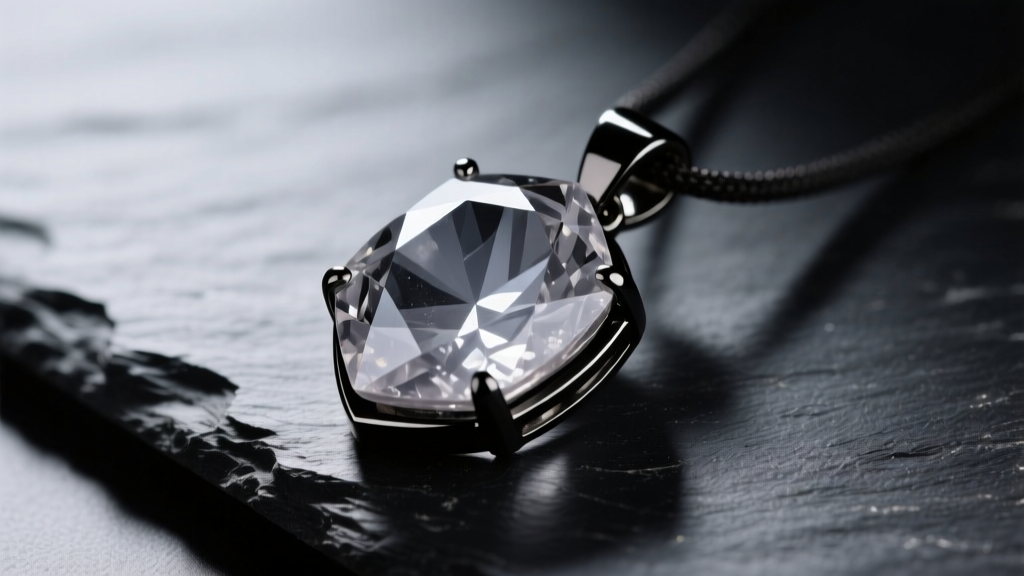
The Mineralogy of Gray Gemstones: Beyond Aesthetics
The term 'gray stone necklace' encompasses a vast and varied spectrum of geological formations. From the metallic luster of iron oxides to the ethereal glow of feldspars, gray gemstones are not a monolith. For jewelry designers and informed collectors, understanding the underlying mineralogy is critical. A stone's visual appeal must always be weighed against its structural integrity, especially for necklaces and pendants that are subject to swinging, impacts, and varying environmental conditions.
In 2026, the shift toward mindful consumption means buyers are prioritizing longevity over fast fashion. Selecting the right gray stone requires a deep dive into Mohs hardness, specific gravity, cleavage planes, and optical phenomena. According to the Gemological Institute of America (GIA), a gemstone's durability is a combination of its hardness (resistance to scratching) and toughness (resistance to breaking or chipping). Let us deconstruct the five most prominent gray stones used in modern necklace design.
Comparative Analysis: Top 5 Gray Stones for Necklaces
1. Smoky Quartz: The Durability Champion
Smoky quartz is a macrocrystalline variety of silicon dioxide (SiO2) that derives its gray-to-brownish-gray hue from natural or artificial irradiation interacting with aluminum impurities within the crystal lattice. With a Mohs hardness of 7 and a lack of cleavage planes, smoky quartz is exceptionally tough. It exhibits a conchoidal fracture, meaning it chips in smooth, curved surfaces rather than splitting along flat planes. This makes it the premier choice for intricate faceting and prong settings in pendants. Its specific gravity of 2.65 keeps it relatively lightweight, allowing it to be paired with delicate 18-gauge or 20-gauge chains without risking structural failure.
2. Gray Moonstone: The Adularescent Challenge
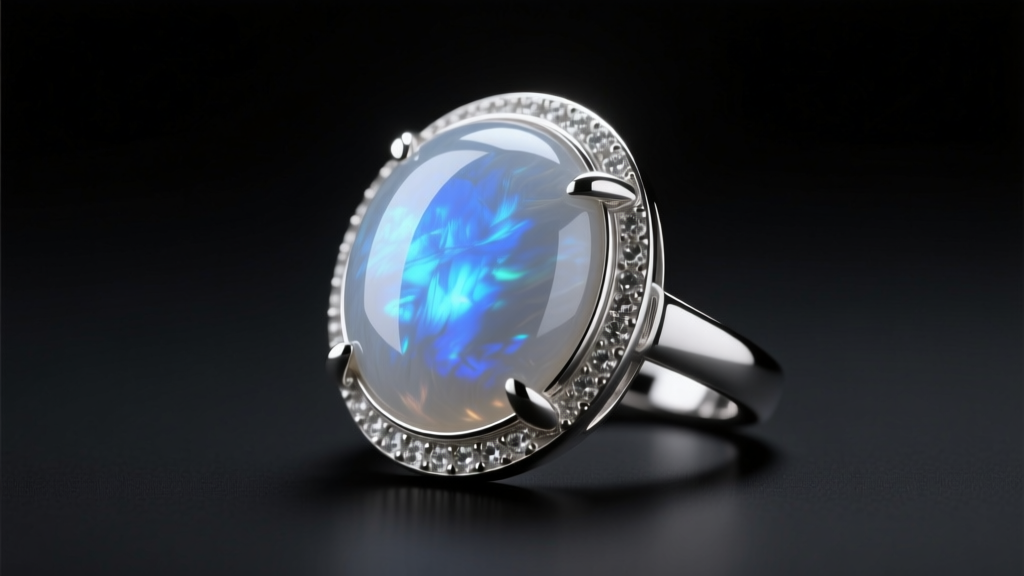
Gray moonstone belongs to the orthoclase feldspar group. Its defining characteristic is adularescence—a billowy, floating light effect caused by the diffraction of light between microscopic layers of albite and orthoclase. However, this layered internal structure is also its Achilles' heel. Moonstone has a Mohs hardness of 6 to 6.5 and possesses perfect cleavage in two directions. A sharp blow against a tabletop can easily split a moonstone cabochon in half. Therefore, a gray moonstone necklace should always feature a bezel or heavy halo setting to protect the girdle and edges. Prong settings are strongly discouraged for daily-wear moonstone pendants.
3. Hematite: The Heavyweight Metallic
Hematite is an iron oxide (Fe2O3) renowned for its opaque, gunmetal-gray appearance and brilliant metallic luster when polished. While its Mohs hardness ranges from 5.5 to 6.5, its most defining physical property for jewelry makers is its extreme specific gravity, which sits at a dense 5.04. This means a 20mm hematite pendant can easily weigh over 20 grams. When designing or purchasing a hematite necklace, the chain engineering is paramount. Standard lightweight chains will snap under the dynamic load of a swinging hematite pendant. Furthermore, hematite is brittle and can shatter if dropped on a hard surface, despite its high density.
4. Labradorite: The Iridescent Enigma
Labradorite is a calcium-rich plagioclase feldspar that typically presents a gray base color, punctuated by flashes of iridescent blue, green, and gold (labradorescence). Like moonstone, it shares a Mohs hardness of 6 to 6.5 and suffers from perfect cleavage. The Mindat.org mineral database notes that labradorite's twinning planes, which cause its famous optical schiller, also act as structural fault lines. When cutting labradorite for a necklace pendant, lapidaries must orient the stone precisely to maximize color while avoiding the most fragile cleavage axes. Protective bezel settings are mandatory for long-term survival.
5. Gray Agate: The Microcrystalline Workhorse
Gray agate is a cryptocrystalline form of silica (chalcedony). Unlike macrocrystalline quartz, agate is composed of microscopic, interlocking fibers. This fibrous structure grants it exceptional toughness, far exceeding that of single-crystal quartz, despite having a similar Mohs hardness of 6.5 to 7. Gray agate is highly resistant to chipping and accepts a brilliant polish. It is frequently used for carved cameos, intaglios, and large statement pendants. Its low porosity (unless dyed) makes it highly resistant to environmental chemicals and everyday wear and tear.
Material Properties Matrix
To make an informed decision, refer to the comparative data table below. This matrix highlights the critical physical properties that dictate how each gray stone should be set and worn.
| Gray Stone | Mineral Class | Mohs Hardness | Toughness / Cleavage | Specific Gravity | Ideal Setting |
|---|---|---|---|---|---|
| Smoky Quartz | Silicate | 7.0 | High / None (Conchoidal) | 2.65 | Prong, Tension, Bezel |
| Gray Moonstone | Feldspar | 6.0 - 6.5 | Low / Perfect (2 directions) | 2.56 | Full Bezel, Halo |
| Hematite | Oxide | 5.5 - 6.5 | Brittle / None | 5.04 | Bezel, Channel (Beads) |
| Labradorite | Feldspar | 6.0 - 6.5 | Low / Perfect (Twinning) | 2.68 | Full Bezel |
| Gray Agate | Silicate | 6.5 - 7.0 | Very High / None (Fibrous) | 2.60 | Any, including Carved |
Setting and Chain Engineering for Gray Stones
The physical properties of your chosen gray stone directly dictate the hardware required for the necklace. The most common point of failure in pendant necklaces is the jump ring—the small metal loop connecting the pendant bail to the chain.
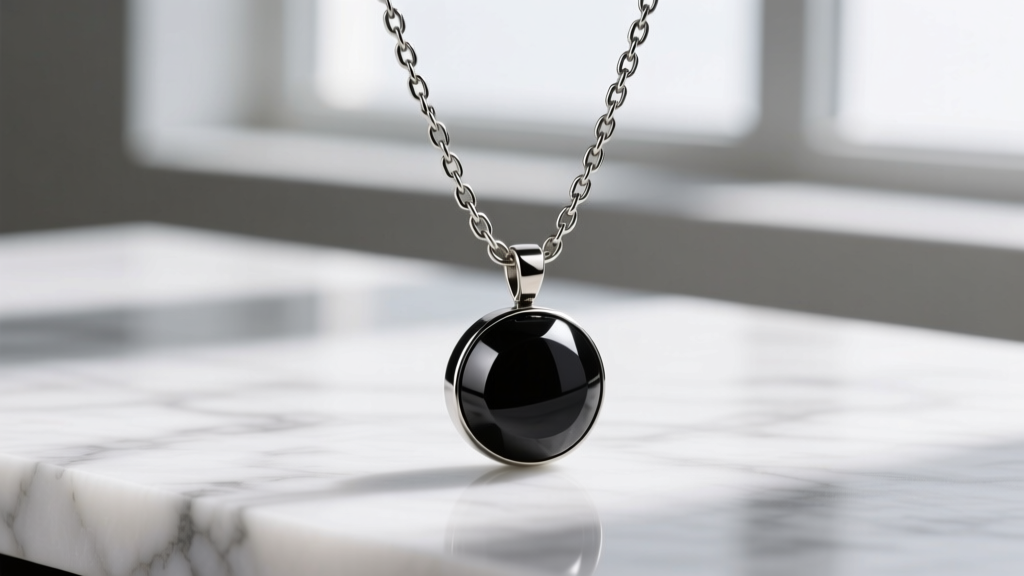
For lightweight stones like smoky quartz, moonstone, and agate (specific gravity ~2.6), a standard 0.8mm (20-gauge) or 1.0mm (18-gauge) jump ring is sufficient, provided it is soldered shut or features a secure split-ring mechanism. However, when dealing with high-density stones like hematite, the dynamic force generated by the wearer's movement can easily deform a standard jump ring, leading to a lost pendant.
For a solid hematite pendant weighing 15 grams or more, you must upgrade the hardware. We recommend using a minimum 1.2mm (16-gauge) or 1.5mm (14-gauge) soldered jump ring. Furthermore, the chain itself must possess adequate tensile strength. A delicate 1.5mm cable chain will eventually stretch and snap under the pendulum effect of a heavy hematite stone. Opt for structural chain styles such as a 3mm Figaro, a 2.5mm Curb, or a woven Wheat chain, which distribute mechanical stress across multiple interlocking links.
Care and Maintenance Protocols
Maintenance protocols vary drastically across the gray stone spectrum. Ultrasonic cleaners, which use high-frequency sound waves to dislodge dirt, are highly effective for smoky quartz and gray agate. However, placing a gray moonstone or labradorite in an ultrasonic cleaner is a catastrophic error. The microscopic vibrations will exploit the stones' natural cleavage planes, causing internal fracturing and completely destroying the stone's optical phenomena.
Hematite requires its own specific care regimen. Because it is an iron oxide, prolonged exposure to moisture, sweat, or harsh chemicals can cause it to oxidize (rust) or lose its polished luster. Hematite necklaces should be wiped down with a dry, microfiber cloth after wear and stored in a low-humidity environment with silica gel packets. Conversely, smoky quartz can be safely cleaned with warm water, mild dish soap, and a soft-bristled brush, making it the most low-maintenance option for active lifestyles.
Final Verdict: Matching Stone to Lifestyle
Choosing the perfect gray stone necklace is an exercise in balancing optical desires with physical realities. If your priority is a faceted, sparkling pendant for daily, carefree wear, smoky quartz is the undisputed champion. If you are drawn to the mystical, shifting colors of labradorite or moonstone, you must commit to protective bezel settings and mindful wearing habits to prevent cleavage-related fractures. Finally, if you prefer the bold, industrial weight of hematite, ensure your chain and jump ring hardware are engineered to handle the significant specific gravity of iron oxide. By respecting the mineralogy of these materials, your gray stone necklace will remain a staple in your wardrobe for decades to come.


