Sapphire Cross Pendant Necklace: Metal & Gemstone Material Guide
Compare metals and gemstone grades for your sapphire cross pendant necklace. Expert insights on durability, pricing, and optical properties.

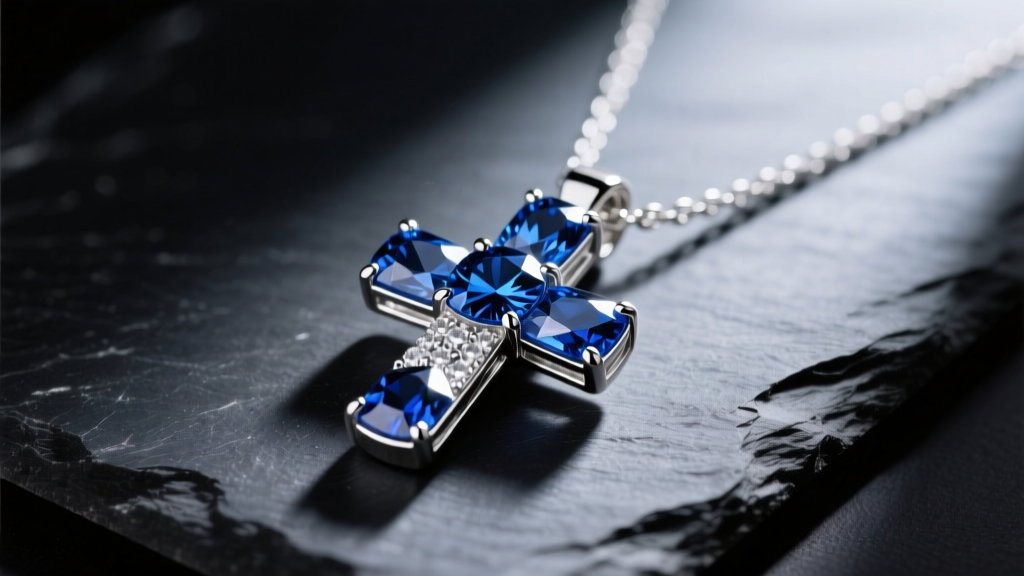
The Anatomy of a Sapphire Cross Pendant Necklace
A sapphire cross pendant necklace represents a unique intersection of mineralogy, metallurgy, and symbolic design. Unlike earrings or rings, a pendant rests directly against the sternum, making it susceptible to swinging, snagging on garments, and sudden temperature changes. Consequently, the material properties of both the gemstone and the chain dictate not only the piece's aesthetic brilliance but its structural longevity. When evaluating a sapphire cross pendant necklace, consumers must look beyond superficial carat weights and scrutinize the specific alloy compositions, gemstone growth methods, and setting mechanics that define high-caliber jewelry.
In this comprehensive material guide, we deconstruct the core components of sapphire cross pendants, providing actionable frameworks for selecting pieces that balance optical performance with everyday wearability. Whether you are sourcing a delicate 14k gold chain with calibrated lab-grown stones or a heavy platinum cruciform featuring unheated Ceylon sapphires, understanding these material variables is essential for making an informed investment.
Sapphire Material Comparison: Natural vs. Lab vs. Simulated
All genuine sapphires are composed of corundum (aluminum oxide, Al2O3) and rank at a 9 on the Mohs scale of hardness, making them exceptionally resistant to scratching. However, their origin and treatment history drastically alter their value, optical characteristics, and structural integrity.
Natural Sapphires and Thermal Treatments
Natural sapphires form under intense geological heat and pressure, often resulting in microscopic inclusions like rutile silk or fingerprint patterns. According to the Gemological Institute of America (GIA), over 90% of natural sapphires on the market undergo routine heat treatment to dissolve silk inclusions and improve color saturation. While thermally treated stones are stable and widely accepted, 'unheated' sapphires with exceptional color command a 50% to 150% premium. For a cross pendant, natural sapphires offer unique optical depth, but buyers must be wary of 'lattice diffusion' treatments, where beryllium is introduced during heating to artificially color pale stones—a practice that significantly diminishes resale value.
Lab-Created Sapphires: Flame Fusion vs. Flux Growth
Lab-created sapphires share the exact chemical and physical properties as their natural counterparts but are grown in controlled environments. The two primary methods yield vastly different results:
- Flame Fusion (Verneuil Process): This method melts aluminum oxide powder through a high-temperature flame. It is highly efficient, producing stones that cost roughly $5 to $15 per carat. However, flame fusion sapphires often exhibit curved striae (growth lines) visible under magnification and can sometimes appear overly perfect or 'glassy' in direct sunlight.
- Flux Growth (e.g., Chatham): This method dissolves corundum in a molten flux, taking up to 12 months to grow a single crystal. Flux-grown sapphires cost between $100 and $300 per carat but feature straight striae and natural-looking inclusions, making them virtually indistinguishable from high-grade natural stones to the naked eye.
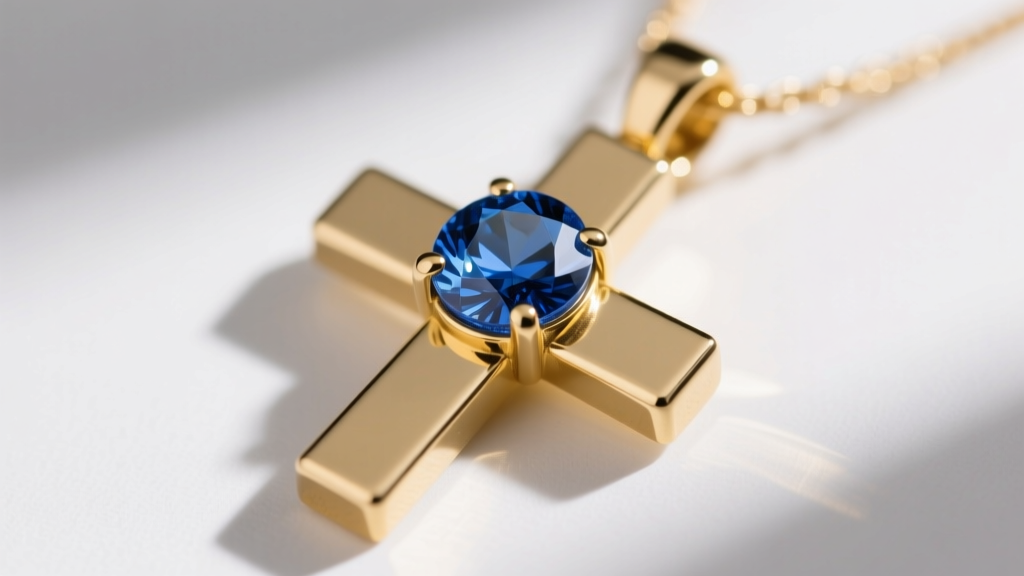
Simulants and the Danger of Glass
Simulants mimic the color of sapphires but lack their physical properties. Blue glass (Mohs 5.5) and blue cubic zirconia (Mohs 8.0-8.5) are common in low-tier cross pendants. Glass is particularly problematic for pendants; its low hardness means it will easily scratch against zippers or buttons, and its conchoidal fracture pattern makes it prone to chipping if the pendant swings and strikes a hard surface.
Chain and Setting Metals: Durability & Tarnish Resistance
The chain and setting of a sapphire cross pendant necklace must possess adequate tensile strength to support the weight of the gemstones without stretching or breaking. The Federal Trade Commission (FTC) mandates strict hallmarking for precious metals, but understanding the metallurgical realities behind those stamps is crucial for daily wear.
| Metal Alloy | Composition | Vickers Hardness (HV) | Maintenance & Wear Profile |
|---|---|---|---|
| Platinum 950 | 95% Pt, 5% Ru/Ir | 135 HV | Develops a patina over time. Scratches displace metal rather than removing it. Ideal for heavy, intricate cross settings. |
| 18k Yellow Gold | 75% Au, 25% Cu/Ag | 140 HV | Rich color but softer than 14k. Prongs may require annual tightening if the pendant is worn during physical activity. |
| 14k White Gold | 58.5% Au, Pd/Ni/Zn | 160 HV | Alloyed with nickel or palladium and plated in rhodium. Requires replating every 1-3 years as the yellowish underlying alloy shows through. |
| Sterling Silver | 92.5% Ag, 7.5% Cu | 70 HV | Highly prone to oxidation and tarnish. Too malleable for secure prong settings; best reserved for bezel-set, lightweight pendants. |
For a sapphire cross pendant necklace intended for lifelong daily wear, Platinum 950 or 14k White Gold offers the best compromise of prong security and structural rigidity. Sterling silver, while budget-friendly, poses a severe risk of prong failure over time due to its low Vickers hardness and high malleability.
Prong vs. Bezel Settings for Cross Pendants
The geometry of a cross pendant introduces unique setting challenges. The intersecting arms of the cross require precise stone placement to maintain symmetry, and the choice of setting dramatically impacts the sapphire's light return.
Dark blue sapphires are highly susceptible to 'inking'—a phenomenon where the stone absorbs too much light and appears black rather than blue. Maximizing light entry through the pavilion is critical for maintaining the gem's vivid saturation.
Prong Settings: Utilizing four or six platinum prongs per stone allows maximum light penetration from all angles. This is the superior choice for deep blue, natural sapphires to prevent inking. However, prongs can snag on knitwear, which is a common hazard for chest-resting pendants.
Bezel Settings: A continuous metal rim encircles the sapphire's girdle. While this offers ultimate protection against lateral impacts and snagging, a full bezel can reduce light return by up to 15%. If opting for a bezel-set sapphire cross pendant necklace, ensure the stones are cut slightly shallower to compensate for the restricted light entry, or choose lighter-toned cornflower blue sapphires that do not rely on ambient light to avoid looking muddy.
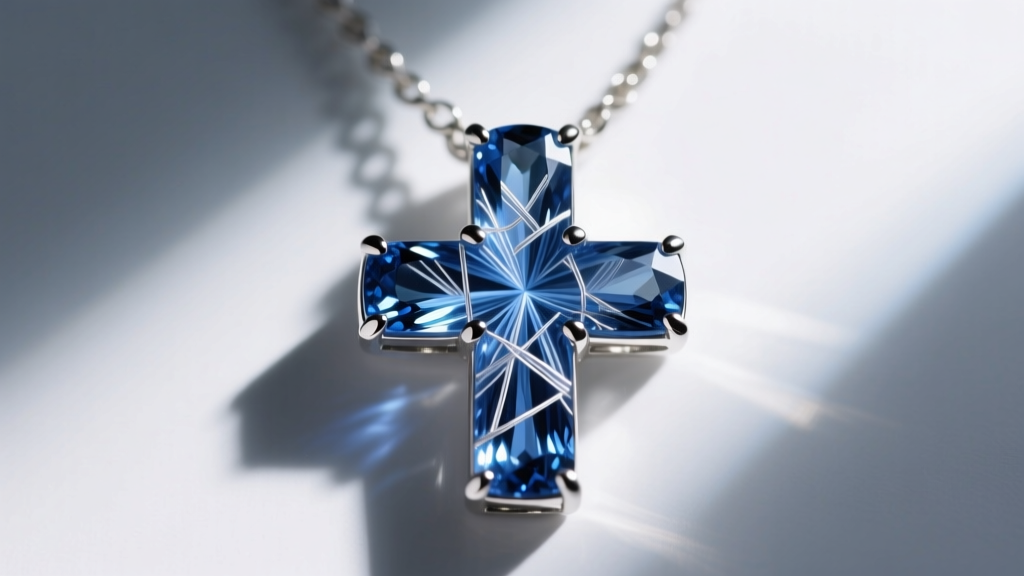
Pricing Tiers and Value Retention
Understanding the material composition allows you to accurately gauge the pricing of a sapphire cross pendant necklace. Here is a realistic breakdown of market tiers based on current material valuations:
- Entry-Level ($150 - $400): Sterling silver or 10k gold chains featuring flame-fusion lab-created sapphires or blue spinel simulants. The stones are typically calibrated (e.g., 2mm or 3mm rounds) and set in shared-prong or channel settings.
- Mid-Tier ($800 - $2,500): 14k gold or platinum chains utilizing flux-grown lab sapphires or lower-grade, heavily included natural sapphires. This tier often features custom-cut baguette sapphires that perfectly fit the geometric lines of the cross.
- Heirloom & Investment ($5,000 - $20,000+): Platinum settings featuring unheated, GIA-certified natural sapphires (often Ceylon or Montana origin) with excellent color zoning. These pieces retain value exceptionally well due to the rarity of untreated, high-clarity corundum.
Care and Maintenance Protocols
While sapphires are incredibly hard, they possess distinct cleavage planes and can fracture if subjected to sharp, localized impacts. Furthermore, the maintenance protocol for your necklace depends heavily on the treatments applied to the stones and the alloy of the chain.
Avoid ultrasonic cleaners if your sapphire cross pendant necklace contains fracture-filled stones. Some lower-quality natural sapphires are treated with lead-glass fillings to mask surface-reaching fractures; the high-frequency vibrations and chemical baths of an ultrasonic cleaner can dissolve these fillings, leaving the stone structurally compromised and visually cloudy. Instead, clean your pendant using a soft-bristled brush, warm water, and a mild, ammonia-free dish soap. Always store the necklace in a separate microfiber pouch to prevent the sapphire—which is harder than most other gemstones—from scratching adjacent diamond or gold jewelry in your collection.


