Coral Seed Bead Necklace Repair and Authentication Guide
Expert troubleshooting for your coral seed bead necklace. Learn to fix stringing failures, test for dyed fakes, and restore chalky beads safely.

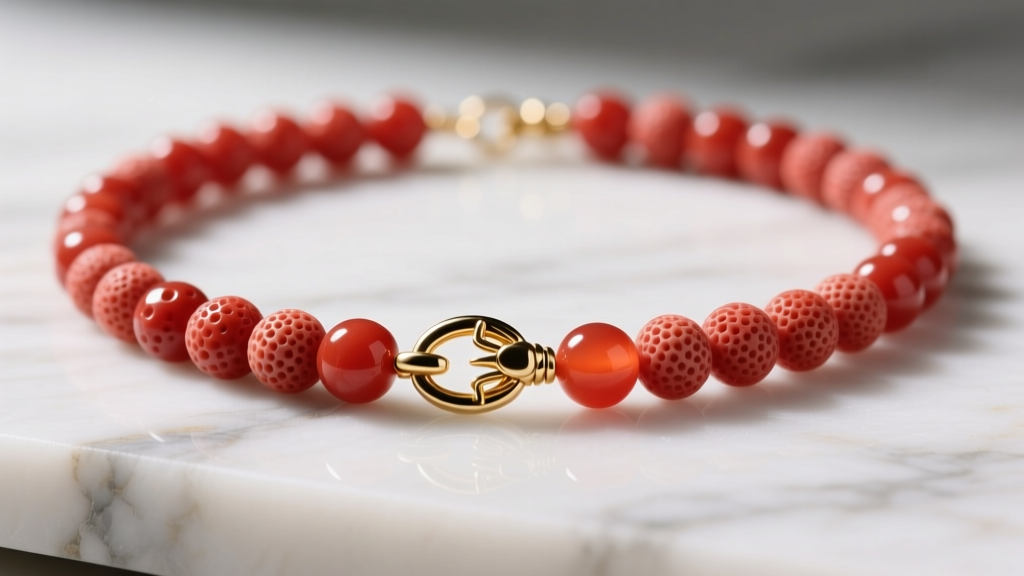
The Unique Vulnerabilities of Coral Seed Bead Necklaces
A genuine coral seed bead necklace is a staple of coastal, bohemian, and vintage-inspired jewelry collections. However, because coral is an organic gemstone composed primarily of calcium carbonate, it presents a unique set of structural and chemical vulnerabilities that standard glass or stone bead necklaces do not. With a Mohs hardness of just 3.5 to 4.0, coral is highly susceptible to scratching, acid etching, and thermal shock. When these material traits are combined with the tiny, often irregularly drilled holes of seed beads (typically sized 11/0 or 8/0), the result is a piece of jewelry that requires highly specialized maintenance and repair techniques.
In this comprehensive troubleshooting guide, we will dissect the most common failure modes of coral seed bead necklaces—from stringing material degradation and clasp tension imbalances to the pervasive issue of dyed imitation beads bleeding onto your skin. Whether you are attempting to restring a vintage heirloom or authenticate a recent boutique purchase, these professional jewelry repair protocols will help you preserve the integrity and value of your pieces.
Diagnosing and Fixing Stringing Material Failures
The most frequent reason a coral seed bead necklace ends up on a jeweler's bench is a catastrophic stringing failure. Because coral is relatively soft, the interior of the bead holes can sometimes be left rough or jagged by mass-manufacturing processes. Over time, these microscopic sharp edges act like tiny saws, slowly fraying and cutting through traditional stringing materials.
The Restringing Protocol
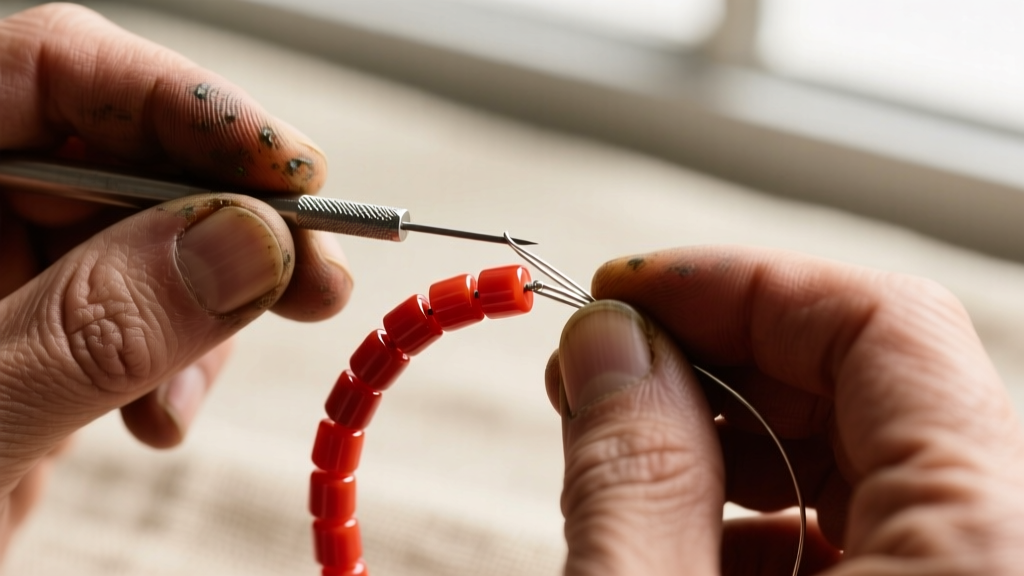
If your necklace has stretched, sagged, or snapped, the first step is identifying the failed material. Traditional silk thread (size F or G) is a poor choice for coral seed beads because it degrades rapidly when exposed to the natural acids in human sweat and the friction of rough bead holes. Similarly, standard nylon threads like Nymo or C-Lon will eventually stretch under the weight of multi-strand designs, leading to unsightly gaps between the beads.
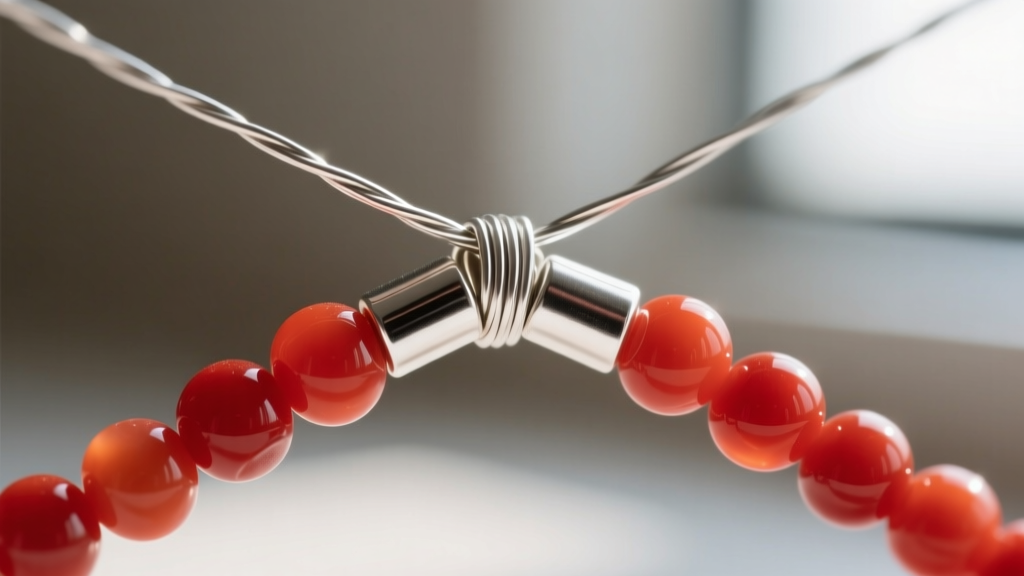
The Expert Solution: For a durable, long-lasting repair, transition the necklace to a 49-strand micro beading wire, such as SoftFlex or Beadalon in a .014" or .018" diameter. The 49-strand construction provides the drape and flexibility of thread while offering the tensile strength of steel. To protect the wire from the sharp edges of the coral beads near the clasp, you must incorporate a French wire (also known as gimp or bullion) or a sterling silver wire protector. This creates a smooth, metal-lined channel that prevents the wire from kinking and snapping at the stress points.
The Dye Bleed Dilemma: Testing and Setting Colors
One of the most frustrating problems jewelry owners face is a "coral" necklace that bleeds red or pink dye onto the skin or clothing, especially in humid weather. Genuine precious coral (Corallium rubrum) derives its color from trace amounts of iron and organic pigments locked within its calcium carbonate matrix; it will never bleed. If your coral seed bead necklace is transferring color, you are dealing with a dyed imitation—most commonly dyed howlite, dyed quartz, or colored glass.
To confirm this, perform a discreet acetone test. Dip a cotton swab in pure acetone (standard nail polish remover often contains moisturizers that interfere with the test) and rub it gently against a single bead near the clasp. If the swab turns pink or red, the bead is dyed. While you cannot reverse the dyeing process, you can seal the beads to prevent further bleeding. Apply a microscopically thin coat of Renaissance Wax or a specialized jewelry sealant to the beads, allowing them to cure for 24 hours before wearing. This creates an inert barrier between the dye and your skin.
Coral Seed Bead Material Diagnostics
| Material | Weight & Temperature | Acetone Swab Test | UV Light Reaction | Approx. Price (11/0 Strand) |
|---|---|---|---|---|
| Genuine Precious Coral | Moderate weight, warm to touch | Negative (No color transfer) | Chalky white/brown fluorescence | $45.00 - $120.00+ |
| Dyed Howlite | Lightweight, cool to touch | Positive (Bleeds red/pink) | Dull, no distinct fluorescence | $4.00 - $8.00 |
| Dyed Quartz/Jade | Heavy, very cold to touch | Positive (Bleeds red/pink) | Weak, mottled fluorescence | $10.00 - $18.00 |
| Opaque Glass | Heavy, cold to touch | Negative (Color is internal) | No fluorescence | $6.00 - $12.00 |
For deeper gemological verification, the Gemological Institute of America (GIA) provides extensive databases on the microscopic identification of organic gemstones, noting that genuine coral will exhibit a distinct wood-grain or fibrous structure under 10x magnification, whereas howlite will show a mottled, sponge-like matrix.
Solving Clasp Tension and Slippage Issues
Seed bead necklaces are inherently lightweight, which creates a mechanical problem when paired with traditional clasps. A heavy brass toggle clasp or an oversized lobster clasp will act as a pendulum, constantly pulling the delicate strand forward and causing the necklace to sag or the clasp to slip off the neck entirely. Furthermore, the tension from a heavy clasp accelerates the fraying of the stringing material at the terminal ends.
The Expert Solution: For single-strand coral seed bead necklaces, replace heavy hardware with a 10x3mm neodymium magnetic tube clasp. These clasps are incredibly lightweight, secure, and eliminate the mechanical stress of pulling a lobster clasp through a tiny jump ring. If you prefer a mechanical closure, use an 8mm lightweight sterling silver lobster clasp paired with a reinforced 4mm oval jump ring. When terminating the 49-strand wire, always use 2x2mm sterling silver crimp tubes. Do not use flat pliers to crush the crimp; instead, use a micro-crimping tool to fold the tube into a neat, rounded bead shape, and cover it with a 3mm crimp cover to protect the coral beads from scratching against the sharp metal edges.
Cleaning and Restoring Chalky Coral Beads
Over time, a coral seed bead necklace may lose its vibrant luster, taking on a dull, chalky, or matte appearance. This is not dirt; it is chemical etching. Calcium carbonate is highly reactive to the mild acids found in human perspiration, perfumes, hairsprays, and lotions. When these acids interact with the coral, they microscopically dissolve the polished outer layer, leaving behind a dull calcium residue.
Never use ultrasonic cleaners, steam cleaners, or commercial jewelry dips on coral. The harsh chemicals and high-frequency vibrations will rapidly degrade the beads and potentially shatter them. Instead, gently wipe the necklace with a slightly damp, lint-free microfiber cloth after every wear to remove acidic oils. To restore the luster of mildly etched beads, apply a single drop of food-grade mineral oil to a soft cotton swab and gently buff the beads. The oil will temporarily fill the microscopic etch marks, restoring the bead's natural translucency and color depth. For severe etching, the necklace must be sent to a professional lapidary for a gentle tumble polish using walnut shell media and a mild polishing compound.
Sourcing Ethical Replacements for Vintage Strands
When repairing a vintage coral seed bead necklace, you may find that several beads are missing, cracked, or too heavily etched to save. Sourcing matching replacements is a significant challenge due to both natural color variations and stringent international trade laws. Precious red coral is heavily regulated to prevent the overharvesting of fragile marine ecosystems.
Expert Compliance Note: As of 2026, international trade in many species of precious coral is strictly monitored under CITES (Convention on International Trade in Endangered Species). When purchasing replacement coral beads, always request documentation from your supplier. The U.S. Fish and Wildlife Service provides clear guidelines on importing and traveling with coral jewelry, emphasizing that undocumented coral can be seized at customs.
To maintain the integrity of a vintage piece without violating ethical sourcing standards, consider sourcing reclaimed or estate coral beads from specialized vintage jewelry salvage dealers. If exact color matching is impossible due to the unique oxidation of the original vintage strand, embrace the Japanese concept of kintsugi by intentionally replacing the missing section with a complementary organic material, such as polished turquoise or lapis lazuli seed beads, turning the repair into a deliberate, documented part of the necklace's history. For comprehensive tutorials on integrating mixed-media seed beads into existing strands, the Fire Mountain Gems Encyclopedia offers excellent visual guides on tension-matching and pattern integration.


