The Costliest Diamond Necklace: Value & Investment Guide
Analyzing the costliest diamond necklace in the world, exploring auction metrics, Type IIa grading, provenance premiums, and high-jewelry investment value.

Defining the Costliest Diamond Necklace Category
When collectors and investors discuss the apex of the high-jewelry market, the conversation inevitably turns to the costliest diamond necklace in existence. Unlike commercial luxury jewelry, which is priced based on standard retail markups and brand prestige, the ultra-high-net-worth (UHNW) jewelry sector operates more like the fine art market. As we navigate the 2026 high-jewelry landscape, the gap between standard luxury and apex investment-grade pieces has widened dramatically, driven by the scarcity of exceptional natural rough diamonds and the volatile macroeconomic climate.
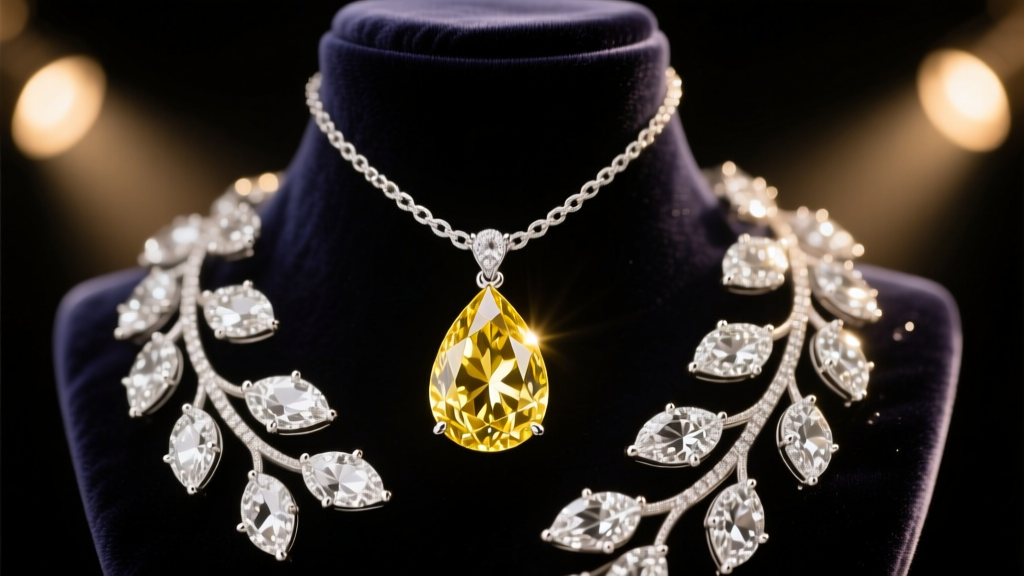
To understand the value assessment of a nine-figure necklace, we must look beyond the traditional 4Cs. Pieces like Mouawad’s L’Incomparable (valued at $55 million, featuring a 63.66-carat internally flawless fancy brownish-yellow center stone) or Chow Tai Fook’s A Heritage in Bloom (valued at $200 million, utilizing 383.8 carats of diamonds descended from the legendary Cullinan I) represent the absolute zenith of gemological achievement. But how do appraisers, auction houses, and private collectors actually assess the budget and long-term value of such astronomical assets?
Gemological Metrics: Type IIa and the D-Flawless Standard
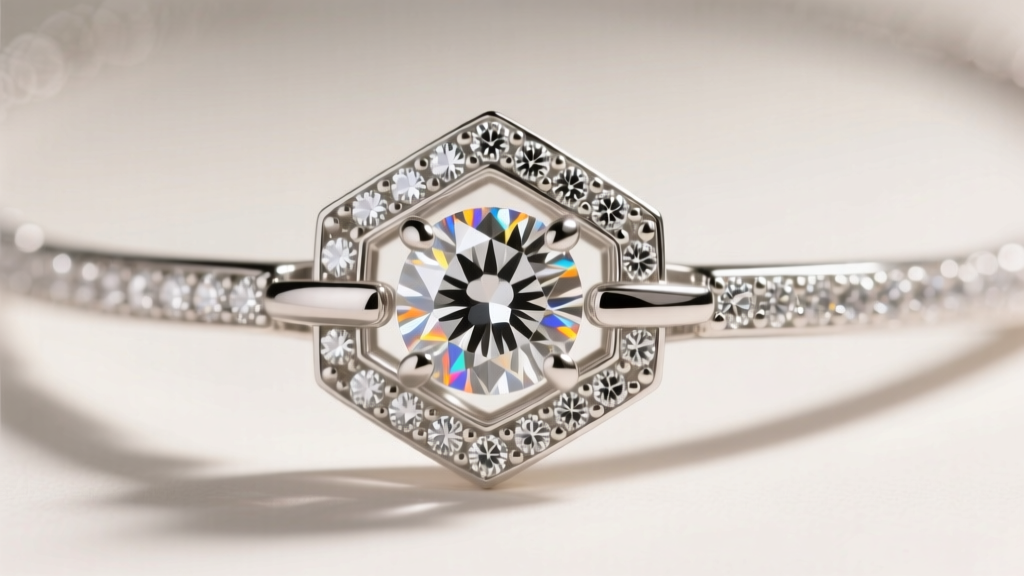
At the multi-million-dollar tier, standard gemological grading is merely the baseline. The true driver of value in the costliest diamond necklace collections is the presence of Type IIa diamonds. According to the Gemological Institute of America (GIA), Type IIa diamonds are chemically the purest, lacking measurable nitrogen impurities in their crystal lattice. They account for less than 2% of all natural gem-quality diamonds.
When assessing a necklace priced above $10 million, buyers demand Type IIa classification paired with D-Color and Flawless (FL) or Internally Flawless (IF) clarity. The price-per-carat metric scales exponentially, not linearly, at this tier. While a standard 3-carat D-FL natural diamond might trade at $120,000 per carat in the 2026 wholesale market, a matched suite of Type IIa D-FL diamonds exceeding 10 carats each—required for a statement necklace—can easily command $1.5 million to $2.5 million per carat at auction.
The Lab-Grown Impact on Apex Valuations
Any budget and value assessment in 2026 must address the lab-grown diamond (LGD) market. While LGD wholesale prices have plummeted by over 85% since 2020, effectively destroying the resale value of commercial-grade natural diamonds, the apex market remains entirely insulated. Synthetic manufacturers cannot reliably produce large-carat, flawless Type IIa stones with the specific geological fluorescence and strain patterns that elite collectors demand. Consequently, the costliest diamond necklace assets are now viewed as rare natural artifacts rather than mere accessories, solidifying their role as alternative investments.
Auction Dynamics and the Provenance Premium
The provenance of a piece—its historical ownership and cultural significance—often eclipses its intrinsic gemological value. This is known as the provenance premium. A definitive example is the Marie Antoinette pearl and diamond pendant, which sold at Sotheby’s Geneva for a staggering $36.1 million. The diamond itself, while historically significant, was not a massive modern-brilliant stone; the value was entirely driven by its royal lineage and tragic history.
When assessing the budget required to acquire a historically significant necklace, collectors must factor in the auction house buyer’s premium. At major houses like Christie's and Sotheby's, the buyer's premium typically hovers around 20% to 25% on the first several hundred thousand dollars, tapering slightly at higher tiers. Therefore, a hammer price of $40 million actually requires a budget allocation of nearly $48 million to secure the lot.
Value Comparison: Intrinsic vs. Historical
| Necklace Category | Primary Value Driver | Avg. Price Per Carat (Center Stone) | Liquidity Profile |
|---|---|---|---|
| Modern Apex (e.g., Mouawad) | Type IIa, Carat Weight, Cut | $800,000 - $2,000,000 | Moderate (Private Treaty) |
| Historical/Royal Provenance | Lineage, Documentation, Era | Highly Variable (Premium up to 500%) | High (Auction Frenzy) |
| Standard Commercial Luxury | Brand Name, Retail Markup | $15,000 - $40,000 | Low (High Depreciation) |
Investment Viability: Structuring the UHNW Portfolio
Is purchasing the costliest diamond necklace a sound financial investment? For the ultra-high-net-worth individual, high jewelry serves as a highly portable, uncorrelated store of wealth. However, it requires a specialized framework to realize returns. Unlike gold or equities, a $50 million diamond necklace does not generate yield; its value is entirely reliant on capital appreciation and scarcity.
- The 10-Year Horizon: Apex diamonds historically appreciate at an annualized rate of 4% to 7%, outpacing inflation but underperforming the S&P 500. The investment thesis relies on wealth preservation and currency hedging rather than aggressive growth.
- Portability and Privacy: A $50 million diamond necklace weighs less than 100 grams and can be transported across borders with a high degree of privacy, making it a favored asset class for individuals in geopolitically volatile regions.
- Collateralization: In 2026, specialized private banks and family offices increasingly accept investment-grade, Type IIa high jewelry as collateral for low-interest liquidity lines, allowing collectors to leverage the asset without triggering capital gains taxes via a sale.
The Hidden Costs of Nine-Figure Ownership
A rigorous budget assessment must account for the carrying costs of ultra-luxury jewelry. Owning the costliest diamond necklace in the world is an expensive endeavor long after the auction gavel falls.
Insurance and Security Infrastructure
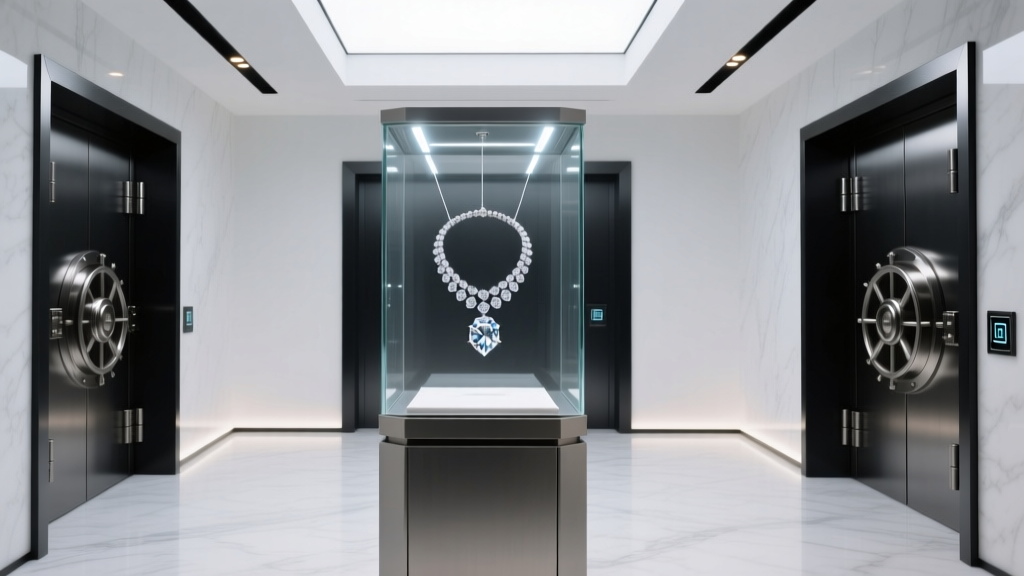
Standard jewelry insurance policies cap out at a few million dollars. For a $55 million piece, collectors must utilize specialized syndicates at Lloyd’s of London or bespoke fine art insurers like AXA Art. Premiums for apex jewelry typically range from 1.2% to 1.8% of the appraised value annually. For a $50 million necklace, expect to pay $600,000 to $900,000 every year just in insurance premiums. Furthermore, storing the piece requires a Level 3 UL-rated vault with seismic sensors, climate control, and biometric access, often necessitating the rental of a private freeport facility in Geneva or Singapore, adding another $50,000+ in annual storage fees.
Final Verdict on Apex Diamond Valuations
Assessing the budget and value of the costliest diamond necklace requires discarding traditional retail jewelry paradigms. At this stratosphere, you are not buying a necklace; you are acquiring a rare geological anomaly wrapped in historical or artistic significance. For the qualified investor, these pieces offer unparalleled wealth preservation, extreme portability, and a hedge against fiat currency debasement. However, success in this market demands rigorous adherence to Type IIa gemological standards, a deep understanding of auction house premium structures, and the financial stamina to absorb the substantial, ongoing carrying costs of nine-figure ownership.


