Journey Diamond Necklace: Metal Settings Compared
Compare platinum, 18k white gold, and palladium for your journey diamond necklace. Expert insights on durability, prong wear, and pricing.

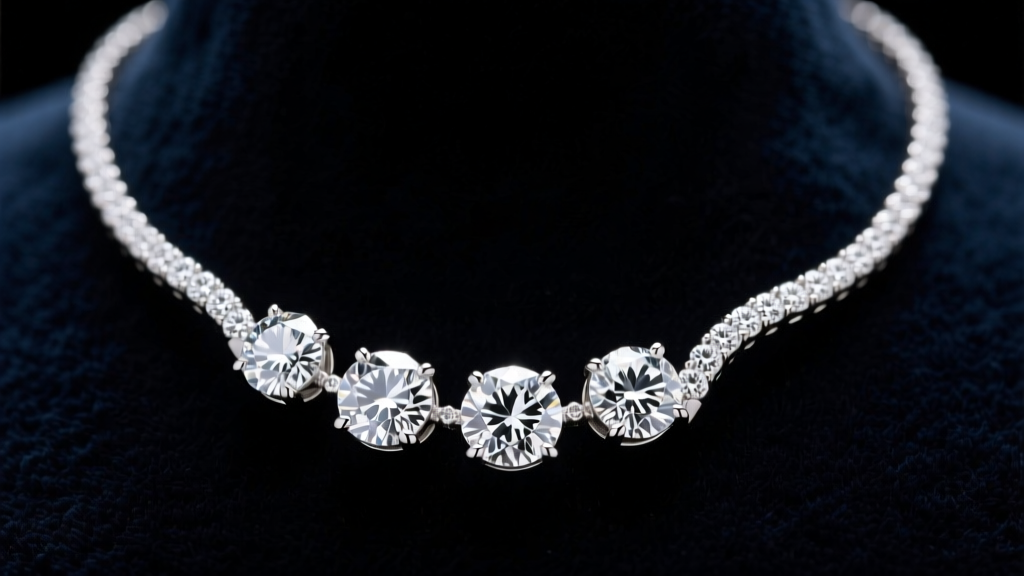
The Structural Anatomy of a Journey Pendant
The journey diamond necklace—typically featuring four, five, or seven graduating diamonds—is a masterclass in symbolic jewelry design. Representing the evolution of a relationship or personal growth, the continuous curve of the stones creates a stunning visual flow. However, from a metallurgical and manufacturing perspective, this curved, multi-stone layout introduces unique structural vulnerabilities that straight-line tennis bracelets or single-stone pendants do not face.
The "spine" of a journey pendant must support the cumulative weight of the diamonds (usually ranging from 0.50 to 2.00 total carat weight) while resisting torsional stress when the chain is pulled or twisted. When selecting the metal for your setting, you are not just choosing a color; you are choosing the tensile strength, work-hardening properties, and long-term wear profile of the piece. As of 2026, advancements in CAD casting have allowed for thinner, yet structurally sound spines, but the fundamental physics of the metal alloys remain unchanged.
Platinum (Pt950) vs. White Gold: The Prong Durability Test
The most critical decision for a journey diamond necklace is the metal holding the shared prongs. Because the diamonds are set along a curve, the prongs experience lateral stress every time the necklace shifts on the collarbone.
Platinum (Pt950/Ruthenium): Platinum is a dense, malleable metal with a Vickers Hardness (HV) of approximately 135. Its greatest advantage is its displacement property. When a platinum prong is struck or snagged, the metal bends rather than wearing away. According to the Gemological Institute of America (GIA), platinum's durability makes it the premier choice for intricate, multi-stone shared-prong settings. Over a decade of daily wear, a platinum journey pendant will develop a patina, but the prongs will remain largely intact, securely gripping the graduating diamonds.
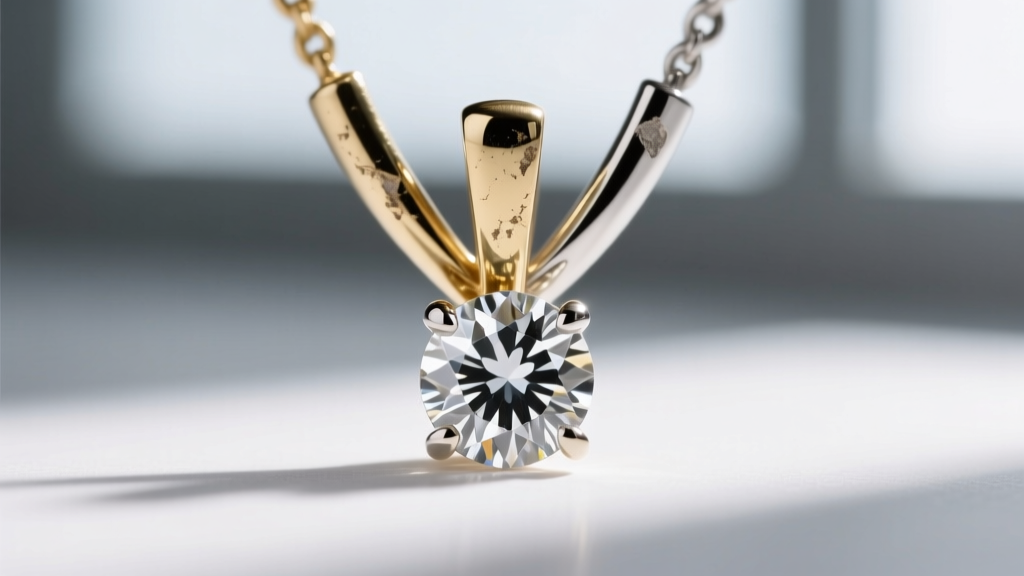
18k and 14k White Gold: White gold is an alloy of yellow gold and white metals (like nickel, palladium, or silver). 18k white gold (75% pure gold) has an HV of roughly 120-125, making it softer and more prone to abrasion than platinum. When a white gold prong experiences friction, the metal literally wears away. Over 5 to 7 years, the shared prongs on a curved journey pendant can thin out, requiring a jeweler to "re-tip" them to prevent stone loss. 14k white gold is harder (HV ~140) but more brittle, increasing the risk of a prong snapping entirely under sudden lateral stress.
The Rhodium Plating Factor and Visual Continuity
A journey necklace relies on the seamless visual transition from one diamond to the next. The metal between the stones should be virtually invisible, acting only as a shadow line.
- White Gold's Hidden Maintenance: Naturally, white gold alloys have a faint yellowish or grayish tint. To achieve a bright white finish, manufacturers electroplate the piece with rhodium. As the necklace rests against the skin, friction and body oils will gradually wear the rhodium plating away, particularly on the back of the pendant and the bail. This results in a patchy, slightly yellow appearance that disrupts the icy aesthetic of the diamonds.
- Platinum's Natural Whiteness: Platinum is naturally white and requires no plating. While it may develop a soft, frosted patina over time, its underlying color never changes, ensuring the metal framing your diamonds remains consistently neutral.
"When setting a five-stone journey pendant, the continuous shared-prong channel requires absolute precision. In white gold, the rhodium flash can sometimes pool in the microscopic gaps between the curved prongs, requiring careful polishing. Platinum, being naturally white, allows the setter to focus entirely on the tension and symmetry of the stones without worrying about plating thickness." — Master Bench Jeweler, 2026 CAD & Casting Symposium
Material Comparison Matrix
To make an informed decision, compare the specific metallurgical properties and market realities of the top three white metals used for journey pendants.
| Metal Alloy | Vickers Hardness (HV) | Prong Wear Profile | Maintenance Required | Avg. Price Premium (vs 14k Gold) |
|---|---|---|---|---|
| Platinum (Pt950/Ru) | ~135 | Displaces (Bends) | Polishing every 2-3 years | +45% to +60% |
| 18k White Gold (Pd Alloy) | ~125 | Abrades (Wears away) | Rhodium dip every 1-2 years | +20% to +30% |
| 14k White Gold (Ni-Free) | ~140 | Abrades / Brittle snap risk | Rhodium dip every 1-2 years | Baseline |
| Palladium (Pd950) | ~120 | Displaces (Bends) | Polishing (Rarely needed) | +10% to +15% |
Note: Because journey pendants are relatively lightweight (typically 2.5 to 5.0 grams without the chain), the absolute dollar difference between 14k white gold and platinum is often only $150 to $350, making platinum a highly cost-effective upgrade for this specific style.
Chain Selection: Matching the Pendant's Metallurgy
A journey diamond necklace is only as secure as the chain and bail that support it. The curved weight distribution of a 1.00ct TCW journey pendant creates a pendulum effect, concentrating friction at the bail loop.
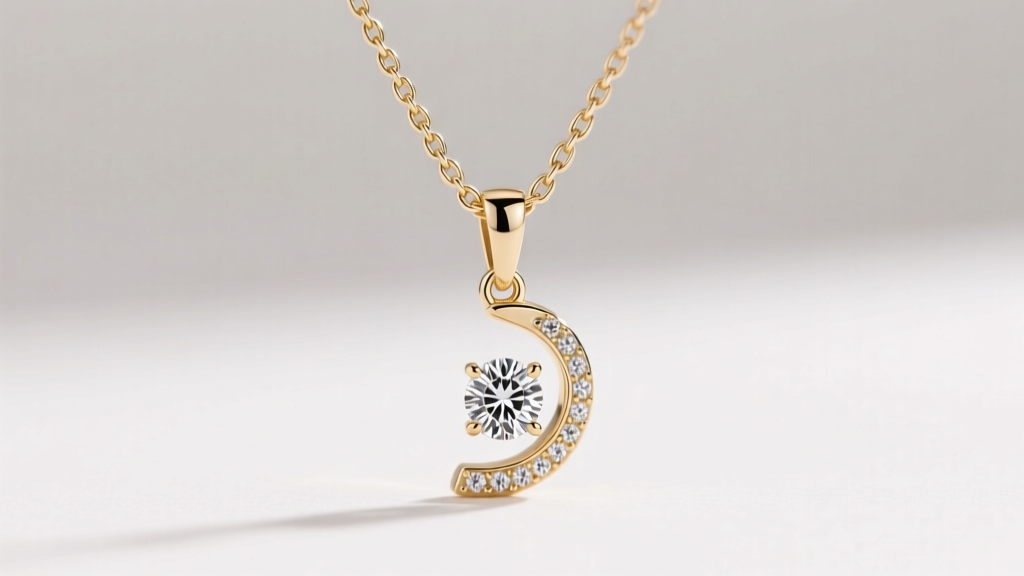
According to the GIA's guidelines on precious metals, matching the chain's karat and alloy to the pendant is crucial to prevent galvanic corrosion and uneven wear. If your pendant is platinum, pairing it with a white gold chain will result in the softer gold bail loop acting as a file against the chain, eventually wearing through the chain links.
Recommended Chain Gauges and Styles
- Wheat Chains (1.0mm - 1.2mm): The woven, interlocking oval links of a wheat chain provide exceptional tensile strength and resist kinking. This is the ideal pairing for a heavy 7-stone journey pendant.
- Solid Box Chains (0.9mm - 1.1mm): Offer a modern, geometric look that complements the graduating diamonds. Ensure the links are solid, not hollow, to prevent crushing.
- Avoid Cable and Rope Chains: Standard cable chains under 1.0mm are prone to stretching under the concentrated weight of a curved pendant, and rope chains can trap skin oils and lotions, dulling the diamonds from behind.
Real-World Failure Modes: The "S-Warp"
The most common failure mode unique to journey diamond necklaces is the "S-warp." Because the spine of the pendant is a continuous strip of metal holding multiple stones, if the necklace is slept in or pulled sharply, the metal can bend into an S-shape between the diamonds.
Troubleshooting the S-Warp:
- In Platinum: A jeweler can easily place the pendant in a leather mallet block and gently tap the spine back into its original curved alignment. Because platinum work-hardens and displaces, the metal will return to shape without compromising the prong tension.
- In White Gold: Bending a white gold journey pendant back into shape is highly risky. The repeated flexing can cause the alloy to become brittle and snap, or it can loosen the shared prongs, leading to a popped diamond. If a white gold journey pendant warps, it often requires partial re-casting or intensive laser welding to repair safely.
Final Verdict: Which Metal Should You Choose?
If your budget allows, Platinum (Pt950) is the undisputed champion for a journey diamond necklace. The minimal price premium is vastly outweighed by the elimination of rhodium maintenance and the superior safety of displacement-prone prongs on a curved setting. For those preferring the brighter, crisper white reflectivity of gold, 18k White Gold alloyed with Palladium is the next best choice, provided you commit to bi-annual rhodium maintenance and prong inspections. Avoid 14k white gold for journey pendants with a total carat weight exceeding 1.00ct, as the brittleness of the alloy poses an unnecessary risk to the continuous shared-prong architecture.


