Best Metals for a Crescent Moon and Star Necklace Compared
Discover the best metals for your crescent moon and star necklace. We compare sterling silver, gold, and titanium for durability, price, and skin safety.

The Anatomy of Celestial Jewelry: Why Metal Choice Matters
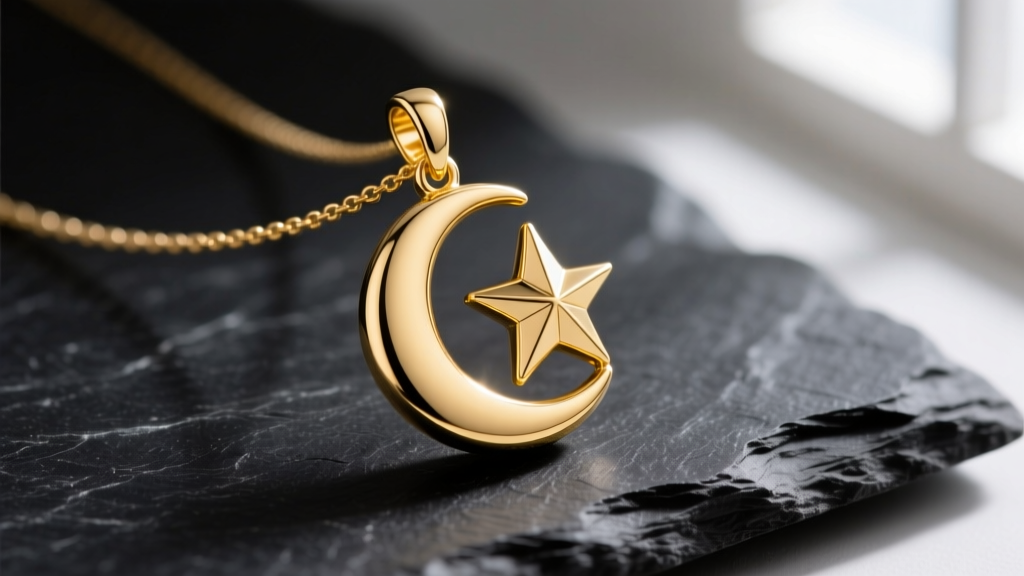
When selecting a crescent moon and star necklace, most buyers focus entirely on the aesthetic silhouette. However, the physical geometry of celestial motifs presents unique metallurgical challenges. A crescent moon features smooth, sweeping curves that are relatively forgiving during the casting and polishing processes. Stars, conversely, feature sharp vertices and acute angles. These delicate star points are highly susceptible to bending, snagging on textiles, and premature wear if the underlying metal lacks adequate tensile strength and hardness.
Furthermore, because these necklaces rest directly against the décolletage—an area prone to perspiration and exposure to cosmetic products—the metal's reactivity is a critical factor. In this comprehensive guide, we dissect the material properties of the most common metals used in celestial jewelry, evaluating their Vickers hardness (HV), tarnish resistance, and long-term viability for daily wear.
925 Sterling Silver vs. Solid Gold: The Classic Debate
Silver and gold remain the foundational metals for fine jewelry, but their alloy compositions drastically alter how a celestial pendant performs over time.
925 Sterling Silver and Rhodium Plating
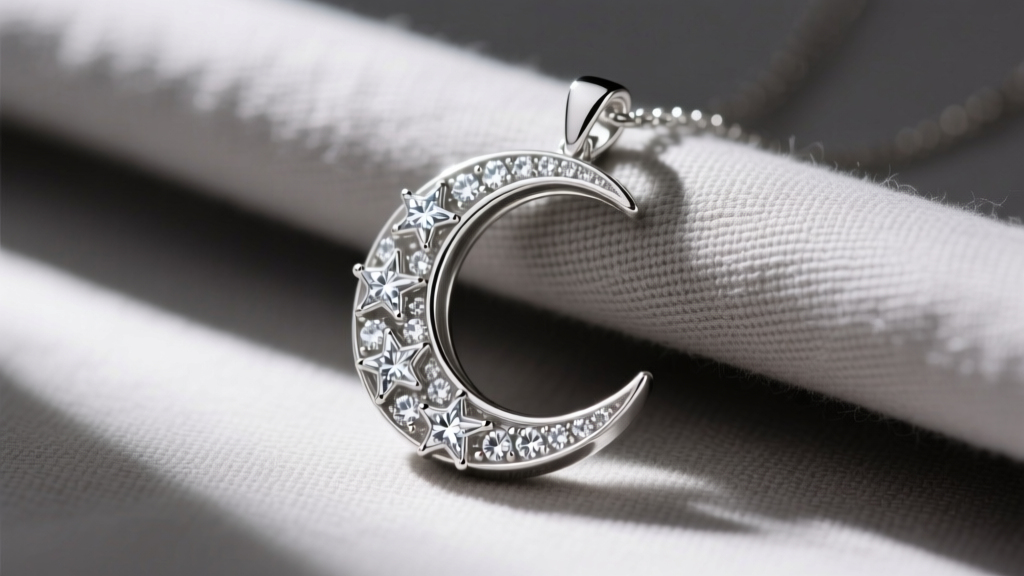
Sterling silver is an alloy consisting of 92.5% pure silver and 7.5% copper. While the copper adds necessary structural integrity, it is also the culprit behind silver's notorious vulnerability to tarnish. When exposed to sulfur compounds in the air or on the skin, the copper reacts to form silver sulfide, creating a dark, dull patina. For a crescent moon and star necklace, tarnish can quickly accumulate in the deep crevices where the star points meet the moon's inner curve, making it difficult to polish without specialized jeweler's cloths.
To combat this, many modern jewelers apply a rhodium plating. Rhodium is a platinum-group metal that provides a brilliant, tarnish-resistant shield. However, buyers must verify the plating thickness. A standard flash plating of 0.05 microns will wear off within months of daily friction. For lasting protection, seek out pieces with a minimum of 0.1 to 0.5 microns of rhodium. Even with plating, sterling silver remains relatively soft (approx. 60-70 HV), meaning the delicate tips of the star motif may bend if caught on a heavy winter sweater.
14k vs. 18k Solid Gold (Focus on Star Tip Durability)
Gold is alloyed with metals like copper, zinc, and silver to increase its durability. According to the Gemological Institute of America (GIA), the karatage dictates both the color and the structural hardness of the piece.
- 18k Gold (75% pure gold): Offers a rich, warm hue but is relatively soft (approx. 110-125 HV). While beautiful, 18k gold star points are prone to micro-bending over years of daily wear.
- 14k Gold (58.5% pure gold): With a higher proportion of alloy metals, 14k gold achieves a Vickers hardness of roughly 120-140 HV. This makes it the superior choice for intricate celestial designs with sharp star vertices, as the metal will hold its shape and resist deformation far better than its higher-karat counterparts.
For those with sensitive skin, it is crucial to ensure the gold alloy is nickel-free, as nickel is a common allergen used in some white gold alloys. The American Academy of Dermatology notes that nickel allergy is one of the most common causes of contact dermatitis, making nickel-free 14k yellow or rose gold the safest bet for reactive skin types.
The Hypoallergenic Alternative: Aerospace-Grade Titanium
For buyers seeking ultimate durability and biocompatibility, Grade 23 Titanium (Ti-6Al-4V ELI) is an exceptional, albeit unconventional, choice for a crescent moon and star necklace. Originally developed for aerospace and medical implant applications, this specific alloy is entirely hypoallergenic and highly resistant to corrosion from sweat, chlorine, and saltwater.
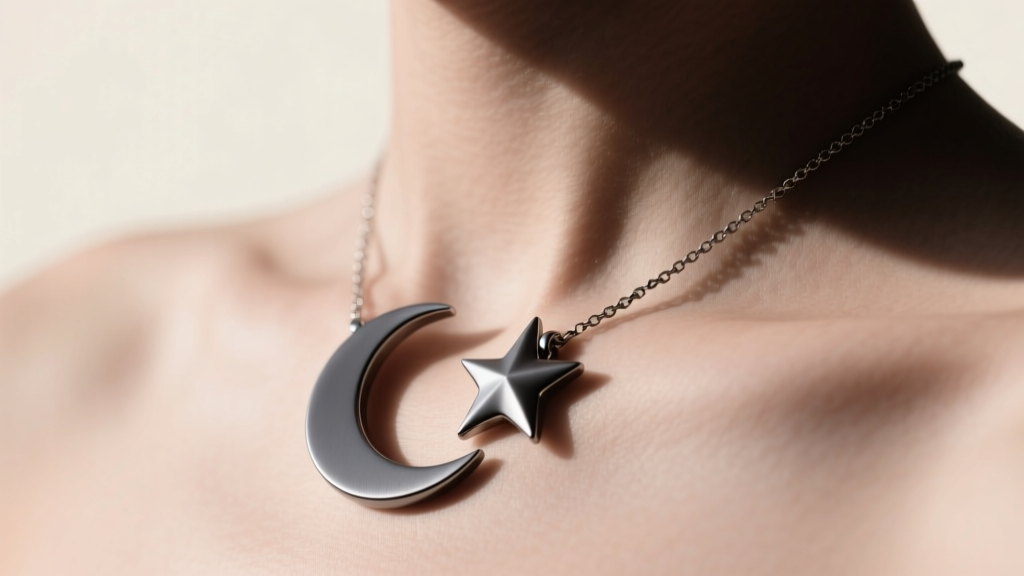
Titanium boasts an impressive Vickers hardness of approximately 334 HV, meaning the star points on a titanium pendant will virtually never bend or warp under normal wear conditions. It is also remarkably lightweight, allowing for larger, statement-sized celestial pendants that won't strain the neck or cause the chain to pull. The primary drawback is its gunmetal-grey hue, which lacks the traditional luster of precious metals, and its extreme hardness makes it nearly impossible for a standard jeweler to solder or resize if a component breaks.
Materials to Avoid: Plated Brass and Mystery Alloys
When shopping for affordable celestial jewelry, you will frequently encounter 'gold-plated brass' or 'zinc alloy' pendants. These should be avoided for daily wear. Brass is an alloy of copper and zinc. When the ultra-thin gold plating (often less than 0.02 microns) inevitably wears away through friction, the exposed brass reacts with the natural acids in your sweat. This chemical reaction produces copper chloride, commonly known as verdigris, which will leave a stubborn green stain on your skin and degrade the structural integrity of the star points, leading to sudden snapping or crumbling.
Comprehensive Material Comparison Chart
Use the table below to evaluate which metal best aligns with your lifestyle, budget, and design preferences for your celestial necklace.
| Material | Composition | Hardness (HV) | Tarnish / Corrosion Risk | Average Price Range |
|---|---|---|---|---|
| 925 Sterling Silver | 92.5% Ag, 7.5% Cu | 60 - 70 | High (without rhodium) | $30 - $80 |
| 14k Solid Gold | 58.5% Au, Alloys | 120 - 140 | Very Low | $150 - $350 |
| 18k Solid Gold | 75.0% Au, Alloys | 110 - 125 | Very Low | $250 - $600+ |
| Grade 23 Titanium | Ti-6Al-4V ELI | ~334 | None | $40 - $90 |
| Plated Brass | Cu/Zn base, Au flash | 80 - 100 | Extremely High | $15 - $30 |
Chain Pairing and Clasp Hardware Considerations
The material of the pendant must be matched with an equally capable chain and clasp system. A solid 14k gold crescent moon and star pendant can easily weigh between 4 to 8 grams. Suspending this weight on a delicate 0.8mm cable chain will lead to premature stretching and eventual chain failure.
For celestial pendants, opt for a 1.2mm to 1.5mm curb or rolo chain. These chain styles feature interlocking, flattened links that distribute weight evenly and resist kinking. Furthermore, always inspect the clasp. Avoid spring-ring clasps, which utilize a weak internal tension spring that frequently fails. Instead, insist on a lobster clasp with a sturdy internal mechanism, ensuring your pendant remains secure. If purchasing a sterling silver piece, verify that the clasp hardware is also stamped '925' and not made of plated base metal, which is a common cost-cutting measure in lower-tier manufacturing.
Final Verdict: Choosing Your Perfect Celestial Piece
The ideal metal for your crescent moon and star necklace depends entirely on your wear habits. If you desire a classic, heirloom-quality piece with sharp, enduring star points, 14k solid gold offers the perfect balance of precious metal value and structural hardness. For those on a budget who don't mind occasional maintenance, rhodium-plated 925 sterling silver provides brilliant luminosity at a fraction of the cost. Finally, if you require a lightweight, indestructible, and entirely hypoallergenic option for active lifestyles, Grade 23 titanium is an unparalleled modern alternative. By prioritizing metallurgical properties over mere aesthetics, you ensure your celestial jewelry remains as timeless as the night sky itself.


