Crescent Necklace Value Guide: Budgets & Metal Grades
Discover the true value of a crescent necklace. We break down 2026 pricing, metal grades, vermeil micron traps, and chain durability to guide your budget.

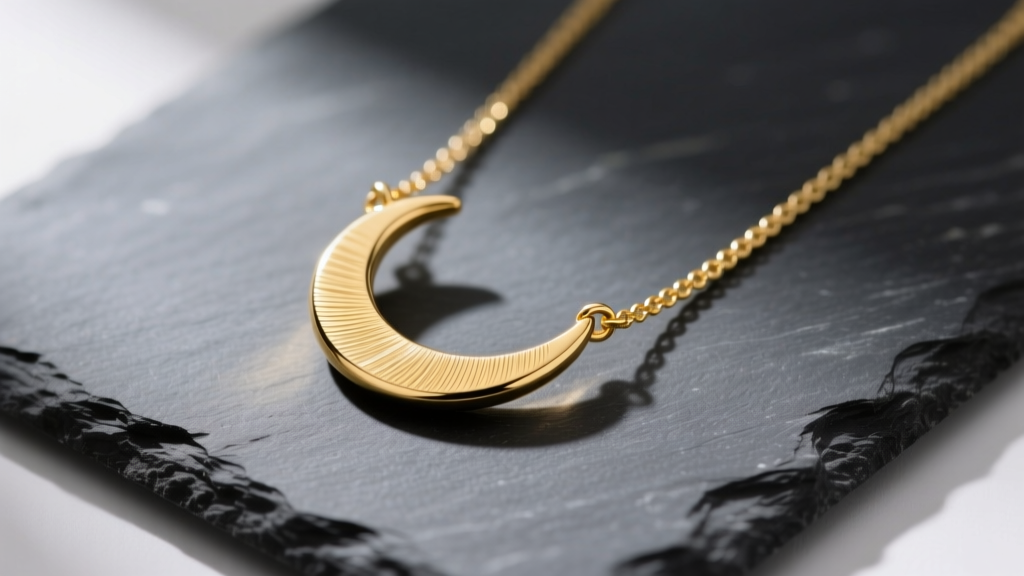
The True Cost of a Crescent Necklace: Beyond the Price Tag
The crescent moon motif remains one of the most enduring symbols in jewelry, representing transition, intuition, and celestial elegance. However, as the popularity of the crescent necklace surges through 2026, the market has become saturated with options ranging from $15 fast-fashion pieces to $5,000 luxury designer pendants. For the savvy buyer, the challenge is no longer finding a crescent necklace; it is accurately assessing its intrinsic value versus its retail markup.
Evaluating the budget and true worth of a crescent pendant requires looking past the aesthetic and examining the structural engineering of the piece. The asymmetrical shape of a crescent—specifically its sharp, tapering tips—creates unique structural vulnerabilities. A poorly cast pendant will suffer from porosity (tiny air bubbles trapped in the metal), making the delicate points prone to snapping under minimal stress. In this comprehensive value assessment, we dissect metal grades, chain mechanics, and gemstone accents to help you determine exactly what you should be paying for a crescent necklace.
Metal Grades & Longevity: A Value Breakdown
The foundation of any necklace's value lies in its metallurgical composition. The sharp tips of a crescent moon require a metal with adequate tensile strength and hardness to resist bending when snagged on clothing.
Sterling Silver (925) vs. Silver-Plated
Sterling silver (92.5% pure silver, 7.5% copper alloy) is the baseline for fine jewelry. In 2026, a high-quality, solid sterling silver crescent pendant (weighing roughly 3 to 5 grams) on a matching chain should retail between $45 and $85. The copper alloy provides the necessary Vickers hardness to protect the crescent's tips. Conversely, silver-plated brass or copper pieces, often sold for $15 to $30, offer zero long-term value. The plating will wear away within months, exposing the base metal to oxidization and causing skin discoloration.
Gold Vermeil vs. Gold Plated (The Micron Trap)
This is where budget buyers lose the most money. According to the FTC Jewelry Guides, true 'gold vermeil' must consist of a sterling silver base coated with at least 2.5 microns of 10k gold or higher. Many brands deceptively market 'gold plated' jewelry (which can have a brass base and a microscopic 0.5-micron flash coating) as vermeil. A genuine 18k gold vermeil crescent necklace offers excellent value, typically pricing between $90 and $160. It provides the rich, warm hue of solid gold at a fraction of the cost, provided you remove it before showering to preserve the micron layer.
Solid Gold (14k & 18k) & Platinum
For heirloom-quality pieces, solid gold is the standard. According to the Gemological Institute of America (GIA), 14k gold contains 58.5% pure gold, while 18k contains 75%. For a crescent necklace, 14k gold is often the superior functional choice. The higher alloy content (copper, silver, zinc) in 14k gold increases its durability, ensuring the sharp horns of the crescent do not bend out of shape during daily wear. An 18k gold piece will be softer, richer in color, and command a 30% to 40% premium over 14k. Expect to pay $350 to $600 for a lightweight solid 14k gold crescent, scaling up to $800+ for 18k or platinum variants.
2026 Price-to-Value Matrix for Crescent Pendants
To contextualize your purchasing decision, refer to the matrix below. This table outlines the expected market pricing for a standard 4-gram crescent pendant with a 16-to-18-inch chain, alongside its projected lifespan and overall value rating.
| Metal Type | 2026 Market Price Range | Expected Lifespan | Value Verdict |
|---|---|---|---|
| Silver-Plated Brass | $15 - $35 | 3 - 6 Months | Poor (Disposable Fashion) |
| Solid 925 Sterling Silver | $45 - $85 | Lifetime (with polishing) | Excellent (Best Budget Entry) |
| Gold Vermeil (2.5+ microns) | $90 - $160 | 2 - 5 Years | Very Good (Mid-Tier Aesthetic) |
| Solid 14k Gold | $350 - $600 | Generational | Outstanding (Best Long-Term ROI) |
| Solid 18k Gold / Platinum | $750 - $1,200+ | Generational | Good (Premium for Color/Status) |
Chain Anatomy: Where Budget Brands Cut Corners
A common mistake when assessing the value of a crescent necklace is focusing entirely on the pendant while ignoring the chain. The chain is the mechanical failure point of any necklace. Budget brands frequently pair heavy pendants with ultra-thin, hollow chains to save on metal costs.
Gauge Thickness and Breaking Points
A standard crescent pendant weighs between 3 and 6 grams. To support this weight safely, the chain should be a minimum of 1.0mm to 1.2mm in thickness. Many budget necklaces utilize 0.6mm or 0.8mm cable chains. While delicate and visually appealing, a 0.7mm chain has a tensile breaking point of roughly 2 to 3 pounds. If the crescent pendant swings and catches on a sweater, the chain will snap instantly. A 1.2mm rolo or cable chain increases the breaking point to over 8 pounds, offering vastly superior security.
Clasp Mechanics and Jump Rings
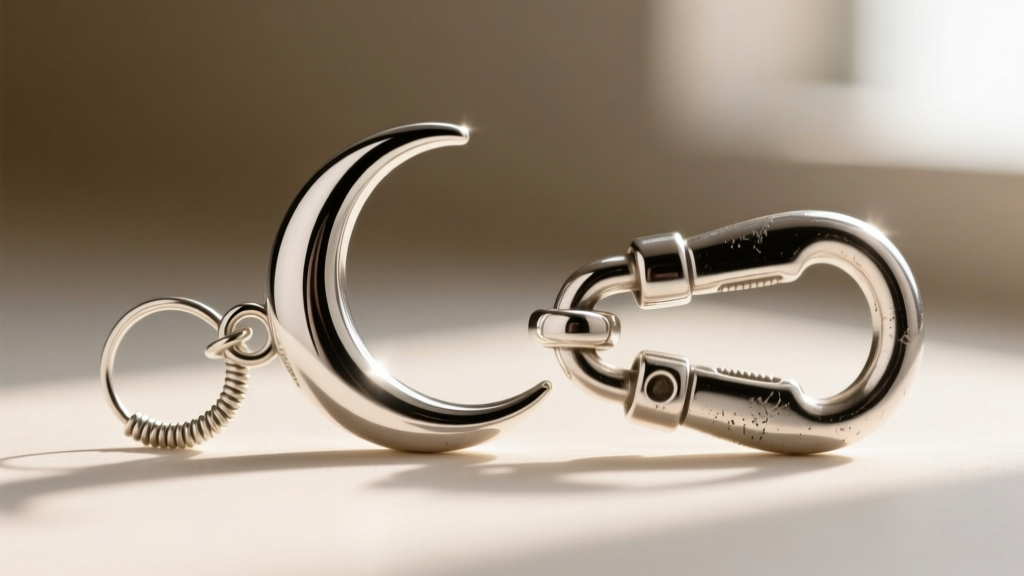
Inspect the clasp and the jump rings (the small loops connecting the clasp to the chain). High-value necklaces utilize sturdy lobster clasps and soldered jump rings. A soldered jump ring is fused shut with a laser or torch, meaning it cannot be pulled apart under tension. Budget necklaces rely on spring ring clasps (which suffer from internal spring failure within a year) and unsoldered jump rings that will easily pull open, resulting in the loss of your crescent pendant.
Diamond and Gemstone Accent Valuation
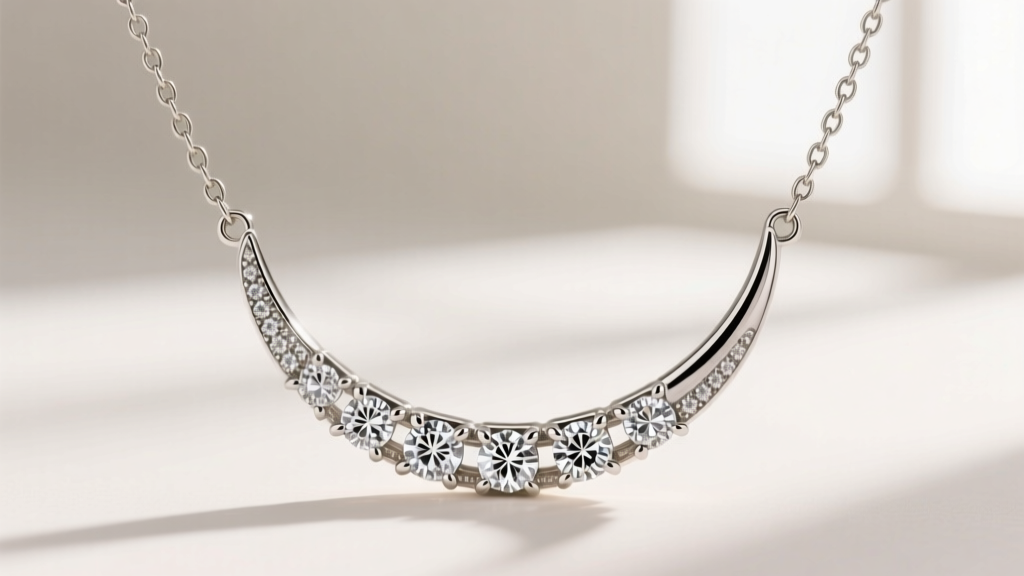
Many crescent necklaces feature pavé or bezel-set diamonds along the inner or outer curve of the moon. When assessing the budget of a diamond-accented crescent, you must separate the metal value from the stone value.
- Melee Diamonds: Most crescent necklaces use 'melee' diamonds (weighing between 0.01 and 0.05 carats each). These are generally SI1/SI2 clarity and G/H color. They provide brilliant sparkle but hold very little resale value. Do not pay a massive premium for 'high clarity' melee diamonds in a pendant of this size; the naked eye cannot distinguish VVS from SI in stones this small.
- Moonstone and Opal Accents: Crescent motifs are frequently paired with cabochon moonstones. A high-value piece will feature a bezel setting (a metal rim enclosing the stone) rather than prong settings. Moonstone has a Mohs hardness of 6 to 6.5, making it highly susceptible to chipping if exposed in a prong setting. A bezel setting adds to the manufacturing cost but drastically increases the longevity of the piece.
How to Spot Overpriced 'Designer' Crescent Necklaces
The luxury jewelry market often applies a 400% to 800% markup on celestial motifs simply because they are trending. A 3-gram 14k gold crescent pendant on a 1.0mm chain contains roughly $180 to $220 worth of raw gold (based on 2026 spot prices), plus $50 to $100 in casting, polishing, and assembly labor. Therefore, a fair retail price from a direct-to-consumer fine jeweler is between $350 and $500.
Expert Insight: If a fashion brand is charging $850 for a lightweight, 14k gold crescent necklace with no substantial gemstones, you are paying for the logo stamped on the clasp, not the intrinsic value of the jewelry. Always weigh the piece (or ask for the gram weight) before purchasing designer celestial jewelry to calculate the actual gold-to-markup ratio.
Final Verdict: Which Budget Tier Should You Choose?
Your ideal budget tier depends entirely on your wear habits and long-term goals.
- The Everyday Budget ($50 - $90): Opt for solid 925 sterling silver. Ensure it features a rhodium plating to prevent tarnishing and a 1.0mm cable chain with a lobster clasp. This offers lifetime durability at an entry-level price.
- The Trend-Conscious Mid-Tier ($100 - $180): Choose 18k gold vermeil over sterling silver. Verify the brand explicitly states a minimum of 2.5 microns of gold thickness. This gives you the luxurious aesthetic of solid gold for seasonal or rotational wear.
- The Heirloom Investment ($400 - $700): Invest in solid 14k gold. The superior hardness of the 14k alloy perfectly protects the delicate tips of the crescent shape, ensuring the necklace survives decades of daily wear without bending or losing its structural integrity.
By prioritizing structural integrity, precise metal compositions, and mechanical chain security over brand prestige, you can secure a crescent necklace that offers genuine, lasting value in 2026 and beyond.


